Best Woods for Smoking Meat: BBQ Wood Selector
Choose the best smoking wood chips, chunks, or splits for brisket, ribs, chicken, salmon, and more, then compare flavor strength and classic BBQ pairings
Choosing smoking wood starts with what you’re cooking and how strong you want the smoke to be. Use the quick picks below for the most common answers, or choose a protein in the BBQ Wood Selector for more specific pairings, blend ideas, and wood intensity.
Quick Answers
- Best wood for brisket: Oak or hickory. Oak is steady and medium-strong; hickory is stronger and more bacon-like. Use mesquite lightly.
- Best wood for ribs: Hickory, apple, and cherry are the safest starting points. Hickory brings classic BBQ smoke; apple and cherry add sweetness and color.
- Best wood for chicken: Apple or cherry. Chicken is mild, so lighter fruitwoods usually work better than heavy smoke.
- Best wood for pork shoulder or Boston butt: Hickory, oak, apple, or pecan. Hickory and oak give pulled pork its backbone; apple softens the smoke.
- Should you soak wood chips? No. Use dry, seasoned wood and control airflow so the smoke stays clean instead of thick and bitter.
- Easy beginner rule: Fish and poultry like lighter woods; pork handles medium smoke; brisket and beef ribs can take oak, hickory, pecan, or a little mesquite.
BBQ Wood Selector
Pick a protein to see the best BBQ woods for that meat, including chips, chunks, or splits that match the flavor you want.
If the BBQ Wood Selector does not load, use the Top 10 table and the Protein-Specific Smoking Guides below to choose wood chips, chunks, or splits for your meat.
How to choose your wood in 3 steps
- Match intensity to protein: fish and poultry usually need lighter smoke; pork can handle medium smoke; beef ribs and brisket can take medium-strong smoke.
- Pick a base, then blend if you want: start with oak, hickory, or alder; add apple or cherry when you want fruitwood sweetness and color.
- Use the right amount: about 2-4 oz per hour of dry, seasoned hardwood; aim for thin blue smoke and adjust to taste.
Chips, chunks, or splits? Use chips for short cooks or a gas-grill smoke box, chunks for charcoal grills and most backyard smokers, and splits for offset smokers that burn wood as the main fuel.
For details, see the Top 10 table or the Protein guides.
Jump to a section
Top 10 Most Popular BBQ Proteins & Wood Pairings
Legend: ★ very light · ★★ light · ★★★ medium · ★★★★ medium-strong · ★★★★★ strong.
“Best woods” lists the top 2–3 picks per protein for quick scanning.
| Protein | Best Woods | Flavor Profile | Intensity |
|---|---|---|---|
| Pork Ribs | Hickory, Apple, Cherry | Sweet to robust | Intensity 4 of 5 stars |
| Chicken | Apple, Cherry, Maple | Mild, fruity | Intensity 2 of 5 stars |
| Pork Shoulder† See note below | Hickory, Oak, Apple | Traditional BBQ | Intensity 4 of 5 stars |
| Brisket | Oak, Hickory, Pecan | Bold, smoky | Intensity 4 of 5 stars |
| Boston Butt† See note below | Hickory, Apple, Pecan | Rich, smoky | Intensity 4 of 5 stars |
| Salmon | Alder, Apple, Maple | Delicate, sweet | Intensity 2 of 5 stars |
| Sausages | Hickory, Apple, Cherry | Savory, balanced | Intensity 3 of 5 stars |
| Turkey | Oak, Apple, Cherry | Balanced, rich | Intensity 3 of 5 stars |
| Beef Ribs | Oak, Hickory, Pecan | Bold, meaty | Intensity 4 of 5 stars |
| Pork Belly | Hickory, Cherry, Apple | Rich, fatty | Intensity 4 of 5 stars |
† Boston butt is the upper portion of the shoulder—pairings are the same.
Protein-Specific Smoking Guides
What’s the best wood for smoking brisket?
Quick Answer: Oak is the gold standard for brisket, providing steady smoke for 12+ hour cooks. Hickory adds traditional BBQ flavor, while pecan offers nutty sweetness. Use 3-4 oz per hour.
Best Woods: Oak (gold standard), Hickory (bold flavor), Pecan (nutty sweetness), Cherry (color enhancement)
Why these work: Brisket’s rich, dense texture and long cook time can handle robust woods
Pro tip: Oak provides steady, consistent smoke for 12+ hour cooks without becoming bitter
Regional note: Texas pitmasters prefer post oak for authentic flavor
Brisket demands patience and the right wood to transform tough connective tissue into tender, flavorful meat. The extended cooking time allows for deep smoke penetration and bark formation that defines great BBQ. If the stall lingers and your smoke color looks right, the Texas Crutch can shorten the cook while protecting a smoke-forward profile. Some cooks finish with a touch of tallow to enrich slices.
If you’re planning the full cook, our Brisket Calculator can help with timing, start time, yield, and altitude.
What’s the best wood for smoking pork ribs?
Quick Answer: Hickory is the classic choice for pork ribs, delivering traditional BBQ flavor. Apple and cherry add sweetness and beautiful color. Use 2-3 oz per hour for 4-6 hour cooks.
Best Woods: Hickory (classic BBQ), Apple (mild sweetness), Cherry (beautiful color), Oak (balanced flavor)
Why these work: Ribs’ fat and bone structure absorbs smoke excellently, creating sought-after bark
Blend suggestion: 70% hickory + 30% apple for traditional flavor with subtle sweetness
Competition secret: Many pitmasters use cherry for that winning color
- Try the 3-2-1 Method for Ribs for a predictable path to tender ribs while you test how apple or cherry behave.
- St. Louis Style Ribs and Spare Ribs welcome medium woods like oak and pecan, while Baby Back Ribs often shine with lighter fruitwoods such as apple or cherry.
- Confirm doneness with the Bend Test for Ribs before you sauce or change wood for a finishing burn.
Pork ribs are the quintessential BBQ protein, with their fat content and cooking method creating ideal conditions for smoke absorption and bark development that judges and backyard enthusiasts love.
If you’re cooking for a group, our Rib Calculator can help figure out how many pork or beef ribs to buy.
What’s the best wood for smoking pork shoulder or Boston butt?
Quick Answer: Hickory delivers classic pulled pork flavor, while oak provides steady smoke for a long cook. Apple adds sweetness that balances the rich pork. Use 3-4 oz per hour for most 8-12 hour cooks.
Best Woods: Hickory (traditional), Oak (steady), Apple (balanced sweetness), Pecan (nutty complexity)
Why these work: Pork shoulder and Boston butt have enough fat and cooking time to handle medium to stronger smoke
Boston butt note: Boston butt is the upper part of the shoulder and uses the same wood pairings
Blend suggestion: Hickory + apple gives pulled pork a classic smoke base with a little sweetness
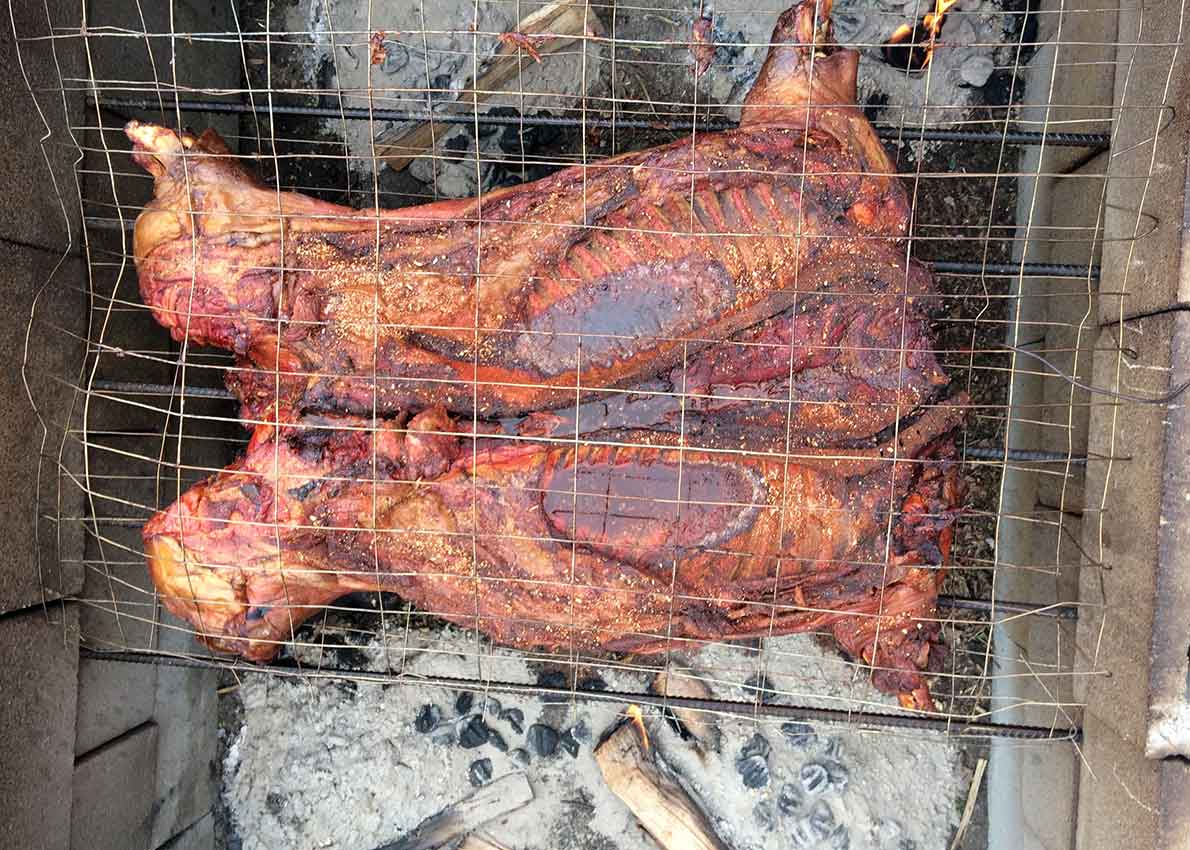
Pork shoulder and Boston butt are forgiving cuts for smoke because they cook slowly and carry enough fat to stand up to hickory, oak, apple, or pecan. For whole-hog and pulled pork traditions in the Carolinas, oak and hickory are the usual starting points.
For pulled pork planning, our Pulled Pork Calculator can help estimate raw weight, servings, and cook time.
What’s the best wood for smoking chicken?
Quick Answer: Apple and cherry are perfect for chicken, providing mild, fruity smoke that enhances without overpowering. Maple adds subtle sweetness. Avoid strong woods like hickory or mesquite.
Best Woods: Apple (gentle, sweet), Cherry (mild, great color), Maple (light sweetness), Peach (delicate fruit)
Why these work: Chicken’s lean, mild meat needs gentle woods that complement natural flavors
Avoid: Hickory, oak, or mesquite—too strong for poultry
Cook time factor: Shorter cook times (1-3 hours) require milder woods
Chicken’s delicate texture and relatively quick cooking time make it ideal for fruit woods that impart subtle flavor without overwhelming the meat’s natural taste. Consider simple brining methods to keep white meat juicy when using lighter woods like apple or alder. A straightforward dry rub lets fruitwoods add color without masking the spice profile.
If wings are on the menu, our Chicken Wing Calculator can help estimate pieces, pounds, and bags.
What’s the best wood for smoking turkey?
Quick Answer: Oak provides balanced flavor for turkey, while apple and cherry add mild sweetness. Pecan offers nutty complexity. Use 2-3 oz per hour for whole birds.
Best Woods: Oak (balanced), Apple (mild sweet), Cherry (color), Pecan (nutty)
Why these work: Turkey’s size requires moderate woods that penetrate without overpowering
Holiday tip: Apple and cherry create beautiful presentation
Spatchcock advantage: Flattened birds absorb smoke more evenly
Turkey’s lean meat and larger size benefit from moderate smoke intensity that complements rather than dominates the natural poultry flavors. Serve with Alabama white sauce if you like a tangy counterpoint to complement the smoke.
For whole-bird planning, our Turkey Calculator can help with size, thaw time, brine time, and cook time.
What’s the best wood for smoking beef ribs?
Quick Answer: Oak and hickory are perfect for beef ribs, handling the rich, meaty flavor. Pecan adds nutty sweetness. Use 3-4 oz per hour for these substantial cuts.
Best Woods: Oak (steady), Hickory (bold), Pecan (nutty), Cherry (color enhancement)
Why these work: Beef ribs’ rich marbling and size can handle robust wood flavors
Texas style: Post oak is the traditional choice for authentic flavor
Plate vs chuck: Both cuts accept the same wood selections equally well
Beef ribs are substantial cuts with rich marbling that welcomes bold wood flavors without being overwhelmed, making them perfect for traditional BBQ woods.
What’s the best wood for smoking salmon?
Quick Answer: Alder is the gold standard for salmon, providing the traditional Pacific Northwest flavor. Apple and maple add gentle sweetness while preserving the fish’s delicate texture.
Best Woods: Alder (classic), Apple (gentle sweetness), Maple (light caramel), Cherry (subtle fruit)
Why these work: Salmon’s oily, firm texture needs subtle woods that accent rather than dominate
Avoid: Hickory, mesquite, or other strong woods that overpower delicate fish flavors
Amount: 2-3 oz per hour for hot smoking, less for cold smoking
Salmon is a smoking classic for both hot and cold applications. Its natural richness welcomes delicate, aromatic woods that enhance the buttery texture without masking the fish’s inherent flavors.
What’s the best wood for smoking sausages?
Quick Answer: Apple and hickory are excellent for sausages, with apple providing mild sweetness and hickory adding traditional BBQ flavor. Use 1-2 oz per hour for shorter cook times.
Best Woods: Apple (versatile), Hickory (traditional), Cherry (color), Peach (mild)
Why these work: Pre-seasoned sausages need woods that complement, not compete with spices
Quick cook tip: Shorter smoking times require milder woods
Variety consideration: Match wood intensity to sausage type (mild woods for chicken, stronger for beef)
Sausages come pre-seasoned with complex spice blends, so wood selection should enhance rather than compete with existing flavors.
What’s the best wood for smoking pork belly?
Quick Answer: Hickory complements pork belly’s richness, while cherry and apple add sweetness that balances the fat. Use 2-3 oz per hour for cubes or slabs.
Best Woods: Hickory (traditional), Cherry (sweet balance), Apple (mild fruit), Oak (steady)
Why these work: High fat content absorbs smoke readily and benefits from sweet wood balance
Burnt ends: Hickory + apple creates perfect sweet-smoky cubes
Asian fusion: Apple works excellently with soy-based marinades
Pork belly’s exceptional fat content makes it ideal for smoke absorption, while sweet woods help balance the richness of this indulgent cut.
Common BBQ Wood Mistakes & Myths
Should you soak wood chips before smoking?
Myth: “Always soak wood chips for 30 minutes before using.”
Reality: Never soak wood chips or chunks. Wet wood creates steam, not smoke, and produces bitter white smoke instead of clean blue smoke [Source: AmazingRibs].
Why this myth persists: Many beginners see thick white smoke and think it’s “more smoke,” but it’s actually poor combustion [Source].
✓Recommended: Correct approach: Use dry, seasoned hardwood and control airflow for clean-burning smoke.
Does more wood always mean more flavor?
Myth: “The more wood you use, the more smoky flavor you’ll get.”
Reality: Too much wood creates acrid, bitter flavors. Aim for clean, thin, blue smoke and moderate fuel additions [Source].
Why people overdo it: More smoke looks impressive, but heavy, opaque smoke often deposits creosote and ash flavors [Source].
✓Recommended: Correct amount: Your general guide of 2–4 oz per hour keeps flavor clean while avoiding bitterness.
Can you use any type of wood for BBQ?
Myth: “Any wood will work for smoking if it burns.”
Reality: Stick with seasoned hardwoods. Softwoods like pine, cedar, or spruce contain resins that create harsh smoke and off flavors [Source: Texas A&M] [Source: BCM].
Dangerous woods to avoid: All softwoods, treated or painted lumber, and green/unseasoned wood.
✓Recommended: Safe hardwoods only: Oak, hickory, apple, cherry, maple, alder, pecan, mesquite.
Do you need to use wood for the entire cook?
Myth: “Keep adding wood throughout the entire smoking session.”
Reality: Flavor can continue to build, but most adhesion happens early while the surface is cooler and moist; there is no hard cutoff when meat “stops” taking smoke [Source] [Smoke Ring]. Focus wood use early, then maintain heat with minimal additions.
Tip: Practical takeaway: Emphasize clean smoke during the first 3–4 hours of long cooks, when it has the most impact.
Is mesquite too strong for everything?
Myth: “Mesquite is too intense and ruins food.”
Reality: Mesquite is common in Texas and works well for beef and shorter cooks when used sparingly and with good airflow [Source: Texas A&M].
Mesquite success tips: Use lightly (about 1–2 oz per hour), pair with beef ribs or steaks, avoid with delicate proteins.
For general smoking safety and handling guidance, see the USDA Food Safety and Inspection Service overview
here.
BBQ Wood Types & Characteristics
Wood Intensity Scale
Very Mild Woods (★☆☆☆☆)
Mild Woods (★★☆☆☆)
Medium Woods (★★★☆☆)
Strong Woods (★★★★★)
Wood Preparation & Technique
Proper Wood Preparation
❌ Never Do
- Soak wood chips (creates steam, not smoke)
- Use wet wood (produces bitter white smoke)
- Use treated or painted wood
- Use green/unseasoned wood
✅ Always Do
- Use dry, seasoned hardwood only
- Start with less wood (can always add more)
- Aim for thin blue smoke
- Choose natural, untreated wood
Wood Blending for Complex Flavors
Apple + Oak
Perfect for: Pork shoulder
Result: Sweetness with backbone
Cherry + Hickory
Perfect for: Ribs
Result: Color plus traditional flavor
Maple + Cherry
Perfect for: Poultry
Result: Double sweetness
Pecan + Apple
Perfect for: Light proteins
Result: Nutty and fruity
Smoking Tips for Beginners
🌱 Start Mild
Apple or cherry are forgiving and won’t overpower
⚠️ Avoid Mesquite Initially
Intense flavor can quickly become bitter for beginners
📏 Use Proper Amounts
2-4 oz of wood per hour of smoking
👁️ Watch Your Smoke
Thin blue smoke, not thick white billows
Regional BBQ Traditions
Texas
Signature wood: Post oak for brisket, mesquite for bold beef flavors
Kansas City
Signature wood: Hickory base with fruit wood blends for complex, sweet profiles
Carolinas
Signature wood: Oak and hickory for traditional whole hog cooking
Memphis
Signature wood: Apple and cherry for famous dry-rubbed ribs
Mexico / Barbacoa
Signature wood: Mild fruitwoods (apple, cherry) when adapting on a smoker; keep smoke brief, then cover to finish.
The regionality of wood choice became clear while researching Going Whole Hog – each area’s BBQ identity is tied to its local hardwoods.
Advanced Protein Smoking Guides
Seafood Smoking Essentials
Shrimp
Best woods: Apple, cherry, alder
Why: Quick cooking requires gentle woods; fruit woods complement natural sweetness
Trout
Best woods: Alder (traditional), apple, cherry
Why: Delicate texture needs mild smoke that won’t overpower clean flavor
Tuna
Best woods: Oak (steaks), apple (cold-smoking)
Why: Meaty texture can handle moderate smoke intensity
Game Meat Smoking
Venison
Best woods: Hickory, oak, cherry, apple
Challenge: Lean meat can dry out; sweet woods balance gamey flavors
Strategy: Cherry or apple adds sweetness that complements venison’s richness
Plant-Based Smoking
Tofu
Best woods: Oak (traditional BBQ), apple, cherry
Tip: Press tofu first; it absorbs smoke like a sponge
Vegetables
Best woods: Cherry, apple (brighten flavors), oak (hearty vegetables)
Tip: Quick absorption requires gentle woods
Full policy.
Where to Buy Smoking Wood & Essentials
You’ll usually get the best results with local, seasoned hardwoods or fruitwoods from a nearby firewood or BBQ supplier. If local options are limited—or you need delivery—these dependable picks match the recommendations in this guide. A specialty option that ships online: Carolina Cookwood.
- Apple wood chunks — reliable fruitwood for poultry, turkey, salmon, and pork.
- Cherry wood chunks — great color and gentle sweetness for ribs and chicken.
- Hickory wood chunks — classic backbone smoke for pork and beef.
- Oak (post oak) wood chunks — balanced base for brisket and beef ribs.
- Pin-type moisture meter — confirm ~10–20% moisture for clean blue smoke.
- Charcoal basket — tidier fuel and steadier airflow with wood + charcoal.
Tip: Choose local, naturally-seasoned (or kiln-dried) hardwood; avoid treated/painted lumber and softwoods.
Expert BBQ Wood FAQ
How do I pick a wood if I’m new?
Match smoke intensity to the meat, then start simple and measure lightly.
Guide: fish/chicken = light–medium (apple, cherry, alder); pork = medium (hickory, maple); brisket/beef ribs = medium-strong (oak/post oak, hickory). Choose one base (oak or hickory) and optionally blend a fruitwood. Use about 2–4 oz/hour of dry, seasoned wood and aim for thin blue smoke.
How much wood should I use for different cook lengths?
Plan on about 2–4 oz of dry, seasoned wood per hour for clean, balanced smoke.
Examples: 4-hour chicken: 8–16 oz total; 12-hour brisket: ~1.5–3 lb. Start conservatively—you can add wood, but you can’t remove over-smoke.
Can I mix different smoking woods?
Yes—use a mild base and blend in a stronger wood at roughly 70/30 for balance.
Popular blends: apple + oak, cherry + hickory, maple + cherry.
Should I soak wood chips before smoking?
No—soaking creates steam, not flavorful smoke, and often leads to harsh white smoke.
Better approach: burn dry, seasoned wood and control airflow for clean thin-blue smoke.
Which woods should I avoid for BBQ?
Avoid softwoods like pine, cedar, and fir—they contain resins that create bitter, acrid smoke.
Never use: treated lumber, painted wood, or chemically processed materials.
How do I know if I’m using too much wood?
Signs include bitter flavor, thick white smoke, an acrid smell, and “ashtray” taste.
Target: thin blue smoke with a clean, slightly sweet aroma.
Methodology & Sources
Our wood pairing recommendations are based on traditional BBQ practices, competition results, and food science principles.
Key sources include
AmazingRibs.com,
Smoking Meat Forums,
food science research on wood combustion, and the
USDA Food Safety and Inspection Service (FSIS) — Smoking Meat & Poultry.