BBQ in Charleston, SC: The Definitive Guide
Charleston barbecue has reached the point where asking for the single “best” restaurant isn’t especially helpful. The better question is what kind of barbecue you want.
Charleston-area barbecue now spans longtime South Carolina traditions built around pork, mustard sauce, hash, and the occasional buffet, along with Central Texas barbecue, wood-cooked whole hog, chef-driven smokehouses, and newer influences from well beyond the state. Destination BBQ has been documenting that changing landscape since 2012.
That variety is what makes eating barbecue around Charleston interesting, but it also makes a simple first-to-last ranking less useful. The restaurants in this guide aren’t all trying to serve the same meal or create the same experience.
So rather than crown one winner, we’ll help you figure out which Charleston barbecue stop best fits what you’re looking for. Start with the quick picks below, then explore the individual entries for what makes each place worth visiting — and why you might choose somewhere else.
Charleston BBQ Quick Picks
Not sure where to start? Pick the experience that sounds most like what you’re looking for.
| If you want… | Start with… |
|---|---|
| Central Texas brisket | Lewis Barbecue |
| South Carolina mustard sauce, pork, and hash | Bessinger’s or Melvin’s |
| Wood-cooked whole hog with Carolina and Puerto Rican influences | Palmira Barbecue |
| An old-school South Carolina BBQ buffet | Dukes Barbecue on James Island |
| All-wood cooking and a broad barbecue menu | Swig & Swine |
| Smoked wings, barbecue, and a lively bar atmosphere | Home Team BBQ |
| Chinese and Southern barbecue traditions on the same menu | King BBQ |
| A sit-down barbecue meal near Charleston’s historic district | Poogan’s Smokehouse |
Looking for Rodney Scott’s BBQ?
The Charleston restaurant is currently closed until further notice. We’ve kept Rodney in this guide because of his importance to Charleston and South Carolina barbecue, with more on the closure and where to find whole-hog barbecue below.
The Best BBQ in Charleston, SC
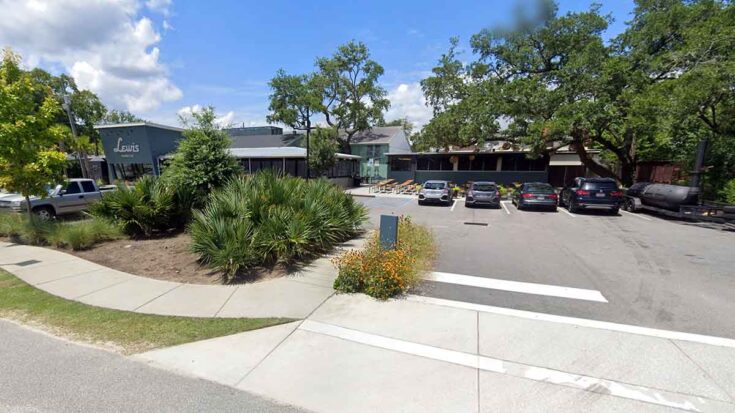
You’ll want to visit Lewis Barbecue because this is the place to start if Central Texas brisket is what you’re after. John Lewis built his reputation around brisket, but the counter also serves pork ribs, beef ribs, pulled pork, turkey, and house-made Texas “hot guts” sausage. Lewis Barbecue earned a Michelin Bib Gourmand in the inaugural Michelin Guide to the American South.
Lewis grew up in El Paso and later worked the competition barbecue circuit before returning to Austin, where he helped Aaron Franklin as Franklin Barbecue was getting started and later partnered with LeAnn Mueller to open La Barbecue. He moved to Charleston in 2015 and opened Lewis Barbecue here in 2016, bringing Central Texas-style barbecue to a city where very little like it existed at the time.
The brisket remains the obvious draw: USDA Prime beef smoked in the Central Texas tradition and sliced to order at the counter. But the sausage and ribs make a strong case for ordering more than one meat.
However, you might not choose Lewis Barbecue if your goal is to experience traditional South Carolina barbecue. Lewis is unapologetically Central Texas-style, so this isn’t where you’ll learn much about the mustard sauce, hash, or whole-hog traditions that developed here.

You’ll want to visit Palmira Barbecue because pitmaster Hector Garate brings together South Carolina, Texas, and his native Puerto Rico in a way that feels distinctive rather than forced. Whole hog is cooked over wood and seasoned with Puerto Rican influences, while the menu also draws on Texas techniques for meats such as beef cheeks, brisket, and house-made sausage.
Palmira started as a Charleston-area pop-up before settling into its permanent West Ashley home. Garate works with locally sourced meats and has built much of the cooking equipment himself. The whole hog remains central to the restaurant, but don’t overlook the beef cheeks or the South Carolina-style hash and rice, made from smoked hog heads.
The restaurant’s rise has attracted serious attention. Southern Living named Palmira the top new barbecue joint in the South in 2024, and Garate was named a 2026 James Beard Award semifinalist for Emerging Chef.
However, you might not choose Palmira if you’re looking specifically for an old-school South Carolina barbecue experience. Its appeal comes from the way Garate combines traditions rather than staying strictly within one of them.
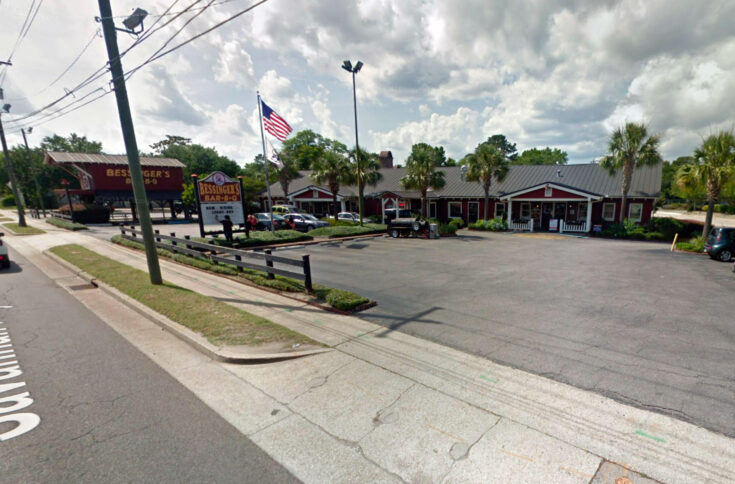
You’ll want to visit Bessinger’s Bar-Be-Que because it offers one of the clearest introductions to the mustard-sauce and hash traditions that have long defined barbecue in this part of South Carolina. The Bessinger family’s barbecue story reaches back to Joseph “Big Joe” Bessinger and the mustard-based sauce his children carried into restaurants of their own.
In Charleston, brothers Thomas and Melvin Bessinger opened a restaurant together on Savannah Highway in the early 1960s. Thomas eventually kept the West Ashley restaurant while Melvin went on to establish the Mount Pleasant restaurant that bears his name. Today, Thomas’s sons Tommy and Michael continue the family business at Bessinger’s.
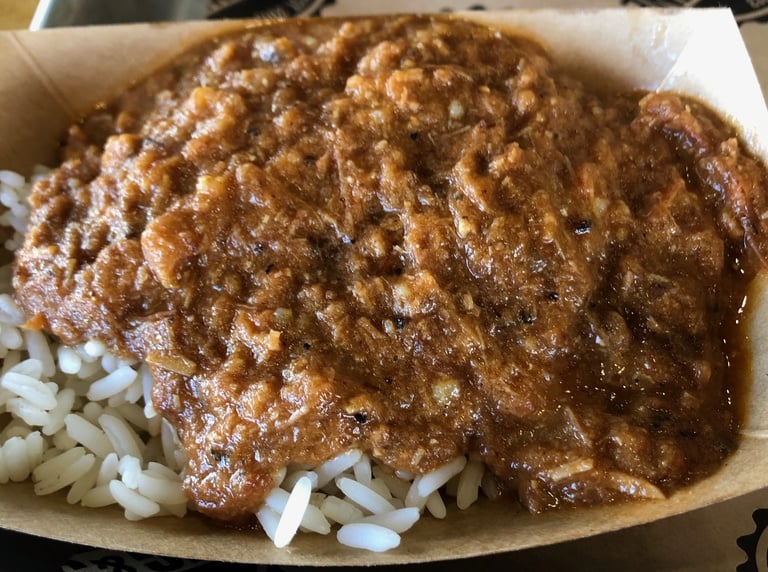
The history matters, but the cooking is why Bessinger’s still belongs in this guide. Pork shoulders are smoked for hours over hickory and oak, then served with the family’s mustard-based sauces. Be sure to try the hash over rice, and the oversized onion rings are another longtime favorite. The South Carolina Barbeque Association has recognized Bessinger’s as “100 Mile BBQ.”
However, you might choose Melvin’s instead if you want to experience another branch of the same Bessinger family tradition. The two restaurants share deep roots, but each has developed its own identity over the decades.
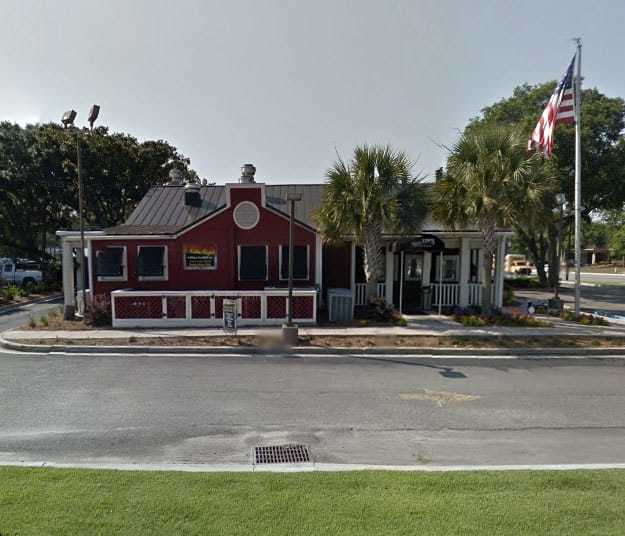
You’ll want to visit Melvin’s Bar-B-Que because it offers another branch of the Bessinger family tradition, with mustard-based sauce, hash, and barbecue smoked over wood. Melvin Bessinger and his brother Thomas operated the Savannah Highway restaurant together for years before Melvin opened his own restaurant in Mount Pleasant in 1982.
Today, Melvin’s is run by Melvin’s son David Bessinger, who brought the cooking back to all-wood pits and expanded the menu while preserving the family’s Golden Secret mustard sauce. The South Carolina Barbeque Association has recognized Melvin’s as “100 Mile BBQ.”
Pulled pork, ribs, brisket, chicken, and turkey are available, but don’t overlook the things that make Melvin’s particularly South Carolinian: mustard sauce and hash over rice. The oversized onion rings have become a signature of their own, and the burgers have a loyal following as well. If you want to bring a little of Melvin’s home, we also have their collard greens recipe.
However, you might not choose Melvin’s if you’re looking for one of Charleston’s newer, chef-driven interpretations of barbecue. The appeal here is almost the opposite: a family tradition that has evolved over generations without losing its South Carolina roots.
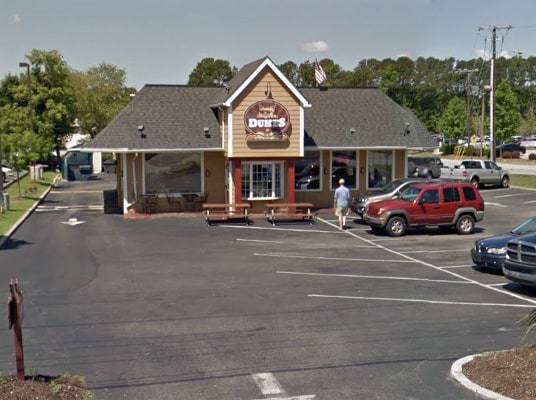
You’ll want to visit Dukes Barbecue on James Island because it represents one of South Carolina’s older barbecue traditions in a form that is getting harder to find: the all-you-can-eat barbecue buffet.
The Dukes name reaches back to Earl Dukes, who opened his Orangeburg restaurant in the 1950s. Over time, relatives and others connected to the family opened independent Dukes restaurants around the state. They share a common barbecue heritage, but they are not a chain or franchise.
The buffet is the reason to come: chopped pork, hash and rice, fried chicken, vegetables, and other old-school Southern sides. Charleston City Paper named Dukes Best Buffet again in its 2026 Best of Charleston awards.
Dukes also has its own take on South Carolina mustard sauce. The reddish-orange sauce is commonly called “rust gravy,” and if you’ve never tried South Carolina hash, this is a good place to start. We also have our Dukes-style BBQ hash recipe if you want to make it at home.
However, you might not choose Dukes if wood-fired barbecue is central to the experience you want. The draw here is the buffet, hash, sauce, and the older Dukes tradition rather than the wood-fired pit experience found at several other restaurants in this guide.
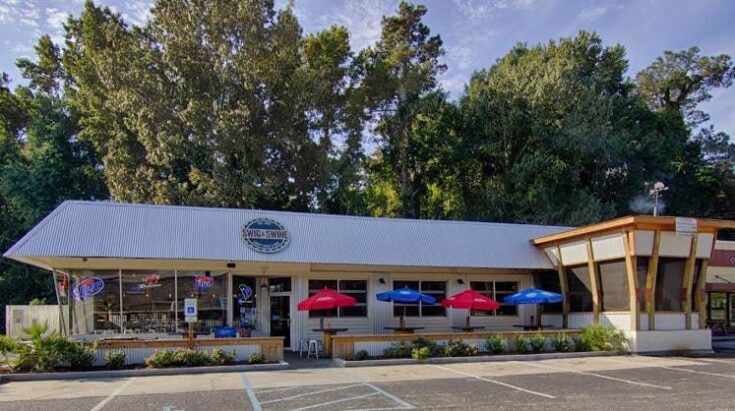
You’ll want to visit Swig & Swine because pitmaster and chef Anthony DiBernardo combines an all-wood approach to barbecue with the broader menu you’d expect from someone with a long restaurant-kitchen background. The result is a place where pulled pork, brisket, ribs, chicken, sausage, and other smoked meats share the menu with South Carolina standards such as hash.
The original West Ashley restaurant on Savannah Highway is the most convenient Swig & Swine location for many Charleston visitors. DiBernardo has since expanded the concept around the Lowcountry and elsewhere in South Carolina, but the focus on cooking with wood remains central to Swig & Swine.
On Thursdays, Swig & Swine goes further into South Carolina barbecue tradition with whole hog cooked over hardwood. The restaurant also serves several styles of barbecue sauce, including its mustard sauce. If you want to try making it yourself, we have Swig & Swine’s mustard-based BBQ sauce recipe, along with DiBernardo’s banana pudding recipe.
However, you might not choose Swig & Swine if what you want is an old-school South Carolina barbecue restaurant or buffet. This is a more contemporary, chef-driven take on barbecue, even though some of the cooking and dishes are firmly rooted in South Carolina tradition.
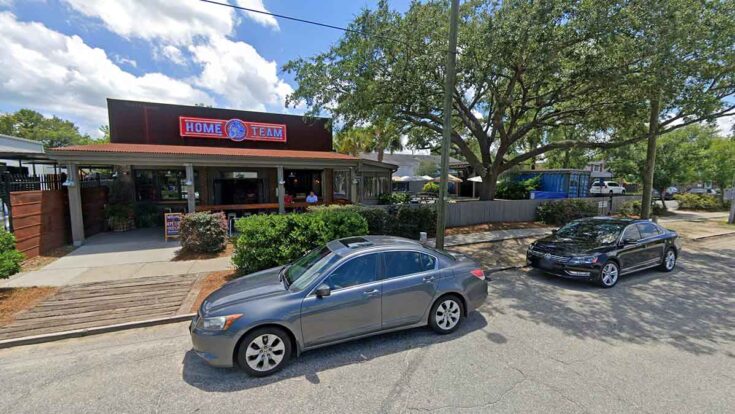
You’ll want to visit Home Team BBQ because it combines serious barbecue with the kind of lively, casual atmosphere that works just as well for families, groups, and a night out. Founder Aaron Siegel came from a fine-dining background, and Home Team has always leaned into a more flexible, multi-regional approach rather than limiting itself to one barbecue tradition.
The Downtown Charleston location is especially useful for visitors because it pairs barbecue with a large bar, cocktails, live music, and a big courtyard. Home Team now has several locations, but the Downtown restaurant remains one of the easiest ways to experience the concept in the city itself.
The smoked chicken wings are the signature order for good reason: they’re dry-rubbed and served with Alabama white sauce. The frozen Gamechanger cocktail has become almost as closely associated with Home Team as the wings. Beyond that, you’ll find pulled pork, brisket, ribs, turkey, chicken, and other Southern-barbecue staples.
However, you might not choose Home Team if you’re looking for the most traditional South Carolina barbecue experience. Its strength is the opposite: a broader, more contemporary barbecue menu with strong food, drinks, and atmosphere rather than a narrow focus on mustard sauce, hash, or whole hog.
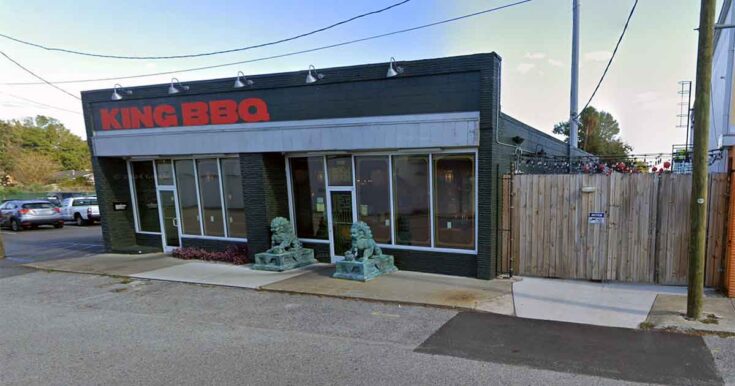
You’ll want to visit King BBQ because it approaches barbecue from a direction unlike anywhere else in this guide. Chef Shuai Wang and Corrie Wang, the team behind Jackrabbit Filly, built King around the Chinese barbecue Wang grew up eating in Flushing, New York, then brought Southern smoke into the mix. The restaurant describes the idea simply as “Chinatown BBQ made with Southern Smoke.”
That means roasted and smoked meats such as crispy duck, chopped pork, and char siu-style ribs rather than a conventional plate of pulled pork with three sides. You’ll also find those meats worked into dishes such as noodle bowls, with Chinese seasonings and sauces alongside Southern barbecue influences. Bon Appétit named King one of its Best New Restaurants of 2024.
However, you might not choose King BBQ if you came specifically for mustard-sauced pork, hash, or another familiar South Carolina barbecue plate. King’s appeal is the meeting of Chinese barbecue traditions and Southern smoke, not an attempt to reproduce an old-school SC barbecue joint.
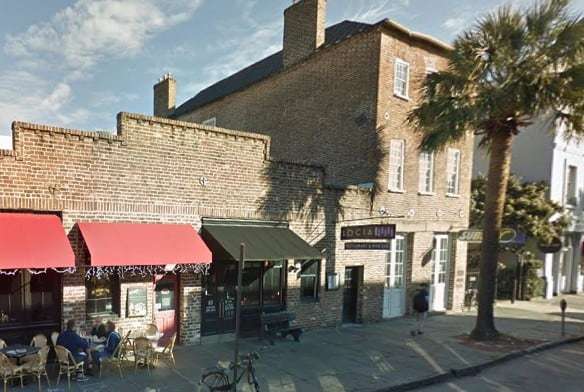
You’ll want to visit Poogan’s Smokehouse because it offers a different kind of Charleston barbecue experience: a full-service Southern restaurant in the historic district where barbecue shares the menu with cocktails, whiskey, and a broader range of dishes.
Poogan’s Smokehouse opened on East Bay Street in 2015 as a sister concept to Poogan’s Porch, the longtime Charleston restaurant on Queen Street. The Smokehouse keeps the Southern focus but builds its menu around slow-smoked barbecue.
This is also one of the better fits in the guide if your group wants more than a traditional barbecue-counter experience. Smoked-meat plates and sandwiches share the menu with a broader range of Southern dishes, cocktails, and whiskey.
However, you might not choose Poogan’s Smokehouse if your priority is a deeply traditional South Carolina barbecue experience or a pitmaster-driven destination. Its strength is convenience, table service, and a broader Southern smokehouse menu in the heart of downtown Charleston.
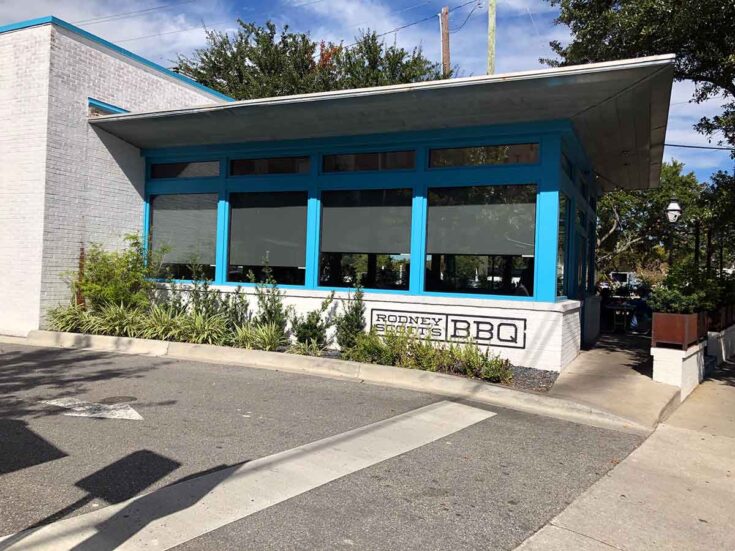
Rodney Scott’s BBQ remains in this guide because Rodney Scott played an important role in bringing traditional South Carolina whole-hog barbecue to a much wider audience. The Charleston restaurant closed on May 3, 2026, and remains closed until further notice. No reopening date has been announced.
Long before the Charleston restaurant opened, Scott learned to cook whole hog in Hemingway, South Carolina. His method is rooted in an old Carolina tradition: hardwood is burned down to coals, those embers are shoveled beneath whole hogs during the long cook, and the pork is finished with a vinegar-and-pepper sauce. Scott won the James Beard Award for Best Chef: Southeast in 2018, and his work later reached an even wider audience through Chef’s Table: BBQ. We also have Rodney Scott’s BBQ sauce recipe if you want to make a version of his vinegar-pepper sauce at home.
That combination of whole hog, wood coals, and vinegar-pepper sauce is why Rodney’s Charleston restaurant mattered here. It offered something quite different from the mustard-sauce tradition represented by Bessinger’s and Melvin’s.
While Rodney Scott’s BBQ is closed, don’t plan a meal around this location. If wood-cooked whole hog brought you to this entry, Palmira is the current Charleston-area option in this guide to consider.
Looking for more options? Browse all Charleston-area barbecue restaurants in our complete directory.
Worth the Drive from Charleston
A few barbecue stops beyond the city are worth working into the trip if you have the time. Some are easy detours within the greater Charleston area; others are the kind of place you visit because the barbecue itself is the destination.
Music Man’s Bar-B-Que — Moncks Corner
Music Man’s is worth the drive to Moncks Corner because the barbecue is only part of the reason to go. Founded by Gene and Esther Cribb, the longtime local favorite still serves whole-hog pork, but the real appeal is the kind of full South Carolina barbecue spread that has become harder to find around Charleston.
Start with the pork and hash and rice, then work your way through the buffet. Fried chicken, macaroni and cheese, vegetables, chicken and dumplings, catfish stew, and other country dishes rotate through the lineup, with bread pudding, banana pudding, and other desserts waiting at the end. Mustard and vinegar-pepper sauces both have a place on the table.
This is a different proposition from the pilgrimage to Scott’s in Hemingway. At Scott’s, the extraordinary wood-cooked whole hog is the reason for the trip. At Music Man’s, the draw is the whole meal: barbecue, hash, sides, country cooking, and dessert served in the kind of small-town buffet restaurant that remains an important part of South Carolina barbecue culture.
Scott’s Bar-B-Que — Hemingway
Scott’s Bar-B-Que is a different proposition. This is a considerably longer trip — more barbecue pilgrimage than quick detour. But if you want to experience one of South Carolina’s most important surviving whole-hog barbecue traditions, Hemingway can justify the drive.
The Scott family still cooks whole hogs over wood embers, using a burn barrel and open pits before finishing the pork with their peppery vinegar sauce. This is also the family barbecue tradition in which Rodney Scott learned his craft before eventually leaving Hemingway to build his own restaurant career.
Scott’s has particular significance for Destination BBQ, too: it was the first restaurant we visited when we began documenting South Carolina barbecue in 2012. More than a decade later, it remains the sort of place that helps explain what old-school Pee Dee whole-hog barbecue actually means.
How Charleston Became a Barbecue Town
Charleston has long had barbecue restaurants tied to South Carolina traditions, including the mustard-sauce and hash heritage represented by places like Bessinger’s, Melvin’s, and Dukes. But when Destination BBQ began covering the state’s barbecue in 2012, Charleston had a much smaller barbecue scene than it does today.
That began changing quickly. In 2016, The Washington Post barbecue columnist Jim Shahin captured the shift in an article titled “Today’s South Carolina barbecue is chef-inspired, upscale — and the future.” He opened with a memorable line: “I have seen the future of barbecue, and it is Charleston, South Carolina.” His point was that Charleston, which had not generally been regarded as one of the state’s major barbecue destinations, was developing a new generation of barbecue restaurants.
That evolution has continued. Charleston’s older mustard-sauce, hash, and buffet traditions never disappeared; instead, they became part of a much broader barbecue landscape shaped by new pitmasters, techniques, and cultural influences. The restaurants in the main Charleston list reflect how much the city’s barbecue identity has expanded while still retaining the South Carolina traditions that were here before the national attention arrived.
About the author
James Roller has documented South Carolina barbecue for Destination BBQ since 2012 and authored the SC BBQ cookbook Going Whole Hog. These guides draw on years of visiting and documenting barbecue restaurants across the state, along with current restaurant information, historical research, and published sources.
Corrections and editorial standards
- Restaurant details change. Spotted something wrong or outdated? Send a correction here: Corrections & Updates
- How we handle sources, fact-checking, and updates: Editorial Standards
- Media or general notes: Email the publisher
I have read this article for probably the , well more than one, for sure. Have had the privilege to eat at all BBQ restaurants except Lewis BBQ. They are all wonderful but Dukes on Folly is our repeat mainly because the wife grew up in Orangeburg and the grandson (13) loves the Mac and cheese with fried chicken on the side.
This time ,Thanksgiving 2023, I found the hot vinegar and pepper in a one of the many squeezers. Oh my. That will set your taste buds to another place.
On our next visit, I plan to drag everyone back to Rodney Scott’s for a feast.
@James Garrette Croxton, thanks so much for sharing! Love the vinegar/pepper suggestion and I’m sure Rodney’s won’t disappoint. Enjoy!
Thank you for another outstanding article. You are absolutely right when you say there are no number 1’s except for the people who enjoy bar- b-q.
What a great list.
@Jay Thomas, thanks for the kind words. People always ask me what the best BBQ is in a given area, and the most truthful answer is there isn’t one that is objectively best because taste is by nature subjective. What is true is that there great choices for whatever your personal preferences are and that is the best way to provide people direction to an enjoyable meal.