How Many Ribs Are in a Rack?
See how many ribs are in a rack by cut, why pork and beef differ, and when the number can mislead you
“Rack of ribs” sounds like it should mean one thing. It doesn’t.
For pork ribs, a full rack is often around 10 to 13 rib bones. That is the answer most people expect, and it works as a starting point for many store-bought pork racks. But the cut still matters.
Baby backs, spare ribs, and St. Louis ribs are related pork cuts, not identical ones. Beef ribs are a different question altogether. A full section of beef back ribs is usually 7 bones, while the big beef plate ribs many folks call dino ribs are usually sold as a 3-bone plate.
Start with the label and the cut. The number of ribs can help confirm what you have, but it does not, by itself, tell you how many people the ribs will feed.
Quick answer: how many ribs are in a rack?
Pork is what most people picture when they hear “rack of ribs,” so that is the place to start.
Ribs by cut
- Most pork racks: Usually about 10 to 13 ribs in stores and on BBQ menus.
- Baby back / pork loin back ribs: Often 10 to 13 bones in stores; USDA AMS purchase specifications set a minimum of 8.
- Pork spare ribs: At least 11 ribs under USDA AMS purchase specifications; often in the low teens at the store.
- St. Louis ribs: Trimmed spare ribs; Texas A&M says 12 to 15 ribs are typical for St. Louis-style spareribs, but store racks vary with the original rack and trim.
- Beef back ribs: A full section is usually 7 bones.
- Beef plate short ribs / dino ribs: Usually a 3-bone plate from ribs 6, 7, and 8.
That answer is useful, but don’t treat it like a promise. How many bones are in a rack of ribs depends on the cut, the trim, and whether you are looking at pork or beef. USDA purchase specifications set minimums for certain cuts, grocery-store racks often land higher, and some intact sections can run higher still.
That is why “a rack has 12 ribs” is too neat. Sometimes it will. Sometimes it will not.
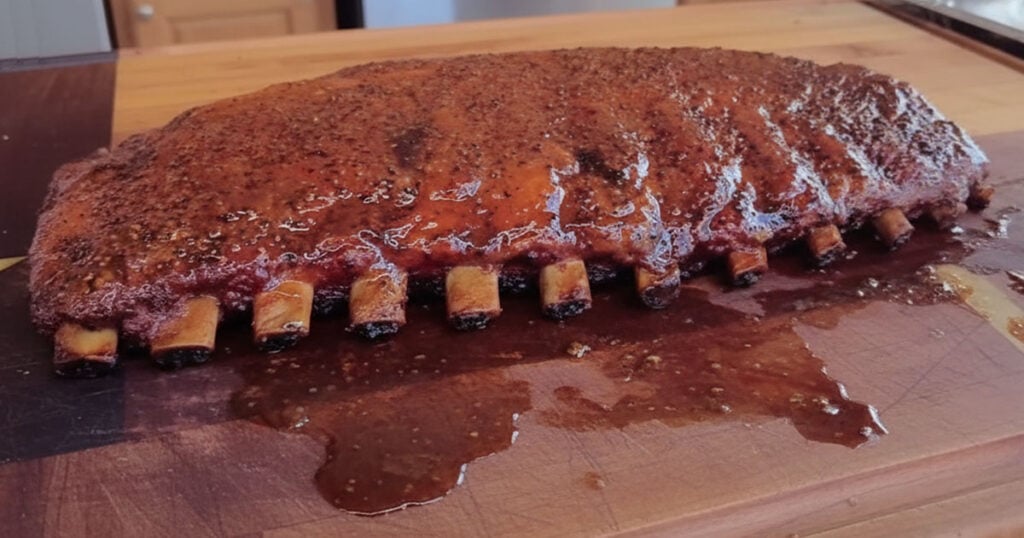
What a rack of ribs means
“Rack” sounds more exact than it really is. In practice, it means a connected section of ribs, not one guaranteed number.
For pork ribs, rack and slab often mean the same basic thing. A grocery store may say rack. A BBQ cook may say slab. A restaurant may say full rack or half rack. Most of the time, they are talking about a connected section of ribs, not individual bones or small cut pieces.
The cut name comes first. Baby backs are not the same as spare ribs. St. Louis ribs are trimmed spare ribs. Beef back ribs are not dino ribs.
Same word. Different ribs.
How many ribs are in each cut?
Pork is where the 10-to-13 answer usually fits. Still, baby backs, spare ribs, and St. Louis ribs are not exactly the same thing. Beef ribs have to be counted separately, and a few “rib” labels should not be counted like racks at all.
The table below starts with how many ribs to expect, then helps you read the label before you count on that rack for dinner.
| Rib type | How many ribs | Label may say | Usually sold as | What it means |
|---|---|---|---|---|
| Baby back / pork loin back ribs | Often 10 to 13 | Baby back ribs, loin back ribs, pork back ribs | Full rack, half rack, or multi-rack vacuum-sealed pack | This is the pork rack most people picture. Count the bones if the rack looks short. |
| Pork spare ribs | At least 11; often low teens | Spareribs, side ribs | Whole slab or rack, sometimes untrimmed | Larger and flatter than baby backs. The trim may still include the sternum and cartilage. |
| St. Louis ribs | Often 12 to 15; varies with trim | St. Louis style, side ribs center-cut | Rectangular rack or slab | These are trimmed spare ribs, not baby backs. A half rack may not serve like a half rack of baby backs. |
| Beef back ribs | 7 in a full section | Beef back ribs, beef ribs | Whole rack or partial section | Not dino ribs. The ribeye has already been removed, so most meat sits between the bones, not thick on top. |
| Beef plate short ribs / dino ribs | Usually 3 | Plate short ribs, dino ribs, short ribs | 3-bone plate | Count these by the bone. One of these bones can be much larger than anything on a pork rack. |
| Beef chuck short ribs | Often 4; can be 2 to 5 | Chuck short ribs, English-cut short ribs, bone-in short ribs | Slab, portions, or cut ribs | Same short-rib family, but not the same cut as plate ribs. Check the label closely. |
| Half rack of pork ribs | Often 5 to 7 | Half rack, half slab | Restaurant portion or split package | Usually about half, but not always exactly 6 bones. |
| Rib tips | Not a rack | Rib tips | Pieces or strips | These come from spare rib trimming and should not be counted like rack ribs. |
| Riblets | Not a full rack | Riblets | Small cut pieces | These are small pieces, not individual full rib bones from a rack. |
| Flanken-style ribs | Not a rack | Flanken, cross-cut short ribs, Korean short ribs | Thin strips cut across the bones | This is a cutting style, not a full connected rack. Use piece count or package weight instead. |
| Country-style ribs | Not rack ribs | Country-style ribs | Slabs or individual pieces | These are not cut from the rib cage like rack ribs. Plan by piece or weight. |
Use the table to match the label to the cut. The notes below explain why the numbers shift from one cut to another.
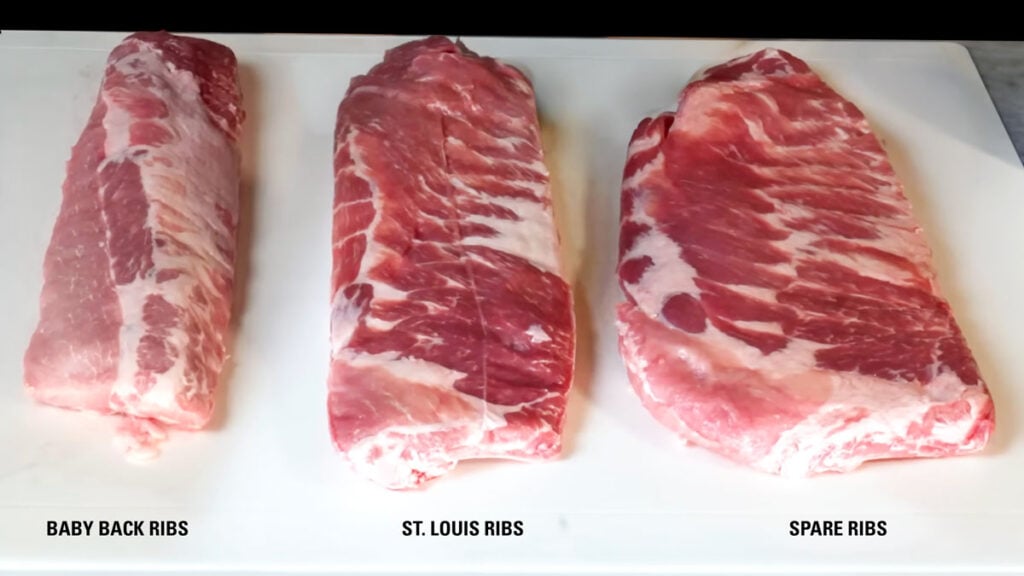
Baby back ribs and pork loin back ribs
Baby back ribs may also be labeled pork loin back ribs. Here, the two names refer to the same basic cut.
USDA AMS purchase specifications set the minimum at 8 ribs for pork loin back ribs, but store-bought racks often have 10 to 13 ribs. Texas A&M Meat Science notes that a whole, intact section may have more.
That is why the 10-to-13 answer is useful, but not absolute. If your baby back rack looks short, count the bones before you assume what you have.
Spare ribs
Spare ribs come from lower on the hog, along the side and belly. They are bigger, flatter, and usually less curved than baby backs.
USDA AMS purchase specifications require spare ribs to have at least 11 ribs. At the store, they often land in the low teens.
So no, pork spare ribs do not usually have only 7 to 9 bones. That is the wrong number to carry into the meat case.
St. Louis ribs
St. Louis ribs are trimmed spare ribs. That is the cleanest way to think about them.
The trim removes the sternum, cartilage, and lower flap area to make a neater rectangular rack. It does not turn them into baby backs. Texas A&M Meat Science says 12 to 15 ribs are typical for St. Louis-style spareribs, but the number still varies with the original rack and how it was trimmed.
If the label says St. Louis, think “trimmed spare ribs.”
Beef rib racks are counted differently
Beef ribs are where a lot of people get turned around. Some of the words overlap with pork, but the cuts are different.
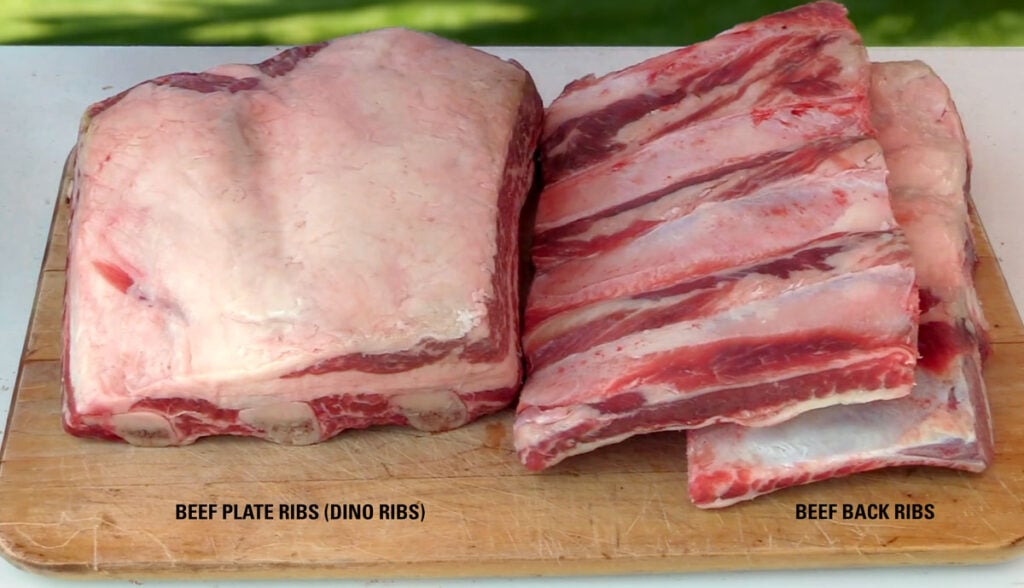
If you find the label on beef ribs confusing, start with beef back ribs vs dino ribs.
Beef back ribs
A full beef back rib section is usually 7 bones. USDA AMS beef specifications define beef back ribs as the intact portion of seven ribs, and Texas A&M Meat Science explains that they come from ribs 6 through 12.
These are not dino ribs.
Beef back ribs can look disappointing if you expected a thick slab of meat on top. The ribeye has already been removed, so most of the meat you get is between the bones. That is not a defect. That is how the cut works.
Beef plate ribs and dino ribs
When BBQ folks say dino ribs, they usually mean beef plate short ribs.
These are the big 3-bone plates. USDA AMS 123A plate short ribs come from ribs 6, 7, and 8, and Texas A&M describes them as 3-bone beef ribs for barbecue.
Do not count them the same way you count pork ribs. Count them by the bone and understand that one bone may carry a lot of meat.
Beef chuck short ribs
Chuck short ribs are still short ribs, but they are not the same as plate ribs.
You may see them as 4-bone slabs, cut portions, or individual English-cut short ribs. The USDA AMS beef specifications allow short-rib items to include 2 to 5 ribs, so the label matters. If the package just says short ribs, look closer before assuming you have dino ribs.
Full rack, half rack, slab, and cheater rack
These terms show up on menus and butcher labels all the time. They are useful, but they are not as exact as they sound.
A full rack usually means the whole rack or slab as sold or served. For pork ribs, a slab often means the same basic thing as a rack.
A half rack usually means about half of a full pork rack, often 5 to 7 bones. Six is common, especially on restaurant menus, but it is not guaranteed. A half rack of baby backs and a half rack of St. Louis ribs may not feel the same on the plate.
A cheater rack is BBQ or butcher slang for a pork rack with fewer than 10 bones. The Virtual Weber Bullet uses that term in its pork rib selection guidance. It is not an official USDA term.
Also, do not assume you were shortchanged just because a rack has fewer bones than expected. If the ribs were sold by weight, the price may still match what you bought. The point is to know what you are holding before you count on it for dinner.
Rib tips, riblets, flanken ribs, and country-style ribs are not racks
These labels have “rib” in the name, but they should not be treated like standard racks.
Rib tips come from the lower portion trimmed away when spare ribs are cut into St. Louis ribs. They are pieces or strips, not a connected rack.
Riblets are small cut pieces. They are not the same thing as individual full rib bones from a rack.
Flanken-style ribs are beef short ribs cut thin across the bones. The Beef Checkoff describes flanken-style ribs this way, and that crosscut shape is the giveaway.
Country-style ribs are not rack ribs. The National Pork Board lists country-style ribs separately from back ribs, spare ribs, and St. Louis ribs because they come from where the loin and shoulder meet. Plan those by piece or by weight.
What to check on the package before you buy ribs
Before you start figuring out what to buy or how many people the ribs might feed, look at the actual package. The label usually tells you more than the total weight alone.
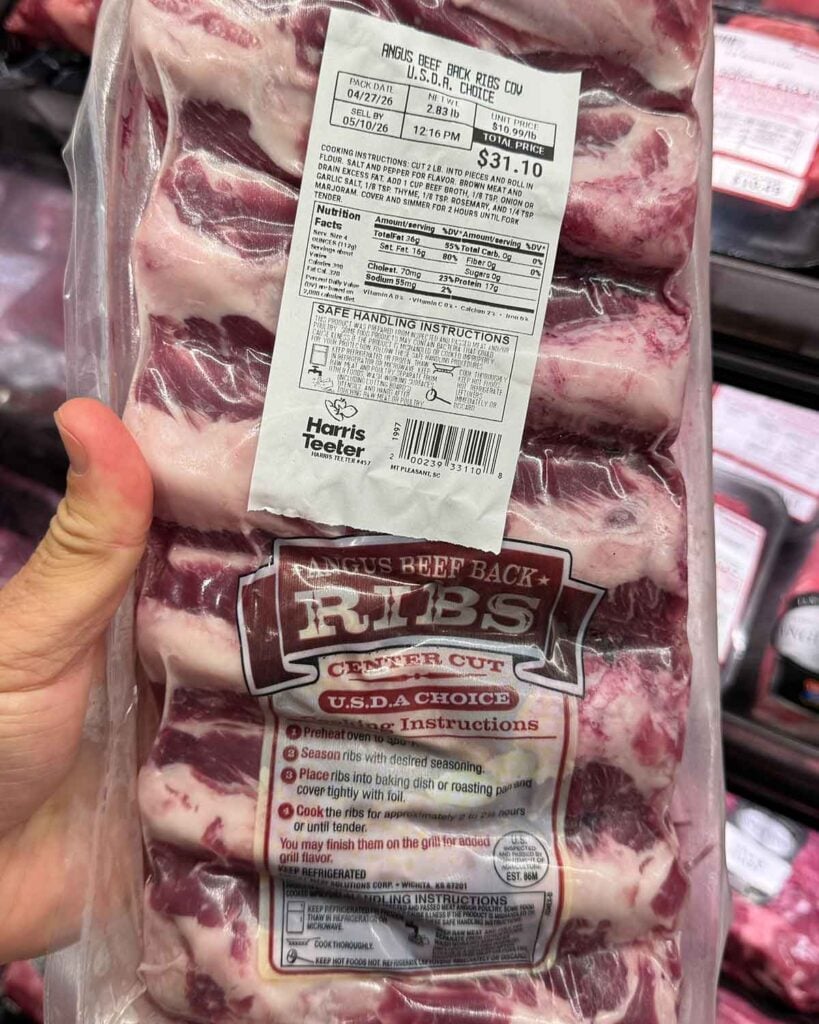
What to check on the rib package
- Cut name: Baby back, loin back, spare ribs, St. Louis, beef back ribs, plate short ribs, dino ribs, or chuck short ribs.
- Pork or beef: Do not count beef ribs the same way you count pork ribs.
- How many racks are in the pack: Big warehouse packs may hold more than one rack or slab.
- How the ribs are packed: Full rack, half rack, split rack, pieces, strips, or cut portions.
- Visible bones: Count the bone ends if you can see them through the package, especially if the rack looks short.
- Weight: Useful for shopping, but not a substitute for knowing the cut.
- Rib labels that don’t mean a rack: Rib tips, riblets, flanken, and country-style ribs use the word “rib,” but they are not standard BBQ racks.
If you’re trying to decide what to buy at the store, check out buying ribs for a crowd. That page covers grocery packs, butcher orders, and big warehouse packs, where the package in front of you may not match the number of racks you planned to buy.
Does the number of ribs tell you how many people they will feed?
No. Not by itself.
The number of ribs helps you understand what kind of rack you have. It does not tell you how much meat everyone will eat. That depends on the cut, how meaty the ribs are, whether you are feeding adults or kids, what sides you are serving, whether ribs are the main meat, and whether leftovers are welcome.
A 10-bone rack of baby backs will not feed the same number of people as a 10-bone rack of spare ribs. The bones are different. The meat sits differently. People also tend to eat them differently.
Don’t plan as if every pork rack will be one of the biggest ones. A 13-bone pork rack can happen, but that does not mean every rack in your cart will look that way. If you are feeding people, a little buffer is usually easier to live with than running short.
Once you know what kind of ribs you have, use our Rib Calculator to figure out how many racks, packages, ribs, and pounds to buy. If you are trying to understand portion sizes first, start with ribs per person. If you want examples for groups like 10, 20, 25, or 50 people, use how many racks of ribs to buy.
Leftover ribs are a better problem than disappointed guests. If you end up with extras, here’s how to reheat ribs without drying them out.
FAQs about ribs in a rack
These are the questions that usually come up once you start comparing the label, the menu, and the ribs in front of you.
No. Twelve is a common assumption for many pork racks, but it is not a promise. Baby backs and spare ribs often land around 10 to 13 bones, while St. Louis ribs vary with the trim. Beef ribs use different numbers altogether. Read the cut name first, then count what you can see.
Start with the cut name, not the weight. “Ribs” could mean baby backs, spare ribs, St. Louis ribs, beef back ribs, short ribs, rib tips, or cut pieces. Once you know the cut, check whether the package holds a full rack, half rack, multiple racks, or portions.
Yes. The number tells you what kind of rack you have, not how much meat each person gets. A 10-bone baby back rack and a 10-bone spare rib rack do not eat the same way. Meatiness, bone size, sides, kids, and whether ribs are the main meat all change how many people the ribs will feed.
The package is not the same thing as a rack. It may hold one rack, several racks, or cut portions. Grocery and warehouse packs may list one total weight for everything inside. Count how many racks are actually in the package before you compare it with a recipe or decide whether you bought enough.
No. Those labels include “rib,” but they are not standard full racks. Rib tips and riblets are pieces, flanken ribs are thin crosscut short ribs, and country-style ribs are a different pork cut. Plan those by piece or package weight instead of trying to compare them with a full rack.
Corrections and editorial standards
- Spotted something wrong or outdated? Send a correction here: Corrections & Updates
- How we handle sources, testing, and updates: Editorial Standards
- Media or general notes: Email the publisher
Sources
The rib counts and cut descriptions in this guide are based on USDA AMS meat-purchase specifications, Texas A&M Meat Science cut references, and established pork, beef, and BBQ sources. USDA AMS specifications define purchase standards, not a guarantee that every grocery-store rack will carry the same number of bones.
- USDA AMS Institutional Meat Purchase Specifications — official hub for current and draft IMPS meat-cut documents
- USDA AMS draft Fresh Pork Series 400 document — pork loin back ribs, spare ribs, and St. Louis-style sparerib definitions
- USDA AMS draft Fresh Beef Series 100 document — beef back ribs, plate short ribs, and chuck short rib definitions
- Texas A&M Meat Science: Pork Loin Back Ribs — plain-English reference for baby back / pork loin back ribs
- Texas A&M Meat Science: St. Louis-Style Spareribs — reference for trimmed spare ribs and typical rib count
- Texas A&M Meat Science: Beef Back Ribs and Beef Plate Short Ribs — references for beef back ribs and 3-bone plate ribs
- National Pork Board: Pork Ribs — pork rib cut descriptions, including country-style ribs
- Beef Checkoff: Plate Short Ribs and Flanken-Style Short Ribs — beef short rib cut and flanken-style references
- The Virtual Weber Bullet: Pork Rib Selection — BBQ usage note for pork rib selection and “cheater rack” language
We use official cut references where they apply, then note where real-world BBQ and meat-counter language can vary.
About the author
James Roller documents South Carolina barbecue for Destination BBQ and authored the SC BBQ cookbook Going Whole Hog. His BBQ guides focus on the practical questions cooks run into at the meat case, including how to read rib labels, compare pork and beef cuts, and buy enough without making the cook more complicated than it needs to be.