How Many Ribs Per Person?
Plan ribs per person by rib type, who you’re feeding, and whether half a rack is really enough
The usual answer is four to six bones per person. It’s a decent starting point. It’s also the kind of answer that gets you in trouble at a cookout when the ribs run out an hour in and people are still hungry.
Which ribs you’re buying matters. So does whether you’re feeding teenagers or young kids, and whether ribs are carrying the whole meal or sharing space with pulled pork and sides. Start with the rib type, then adjust for kids, teens, sides, and what else is on the table.
These numbers are in bones rather than pounds, because bones are how ribs get eaten and how people think about them at the table. When you’re ready to turn a bone count into racks to buy, the Rib Calculator handles that step.
Quick answer: ribs per person by type
Start here if you just need the fast answer. These numbers are for adults eating ribs as the main part of the meal unless a line says otherwise.
How many ribs to serve
- Baby back ribs: about 5 to 6 bones per adult as a main dish. Six is the safer number.
- St. Louis ribs: about 4 to 5 bones per adult as a main dish. Use 5 for rib-only meals, light sides, or big eaters.
- Spare ribs: about 4 to 5 bones per adult as a main dish. Tips and trim can stretch portions, but don’t plan too tightly.
- Beef back ribs: about 3 to 4 bones per adult as a main dish. Use 4 if the racks look skimpy or beef back ribs are the main event.
- Beef plate ribs (dino ribs): about 1 bone per adult as a main dish, unless you plan to slice and share them.
- Teens: count them as adults.
- Kids under 12: often count around half an adult portion, but round up for older kids and known rib eaters.
Use the lower end when ribs are part of a full meal with other meats and heavy sides. Use the higher end when ribs are the reason people are filling their plates or you’d rather have leftovers than risk running short.
This tells you what people are likely to eat. Before you shop, you still have to turn that into racks, store packs, or beef plate bones.
Ribs per person by type and serving style
Here’s how the numbers break down by type of rib and how you plan to serve them. Counts are rib bones unless noted.
| Rib type | Main dish per adult | One of several meats per adult | Appetizer per adult | Kid under 12, main dish | What to remember |
|---|---|---|---|---|---|
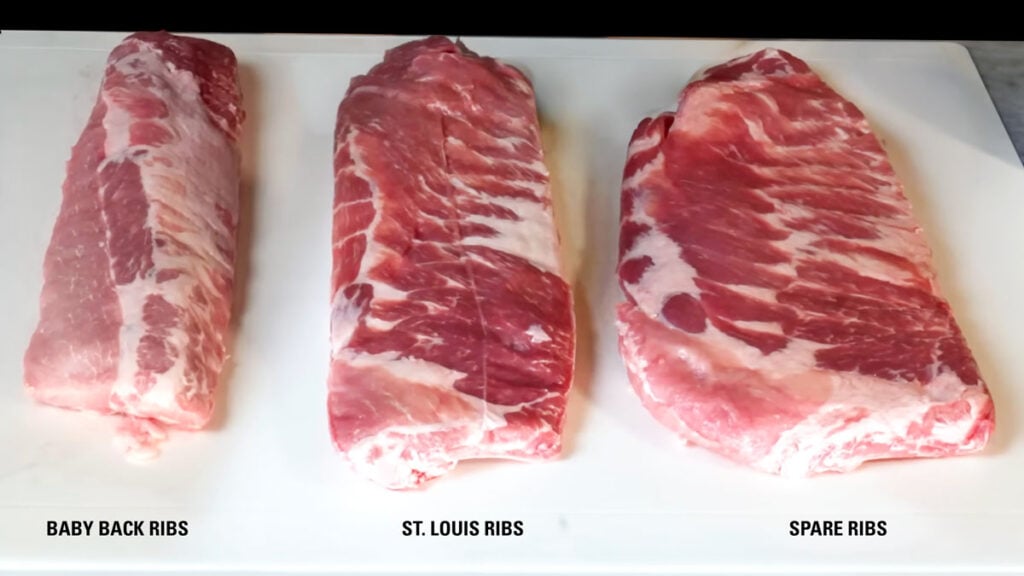
| Baby back ribs | About 5 to 6 bones; 6 is safer | About 3 bones | About 2 bones | About 2 to 3 bones | Smaller, leaner pork ribs. The half-rack shortcut usually fits best here. |
| St. Louis ribs | About 4 to 5 bones; use 5 for hungry rib-only meals | About 2 to 3 bones | About 2 bones | About 2 bones | Trimmed spare ribs with a cleaner, more uniform shape. |
| Spare ribs | About 4 to 5 bones; tips can stretch portions, but don’t plan too tightly | About 2 to 3 bones | About 2 bones | About 1 to 2 bones | Fuller belly-side racks. Tips and trim affect how portions feel on the plate. |
| Beef back ribs | About 3 to 4 bones; use 4 when racks look skimpy or beef back ribs are the main event | About 2 bones | About 1 to 2 bones | About 1 bone | Rack-style beef ribs with most of the meat between the bones. |
| Beef plate ribs (dino ribs) | About 1 bone | About 1 bone for 2 adults | Sliced portions, or about 1 bone for 3 adults | Case by case | Plan these separately. One large bone can be a full meal. |
Planning estimates, not official serving rules. I start with bone count because ribs are served and eaten bone by bone, then round toward not running short for self-serve meals, teens, light sides, and rib-only dinners.
Why bones work better than pounds for ribs
When you’re planning how many ribs to buy, the instinct is to think in pounds. The problem is that pounds are a tricky unit for ribs because ribs include bone, and different cuts have very different bone-to-meat ratios. A pound of baby back ribs is not the same as a pound of beef plate ribs. Not even close. Even within the same kind of ribs, racks vary enough that raw weight at the store doesn’t translate cleanly to plates at the table.
Bones are a better starting point because ribs are eaten bone by bone. Someone at a cookout grabs three bones or five bones off the platter, not a calculated weight. When you plan in bone count, you’re working in the same unit your guests will eat.
Once you have a bones-per-person number, racks are how you’ll buy most pork ribs. Pounds are useful when you’re standing in the store comparing packages, but that’s a later step.
That is also why the Rib Calculator starts with rib type and serving style before turning the answer into racks and raw weight.
How to choose the right rib-per-person number
The table gives you the range. The real decision is whether this meal calls for the low end or the safer end.
Before you choose your rib count
- Pick the type of rib. Baby back, St. Louis, spare, beef back, or beef plate. A baby back rack and a dino rib do not feed people the same way.
- Decide how ribs fit into the meal. Are ribs just an appetizer, one of several meats, or the main dish? That one decision moves the per-person number more than anything else.
- Count your guests honestly. Adults, teens counted as adults, and kids under 12 counted separately from adults.
- Choose the lower or higher end. Go lower for heavy sides, other meats, plated portions, and light eaters. Go higher for ribs as the main event, teens, big eaters, self-serve meals, light sides, or when leftovers are welcome.
- Turn that into what you need to buy. Use the Rib Calculator for exact racks, beef plate bones, raw weight, and a leftovers cushion.
Baby back ribs per person
Baby back ribs are smaller and leaner than spare ribs, which is part of why they’re the most popular rack at the grocery store. The National Pork Board puts them at the blade and center section of the pork loin.
For a main dish, plan about 5 to 6 bones per adult. Six is the safer number, especially at a self-serve cookout or when ribs are the centerpiece.
If baby backs are on the table alongside other meats, about 3 bones per adult is enough. For an appetizer, plan about 2.
For kids under 12, plan 2 to 3 bones, then round up for older kids, athletic kids, or any child you already know can put away ribs.
St. Louis ribs and spare ribs per person
St. Louis ribs are spare ribs with the lower cartilage and sternum trimmed off, leaving a cleaner rectangular rack. Same cut, tidier shape. Full spare ribs come from the belly side of the hog and run longer and meatier than baby backs. The USDA pork cut specifications cover the distinction in detail if you want the full breakdown.
For a main dish, plan about 4 to 5 bones per adult for both types. Use 4 when ribs are part of a spread with other meats and heavy sides. Use 5 when ribs are what people came for, sides are light, or your guests are good eaters.
Full spare ribs are less uniform than St. Louis because the untrimmed rack includes rib tips and cartilage at the lower end. Those tips add some bulk and can help stretch portions slightly, but don’t count on them to make up a shortfall. If you’re buying full spare ribs, stay toward the upper end of the range.
For meals where other meats are also on the table, about 2 to 3 bones per adult works well for both types. For an appetizer, about 2 bones. For kids under 12, plan about 2 bones for St. Louis and 1 to 2 bones for full spare ribs, depending on the child.
Beef ribs per person
“Beef ribs” is too broad to be useful by itself. Beef back ribs and beef plate ribs are not the same thing, and they should not be planned the same way.
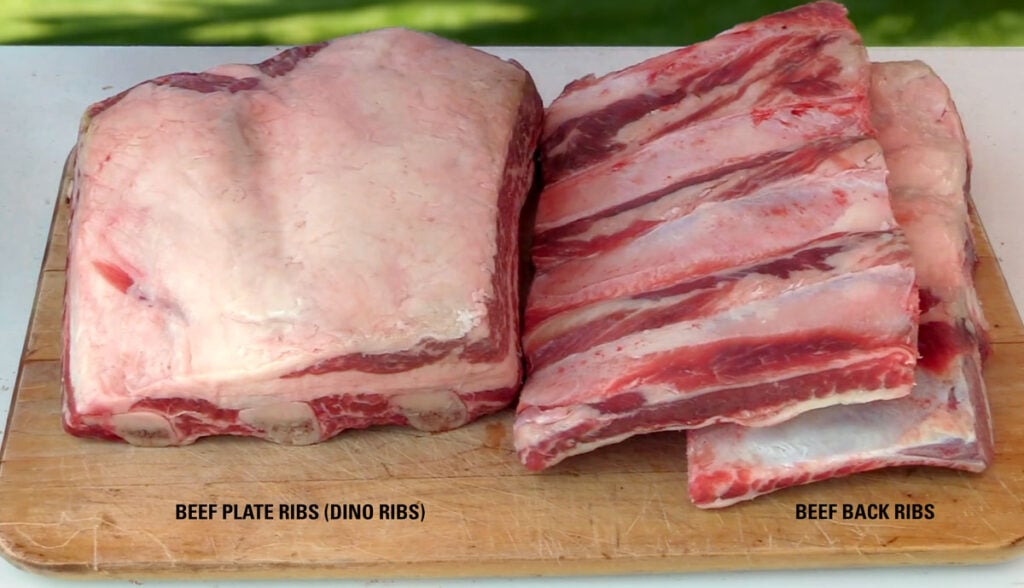
Beef back ribs come from the upper portion of the rib cage, typically a 7-bone rack. The ribeye muscle has been removed from the top side, so most of the meat sits between the bones, not on top of them. Texas A&M Meat Science covers the anatomy in detail, but the part that matters here is that there is less meat sitting on top than most people expect.
For beef back ribs as a main dish, plan about 3 to 4 bones per adult. Use 4 when beef back ribs are the main event, when the racks look lean after trimming, or when you have a hungry group. For meals with other meats, about 2 bones. For an appetizer, about 1 to 2 bones.
Beef plate ribs (the large individual bones often called dino ribs) carry significantly more meat per bone. Texas A&M Meat Science describes these as the typical 3-bone barbecue beef ribs from the short plate. Plan about 1 bone per adult as a main dish. One bone sometimes feeds more than one person, but 1 per adult is the safer assumption unless you’re slicing and sharing.
For a closer look at how these two types compare, see Beef Back Ribs vs Dino Ribs.
How kids and teens change ribs per person
Teens eat like adults. That is the better way to count them. A sixteen-year-old at a cookout is going to take the same number of ribs off the platter as the adults nearby, if not more. Count every teen as a full adult in your headcount.
Kids under 12 generally eat lighter. About half an adult portion is a reasonable starting point. So if you’d plan 5 to 6 bones for an adult, plan 2 to 3 for a younger child. But that estimate loosens quickly. An older kid, an athletic kid, or any child who has been asking about the ribs since they walked in the door should be rounded up toward something closer to an adult portion. When in doubt, round up.
Some kids pick at ribs. Some eat like they have been waiting all week for them. That is why kids are the hardest part of this count, and it’s why it’s worth knowing who you’re feeding before you lock in a count.
For big eaters, self-serve meals, or any situation where guests will make multiple passes, lean toward the higher end of the range. Ribs are hard to add to once people are eating. An empty platter at hour two is a worse outcome than leftover ribs in the refrigerator.
When ribs are one of several meats
The main-dish numbers in this article assume ribs are carrying the meal. When ribs are sharing the table with pulled pork, brisket, chicken, sausage, or burgers, you can plan fewer ribs per person, but you still need enough for people to take a few.
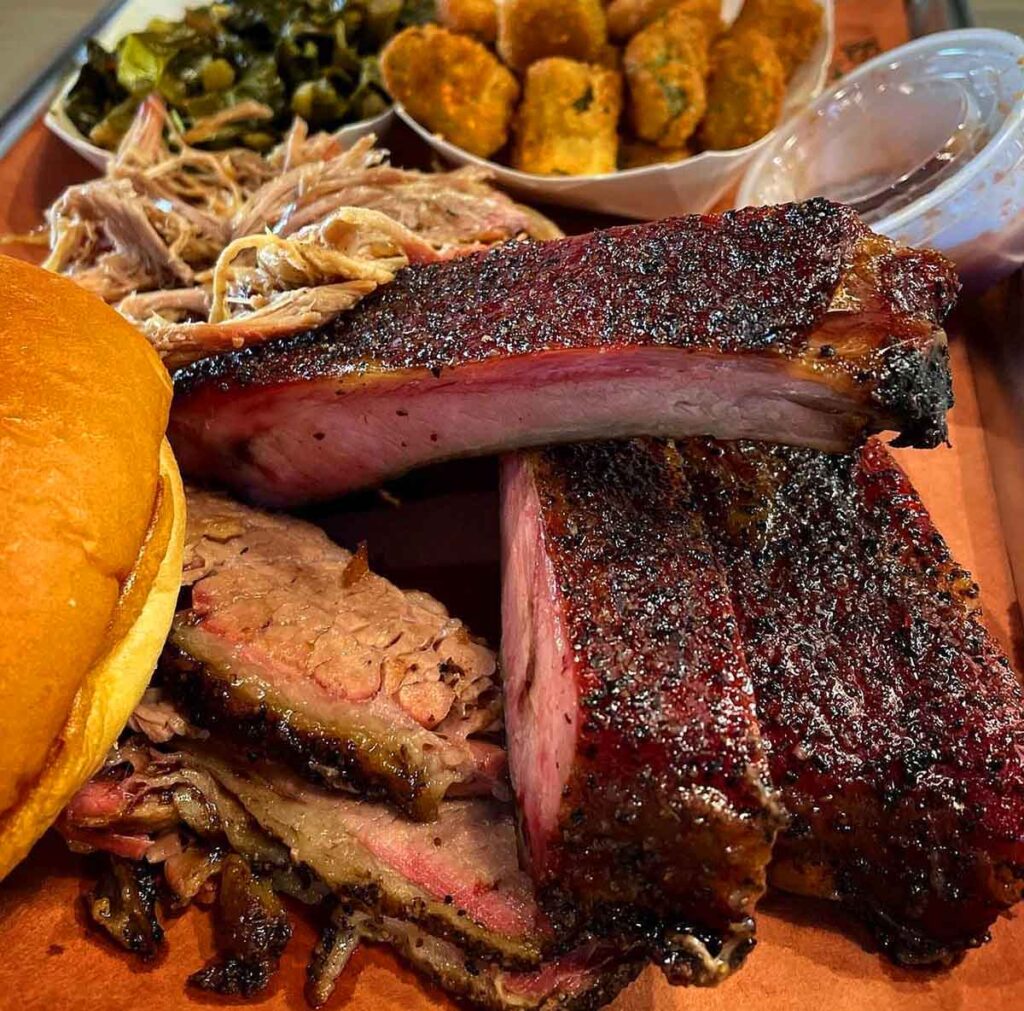
For those meals, use the “one of several meats” column in the table above. In general, that means:
- Baby backs: about 3 bones per adult
- St. Louis ribs: about 2 to 3 bones per adult
- Spare ribs: about 2 to 3 bones per adult
- Beef back ribs: about 2 bones per adult
- Beef plate ribs: about 1 bone for every 2 adults, especially if sliced and shared
One important caveat: heavy sides like baked beans, mac and cheese, potato salad, and coleslaw can let you use the lower end of the range, but don’t cut ribs too hard when they’re the food people are most looking forward to.
If you’re serving ribs as an appetizer, most pork types land around 2 bones per adult. Beef plate ribs as a starter work better sliced and shared than served as individual bones.
When you’re ready to think about how stores sell ribs and how to translate a bone count into something you can actually pick up at the market, see Buying Ribs for a Crowd.
Is half a rack per person enough?
Half a rack is a useful shorthand, and it’s not wrong. It just gets used too broadly.
Is half a rack enough?
- Usually, yes for baby backs as the main dish. Half a rack often lines up with about 5 to 6 bones per adult, which fits the main-dish estimate.
- Less reliable for St. Louis ribs and spare ribs. Those racks are larger and less uniform. Half a rack might be more or less than you need depending on the specific rack.
- Not the right shortcut when other meats are on the table. If ribs are only part of the plate, bones per person gives you a better starting point.
- Not useful for beef plate ribs. One dino rib bone can be a full adult serving by itself.
The half-rack shortcut works best when you’re serving pork ribs as the main dish to mostly adults. Once you add kids, teens, other meats, light sides, or beef ribs, working from bones per person gives you a more reliable number.
Common rib planning mistakes
Most rib shortages come from one of a few bad assumptions. None of these are hard to fix if you catch them before you shop.
- Treating every rack as the same size. Baby backs, St. Louis ribs, spare ribs, beef back ribs, and beef plate ribs don’t portion the same way. There’s no universal rack.
- Planning by pounds first. Pounds include bone weight, and the ratio of bone to meat varies by type. Start with bones, then cross-check weight at the store.
- Forgetting teens. Count teens as adults unless you have a strong reason not to.
- Underestimating self-serve meals. People take more when ribs are on a platter and seconds are easy.
- Cutting too aggressively when ribs are the featured meat. If ribs are what guests are looking forward to, don’t treat them like a side item just because other food is present.
- Treating beef plate ribs like pork ribs. Dino ribs are their own thing.
- Buying the bare minimum with no room. Ribs can’t be added to mid-cook. A modest cushion is good hosting, and leftover ribs are not a problem.
When you are unsure, round up modestly. Ribs are hard to add once the cook starts, and leftover ribs are a much better problem than an empty platter, especially if you know how to handle reheating ribs later.
Quick food safety note for serving ribs
This is a serving-size page, not a cooking-temperature guide, but food safety still matters when ribs sit out for a group.
The USDA FSIS recommends a minimum internal temperature of 145°F with a 3-minute rest for whole cuts of pork and beef. That’s the safe minimum. The tenderness you’re after with barbecue ribs requires cooking well past that point, so food safety and barbecue doneness are separate goals.
For serving, keep hot ribs at 140°F or above. If the ribs finish before people are ready to eat, the guide to keeping ribs warm for a party covers safe holding options without drying them out. Per USDA FSIS danger zone guidance, perishable food shouldn’t sit out more than 2 hours (or more than 1 hour when the temperature is above 90°F). Refrigerate leftovers promptly after the meal.
Once you know about how many bones each person needs, it is easier to figure out what to buy. If you are not sure what counts as a full rack, half rack, or 3-bone beef plate, start with how many ribs are in a rack. For the next step, How Many Racks of Ribs for a Crowd walks through how to turn that number into racks to buy.
Ribs per person FAQs
Round up to the next whole rack or store pack, especially when ribs are the main dish, guests serve themselves, or teens are eating. Racks do not portion evenly, and a short platter is hard to fix after the cook starts. For a small meal with heavy sides, a meatier rack may be enough.
Usually, yes. When ribs sit on a platter, people tend to take a little more and come back for seconds. Use the higher end of the per-person range for self-serve meals. If you need tighter portions, slice racks cleanly, put out smaller batches, and keep the rest warm until needed.
Not cleanly. Baby backs, St. Louis ribs, beef back ribs, and dino ribs do not feed people the same way. Plan each type separately, then add the results together. If one rib type is clearly the reason people are coming to the table, lean higher for that type rather than averaging everything down.
Move toward the higher end of the range or buy one more rack if the racks look narrow, lightly meated, or uneven. Bone count gives you the serving target, but the meat on those bones still matters. This is especially true with baby backs and beef back ribs, where racks can vary a lot.
Yes, but only within the range for that rib type. Heavy sides like beans, mac and cheese, potato salad, and slaw can let you use the lower end. Light sides, snack-style meals, or ribs as the clear favorite should push you higher. Sides help, but they do not make a short rib count safe.
No. Country-style ribs are not portioned like rack ribs, and many packages are boneless or partly boneless. The bone-count method in this guide is for rack-style pork ribs and beef ribs. For country-style ribs, plan by pieces or cooked portions instead, then adjust for sides and how heavy the meal is.
Corrections and editorial standards
- Spotted something wrong or outdated? Send a correction here: Corrections & Updates
- How we handle sources, testing, and updates: Editorial Standards
- Media or general notes: Email the publisher
Sources
This guide combines practical rib-planning experience with published meat-cut references and food-safety guidance. The serving ranges are practical estimates based on rib type, typical bone counts, and what usually happens when ribs are served at a cookout. I have not run controlled serving tests, so the advice intentionally rounds toward not running short.
- National Pork Board: Pork Ribs — source for plain-language pork rib cut definitions, including baby back ribs as back ribs from the loin area
- USDA AMS: Institutional Meat Purchase Specifications, Fresh Pork Series 400 — source for formal pork rib cut specifications, including St. Louis-style ribs as trimmed spare ribs
- Texas A&M Meat Science: Beef Rib, Back Ribs — supports the explanation of beef back ribs as a 7-bone rack with most meat between the bones
- Texas A&M Meat Science: Beef Plate Short Ribs, Trimmed — supports the explanation of beef plate ribs and why you count them by the bone instead of treating them like pork racks
- USDA FSIS: Safe Minimum Internal Temperature Chart — source for the 145°F minimum with 3-minute rest for whole cuts of pork and beef
- USDA FSIS: Danger Zone 40°F to 140°F — source for the 140°F hot-holding standard, the 2-hour rule, and the 1-hour rule above 90°F
Serving estimates are meant to help you plan with a little room, not predict exactly how much every guest will eat or how each rack will cook down.
About the author
James Roller documents South Carolina barbecue for Destination BBQ and authored the SC BBQ cookbook Going Whole Hog. His BBQ guides focus on practical questions home cooks actually run into, like how much food to buy, how to avoid running short, and how to use reliable meat-cut and food-safety guidance without making backyard cooking harder than it needs to be.