How to Keep Ribs Warm for a Party
Keep ribs warm without drying them out by holding whole racks gently, keeping them at 140°F or warmer, and slicing close to serving
Your ribs are done, but the party is not ready.
That feels like a problem, but it is usually the better problem. A late finish creates stress fast. Finished ribs give you something to work with, as long as you keep them hot, keep them from drying out, and do not let a short delay turn into a food safety gamble.
The safest, easiest plan is simple: keep the racks whole, hold them at 140°F or warmer, use gentle heat instead of high heat, and slice or sauce in smaller batches close to serving. The longer the ribs need to wait, the more you have to choose between protecting moisture and protecting bark.
This is about same-day holding. If your plan is to cook today and serve tomorrow, that is a different job. Use the guide to make ribs the day before instead.
Quick answer: how to keep ribs warm without drying them out
Start with how long the ribs need to wait. A 20-minute rest is one thing. A two-hour delay with guests still on the way needs a better setup.
Quick answer
- Best default: Keep ribs whole, wrap or cover them, and hold them gently until serving.
- Safe temperature: Keep cooked ribs at 140°F or warmer during a hot hold.
- Short hold: For less than 30 minutes, rest the racks whole and tent them lightly if needed.
- Medium hold: For 30 to 90 minutes, use a low oven, wrapped pan with active heat, or preheated cooler.
- Longer same-day hold: For 90 minutes to 3 hours, use a preheated cooler or insulated carrier only while the ribs stay at 140°F or warmer. Check the rib temperature, especially if the hold stretches.
- More than 3 hours: Do not rely on casual cooler advice. Use a heated carrier if you have one, or plan to cool the ribs and reheat them safely.
- Slice and sauce timing: Slice in batches and sauce late, or keep warm sauce on the side.
- If ribs cool below 140°F: Stop treating the situation as a hold. Check the time and reheat to 165°F only if the ribs are still within safe limits.
Still before the cook? Use the Rib Calculator to size the racks first, then use this page to hold and serve them.
Holding ribs is not the same as reheating ribs
People get tripped up here. Ribs that are still hot need one plan. Ribs that have cooled too far need another.
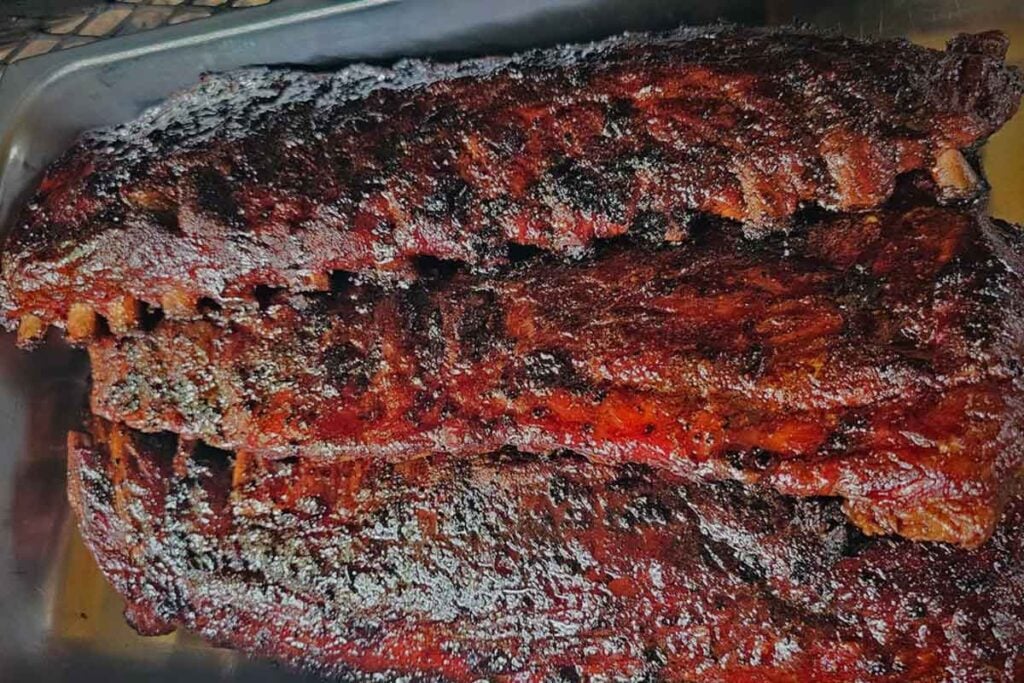
A rest is just a short pause after the ribs come off the cooker. You might leave the racks whole and tent them lightly for 10 or 15 minutes while you finish sides or clear the table.
A hot hold means the ribs are cooked, still hot, and you are keeping them hot until guests eat. That is what this page is about.
A reheat means the ribs have already cooled too far or have been refrigerated. At that point, you are not holding hot ribs anymore. You are bringing cooled ribs back up safely.
The mistake is treating a failed hold like it is still a hold. Once ribs have dropped below 140°F, do not just wrap them tighter and hope. Probe first. Then decide whether they can be safely reheated or should be discarded.
The safe temperature for keeping ribs warm
The food safety number to remember is 140°F. FoodSafety.gov says to keep hot food at 140°F or above after cooking. USDA FSIS gives the same 140°F-or-warmer guidance for cooked grilled meat.
The danger zone is 40°F to 140°F. That is the range where bacteria can grow quickly. The ribs may still feel warm in your hand at 120°F, but that is not safe hot holding. Use a thermometer.
If ribs fall below 140°F, the clock starts to matter. FoodSafety.gov says perishable food should not sit out for more than 2 hours. If the temperature around the food is above 90°F, that window drops to 1 hour.
If the ribs have cooled and are still safe to recover, the reheat target is 165°F. FoodSafety.gov lists 165°F for reheating leftovers, and CDC gives the same number for food cooked ahead and reheated before serving.
You may see 135°F in commercial foodservice references. The FDA Food Code uses that number for hot holding in foodservice. For a home BBQ party, 140°F is the cleaner, more conservative number to use.
Food safety note
- Hot holding: Keep cooked ribs at 140°F or warmer.
- Danger zone: The range from 40°F to 140°F is where bacteria can grow quickly.
- Two-hour rule: Do not leave perishable food out for more than 2 hours without safe temperature control.
- Hot weather rule: If the surrounding temperature is above 90°F, that window drops to 1 hour.
- Recovery reheat: If ribs cool too far and are still safe to recover, reheat them to 165°F.
- Do not guess: “Still warm” is not a safety check. Use a thermometer.
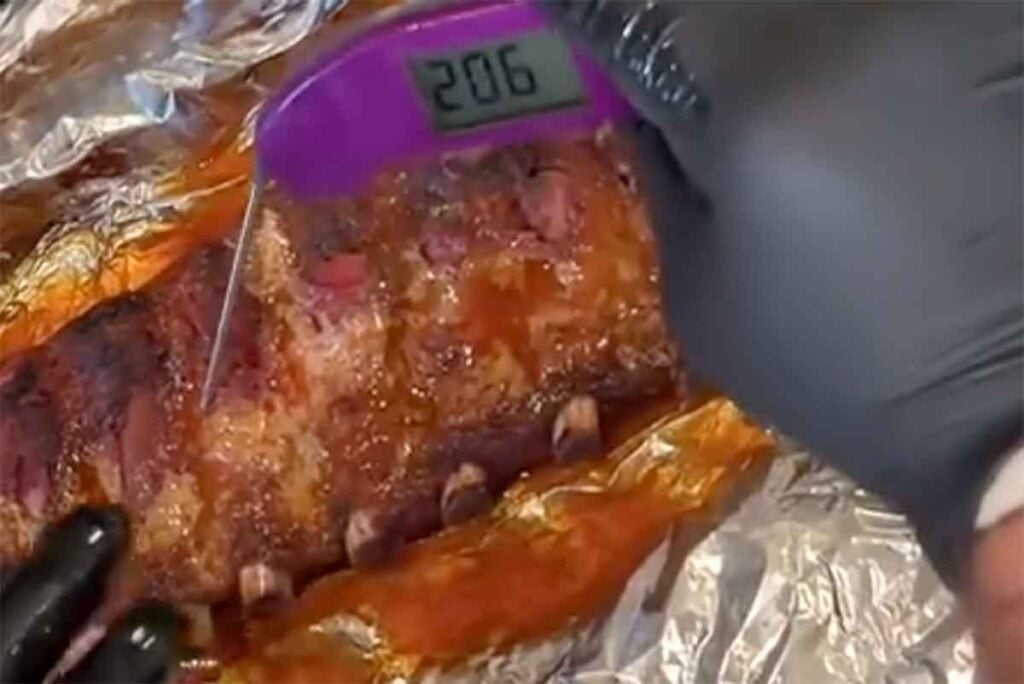
When you check ribs during a hold, probe the thickest meaty part of the rack and avoid pressing the tip against bone, foil, or the pan. If you are holding several racks, check the smallest or thinnest rack too, because it will usually cool faster than the biggest one.
Choose your holding method by how long you have
The right method depends on how long the ribs need to sit. The longer they sit, the more you need to control heat, moisture, and timing.
How long until serving
- Less than 30 minutes: Keep racks whole, rest briefly, tent lightly if needed, and slice close to serving.
- 30 to 90 minutes: Use a low oven, wrapped pan with active heat, or preheated cooler. Keep the ribs at 140°F or warmer.
- 90 minutes to 3 hours: Use a preheated cooler or insulated carrier. Keep racks whole and wrapped, limit opening, and check the rib temperature as the hold stretches.
- More than 3 hours: Do not rely on casual “cooler for hours” advice. Use a heated carrier if you have one, or consider a planned cool-and-reheat approach.
- Already cooled below 140°F: Probe first, apply the 2-hour or 1-hour rule, and reheat to 165°F only if the ribs are still within safe time limits.
Those windows are for planning. They are not safety promises. A full cooler, a half-empty cooler, a cold garage, a hot tailgate, and a rack of baby backs will not all behave the same way.
Rib holding methods compared
Use this table before the ribs come off the cooker. It is easier to hold ribs well when the foil, pans, towels, oven space, and thermometer are already ready.
| Method | Best time window | Setup | Moisture result | Bark result | Safety concern | Best use case |
|---|---|---|---|---|---|---|
| Brief rest / loosely tented | 10 to 20 minutes | Whole racks, lightly tented or uncovered briefly | Fair | Best preserved | Not a true hot hold if ribs are not kept hot | Letting ribs settle before a short service delay |
| Wrapped pan | 15 to 45 minutes | Whole racks in a foil-covered pan | Good | Softens with time | Needs active heat for a true hot hold | Short bridge from cooker to table or oven |
| Low oven | 30 to 90 minutes | Covered pan or wrapped racks at the lowest stable oven setting | Good | Fair to soft | Too much heat can keep cooking the ribs | No cooler available, short to medium delay |
| Insulated cooler | 45 minutes to 2 hours, sometimes longer if temperature holds | Preheated cooler, wrapped racks, towels to fill empty space, lid kept closed | Very good | Softens | Safe only while ribs stay 140°F or warmer | Transport or medium same-day hold |
| Cambro-style carrier | 1 to 4 hours depending on the unit and food temperature | Preheated insulated carrier or heated carrier, pans or wrapped racks | Very good | Softens less if rarely opened | Still needs temperature checks | Longer service window, transport, or catering-style hold |
| Smoker or pellet warm mode | 30 to 120 minutes if stable | Indirect gentle heat, wrapped or panned racks, independent probe | Good | Good if not too humid | Controller temperature is not food temperature | Outdoor hold when the cooker runs steady |
| Chafing dish | Active service only | Small batches of sliced ribs, backup racks held elsewhere | Good | Poor to fair | Not a reheat tool for cooled ribs | Buffet line after the main hold |
| Electric roaster or slow cooker | Active service or sauced rib portions | Rack or pan, low or warm setting, temperature monitored | High, but steamy | Soft to poor | Can steam and over-soften ribs | Sauced sliced ribs when warmth matters more than bark |
Scroll sideways on small screens to compare all rib holding methods.
Time windows are practical planning ranges, not safety guarantees. A thermometer decides whether the ribs are still in safe hot-holding range. Pork ribs generally tolerate shorter holds than large beef ribs. Baby backs cool fastest, while St. Louis ribs and spare ribs usually give you a little more cushion because they have more size and fat.
That is why I handle pork ribs a little differently than bigger cuts like brisket or pork butt. Baby backs especially do not give you much cushion once the delay starts stretching. If the hold is short, I keep the racks whole and slice late. If the wait keeps growing, I stop worrying so much about bark and texture and start checking temperature.
Larger beef ribs can handle a longer hold better because they have more mass. If you are sorting that out before the cook, the difference between beef back ribs and dino ribs matters.
Moisture vs bark tradeoff
- Foil or a covered pan: Protects moisture well but softens bark.
- Loose covering: Protects bark better but lets ribs dry faster.
- A cooler: Holds moisture well but can soften pork ribs over time.
- A low oven: Protects temperature but can keep cooking the ribs.
- A chafing dish: Helps during service, but steam can soften bark.
- Best party move: Keep backup racks wrapped and hot, then slice and sauce smaller batches as people eat.
How to hold ribs in a wrapped pan
A covered pan is the simplest move when ribs are done a little early and you need to buy a few minutes.
Put whole racks in a foil pan, cover the pan with foil, and keep it warm. For a short delay, that may be enough to get you from cooker to table. For anything longer, the pan needs to be in a warm oven, warming cabinet, or another safe heat source.
The tradeoff is easy to understand. The pan traps steam and protects the meat from drying out. That same steam softens the bark. For a short hold, that is usually a fair trade. For a long hold, the ribs can turn softer than you meant them to.
Can you keep ribs warm in foil?
Yes. Foil is one of the easiest ways to keep ribs warm because it traps heat and moisture around the racks. That helps protect the meat during a short hold, especially if the ribs are going into a low oven, covered pan, cooler, or insulated carrier.
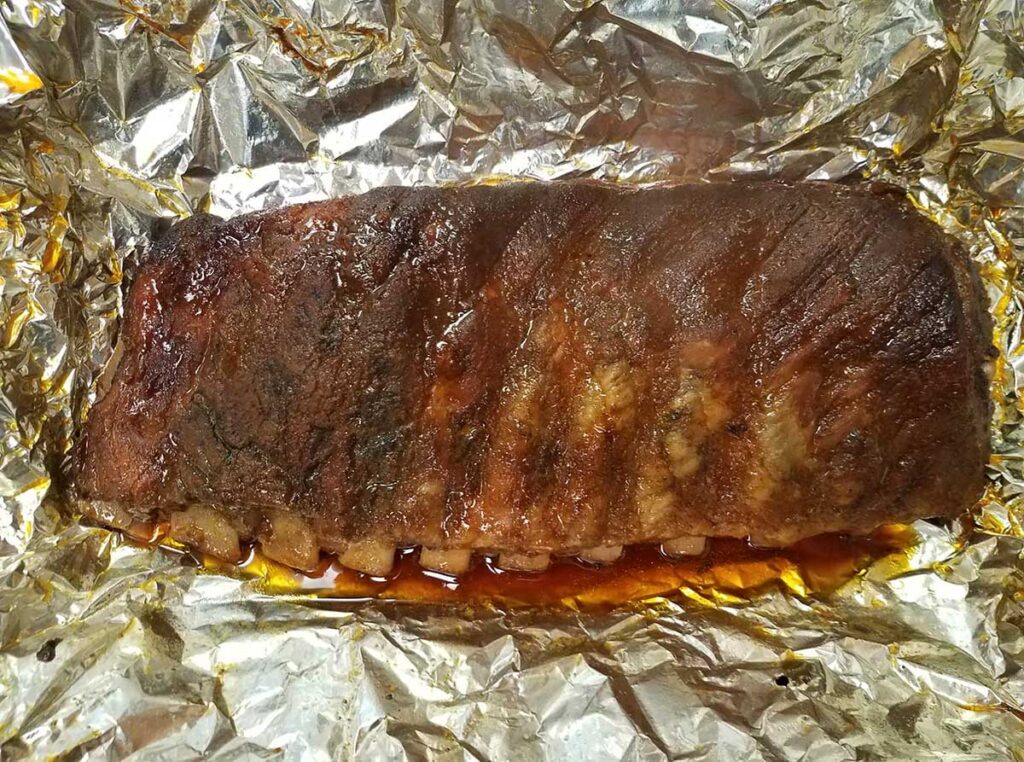
Foil helps ribs keep heat and moisture, but foil is not a heat source. For a short pause, wrapping may be enough. For a longer wait, wrapped ribs still need a low oven, warm pan setup, preheated cooler, insulated carrier, or another plan that keeps the meat at 140°F or warmer.
The tradeoff is bark. The longer ribs sit wrapped in foil, the softer the outside will get. For a party, that is usually worth it if the other choice is dry ribs. Keep the racks whole, wrap them for the hold, then slice and sauce in smaller batches close to serving.
If the ribs still seem dry before service, do not hit them with high heat. Add a small splash of apple juice, broth, water, or saved juices to the pan, cover it gently, and warm them under low heat. You are trying to help the ribs recover, not cook them again.
How to hold ribs in a cooler
A cooler works because it slows heat loss. It does not make unsafe ribs safe, and it does not remove the need to check temperature.
Set it up before the ribs come off:
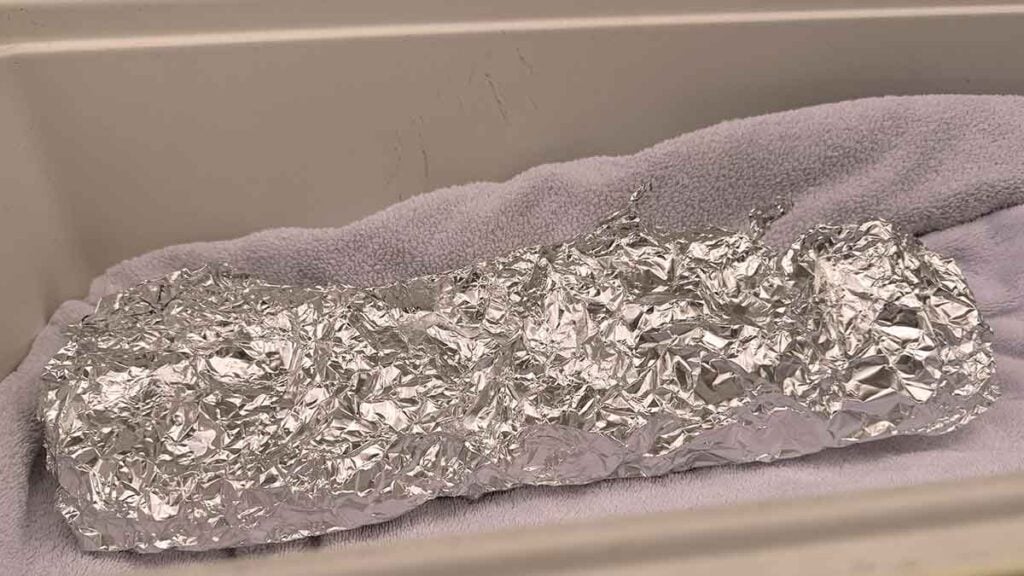
- Preheat the cooler. Add hot water, close the lid for several minutes, then drain and dry it well.
- Keep the racks whole. Whole racks hold heat and moisture better than sliced ribs.
- Wrap the ribs. Use foil, or place racks in foil pans and cover the pans tightly.
- Use a pan if needed. Wrapped ribs can leak. A pan keeps juices from soaking the towels.
- Fill empty space. Use clean towels to reduce air space and help the cooler hold heat.
- Keep the lid closed. Every peek costs heat.
- Check the ribs. If the hold runs longer than a short window, confirm the ribs are still 140°F or warmer.
How to transport ribs and keep them warm
If you need to drive ribs across town, treat the cooler like a holding setup, not just a box for carrying food. Preheat it first, keep the racks whole, wrap them well, and pack the empty space with clean towels so the ribs do not lose heat as quickly.
Put wrapped racks in a pan if they might leak, and keep the cooler closed until you reach the party. When you arrive, check the ribs with a thermometer before deciding what happens next. If they are still 140°F or warmer, move them into your serving plan. If they have dropped below 140°F, follow the time-and-temperature guidance instead of guessing.
A well-packed cooler can be a good short-term option, especially when you need to free the oven or hold ribs somewhere other than the cooker. Just do not treat “three hours in a cooler” as if it’s nothing to worry about. That only works if the ribs stay hot enough.
Also, expect bark to soften. That is not failure. That is what happens when hot ribs sit wrapped in a warm, humid space.
How to keep ribs warm in the oven
A low oven is the easiest method for many home cooks because it adds steady heat. That makes it more forgiving than a passive cooler when guests are running behind.
Use the oven’s lowest stable setting. Many ovens hold somewhere around 170°F to 200°F on a warm or low setting, and USDA FSIS says cooked grilled meat can be kept hot in an oven set around 200°F.
For ribs, lower is usually better as long as the ribs stay at 140°F or warmer. Put whole racks in a covered pan or wrap them in foil. Check the rib temperature, not just the oven dial.
The risk with the oven is not usually safety. The risk is overdoing the ribs. Even gentle oven heat can keep cooking them if the hold runs long. Pork ribs are thinner than brisket or pork butt, so they do not have as much cushion.
For a short-to-medium hold, the oven is a good tool. For a long afternoon, it can turn tender ribs into ribs that eat soft and overdone.
Can you keep ribs warm on the smoker or grill?
You can, but only if the cooker can hold steady gentle heat without drying the ribs or cooking them harder.
This works best with indirect heat. Keep ribs away from direct flame, wrap or pan them if the hold is more than brief, and use a thermometer in the ribs or in the pan area. The temperature on your lid, dome, or controller does not automatically tell you what the meat is doing.
On some pellet grills, a keep-warm mode can be useful once the ribs are fully cooked. Traeger says its Keep Warm function maintains the grill at 165°F, but also says that mode is not designed to cook food to proper food safety standards. That is the key point.
Use warm mode to hold cooked ribs, not to rescue ribs that have cooled into the danger zone.
A smoker or grill hold makes the most sense when you are serving outside and the cooker is already behaving. If the cooker swings hot, runs dry, or keeps flaring, move the ribs to a safer setup.
Cambro-style carriers, roasters, and warmers
This is where the equipment starts to matter. A real insulated food carrier is built for holding and transporting hot food. A picnic cooler can help, but it is simply not the same.
A Cambro-style carrier is the best option when you have one, especially for transport or a longer same-day service window. Cambro says its UPCH400 heated carrier maintains 150°F to 165°F. That is equipment-specific guidance, not a rule for every cooler or carrier.
Electric roasters and slow cookers can work, but they are usually better for sauced portions than whole racks with bark you care about. They create a moist environment, which helps prevent drying but softens the surface.
Use them when the day has already moved toward sauced, sliced ribs. Do not expect them to preserve the same texture you had when the ribs came off the cooker.
One more caution: skip household plastic wrap in hot holding. Reynolds says plastic wrap should not be used in conventional ovens, toaster ovens, stovetops, slow cookers, pressure cookers, air fryers, or grills. Foil is the safer choice for hot ribs.
Chafing dishes and buffet trays
A chafing dish is for active service, not the main long hold.
That does not mean a chafer is bad. It can be the right tool when people are eating and ribs are moving from pan to plate. The problem comes when all the ribs go into the chafer at once and sit there under steam for an hour.
The better plan is to keep most of the racks wrapped and hot somewhere else. Slice a rack or two, move those pieces to the chafer, and refill with fresh batches as needed. Do not pile new ribs on top of old ribs that have already been sitting in the pan.
FoodSafety.gov and USDA FSIS both recognize chafing dishes, slow cookers, and warming trays as ways to keep hot food hot. The question is not whether a chafer can help. It is whether it should do the whole job. For whole racks before the party starts, no. For small batches during service, yes.
When to sauce and slice ribs for a party
Hold ribs whole when you can. Slice close to serving.
Whole racks hold heat and moisture better because less surface area is exposed. Once you cut ribs apart, every cut edge starts losing heat and moisture faster. That is why pre-sliced ribs dry out sooner, even if they looked great when you cut them.
I’d rather slice a little more often during the party than cut everything early and watch the ribs dry out on the table.
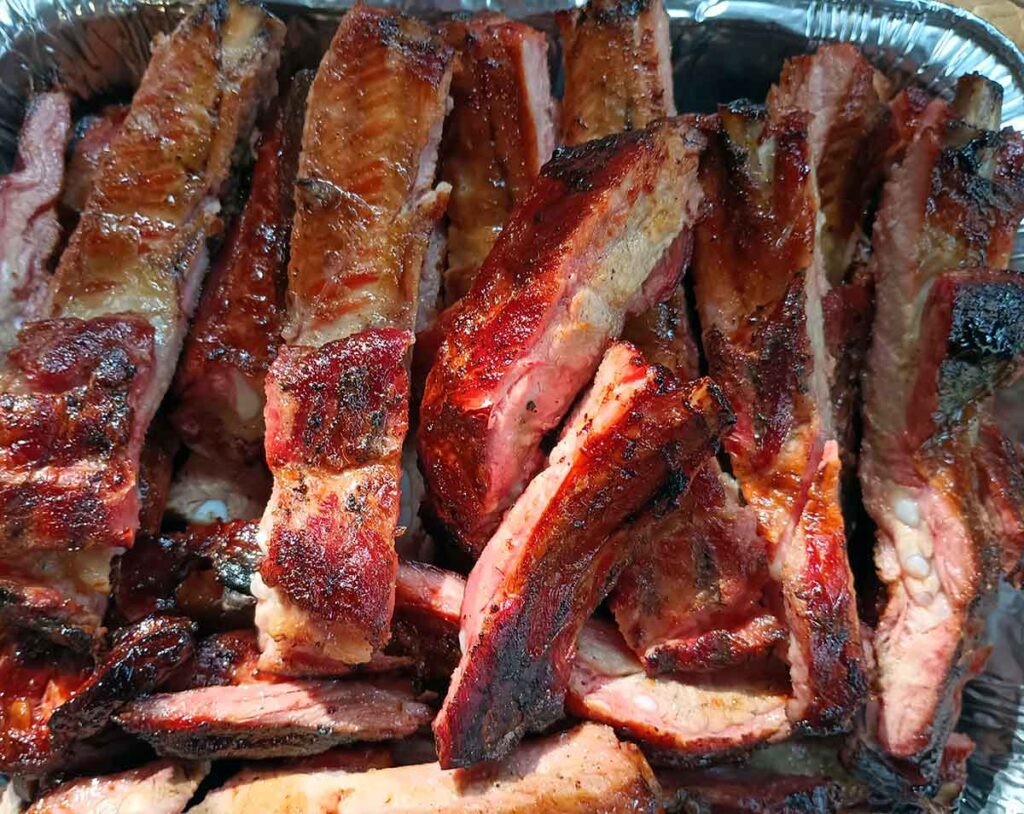
Sauce timing works the same way. Sauce that sits under foil or steam for a long time can dull out, run into the pan, or make the bark softer than you wanted. For most party holds, the better move is to sauce late or keep warm sauce on the side.
Dry rub ribs usually hold their surface better if you keep sauce on the side until serving.
A good serving pattern looks like this:
- Keep backup racks whole, wrapped, and hot.
- Slice one or two racks at a time.
- Brush or toss with warm sauce close to service.
- Move only the amount people will eat soon to the tray or chafer.
- Refill with fresh batches instead of loading the whole table at once.
That gives you a little more work during service, but it protects the ribs. For a party, that is usually worth it.
What to do if ribs cool down before serving
Probe first. Do not guess by touch.
If the ribs are still at 140°F or warmer, move them back into an appropriate hot-holding method. That might be a low oven, wrapped pan, preheated cooler, or insulated carrier.
If the ribs are below 140°F, now you have to think differently. Apply the 2-hour rule, or the 1-hour rule if the ribs have been in temperatures above 90°F. If you know the ribs are still within that safe window, reheat them to 165°F before serving.
If you do not know how long they have been below 140°F, do not serve them. That is hard to do when you have guests waiting, but it is the safer call.
For the full recovery method, use the guide to reheat ribs without drying them out. Once ribs have cooled too far, this is no longer a holding problem.
Common mistakes that dry out or ruin warm ribs
Most rib-holding problems come from rushing one decision or asking one piece of equipment to do the wrong job.
- Slicing too early: Cut ribs lose heat and moisture from every exposed surface. Keep racks whole and cut in batches close to serving.
- Saucing before the hold: Sauce held under foil for a long time can lose its brightness and pool in the pan. Sauce close to serving or keep it warm on the side.
- Holding too hot: A hot oven that keeps cooking the ribs is not a hold. Set the oven as low as it runs stably and verify the food temperature.
- Letting ribs steam too long in a chafer: Chafers are for active service. Keep backup racks wrapped and hot elsewhere.
- Leaving ribs uncovered in a dry oven: No wrapping plus heat can dry ribs quickly. Cover them for anything more than a brief rest.
- Trying to fix dry ribs with high heat: If ribs start drying out before service, do not blast them in a hot oven or put them back over direct heat. Cover them gently, add a small splash of apple juice, broth, water, or saved juices, and warm them slowly.
- Trusting “still warm” without a thermometer: Warm to the touch is not the same as 140°F or warmer.
- Treating cooler time as a safety guarantee: A cooler hold time is a planning estimate. It only works if the ribs stay above 140°F.
- Opening the cooler repeatedly: Each opening releases heat. Pack it well, check when needed, and close it again.
- Using plastic wrap in hot environments: Do not use household plastic wrap in an oven, grill, smoker, roaster, or slow cooker.
- Putting all the ribs on the buffet at once: Serve in smaller batches so the last ribs are still hot and moist.
- Treating a failed hold like it is still a hold: If the ribs have cooled below 140°F, check time and temperature before you do anything else.
Party serving flow for ribs
A little staging makes the whole day easier. Set up the hold before the ribs finish, not after.
Before the ribs come off
This is when you give yourself room to think.
- Decide how long you expect to hold the ribs.
- Preheat the cooler or carrier if you are using one.
- Clear oven space if the oven is your backup.
- Set out foil, foil pans, clean towels, gloves, a thermometer, serving pans, and sauce.
- Warm sauce gently on the stove or in a heat-safe bowl set over hot water.
During the hold
Once the ribs are in the hold, your job is to protect heat and moisture without fussing with them.
- Keep racks whole.
- Keep ribs at 140°F or warmer.
- Keep lids closed as much as possible.
- Do not slice the full batch early.
- Do not use plastic wrap in any hot oven, grill, smoker, roaster, or slow cooker.
- If the hold runs longer than expected, check temperature and make a real decision.
At service
Do not let the first serving pan decide the quality of the whole meal.
- Slice one rack, or one small batch, at a time.
- Sauce late, or let guests add warm sauce at the table.
- Move small amounts to the chafer, buffet tray, or serving platter.
- Keep backup racks wrapped and hot until you need them.
- Replace the pan with a fresh batch instead of topping off old ribs.
Once people are done eating, do not let leftover ribs drift on the table while everyone cleans up. Refrigerate leftovers within 2 hours, or within 1 hour if the food has been sitting in temperatures above 90°F.
Do not save ribs if you do not know how long they sat below 140°F. For ribs you can safely keep, pack them into shallow containers so they cool faster, then reheat leftovers to 165°F before serving again.
If you are still planning the cook, start with how many racks of ribs you need, then use the buying ribs for a crowd guide when you are looking at store packs, butcher orders, or warehouse-club packaging. For the full number by rib type, adults, kids, leftovers, and shopping style, use the Rib Calculator before you worry about how to hold them.
Finishing early is fine. Cold ribs, dry ribs, or unsafe ribs are the problems you are trying to avoid.
FAQs about keeping ribs warm for a party
If guests are late, keep the racks whole, wrap or cover them, and keep the meat at 140°F or warmer. For a short delay, a loose tent or covered pan may be enough. For a longer same-day delay, use a low oven, preheated cooler, or insulated carrier, and verify with a thermometer.
Use a cooler when you need to transport ribs or free up oven space, but remember it only slows heat loss. Use a low oven when you need steady heat and guests are running late. The cooler protects moisture better; the oven gives more temperature control but can keep cooking thin pork ribs if the hold runs long.
Ribs can stay wrapped only as long as they remain safely hot and the texture still works for the meal. A short wrapped rest is usually fine. A 30- to 90-minute hold needs a real heat plan. Once you get beyond a couple of hours, check temperature and expect bark to soften.
Yes, if the ribs are fully cooked and the cooker can hold steady, gentle indirect heat. Wrap or pan the ribs for anything more than a brief hold, and check the meat temperature instead of trusting the controller alone. A warm setting is for holding cooked ribs, not for making cooled ribs safe again.
Use the chafing dish for small service batches, not the full hold. Keep most racks whole, wrapped, and hot somewhere else. Slice one or two racks at a time, sauce close to service, and refill with fresh batches instead of piling new ribs on top of pieces that have already been sitting.
Probe the ribs first and stop treating the situation as a normal hold. If they have been below 140°F but are still within safe time limits, reheat them to 165°F before serving. If you do not know how long they were below 140°F, the safer call is not to serve them.
Corrections and editorial standards
- Spotted something wrong or outdated? Send a correction here: Corrections & Updates
- How we handle sources, testing, and updates: Editorial Standards
- Media or general notes: Email the publisher
Sources
- FoodSafety.gov: 4 Steps to Food Safety – supports the 140°F hot-holding guidance, 40°F to 140°F danger zone, and the 2-hour and 1-hour food safety rules.
- FoodSafety.gov: Safe Minimum Internal Temperatures – supports the 165°F reheating target for leftovers.
- USDA FSIS: Grilling and Food Safety – supports keeping cooked grilled meats hot at 140°F or warmer and lists ovens, chafing dishes, slow cookers, and warming trays as hot-holding options.
- CDC: Preventing C. perfringens Food Poisoning – supports the danger-zone concern, 140°F holding, 40°F-or-colder refrigeration, and 165°F reheating guidance for cooked-ahead foods.
- FDA Food Code 2022 – supports the 135°F commercial hot-holding standard mentioned only as foodservice context.
- Cambro: UPCH400 Heated Pan Carriers – supports the equipment-specific note about heated insulated carriers maintaining 150°F to 165°F.
- Traeger: WiFIRE Controller Functions – supports the note that Traeger’s Keep Warm function maintains 165°F and is not designed to cook food to food-safe standards.
- Reynolds Brands: Plastic Wrap for Food Guide – supports the warning against using household plastic wrap in ovens, grills, slow cookers, air fryers, pressure cookers, or other high-heat appliances.
Food-safety guidance above comes from government and public-health sources. Equipment and brand sources are used only for equipment-specific notes. Holding time windows are practical estimates, not safety guarantees; a thermometer is the reliable way to confirm that a hot hold is still safe.
About the author
James Roller documents South Carolina barbecue for Destination BBQ and authored the SC BBQ cookbook Going Whole Hog. His BBQ guides focus on practical planning questions, including how much food to buy, how to avoid running short, and how to use reliable meat and food-safety guidance without making backyard cooking more complicated than it needs to be.