Bark
Learn what bark is, why it forms on smoked meat, and how to get a darker, better set without drying out your brisket or butt
What is Bark in Barbecue?
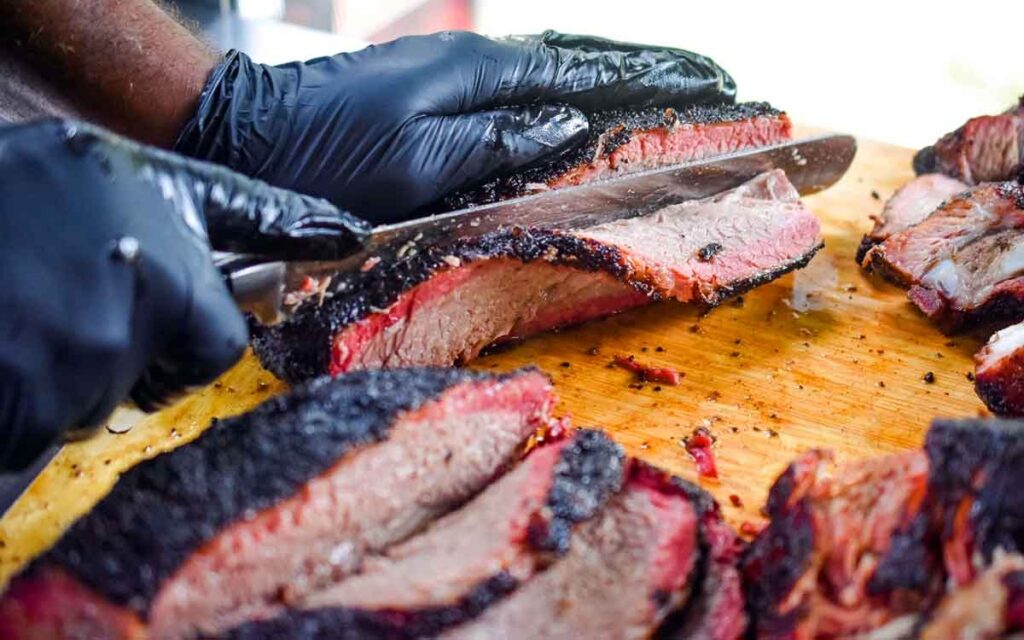
Bark (also called “Mr. Brown”) is the dark, flavorful crust that forms on the surface of slow-smoked meat. This prized BBQ crust results from complex chemical reactions – primarily the Maillard reaction and surface dehydration – combining with smoke and a well-seasoned rub. The bark delivers a concentrated dose of savory, smoky flavor and a pleasant, chewy–crisp texture that barbecue enthusiasts covet in perfectly cooked brisket, ribs, pork butt, and other smoked meats.
Quick controls for bark
- Pit temp: 225–275°F steady; thin, clean blue smoke beats billowy white.
- Rub: Even, generous coat; trim thick fat so rub contacts meat.
- Spritz: Optional, light, only after the sheen fades; stop in final hours so bark can set.
- Wrap: Only after bark is firm; butcher paper preserves texture better than foil (Texas crutch).
Goal: dry surface + time + clean smoke = dark, flavorful bark.
Key Takeaways
- How bark forms: A coarse, well-adhered rub plus steady 225–275°F heat, clean blue smoke, and gradual surface drying create dark, flavorful bark, while a thin pellicle under the rub helps the crust stay attached.
- Control color and texture: Keep the exhaust open for clean flow, spritz only after the surface sets and taper late, and wrap only when the crust is firm; butcher paper preserves bark better than foil.
- Match the cut and cooker: Brisket and pork shoulder often benefit from longer unwrapped time for thicker bark, ribs usually eat best with a thinner bite-through crust, and pellet grills may need extra time at 225–250°F or a smoke tube to deepen color.
“Admit it, your favorite part of pulled pork is the bark, the deep dark, rich, sweet, chewy, crusty, jerky-like rind suffused with incredible complex flavor.”
~ Meathead Goldwyn, AmazingRibs
Understanding Bark
Bark is more than just “charred” meat – it’s a rich, mahogany crust packed with smoky-sweet savor. Formed during low-and-slow cooking, bark represents the intersection of meat science and pitmaster art. Below, we explore what bark is made of, how it forms, ways to control it, and why it’s so beloved. (Spoiler: A beautiful bark can make a smoked brisket look like a meteorite, yet taste like meat candy, not char.)
What Bark Is Made Of
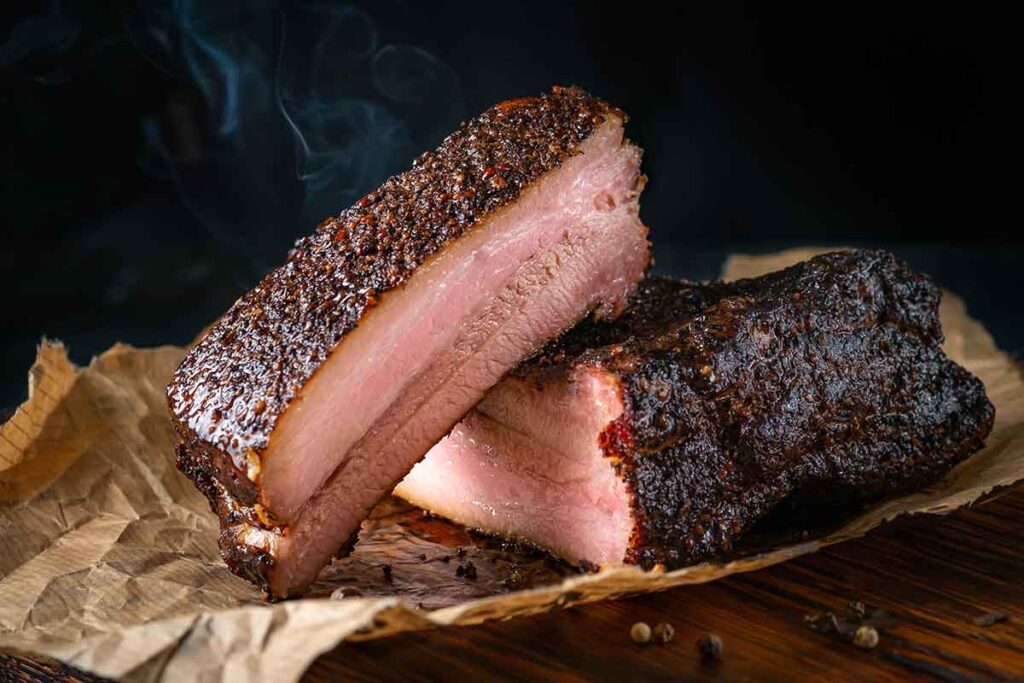
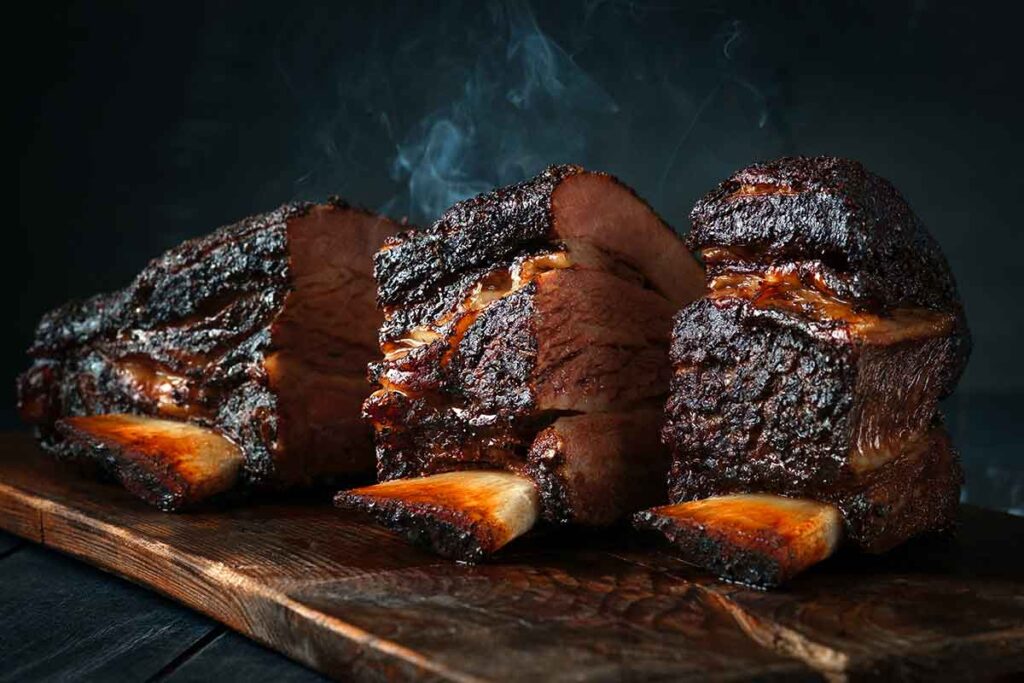
Bark is essentially a layered composition of spices, dehydrated meat, rendered fats, and smoke particulates fused into a flavorful “skin.” Its appearance is typically a deep reddish-brown to black lacquer on the meat’s exterior.
“Without smoke, bark usually becomes a dark mahogany red, depending on what is in the rub,” writes Prof. Greg Blonder for AmazingRibs. “With smoke and enough time, it can be transformed into a licorice-black, shiny lacquer.”
Despite its dark color, good bark is not burnt – it should taste savory and smoky, with peppery, spicy notes from the dry rub, a hint of sweetness, and umami depth.
The texture can range from paper-thin and slightly chewy to crackly and crisp, depending on the meat and cooking method. When you bite into well-developed bark, you get a satisfying “bark-to-meat” contrast: a concentrated burst of seasoning and smoke on the outside and juicy tenderness inside, as Steve Nestor notes on Barbecue Bible.
In barbecue culture, those “little burnt-looking pieces” (as pitmaster Malcolm Reed calls them) of bark are considered bites of pure flavor and are often picked off and eaten straight by knowing pitmasters.
What’s in the bark? Primarily the dry rub (salt, coarse black pepper, sugars, spices) that has melted with meat juices and “glazed” onto the surface.
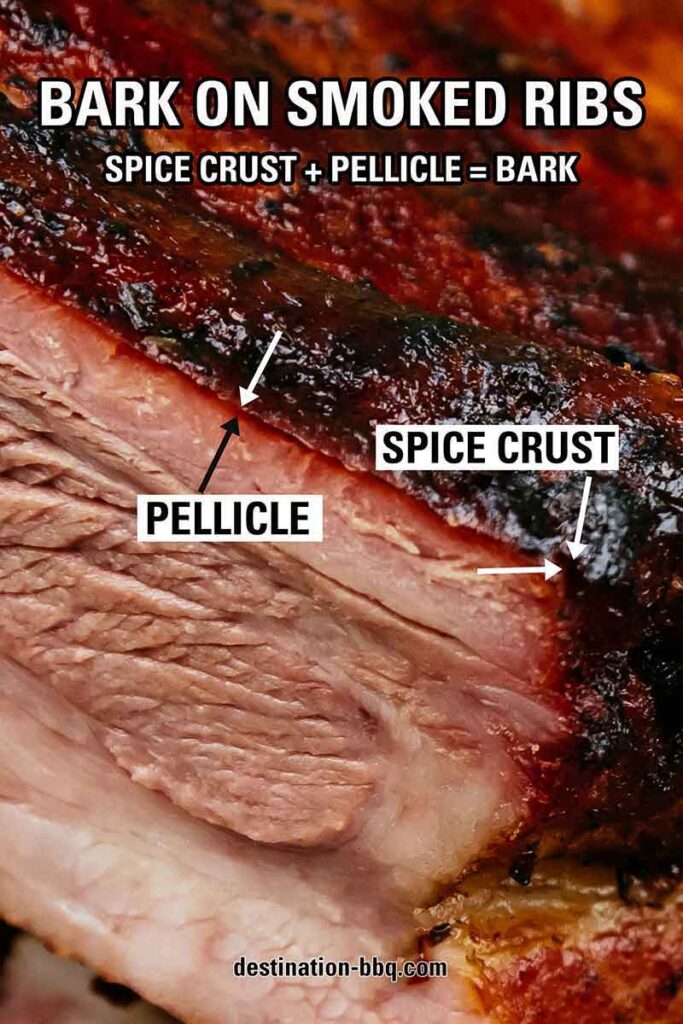
As the cook progresses, this layer becomes a concentrated spice paste that eventually dries out. Mixed in are smoke particles from the wood – literally, microscopic bits of soot and oils that stick to the moist surface and contribute to bark’s dark color and smoky taste. The meat itself contributes gelatinized proteins that form a thin, jerky-like pellicle underneath the spice layer.
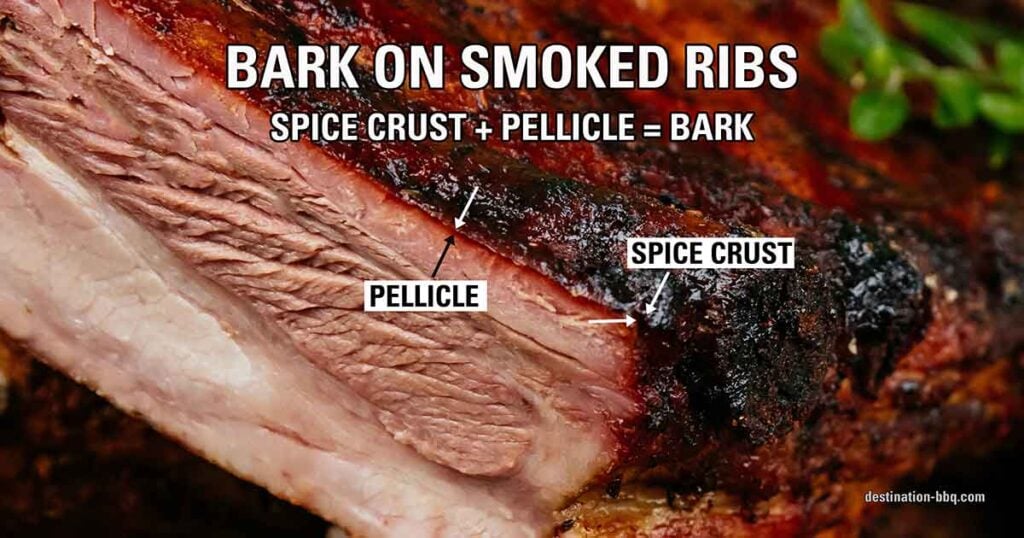
“As meat proteins under the spices bind and clump together, they form a complex tightly bound matrix of compounds called polymers which form a skin called a pellicle,” says Blonder. “On the surface just beneath the spice crust. The pellicle is usually less than a millimeter thick, not unlike the skin on latex paint in a can. Once the polymers are formed, they are permanent and cannot be dissolved.”
Finally, rendered fat from the meat may slick the surface, giving bark a sheen. (Note: A heavy fat cap can actually prevent bark formation on the meat itself – most pitmasters trim off excess fat so bark can form on the muscle surface, not on a layer of fat that will be discarded.)
How Bark Forms
Bark formation is a slow, transformative process that happens in stages as you smoke the meat:
- Rub Becomes a Wet Paste: At the start of the cook, the meat is coated in a spice rub. As the meat heats up to the low smoking temperature (typically 225–275°F), it begins “sweating” out moisture. Water from the meat (and any water in the smoke or a water pan) dissolves water-soluble rub ingredients like salt and sugar, creating a gritty, wet slurry on the meat’s surface. Fat renders out as well, dissolving fat-soluble spices like paprika or garlic powder. At this stage, the rub is no longer dry powder – it’s a flavor-packed paste coating the meat.
- Smoke Deposition and Color Change: As smoke from the burning wood circulates, particles in the smoke adhere to the sticky surface. This is when the bark darkens in color. Without much smoke, a bark would cure into a deep mahogany-brown. With plenty of smoke and time, however, that bark can turn nearly black – a shiny ebony “lacquer” that looks burnt but isn’t. The smoke deposits not only color but also phenols and other compounds that add smoky flavor to the bark. (Clean, thin blue smoke is ideal here – too much thick white smoke can deposit soot or creosote, leading to bitterness.) Importantly, at normal barbecue temperatures sugar in the rub does not burn black. Table sugar won’t caramelize until over ~300°F, so the black color of bark comes largely from smoke and prolonged Maillard browning, not burnt sugar. Wood choice influences color and bitterness; see our BBQ Wood Pairing Guide.
- Drying and Maillard Reaction: As the cook continues, the surface moisture slowly evaporates. This evaporation cools the meat (the infamous “stall”), but eventually the surface dries enough that Maillard browning kicks in. The Maillard reaction – a chemical dance between amino acids and sugars – browns the outer layer of the meat and rub, producing hundreds of new flavor compounds that taste toasty, savory, and complex. This is the same reaction that creates the golden crust on a seared steak, only in BBQ it happens at lower temperatures over a longer time. Maillard browning deepens the color of the bark and firms it up into a thin shell.
- Pellicle Formation (Polymerization): Beneath the spice crust, the heat causes proteins on the meat surface to bond into a durable layer called a pellicle. In BBQ science terms, meat proteins undergo “diffusion-limited, irreversible polymerization” (as Blonder describes it) – basically, they form a permanent skin that locks spices and smoke particles in place. This pellicle is very thin (often less than 1 mm) but gives bark its distinctive bite (a bit like the skin on smoked salmon or jerky). Once formed, the pellicle won’t dissolve – it’s there to stay. A well-formed pellicle is one reason bark doesn’t fall off when you slice the meat. (In old-school BBQ where only salt is used, the bark you get is essentially pure pellicle – a thin, golden-brown chewy–crisp skin that can even peel off in sheets if it gets too dry.)
In summary, bark forms through low-heat dehydration and chemical reactions rather than direct charring. Smoke, spices, protein, heat, and time all play a part. The end result is a dark, spice-laden crust fused to the meat. When done right, it’s packed with flavor (without any burnt taste) and provides the defining texture of authentic barbecue.
Plain-English recap
- Rub + smoke make a sticky paste that dries and browns over time.
- The Maillard reaction (not burnt sugar) darkens color and builds flavor at BBQ temps.
- A thin pellicle forms under the rub so the bark stays put when you slice.
That’s the whole idea: dry surface, time, and clean smoke.
Key Controls for Bark
Small tweaks make a big difference. Focus on pit temp, airflow, moisture, wrapping, and your rub.
Temperature & airflow
Run a steady 225–275°F. That range dries the surface and lets the Maillard reaction build color without scorching; stable airflow (exhaust open) keeps smoke clean and thin. On a pellet grill, smoke output is very clean; if bark color is pale, stay in the 225–250°F range longer or add a dedicated smoke tube to increase smoke exposure. On a charcoal kettle, the Snake Method (a slow-burning arc of briquettes lit at one end) keeps 250°F steady for hours so bark can set evenly.
Spritz timing
Spritz only after the surface sets and the rub no longer wipes off. Use light, occasional mists; taper off in the final hours so the bark can dry and firm.
When to wrap
The Texas crutch speeds tenderness but softens bark. If you wrap, wait until the bark is set and dry (often ~165–170°F) and prefer butcher paper over foil. A digital thermometer is a crucial tool here; while it doesn’t confirm the bark is set, it helps you track the meat’s internal temperature and recognize the “stall,” which is a good indication that the meat is ready for the next phase.
Binders & rubs
Pat meat dry and apply a generous, even coat; coarse grains (kosher salt, cracked black pepper, turbinado sugar) build texture. Binders help adhesion more than flavor, optional.
(Result: dark, flavorful, firm bark without tasting burnt.)
Bark on Brisket: Quick Tips
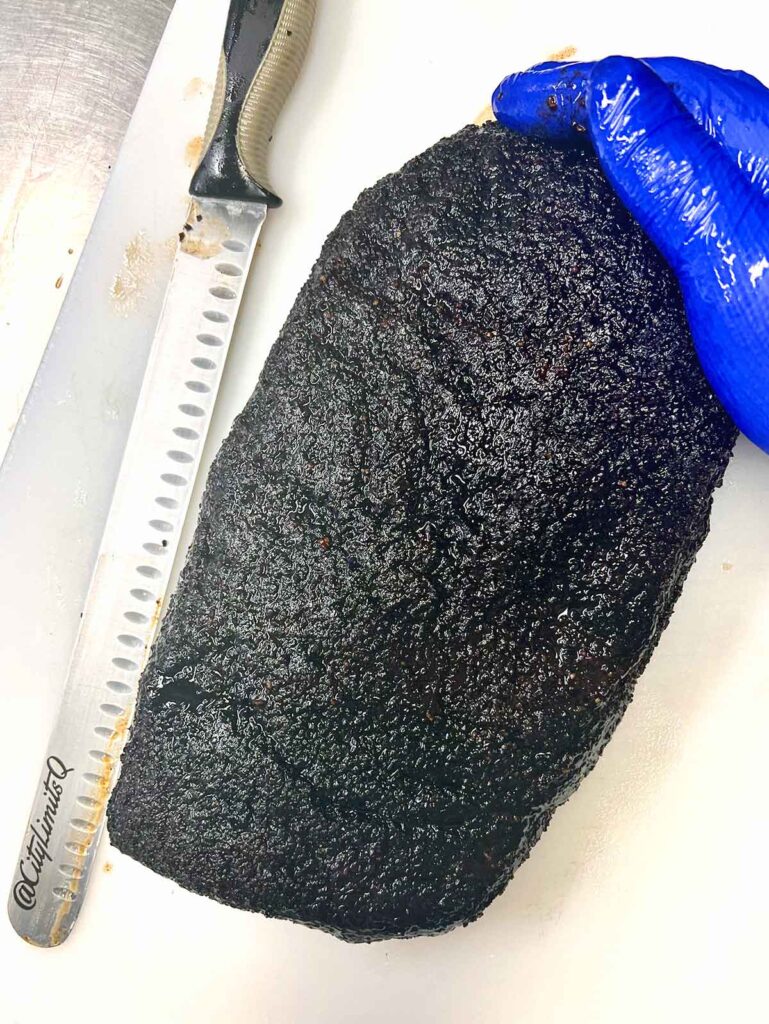
When it comes to brisket, bark is king. Use these quick tactics to build a dark, flavorful crust that stays firm through the cook and on the slice.
- Texas-style rub: Use a coarse 50/50 blend of black pepper and kosher salt. Pat it on firmly (mustard binder optional) and let the brisket sweat ~30 minutes so the paste sets and becomes bark.
- Low and steady heat: Cook around 250°F with indirect heat. Keep airflow moving for a dry, convective environment that builds thick bark and avoids char.
- Wrap with care: Do not wrap until the bark is dry and firm to the touch. If you need to speed the cook, wrap in pink butcher paper around 165–170°F so the crust can breathe and stay drier than with foil.
- Rest and vent: Rest the brisket uncovered on a rack for 15–30 minutes so steam escapes and the crust stays crisp. Then hold wrapped as needed and slice with a sharp knife to keep the bark intact.
- Building in the right amount of time for a long rest and hold is the secret to an stress-free cook. You can use our brisket planner to work backward from your serve time and create a perfect schedule.
- Fat cap & spritz: On offsets, cook fat cap up; on kettles or drums, fat cap down to buffer direct heat. Spritz only after the surface has darkened, then keep intervals modest so the bark can set.
Dialing in these five levers—rub, heat, wrap, rest, and spritz—gives you consistently firm bark on brisket. With practice, each slice will carry that bold, smoky border that defines Texas barbecue.
Ribs & Pork Shoulder: Quick Tips
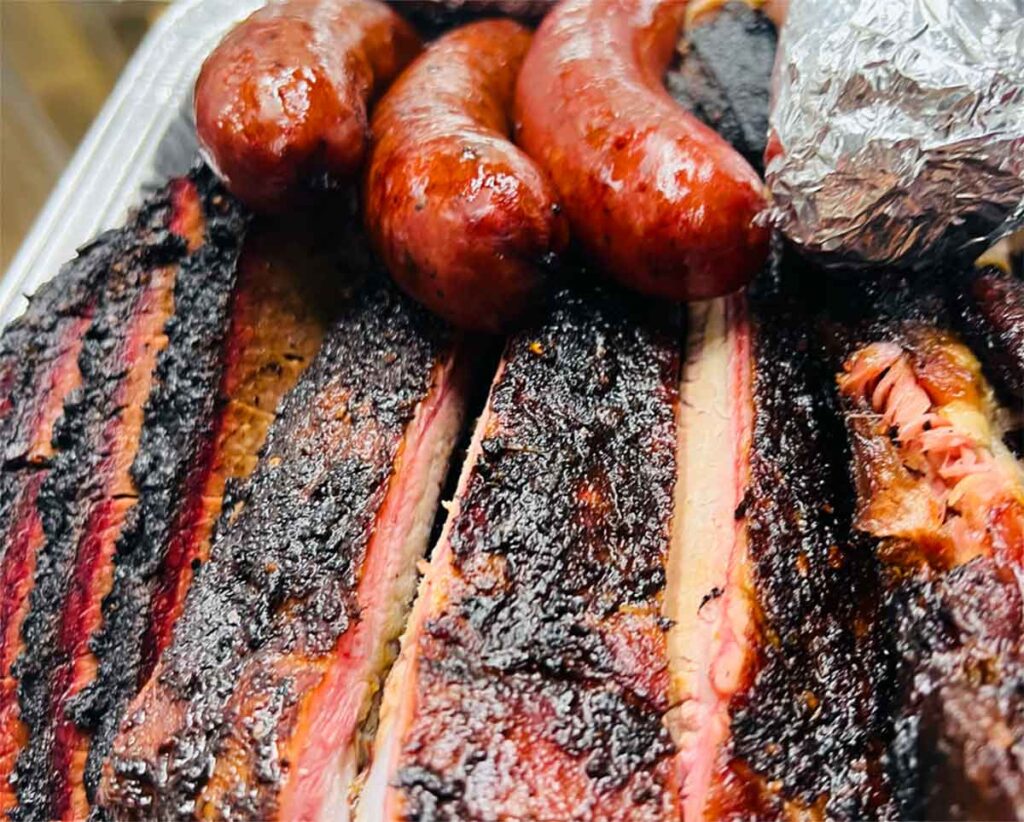
Two pork cuts, two slightly different paths to good bark.
Ribs: Quick Tips
- Membrane & trim: Remove the silver skin from the back; square ends for even cook. Thin, even rub; medium sugar is fine at 250–275°F.
- Cook plan: Run 250–275°F with clean blue smoke. Skip the wrap for a drier bark, or wrap mid-cook and unwrap to firm in the last 20–30 minutes.
- Spritz & sauce: Spritz lightly only after the surface sets; stop late so bark can dry. Sauce in the final 15–20 minutes, just enough to gloss, not drown.
- Texture target: Aim for bite-through ribs with a thin, flavorful crust, not a hard shell that fights the bite.
Pork Shoulder (Boston Butt): Quick Tips
- Prep: Trim the fat cap to about ¼″ so rub contacts meat. If the cap is thicker, lightly score just the fat about ⅛″ deep in a wide crosshatch; don’t cut into the meat.
- Cook plan: Run 250–275°F mostly unwrapped to build bark. Wrap in butcher paper only after color and firmness look right, or skip wrapping entirely.
- Moisture management: Spritz sparingly once set to prevent a rock-hard crust; let the last hour go dry to finish the bark.
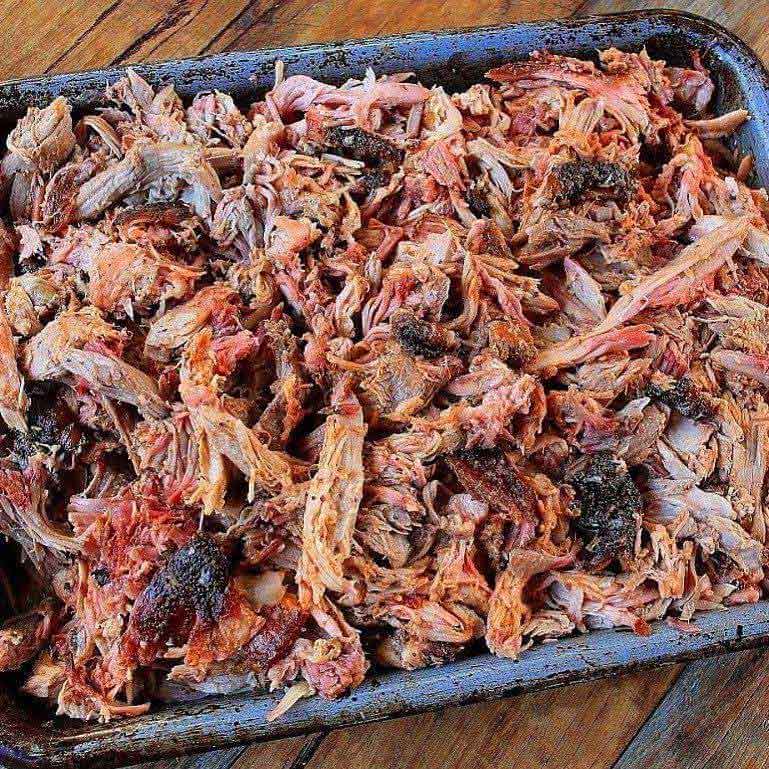
- Serving: Chop or pull and mix outside brown – often called Mr. Brown – through the meat so every bite carries bark.
If you want to compare how 225°F, 250°F, 275°F, and 300°F affect bark, wrap timing, and total cook length, see our pork butt timing guide.
Short and sweet: ribs like a thinner, bite-through crust; shoulder rewards time with a thicker, rugged bark.
Bark vs. Char vs. Smoke Ring
To avoid confusion, let’s distinguish bark from two other common barbecue phenomena: char and the smoke ring. Bark is not simply burning or a smoke ring; it’s its own unique feature of low-and-slow BBQ. The table below highlights the differences:
Texas A&M Meat Science on the smoke ring: “The smoke ring involves the chemistry of nitric oxide from burning wood combining with myoglobin in meat to form nitrosyl hemochromogen.”
| Surface feature | What it is | Looks / tastes like |
|---|---|---|
| Bark | Dry rub + smoke + Maillard + pellicle on meat surface | Mahogany to black; savory, not bitter; chewy-crisp |
| Char | Carbonized surface from excess heat or sugar burn | Sooty, bitter, flaky |
| Smoke ring | NO/NO₂ reaction with myoglobin beneath the bark | Pink band; mostly cosmetic |
Next up is troubleshooting with fix-now steps and what to change next time.
Troubleshooting Bark
When the crust isn’t acting right, it’s usually one of four levers: temperature/airflow, moisture, wrap timing, or the rub. Use the table below to match the problem to the likeliest cause and a quick fix.
| Problem | Likely cause(s) | Fix now / Prevent next time |
|---|---|---|
| Bark is soft / soggy | Wrapped too early; high humidity; over-spritzing; low pit temp |
Fix now: Cook unwrapped at 250–275°F; open exhaust; vent briefly to dry; stop spritzing.
Prevent next time: Wrap only after bark is firm; use butcher paper; spritz sparingly; verify grate temp. |
| Bark peels off | Thick fat cap under rub; pellicle too leathery; dull knife; steamed in foil/rest |
Fix now: Air-dry uncovered 10–15 minutes; slice with a sharp knife; avoid scraping the crust.
Prevent next time: Trim fat cap to ~¼″; apply rub directly to meat; spritz lightly only after set; rest in paper, not tight foil. |
| Bark is very dark and bitter | Dirty smoke/creosote; too much heavy wood; pit hotter than you think; restricted exhaust |
Fix now: Open exhaust; reduce fuel; switch to cleaner wood mix; wrap in paper to stop darkening.
Prevent next time: Favor oak/fruitwood; avoid green wood; keep exhaust open; measure temp at the grate; don’t smother the fire. |
| Can’t get darker bark without burning | Surface too wet for too long; light smoke output; rub too fine; short smoke time |
Fix now: Stop spritzing; hold at 225–250°F longer unwrapped to color.
Prevent next time: Use a coarser grind; ensure steady airflow; extend the smoke stage before wrapping. |
| Pale bark (common on pellet grills) | Low smoke density; short time at lower temps; high humidity; controller cycling |
Fix now: Add a smoke tube; run 225–250°F longer; finish unwrapped once bark is set.
Prevent next time: Use stronger pellets (oak/hickory blends); keep exhaust open; skip the water pan unless needed; plan a longer cook. |
| Bark softened during rest/hold | Wrapped too tight while wet; long hold in foil; pan juices steaming the crust |
Fix now: Vent on a rack 15–30 minutes before holding; re-dry briefly unwrapped at low heat.
Prevent next time: Wrap only after bark is set; hold in butcher paper; keep meat above accumulated juices. |
Set the fix in motion, then run steady heat with clean blue smoke and stop spritzing late so the surface can dry and the bark can re-firm.
Competition & Culture
In contests, bark is a tradeoff. Judges want big flavor, but they also score tenderness, so teams aim for a soft, bite-through bark rather than a hard, crunchy crust. Too firm and it can cost points even if the taste is spot on.
To thread that needle, many cooks wrap only after the bark is set, favor butcher paper over foil, glaze ribs lightly, and hold brisket warm so the crust relaxes. Some will unwrap or vent briefly before turn-in to re-dry the surface without turning it brittle.
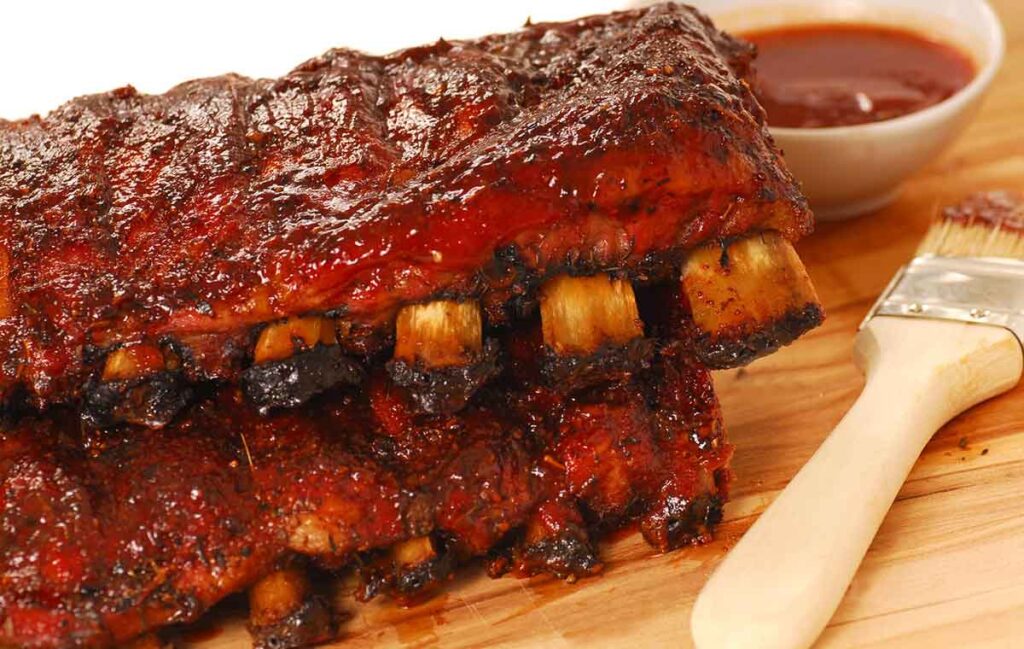
Appearance matters, too. A deep mahogany color, even coverage, and clean shine read as skill; sooty, flaky char does not. Great bark should add savor and texture without fighting the bite.
Outside the judging tent, bark is celebrated. Texas turns barky point meat into burnt ends; Carolina pitmasters mix “outside brown” into chopped pork so every serving carries that smoky crust. Many folks ask for extra bark at the counter because it tastes like time and wood well spent.
Bottom line: competitors soften bark to please the scorecard, while backyard cooks can choose their preference, tender and sauced, or firm and peppery with plenty of snap.
Frequently Asked Questions on How to Get Great Bark
Look for a dry, matte surface that no longer wipes off, a light scrape that doesn’t paste the rub, and a slight “sandpaper” feel. A probe should lift clean without sticky residue. On brisket this often happens around 160–175°F, but trust feel over temperature and wait until the crust resists gentle pressure.
Do not spritz until the sheen fades and the rub stays put. After that, a fine mist every 45–60 minutes is plenty. If the surface looks wet, skip the next round. Stop spritzing in the last hour before wrapping or finishing so the exterior can re-dry and firm.
A thin binder helps the rub adhere and won’t block smoke or bark formation. Use just enough to make the surface tacky, then apply a coarse rub directly to the meat. Let it sit until the rub looks damp and fused. Heavy, wet binders or thick fat left untrimmed are more likely to cause bark to slip.
Yes. Sugar deepens color but can scorch. For a firm, savory crust, rely on coarse black pepper, salt, paprika, and chilies, and give the meat time in clean smoke at 225–275°F. If color lags, extend the unwrapped phase rather than adding more sugar. Turbinado is the most heat tolerant if you do include it.
Vent the meat on a rack for 15–30 minutes to release steam, then re-dry briefly unwrapped at low heat to firm the surface without overcooking. Next time, wrap only after the bark is set, rest in butcher paper instead of tight foil, and keep the meat above pooled juices during the hold.
Now that you know the science behind bark, we want to hear from you. What’s your go-to wood for a deep, dark crust? Share your best tips or biggest bark blunders in the comments below!
Sources
- AmazingRibs: “What Is Bark, and Why It Makes Us Howl for More” (Meathead; Blonder commentary)
- Texas A&M Meat Science: “Barbecue Science” (smoke ring chemistry)
- Barbecue Bible: Steve Nestor, “Smoking Brisket Like a Pro”
Principal sources are also cited in the body above.
About the author
James Roller documents South Carolina barbecue for Destination BBQ and authored Going Whole Hog. He researches techniques, interviews pitmasters, creates tools, and curates reliable sources so home cooks can cook barbecue safely and confidently at home.
More about James.See something that needs a tweak? Send a correction.
« See All BBQ Terms