Hickory
See what hickory smoke does best, which meats can take its bold punch, how it compares to oak and pecan, and when to blend
What is Hickory Wood for BBQ?
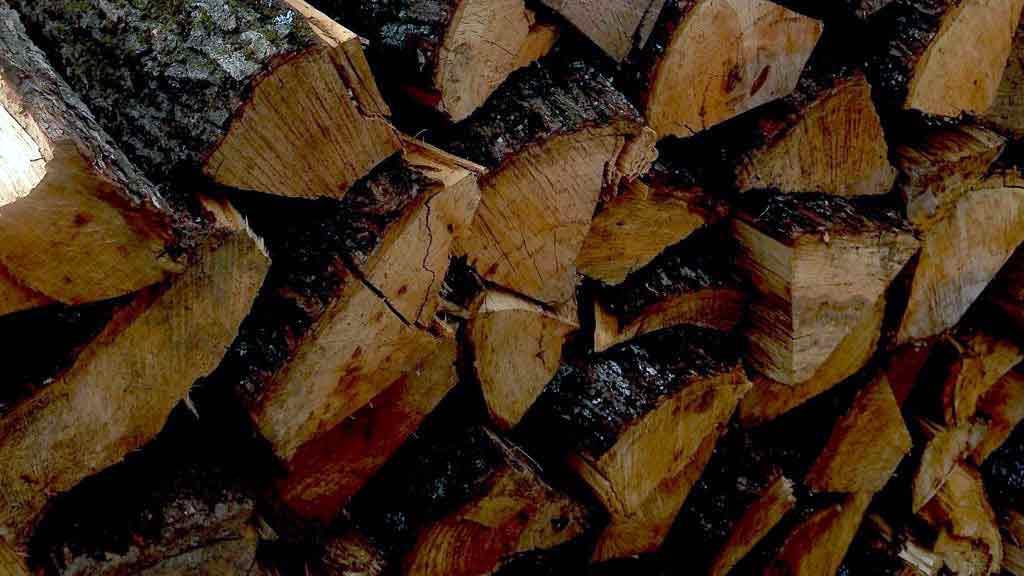
Hickory is a type of hardwood tree whose dense, heavy wood has become a cornerstone fuel for barbecue. In the pit, hickory burns hot and slow, producing a robust smoke that imparts a strong, savory-sweet flavor often described as “bacon-like.” Generations of Southern pitmasters have relied on hickory’s steady heat and rich smoke in traditional barbecue, from whole hog roasts in the Carolinas to smoked ribs in Memphis.
Key Takeaways
- Hickory = Bold BBQ Flavor: Hickory wood gives a powerful, bacon-like smoke flavor that’s classic for pork and brisket.
- Dense, Hot, and Steady: At ~51 lbs/ft³, hickory burns slow and hot, creating excellent coals for long cooks.
- Balance Matters: Too much hickory can turn bitter; blending with oak or fruitwoods often yields the best results.
- Tradition in Smoke: From Memphis ribs to Carolina pig pickings, hickory is deeply tied to Southern barbecue culture. (For pairings, see our BBQ Wood Selector.)
“The wood does make a difference. Hickory is great. It’s nice and hot and has a nice flavor to it. Oak, as well. Pecan. Cherry. Applewood. All these hardwoods are great. Those give you a much better flavor. You don’t want to get a wood like pine.”
~Rodney Scott, owner Rodney Scott’s BBQ
Understanding Hickory
Hickory Wood Characteristics for BBQ
Hickory refers not to one tree, but to a group of about 18 species in the Carya genus, part of the walnut family. For barbecue purposes, pitmasters don’t worry about the specific variety — all produce dense, heavy-grained wood that burns with steady heat.
“Hickory is among the hardest and strongest of woods native to the United States. On average, Hickory is denser, stiffer, and harder than either White Oak or Hard Maple..the wood of Carya species also has a very high thermal energy content when burned,” notes The Wood Database.
In fact, it may be that location the wood is grown that is more relevant to the final taste than the type of hardwood you use:
“Smoke flavor is influenced more by the climate and soil and how much oxygen the fire is getting than the species of wood,” writes Meathead Goldwyn of AmazingRibs. “This is crucial, especially when you are caught up in the game of deciding which wood to use for flavor. This means that the differences between hickory grown in Arkansas and hickory grown in New York may be greater than the differences between hickory and pecan grown side by side. And more important, this means that hot aggressively burning hickory with lots of oxygen will taste drastically different than the same hickory starved for oxygen and smoldering.”
On average, hickory weighs about 51 pounds per cubic foot, placing it among the heaviest North American hardwoods. That density means each stick holds a lot of energy: it burns slowly, produces excellent coals, and provides the kind of sustained heat that makes overnight cooks possible.
While hardwoods like oak, pecan, and hickory are favored for barbecue, softwoods like pine or cedar are avoided — they burn fast, produce harsh smoke, and can even be unsafe to cook with.
Flavor Profile
“Most essential to the meat smoking process is the source of the smoke—wood… Hickory wood is known for its sweet, powerful smoke flavor,” notes Texas A&M Forest Service.
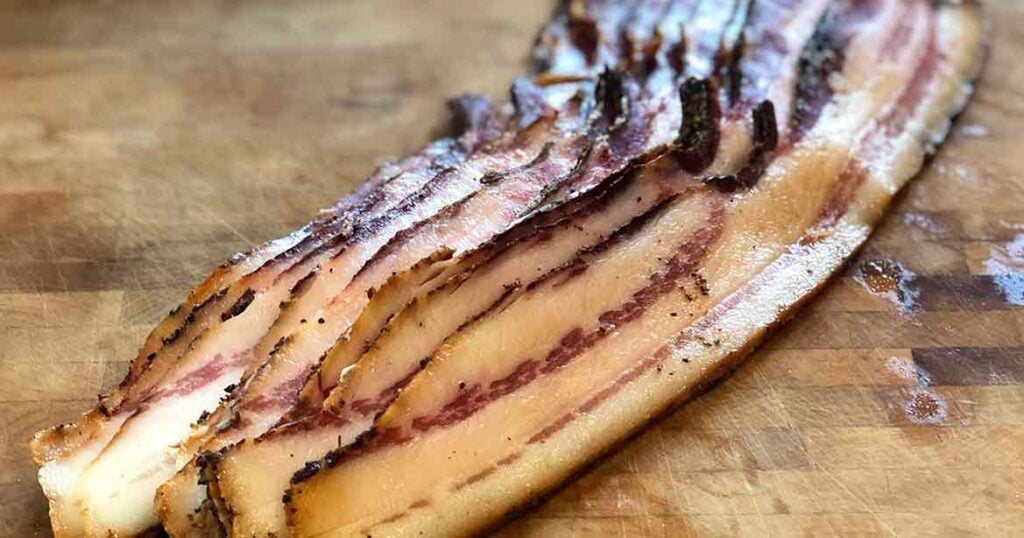
Hickory smoke is bold and full-bodied. It’s often described as savory, with a sweetly rich, bacon-like aroma and a hint of nuttiness. It’s stronger than fruitwoods like apple or cherry, but generally milder than mesquite.
“Pitmasters love to use hickory because it adds a dark color to smoked meats,” per Bradley Smoker. “Hickory has a stronger flavor than oak and the two woods are often used in combination, since they burn in a similar fashion. The popularity of hickory-smoked bacon originates from the smoke’s unique flavor – sweet like maple wood, pungent like mesquite.”
Because it’s so potent, hickory requires balance: used wisely, it gives pork and beef a mouthwatering, old-fashioned BBQ character; overused, it can turn acrid or bitter. Many pitmasters blend hickory with milder woods such as oak or apple — using oak for steadiness and hickory for flavor — which shows that mastering hickory is as much about seasoning the air as it is seasoning the meat.
Avoiding Bitter Hickory Smoke
The Problem: Hickory’s bold flavor can quickly turn harsh and bitter, ruining hours of work. Bitter hickory smoke tastes acrid, like an ashtray, and overpowers the meat’s natural flavors.
Why Hickory Turns Bitter:
- Green or wet wood – Unseasoned hickory smolders instead of burning clean
- Too much, too fast – Adding multiple splits creates thick, choking smoke
- Poor airflow – Starved fires produce creosote and harsh compounds
- Overuse on long cooks – Hickory for 12+ hours overwhelms any meat
Quick Fixes:
Use only seasoned hickory – Wood dried 6-12 months burns clean. Wet hickory = bitter smoke every time.
Start small – One split or 2-3 chunks maximum. Let each piece burn to thin blue smoke before adding more.
Maintain proper airflow – Keep dampers open enough for clean combustion. White smoke means adjust your air.
Time your hickory – Use only during the first half of long cooks. Switch to oak after 4-6 hours or let coals finish.
Pre-warm splits – Place your next piece on the firebox edge so it ignites quickly instead of smoldering.
Signs You’re on Track: Thin, almost invisible smoke with a sweet, bacon-like aroma. If neighbors complain about thick smoke, you’re using too much hickory.
History & Regional Use
Hickory became a barbecue standard simply because it was abundant across the Eastern and Southern U.S. Farmers and communities relied on what grew nearby, and in the South that often meant hickory and oak.
As a result, “hickory-smoked” became synonymous with authentic barbecue. Memphis ribs, Kentucky’s mutton, and South Carolina’s whole hogs have all been cooked for generations over hickory coals.
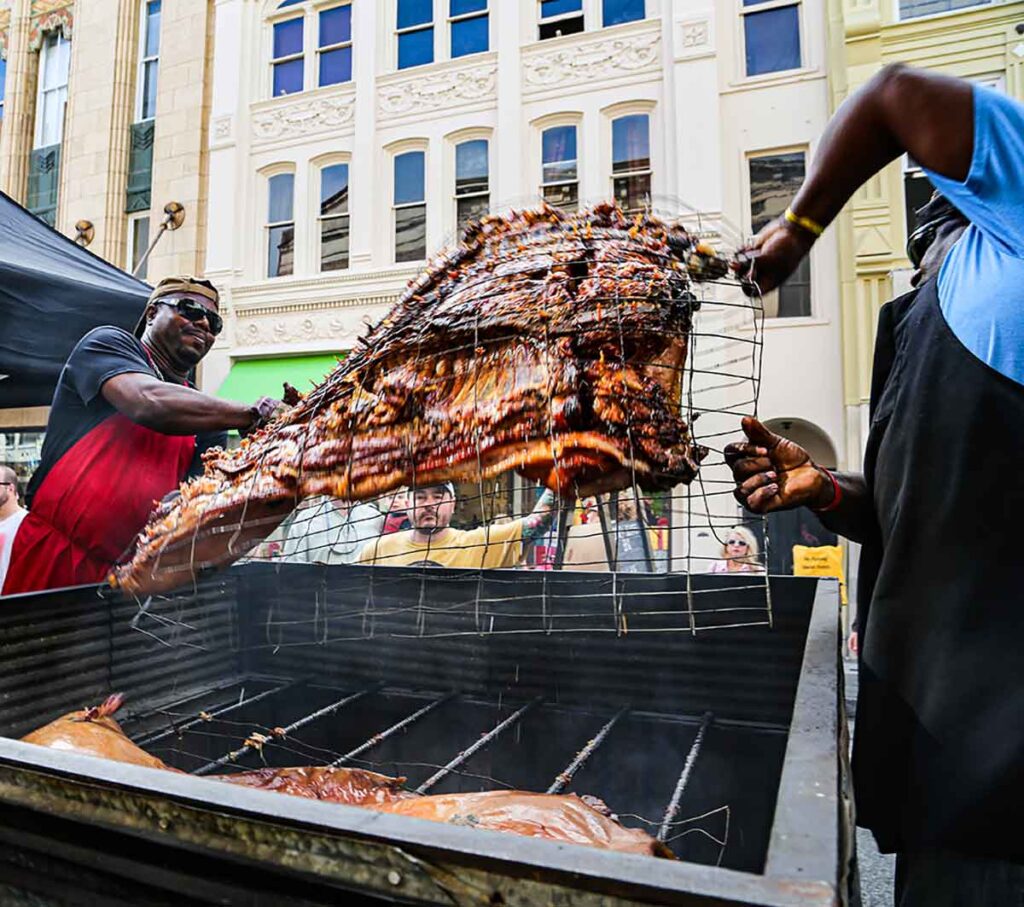
In the Carolinas, pits were traditionally fueled by a mix of oak and hickory, a practice still common at whole hog feasts. At pig pickings — community gatherings where a hog is slow-roasted overnight — hickory coals provide the bed of heat, while neighbors gather to pull pork straight from the hog. It’s more than just fuel; hickory smoke is woven into the ritual and the memory of whole hog barbecue.
Best Meats to Smoke with Hickory
Hickory’s strength makes it ideal for pork — shoulders, butts, ribs, and whole hog all benefit from its smoky-sweet punch. It’s also well-suited for beef brisket, chuck roasts, and other hearty cuts that can stand up to the intensity. Wild game and lamb can also take hickory’s smoke, while poultry and fish are best approached with care.
That said, not every veteran pitmaster is in love with hickory:
“Hickory is the most predominant wood used in barbecue. I’m not a big believer in it. I will augment a little here and there if I’m in a specific region. Hickory will overpower chicken and pork. Beef will tolerate it a little better, but your delicate meats will get that hickory burn. We prefer the lighter woods.,” as 7-time world barbecue champion Melissa Cookston explains.
To expand hickory’s range, many pitmasters mix in apple or cherry, or pair it with pecan, its milder cousin. Beyond meat, hickory’s smoke is also used for cheese, nuts, and even salt, showing its versatility. For more guidance on pairings, see our BBQ Wood Selector.
Buying & Selecting Hickory Wood for Smoking
When buying hickory, the key is dryness. Seasoned wood (dried 6–12 months) burns cleaner than green wood, which smokes harshly and is hard to light.
Some suppliers offer kiln-dried hickory, which ensures the wood is free of mold, bugs, or mildew and ready for safe cooking, but it’s not the choice most experienced pitmasters make. Hickory is available as:
- Logs/Splits: Best for offsets and pits, long-burning with high heat.
- Chunks: Fist-sized pieces for kettles and kamados, ideal for steady smoke.
- Chips: Quick-burning, suited for short cooks on gas grills; often soaked to extend burn.
- Pellets: For pellet grills, typically blended with oak for consistency, but still delivering hickory’s signature flavor.
Store wood in a dry, ventilated place to keep it from reabsorbing moisture.
Preparation & Use
No matter the cooker, the goal with hickory is clean, thin blue smoke. In an offset smoker, add splits to a solid coal bed and manage airflow to prevent smoldering.
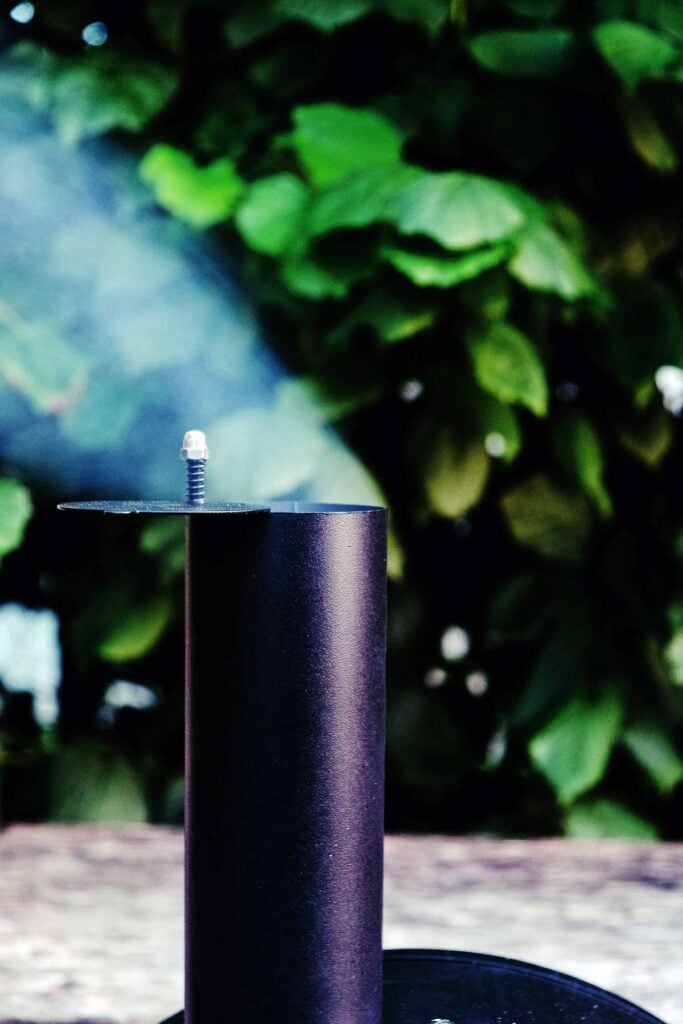
In kettles or ceramics, tuck chunks into a Snake Method charcoal setup for gradual release. Pellet grills make it simpler: fill the hopper with hickory pellets and let the auger feed. On gas grills, chips in a smoker box or foil pouch add a short burst of flavor.
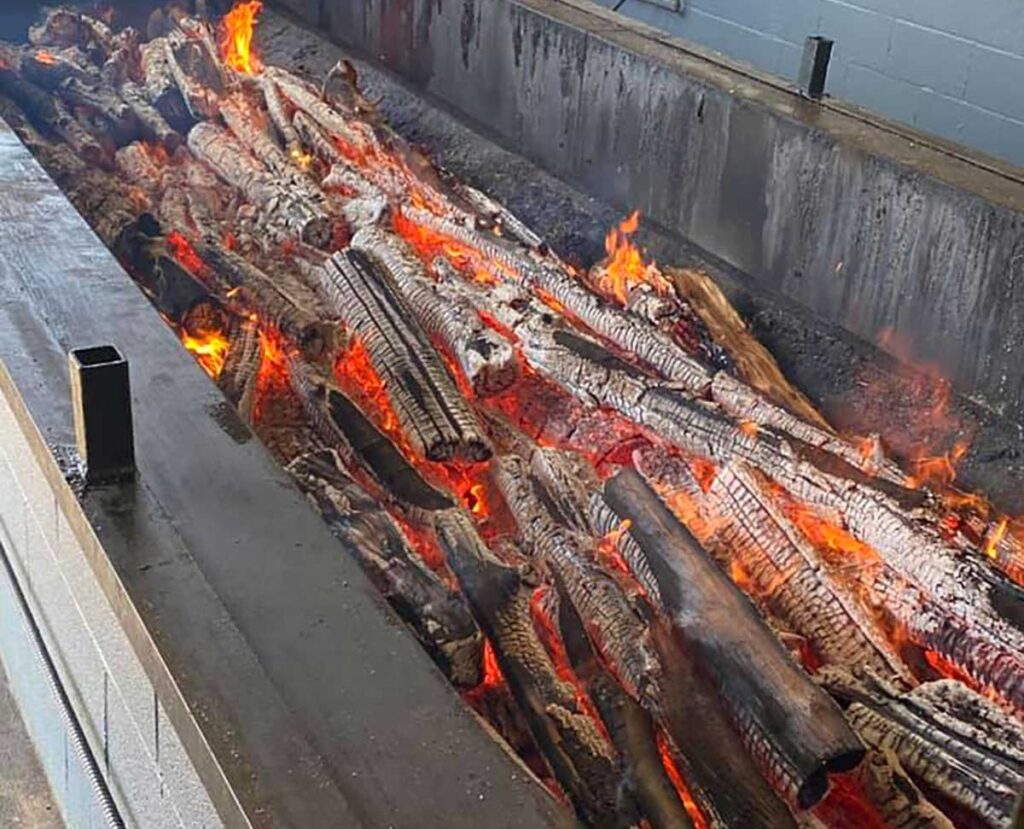
Hickory’s density also means it creates excellent coals. Many whole-hog cooks burn down hickory logs in a barrel, then shovel glowing embers under the meat. However you use it, remember that too much hickory too fast can smother flavor — add gradually and watch the smoke.
The Science of Hickory Smoke and Flavor
Hickory owes its flavor to lignin, a natural polymer in the wood. When heated, lignin breaks down into compounds like guaiacol (which gives smoky-sweet aroma) and syringol (responsible for that lingering, savory note).
Hickory’s high lignin content means more of these compounds reach your meat. This smoke contributes to two hallmarks of barbecue: the smoke ring and the bark. The smoke ring comes from gases like nitric oxide bonding with meat proteins, while the bark forms as rubs caramelize through the Maillard Reaction and smoke particles adhere.
Hickory’s heat — around 25–27 million BTUs per cord — also ensures a steady fire for long cooks, building both flavor and structure.
Comparison Table
| Wood | Flavor Strength | Smoke Flavor Notes | Burn Character | Best Uses | Where It’s Iconic |
|---|---|---|---|---|---|
| Hickory | Strong | Bacon-like, smoky-sweet, nutty | Hot & slow-burning; excellent coals; low sparking | Pork (shoulders, ribs), brisket, whole hog; cheeses & nuts | Southern BBQ (Carolinas, Memphis, Kentucky); hickory-smoked bacon & ham |
| Oak | Medium | Smooth, balanced, subtle | Steady heat; long-burning; user-friendly | Brisket, beef ribs, pork butt; all-purpose base | Central Texas brisket (post oak); South & Midwest |
| Mesquite | Very strong | Earthy, sharp; can be bitter if heavy | Extremely hot & fast; heavy smoke quickly | Quick grills (steaks); small blends for long cooks | Southwest & West Texas; N. Mexico |
| Pecan | Medium–strong | Nutty, slightly sweet; hickory-like but milder | Burns hot & steady; good coals; moderate ash | Pork ribs & shoulder, turkey & chicken, balanced brisket | Deep South pits; popular in competitions |
Competition Context
In competition barbecue, hickory is a classic. Judges expect its flavor in pork, but they don’t want it to overpower.
“Hickory is the tried and true mate for pork, but some people find it too aggressive and occasionally it can taste bitter,” notes Goldwyn.
Cookston takes a cautious view, preferring pecan and fruitwoods. But others, like Tuffy Stone, have built reputations mastering hickory’s intensity. As he told Sea Island Forge, “I’ve gotten so good at managing a fire that I can really manage that smoke.”
In contests, a clean, balanced hickory profile is often seen as a benchmark of fire control and skill.
Cultural Notes Regarding the Use of Hickory Wood for Barbecue
Culturally, hickory has become barbecue shorthand. “Hickory-smoked” is stamped on everything from potato chips to bacon, reinforcing the wood’s association with authentic Southern flavor.
In Kentucky, Owensboro’s barbecue mutton tradition depends on hickory pits. In Alabama, Big Bob Gibson’s pork shoulders were smoked over hickory. In Memphis, ribs are steeped in its smoke.
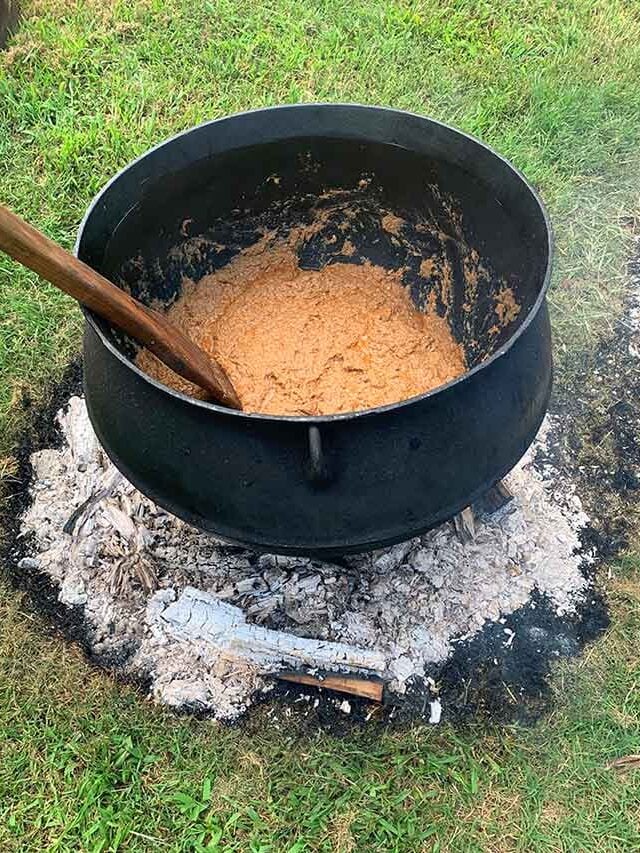
In the Carolinas, whole hog pits fueled by oak and hickory coals anchor gatherings like pig pickings, where the smoke itself becomes part of the celebration. South Carolina’s hash, often cooked alongside the hog or in a cast iron pot embedded in embers, sometimes carries a faint trace of hickory too — a reminder that smoke flavors the whole table, not just the meat.
Hickory Wood FAQ
Start with milder woods like oak first. Hickory is unforgiving—small mistakes create big flavor problems. Try blending 30% hickory with 70% oak when starting out.
Rule of thumb: kettles 2–4 for ribs and 3–6 for larger cuts; kamados 2–3 large chunks; add gradually and watch for clean blue smoke. Use 2-3 chunks for ribs, or hickory for just the first 4-6 hours of long cooks like brisket. Hickory is potent—less is more.
Bitter, acrid, and harsh—like an ashtray. Avoid by using thin blue smoke, not thick white smoke, and limiting hickory to the first half of cooks.
Pork shoulder and ribs, brisket, and hearty cuts shine with hickory’s bold, bacon-like smoke.
Hickory can overpower chicken. Use a light touch (fewer chunks),or blend with fruitwoods like apple or cherry instead (10% hickory with 90% fruitwood maximum).
About the author
James Roller documents South Carolina barbecue for Destination BBQ and authored Going Whole Hog. He researches techniques, interviews pitmasters, creates tools, and curates reliable sources so home cooks can cook barbecue safely and confidently at home.
More about James.See something that needs a tweak? Send a correction.
« See All BBQ Terms