Mesquite
Learn when mesquite shines, which meats can handle its strong smoke, how it compares to hickory and oak, and easy ways to tame it by blending
What is Mesquite Wood for BBQ?
Mesquite is a hardwood native to the American Southwest and northern Mexico, famous in barbecue for its intensely bold smoke flavor and its hot, fast-burning fire. It’s the wood that defines West Texas cowboy barbecue and northern Mexican grilling traditions, loved for searing steaks and adding punch to brisket, yet feared by some for its tendency to overpower.
Key Takeaways
- Mesquite = bold power. The hottest, smokiest wood in barbecue, mesquite delivers unmatched intensity — and can overwhelm if not managed.
- Best with beef and game. Brisket, steaks, and wild meats thrive under mesquite’s heavy smoke; delicate meats need gentler woods or blends.
- Rooted in the Southwest. From indigenous uses to cowboy barbecue and Mexican carne asada, mesquite is the signature wood of the desert.
- High-risk, high-reward. In competitions, mesquite can make brisket shine or ruin it — its use signals both confidence and skill.
“Mesquite is the smokiest wood out of all the smoked woods, and its rich, earthy flavor will destroy anything that can’t stand up to it.”
— Andrew Housman, in Food Republic
Understanding Mesquite
Species & Characteristics
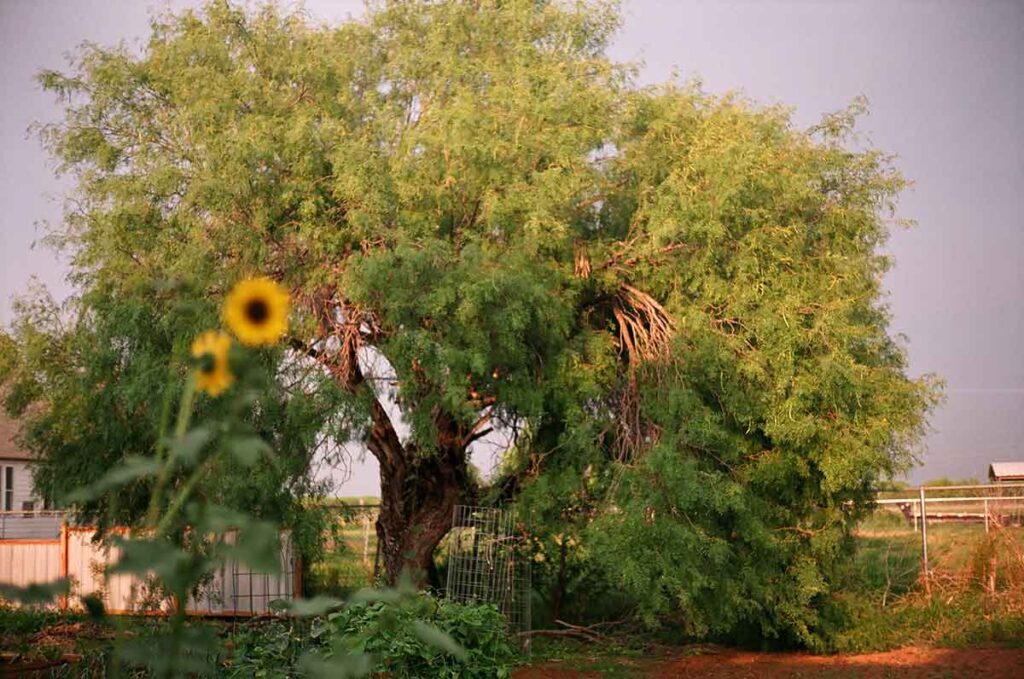
Mesquite refers to several thorny trees and shrubs in the Prosopis genus, with Honey Mesquite (Prosopis glandulosa) being the most common. It’s an exceptionally dense hardwood: on the Janka hardness scale, mesquite measures around 2,345 lbf, putting it tougher than oak or maple. It averages 45 lbs/ft³, meaning it’s tightly packed with fuel, which explains why it burns so hot and fast.
Mesquite wood shows a striking appearance: a rich, dark reddish-brown heartwood with contrasting yellowish-white sapwood. Its twisted grain makes it difficult to split but also produces beautiful boards prized for furniture and flooring.
Mesquite Smoke Flavor Profile
Mesquite smoke is strong, earthy, and savory, often described as pungent with a touch of sweetness. Some pitmasters even call it “cumin-y” — a spicy, herbal kick on top of its robust base. It’s considered the most intense of all smoking woods, stronger even than hickory, and it can build a dark, assertive bark quickly, so use a light hand.
This intensity divides cooks: some swear it’s their absolute favorite, while others say they “can’t stand straight mesquite.” Part of this divide may come down to wood prep — some claim kiln-dried mesquite tastes more acrid, while naturally dried wood gives a cleaner flavor. Technique matters, too: a clean-burning mesquite fire yields deep, complex smokiness, but smoldering logs can make food bitter, even turpentine-like.
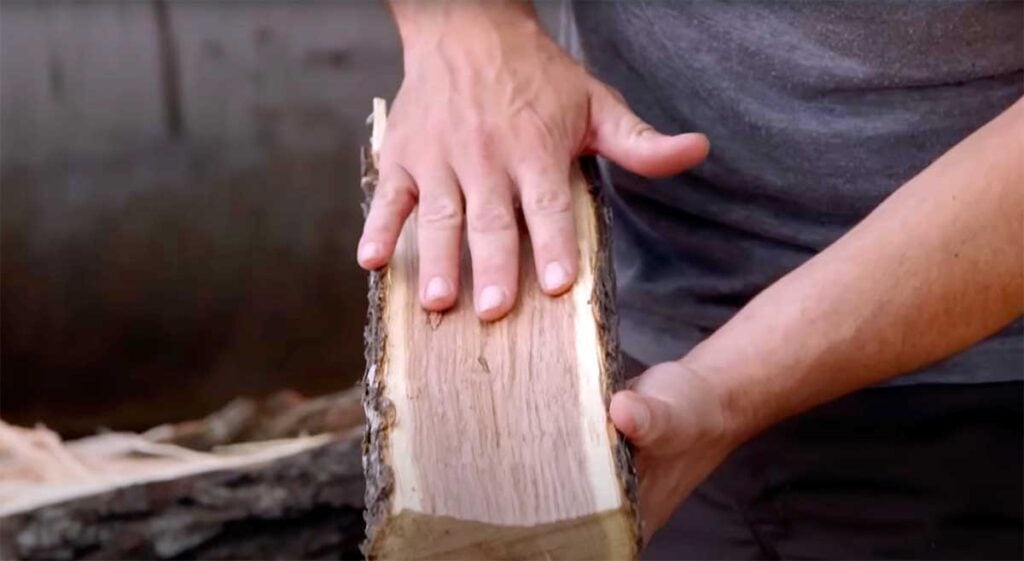
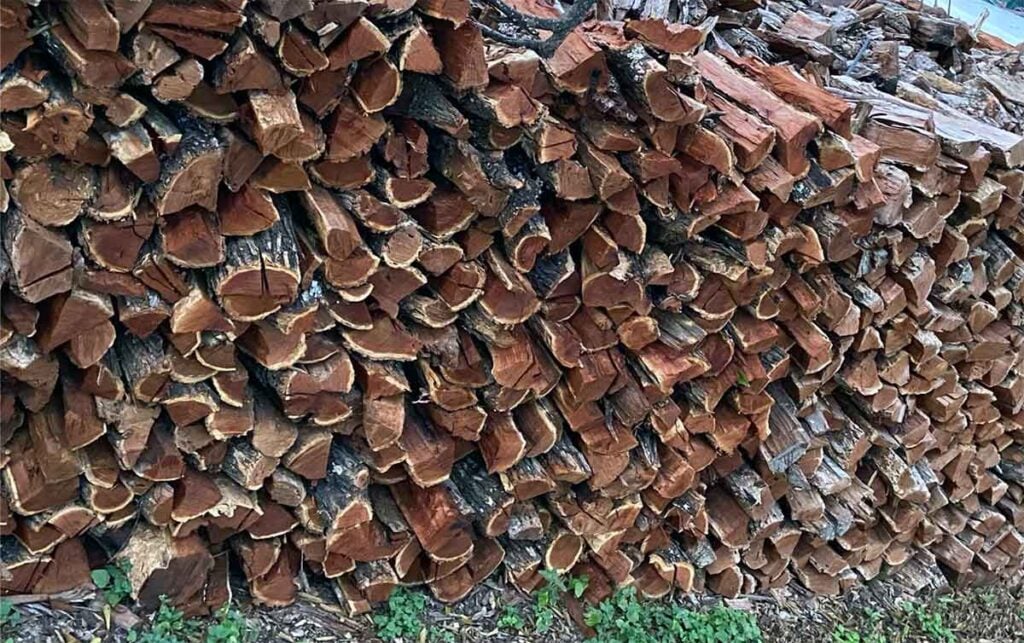
“You can always tell it because it always has red streaks, and it has a real tight bark on it,” said famed Austin pitmaster Aaron Franklin in his PBS Food series BBQ with Franklin.
“It’s great for grilling steaks. It’s good for shorter cooks. One of the things about Mesquite is that it’s got a really strong flavor when it’s green. The more you let it age, the more it mellows, and those flavors really take a backseat. So this is definitely a good candidate for letting it age for at least a year.”
Regional Traditions: West Texas & Northern Mexico
Mesquite has been central to life in the desert Southwest for centuries. Indigenous peoples like the Pima and Tohono O’odham considered it a “tree of life,” grinding its pods into a sweet flour, using gum and bark medicinally, and burning its wood for heat and cooking. The word itself comes from mizquitl, the Nahuatl term used by the Aztecs.
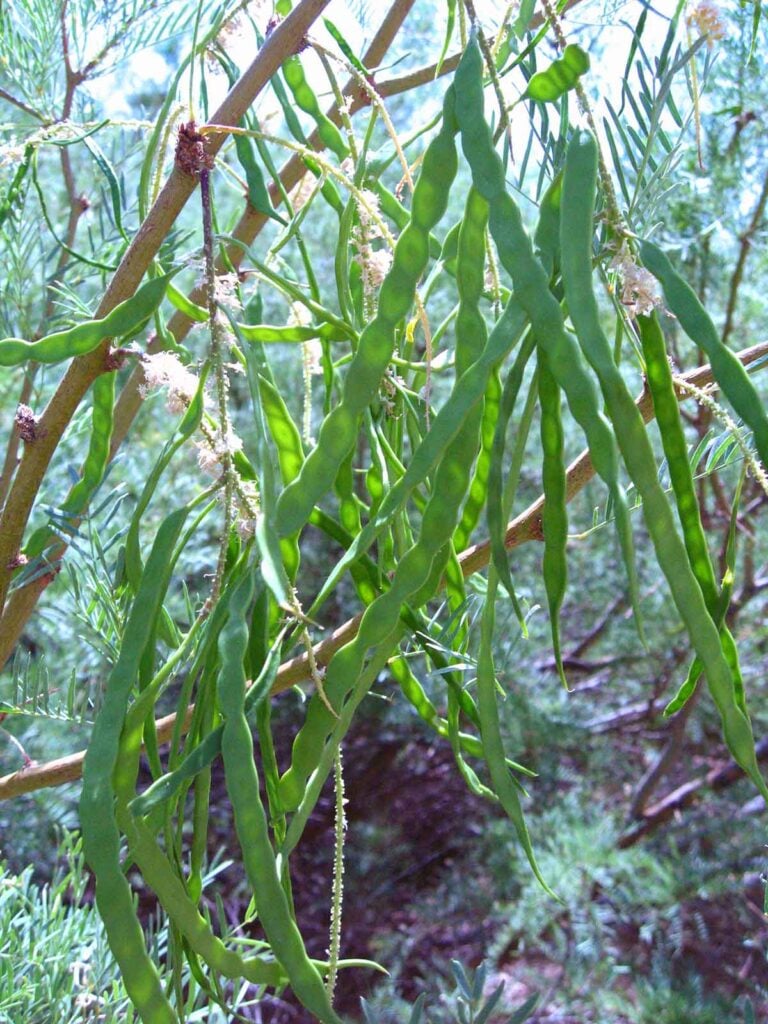
_beans;_Oasis_of_Mara.jpg)
Mesquite is also a legume, a member of the pea family (Fabaceae). Like other legumes, it fixes nitrogen in the soil, which allows it to thrive in poor, arid environments. Its bean-like pods, high in sugar and protein, were a crucial food source for native peoples and are still ground into mesquite flour today, adding a sweet, molasses-like flavor to breads, tortillas, and even BBQ rubs. The tree’s deep taproots — sometimes reaching over 100 feet — make it one of the most resilient plants of the desert, ensuring its role as both a survivor and provider.
Geography sealed mesquite’s role in barbecue. In the arid lands of West Texas, Arizona, New Mexico, and northern Mexico, mesquite is the most abundant hardwood. Naturally, ranchers and vaqueros used it for cooking: from carne asada over mesquite coals in Mexico to cowboy-style open pit barbecue in West Texas. In northern Mexico, mesquite has long fueled traditional barbacoa, its hot coals and assertive smoke driving underground pit cooks of lamb or beef.
European settlers cursed mesquite as an invasive nuisance, dubbing it “the devil with roots.” Yet today, it’s celebrated not just for its flavor but for its ecological value: mesquite helps stabilize soil and sequester carbon, giving it a role in sustainability discussions.
Best Meats for Mesquite BBQ Smoking
Mesquite’s assertive smoke works best with big, bold meats:
- Beef: Brisket and steaks are classic. The richness of beef balances mesquite’s forceful flavor — it’s the Texas standard.
- Wild Game: Venison, elk, and duck can all take the punch of mesquite smoke.
- Pork (cautious use): Some blend mesquite with milder woods to flavor fattier cuts like pork shoulder or ribs. Straight mesquite often overwhelms lighter pork or poultry.
- Not for Delicate Meats: Fish, chicken, and turkey can easily be ruined with pure mesquite — unless used in very small amounts or blended.
(For more pairing advice, see our BBQ Wood Selector.)
Buying and Selecting Mesquite (Logs, Chunks, Chips, Pellets)
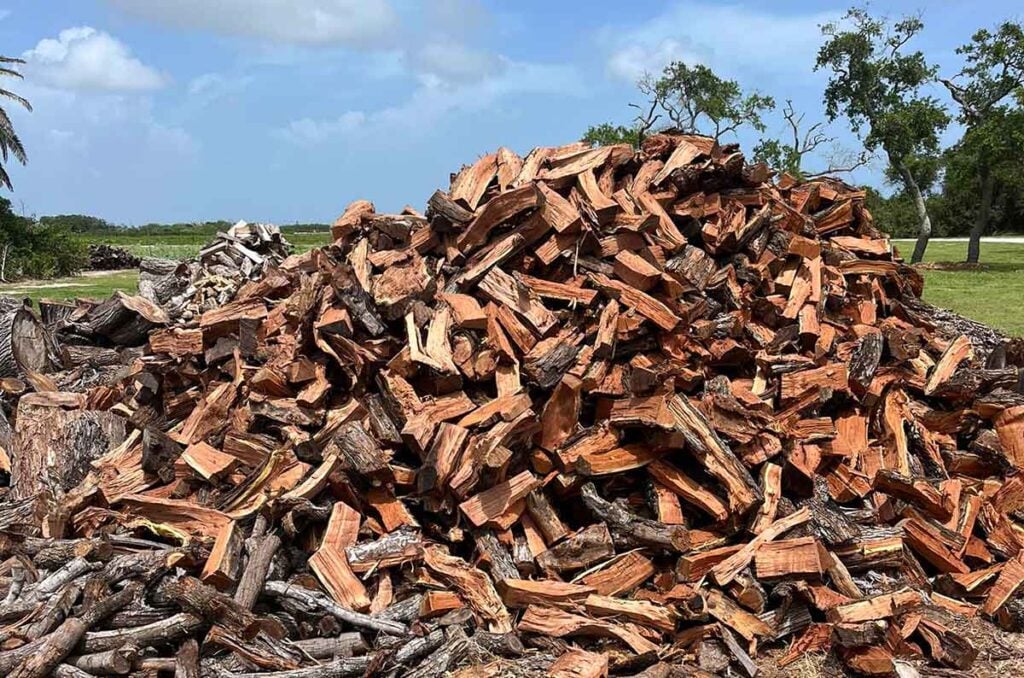
Mesquite is widely available in many forms:
- Logs and splits: Best for offset smokers or open pits.
- Chunks: Great for kettles, kamados, or drum smokers.
- Chips: Good for gas grills in a smoker box.
- Pellets: Common in pellet grills, often blended to tame the flavor.
Always choose well-seasoned wood. Green mesquite contains too much oil, producing acrid, resinous smoke. Fortunately, mesquite seasons quickly compared to oak — usually in 6–12 months — thanks to its lower water content.
How to Use Mesquite Wood for BBQ

Mesquite is fiery and fast. In offset smokers, many pitmasters start a fire with mesquite (for the coal bed and early flavor) and then switch to oak or hickory for a steadier, milder burn. In grills, mesquite coals burn hot and radiant — perfect for searing steaks or carne asada. Be prepared to add fuel often; mesquite coals burn down faster than oak.
Blending is common: mesquite plus oak for balance, or mesquite plus fruitwood for complexity. For pellet grills, mesquite pellets give a noticeable boost of smokiness many find lacking in milder pellets.
The Science Behind Mesquite’s Intense Smoke
Mesquite’s ferocity comes down to chemistry. It contains a remarkably high 64% lignin — compared to hickory’s 18%. Lignin is the plant polymer that produces smoky aromatics when burned. Breaking down, it yields compounds like guaiacol and syringol, responsible for barbecue’s signature smoky, spicy, and clove-like aromas.
It also produces more polycyclic aromatic hydrocarbons (PAHs) than other woods — 1250 µg/kg vs. 688 µg/kg in hickory smoke — which explains its heavier, sometimes harsher flavor. Mesquite’s hot burn creates nitric oxide and carbon monoxide that bind with meat pigments to form a prominent smoke ring, while its heavy smoke helps build a thick, dark bark on brisket.
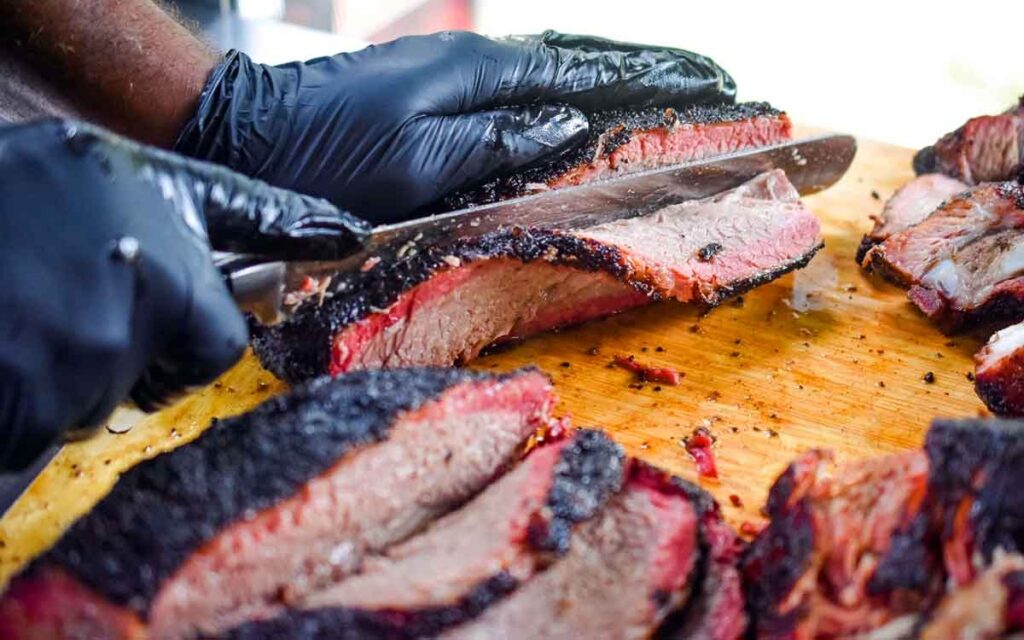
“Mesquite is the barbecue equivalent of a stick of dynamite — incredible power, but dangerous if you don’t respect it.” — Robb Walsh, Texas food writer
Competition Context
On the barbecue circuit, mesquite is known as a high-risk, high-reward wood. Judges expect balance — smoke should complement, not overwhelm. Many competitors avoid straight mesquite, worried it might turn acrid or dominate the box. Still, some Texas teams use a touch of mesquite on brisket for regional authenticity. Done right, it can help an entry stand out — but one misstep, and bitterness can sink a score.
Cultural Notes
Mesquite isn’t just fuel; it’s an icon. It evokes cowboy cooking on the range and Mexican carne asada in backyard parrillas. It flavors not only brisket but also cultural staples like mesquite-grilled cabrito (young goat) or carne seca (sun-dried beef).
Beyond the pit, mesquite pods are ground into flour for breads and sweets, while the lumber is sought for furniture. Once despised as a pest, mesquite is now embraced as a symbol of Southwestern heritage and resilience.
Mesquite vs Hickory, Oak & Pecan — Quick Compare
| Wood | Flavor Strength | Smoke Flavor Notes | Burn Character | Best Uses | Where It’s Iconic |
|---|---|---|---|---|---|
| Mesquite | Very strong | Earthy, sharp; can turn bitter if overused | Extremely hot & fast; heavy smoke quickly | Quick grills (steaks); small amounts blended on long cooks | Southwest & West Texas “cowboy” grilling; northern Mexico |
| Hickory | Strong | Bacon‑like, smoky‑sweet, nutty | Hot, slow‑burning; excellent coals; low sparking | Pork (shoulders, ribs), brisket; cheeses & nuts | Southern BBQ (Carolinas, Memphis, KY); bacon & ham |
| Oak (Post Oak) | Medium | Smooth, balanced, subtle | Steady heat; long‑burning; very user‑friendly | Brisket, beef ribs, pork butt; all‑purpose base wood | Central Texas brisket (post oak); common South/Midwest |
| Pecan | Medium‑strong | Nutty, sweet; milder than hickory | Moderate heat; more ash than hickory | Pork ribs, poultry, balanced brisket | Deep South BBQ; popular in competitions |
Mesquite Wood for BBQ: FAQ
Mesquite is the strongest common BBQ wood. Use it straight for bold beef and game; for pork or poultry, blend 10–25% mesquite with a milder base like post oak or fruitwood to avoid bitterness.
For long cooks like brisket: use mesquite only for the first 2 hours, then switch to oak. For ribs: add 2-3 small chunks just during the last hour. Mesquite burns fast and turns bitter, so use it strategically rather than throughout the entire cook.
Start at 10–25% for pork and poultry, 25–50% for brisket or steaks. If smoke seems acrid, reduce the percentage and wait for clean blue smoke before adding more fuel.
Burn clean: preheat splits, keep the exhaust open, and add small, frequent sticks to avoid smoldering. Aim for thin blue smoke—thick white smoke signals incomplete combustion.
Brisket, steaks, short ribs, and venison handle mesquite well. For pork ribs or chicken, keep mesquite as an accent wood instead of the main fuel.
About the author
James Roller documents South Carolina barbecue for Destination BBQ and authored Going Whole Hog. He researches techniques, interviews pitmasters, creates tools, and curates reliable sources so home cooks can cook barbecue safely and confidently at home.
More about James.See something that needs a tweak? Send a correction.
« See All BBQ Terms