Hardwoods
Learn how hardwoods burn and taste, which ones run mild to bold, how to season and store them, and when blending keeps smoke clean and balanced
What are Hardwoods (in BBQ terms)?
In barbecue, hardwoods are your flavor fuel—dense woods from broadleaf trees like oak, hickory, apple, and mesquite that create the smoke that makes great BBQ. These aren’t just burning logs; they’re what separates backyard cooking from real barbecue. Each wood brings its own character, from hickory’s bold smokiness to apple’s gentle sweetness.
Key Takeaways
- Hardwoods are the backbone of BBQ smoking. Dense woods like oak, hickory, pecan, and maple burn hot and steady, producing the clean smoke that defines great barbecue.
- Each hardwood brings its own flavor. Oak offers balance, hickory adds boldness, mesquite delivers intense earthy smoke, and fruitwoods such as apple and cherry provide sweet, mild notes—often blended for complexity.
- The best wood depends on the meat and region. Oak and hickory shine with pork and beef, applewood suits poultry and fish, mesquite pairs with brisket and game, while traditions vary from Texas post oak to Carolina hickory.
- Proper seasoning is essential. Wood dried to 15–20% moisture burns clean, giving thin blue smoke, while green or resinous woods create harsh or even unsafe flavors.
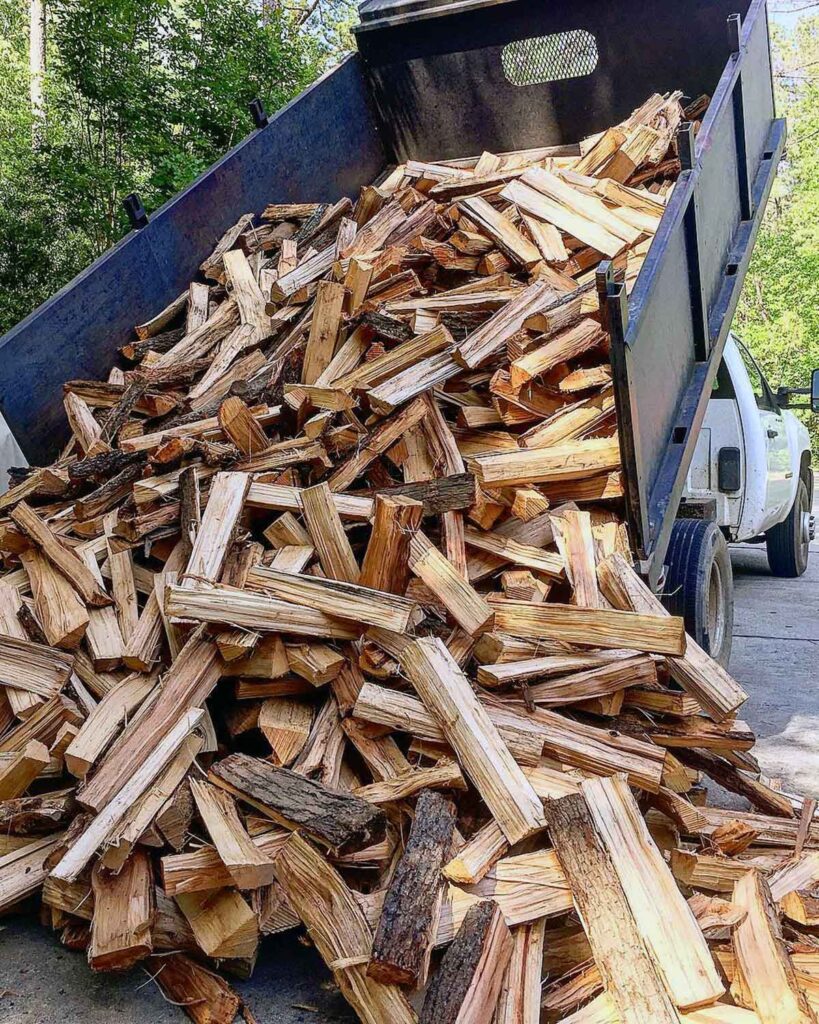
“The best smoke is thin and blue. It comes from clean-burning hardwood that’s dry and seasoned—not green and not resinous.”
– Meathead Goldwyn, AmazingRibs.com
Understanding Hardwoods
The Science Made Simple
Hardwoods are the fuel behind authentic barbecue, burning hot and steady to create the clean smoke pitmasters rely on. Each wood offers its own flavor—oak’s balance, hickory’s boldness, mesquite’s intensity, and apple or cherry’s sweetness—making it crucial to match the right hardwood with the meat.
Hardwoods come from trees that lose their leaves—oaks, maples, fruit trees. They grow slowly, creating dense wood that burns steady and clean. Softwoods (pine, cedar) are loaded with resins that create bitter, harsh smoke that’ll ruin your meat.
When hardwood burns at BBQ temperatures (225-275°F), it breaks down into hundreds of flavor compounds. The lignin creates phenols like guaiacol—the molecules that give you that classic barbecue smell. Different woods have different ratios of these compounds, which is why hickory tastes nothing like apple.
Properly seasoned to 15–20% moisture, these woods deliver the thin blue smoke that defines great BBQ. Per a report by the University of Tennessee, “the most important property of good firewood is moisture content. Firewood should be fully seasoned (to below 20 percent moisture content) before being burned. Because it can be difficult to ensure that purchased firewood is properly seasoned, the best approach is to buy and stack firewood well before it is needed. There is no danger in over-seasoning wood – drier is better.”
Best Hardwoods by Meat (Quick Guide)
If you’d like to see which woods shine with which meats, our BBQ Wood Selector lays it all out—tried-and-true matches from brisket to ribs to salmon, plus tips on mixing woods to create your own signature flavor.
Regional Roots
“The thing that makes barbecue barbecue, it makes it regional, is the type of wood,” said Aaron Franklin of Franklin Barbecue. “Wood is the primary flavor that we’ve got on barbecue.”
Wood choice started with what was available locally, and these practical decisions became BBQ traditions:
- Texas: Post oak and mesquite from cattle country
- Carolinas: Hickory from abundant southeastern forests
- Pacific Northwest: Alder for salmon smoking
- Orchard regions: Apple and cherry from fruit tree pruning
You can still guess a pit’s heritage just by smelling the smoke.
Best Hardwood Types for BBQ Smoking
Bold Flavor Woods
Oak – The reliable workhorse. Burns hot and long with clean, woody flavor that enhances without overpowering. Post oak, white oak, red oak—all good choices for steady heat and background flavor.
Hickory – The bold one. Strong, bacon-like smoke that built the reputation of Carolina whole hog and Kansas City ribs. Use carefully—too much overpowers.
Mesquite – Texas intensity in wood form. Burns hot and fast with earthy, almost chocolate notes. Perfect for beef brisket but can overwhelm lighter meats.
Mild Flavor Woods
Apple – Mild and sweet with subtle fruit notes. Adds beautiful golden color to meat. Gets along with everything.
Cherry – Sweet smoke plus gorgeous mahogany color. Competition teams love it for appearance and flavor.
Maple – Mellow sweetness with vanilla hints. Enhances without dominating.
Pecan – Hickory’s refined cousin. Nutty sweetness that’s perfect for long cooks without overwhelming intensity.
Alder – So mild it’s the standard for delicate fish. What it lacks in boldness, it makes up in versatility.
Hardwoods for Smoking: Comparison Guide
| Wood | Flavor Strength | Smoke Flavor Notes | Burn Character | Best Uses | Where It’s Iconic |
|---|---|---|---|---|---|
| Oak | Medium | Balanced, earthy, not overpowering | Steady, long burn | Brisket, pork butt, ribs, poultry | Central TX (post oak), Carolinas, Santa Maria CA |
| Hickory | Strong | Bacon-like, hearty, bold | Hot burning; can get bitter if heavy-handed | Pork shoulders, ribs, chicken | Southeast, Midwest, Carolinas |
| Mesquite | Very strong | Intense, earthy; easily bitter | Hot/fast burning | Beef (brisket, steaks), wild game | Texas, Southwest U.S. |
| Apple | Mild | Sweet, fruity, subtle | Moderate burn; blend for long cooks | Poultry, pork chops, fish | Midwest, orchard regions |
| Cherry | Mild–Medium | Slightly sweet; deep mahogany color | Moderate burn | Poultry, ribs, beef | Midwest; often blended with oak/hickory |
| Pecan | Medium | Sweeter, gentler than hickory | Slow, steady burn | Poultry, pork, brisket | Southern U.S. |
| Maple | Mild | Light, delicate sweetness | Even, clean burn | Ham, poultry, vegetables | Northern U.S., Canada |
Mixing Hardwoods for BBQ
“I personally like to use a combination of some hardwoods,” said Malcom Reed of How To BBQ Right. “Like I’ll take my oak and hickory and mix it with some pecan or maybe some fruit wood like apple or cherry or peach, something to give it some unique characteristics.”
Like Reed, pitmasters regularly blend hardwoods to create a more balanced smoke profile and to soften aggressive flavors, temper bitterness, and build a deep, clean bark. A steady-burning base wood like oak provides heat and consistency, while smaller additions of fruitwoods such as apple or cherry add sweetness and color.
This approach prevents stronger woods like hickory or mesquite from overwhelming the meat while still lending depth of flavor.
Common pairings include:
- Oak + Cherry: Balanced smoke with a touch of sweetness and a deep mahogany finish on brisket.
- Hickory + Apple: Boldness softened by gentle fruit, a favorite for pork ribs.
- Pecan + Oak: Nutty smoke layered over a stable fire, versatile for poultry or beef.
Experimenting with blends allows you to tailor smoke flavor to the cut of meat, cooking style, and even the audience. Just remember: a little goes a long way with stronger woods.
Hardwood Forms & Uses: Logs, Chunks, Chips & Pellets
Logs and Splits (3-6 inches) For offset smokers and all-day cooks. Provide steady heat and long burn times.
- What They Are: Full-sized pieces of split hardwood, used in large-scale smokers.
- Pros: Logs produce the most authentic, deep smoke flavor and are the traditional fuel of choice for large, offset stick burners. They are the most efficient fuel source for long, all-day cooks.
- Cons: They require the most skill and attention to manage. They burn with a lot of heat, so temperature control can be challenging, and they are only suitable for large, dedicated smokers.
- When to Use: Ideal for offset stick burners and other large, traditional smokers where wood is the primary heat and smoke source.
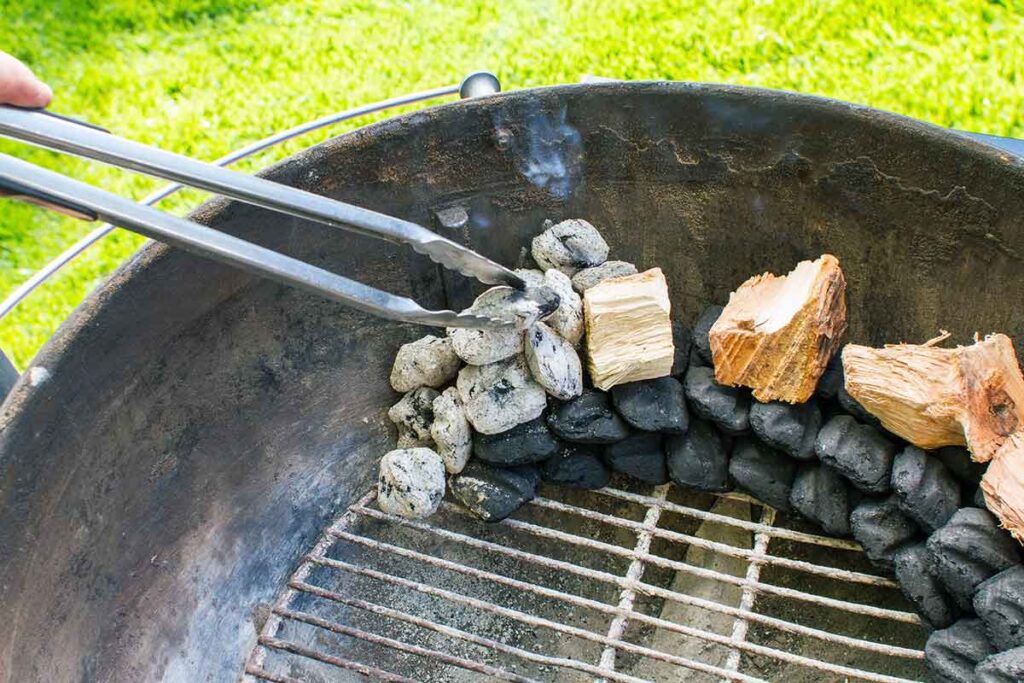
Chunks (2-4 inches) Perfect for kettle grills and backyard smokers. Big enough for endurance, small enough to ignite predictably.
- What They Are: Fist-sized pieces of wood, larger than chips but smaller than logs.
- Pros: They burn slowly and consistently, producing a steady stream of “thin blue smoke” for an hour or more. This makes them excellent for longer cooks. They are also versatile and work well with most smoker types.
- Cons: They are not ideal for short, hot cooks as they take longer to start smoking.
- When to Use: The go-to choice for charcoal smokers and grills. Chunks can be placed directly on the hot coals to create a lasting smoke source without needing to constantly add more wood.
Chips Quick-burning option for gas grills and short cooks. Need frequent replacement.
- What They Are: Small, fine pieces of wood, often sold in bags at grocery or hardware stores.
- Pros: They ignite quickly and produce smoke almost instantly, making them great for adding a short burst of flavor. They are also widely available and inexpensive.
- Cons: They burn out very fast, often in as little as 15-20 minutes, requiring frequent reapplication to maintain a consistent smoke. This makes them less ideal for long cooking sessions.
- When to Use: Best for gas or electric smokers, or for quick, high-heat grilling. For gas grills, you can place them in a foil pouch or a smoker box to prevent them from burning too quickly.
Pellets Modern compressed sawdust. Burn consistently in pellet grills.
- What They Are: Compressed sawdust, shaped into small, cylindrical pellets. They are the standard fuel for pellet grills.
- Pros: They are designed for consistency and temperature control. Pellets burn efficiently and cleanly, producing a steady, predictable smoke. The flavor is often pre-blended, offering a wide range of options.
- Cons: They are specific to pellet smokers and grills and generally cannot be used as a primary fuel source in other types of smokers. The flavor can be less pronounced compared to chunks or logs.
- When to Use: Exclusively for pellet smokers. They are the fuel and smoke source combined, making them a “set-it-and-forget-it” option.
How to Choose Quality BBQ Hardwood
Good hardwood should:
- Look weathered (grayish, not bright and fresh)
- Sound hollow when knocked together
- Feel lighter than fresh-cut wood
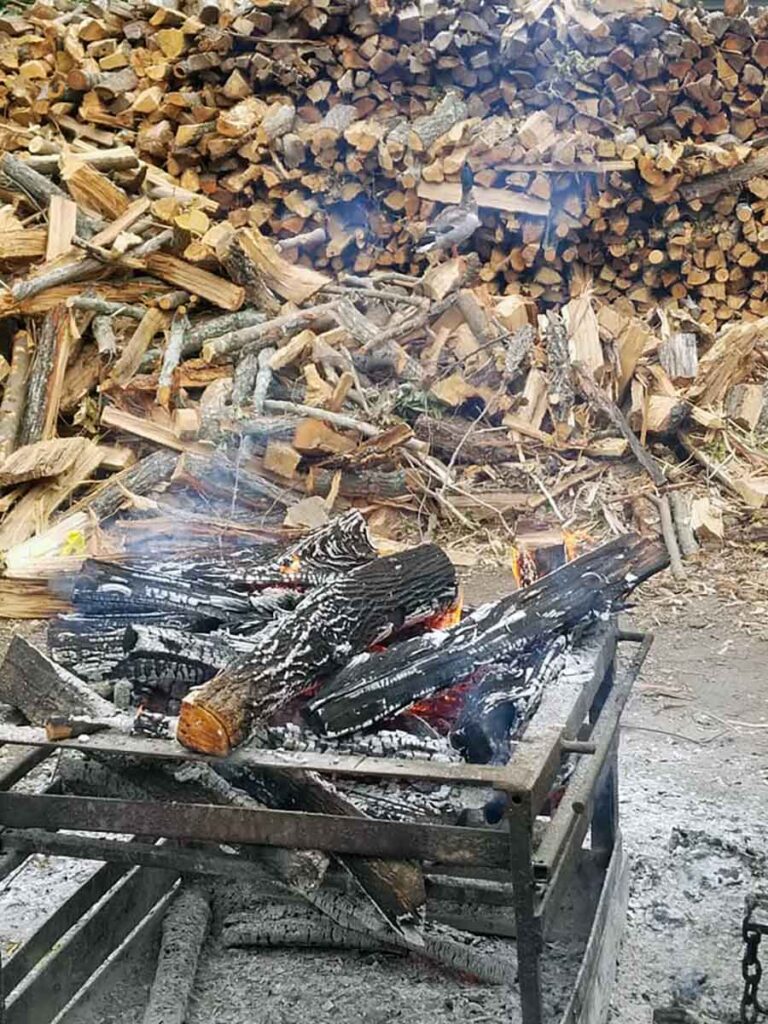
“Hardwoods like oak, hickory, and mesquite are ideal because they produce a rich, thick smoke… Always avoid softwoods like pine or cedar, as they burn poorly and can leave a bitter taste.”
– Oklahoma Joe’s
What to Avoid:
- Green (fresh-cut) wood with high moisture
- Treated lumber or painted wood
- Moldy or rotted pieces
- Unknown species
Regional Traditions
Texas – Post oak is king for brisket—burns clean with minimal flavor interference, letting the meat shine. Mesquite dominates South Texas for its intense character.
Carolinas – Hickory built the whole hog tradition. Eastern SC and NC uses it for whole pigs, Western NC adds fruitwoods for complexity.
Kansas City – Hickory’s boldness complements the region’s thick sauces and diverse meats.
Memphis – Hickory for ribs where boldness penetrates the meat, oak for shoulders needing gentler smoking.
Fire Management
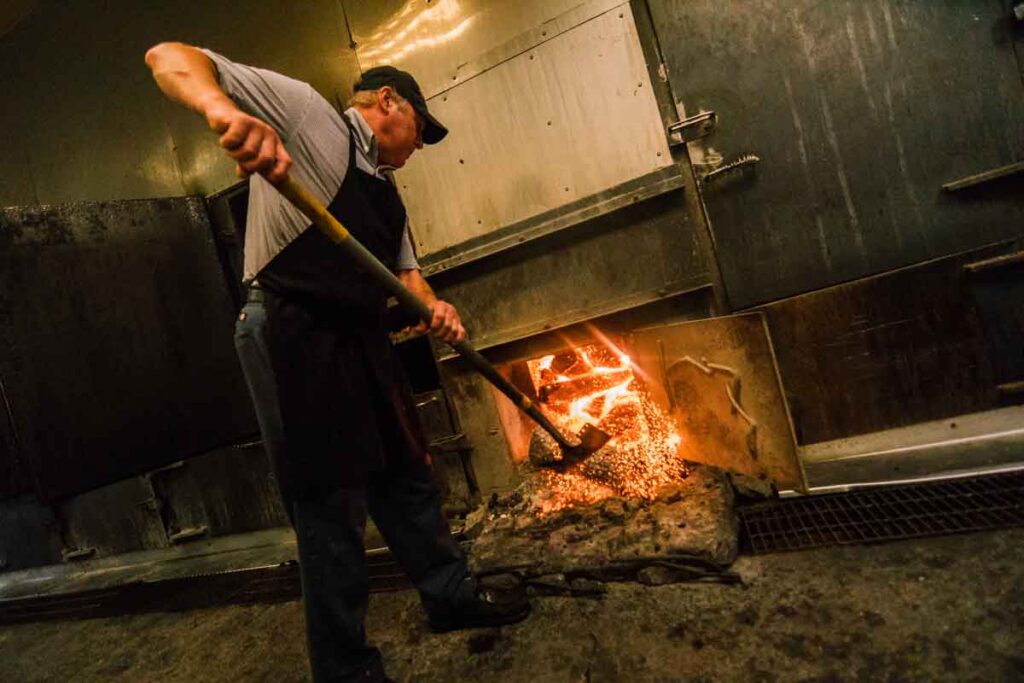
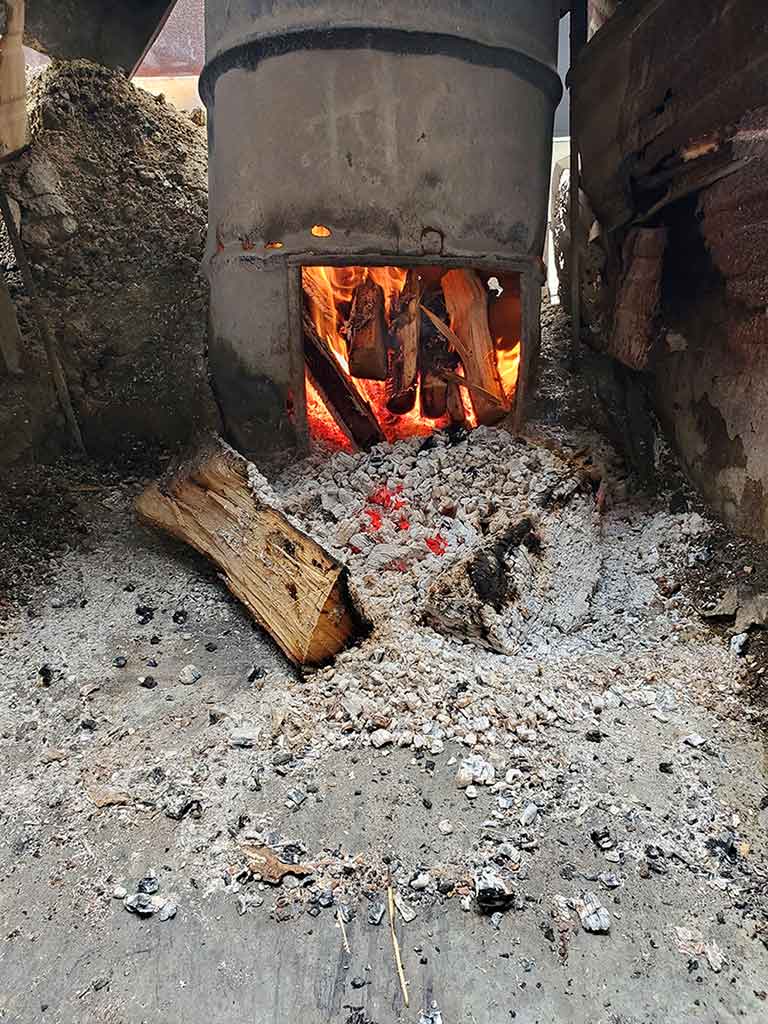
- Most hardwood fires burn 600-1,000°F in the firebox, settling to 225-275°F in the cooking chamber. The goal is thin, blue smoke—almost invisible wisps that mean clean combustion.
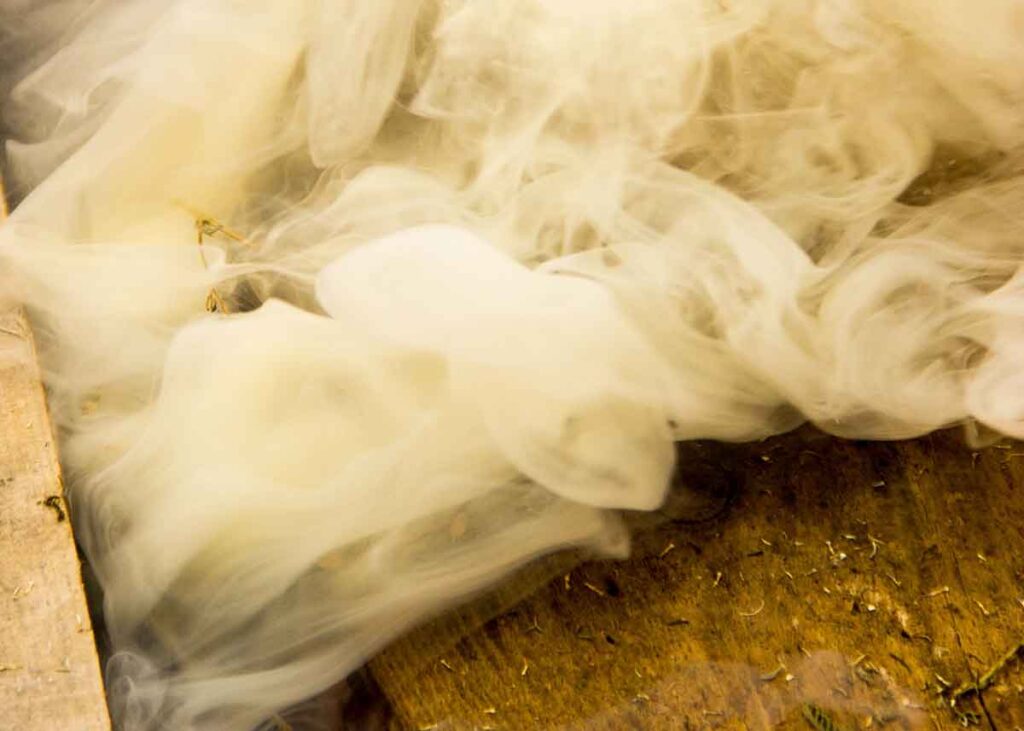
- White, billowing smoke = incomplete combustion = bitter flavors.
- Always add wood to established coals, not flames. Wait for clean blue smoke before adding meat.
- Many serious pitmasters use a separate burn barrel (or burn box) to pre-burn their hardwood down to clean-burning coals before transferring them to the main firebox. This technique ensures you’re only adding seasoned coals that produce clean smoke, rather than fresh wood that might create dirty smoke during the initial burn phase.
Competition Context
Judges taste smoke as a distinct flavor component. Balance matters more than intensity. Many winning teams use:
- Fruitwood blends for chicken and ribs
- Oak or pecan as anchor woods
- 80% oak + 20% cherry for color and subtleness
- Hickory-apple blends for balanced flavor
“Fruitwoods give a gentle sweetness. Hickory brings boldness. Oak is the steady hand that won’t let you down.”
– Chris Lilly, Big Bob Gibson’s BBQ
Common Mistakes
The biggest rookie mistake? Using green, unseasoned wood that produces harsh, white smoke.
The second biggest? Over-smoking with too much strong wood. Remember, you’re seasoning the meat, not overwhelming it.
Never use treated lumber, painted wood, or anything that’s been stored in contact with chemicals. Stick to identified hardwood species from reputable sources. And please, resist the urge to soak wood chunks for hours—a light 30-minute soak is plenty, but most experienced pitmasters will tell you to skip soaking altogether.
Beyond North America: Hardwood Traditions Worldwide
Hardwoods shape barbecue traditions well beyond the United States. Around the world, cooks rely on local trees to provide both heat and flavor, creating distinctive regional styles of smoked and grilled meat.
- Europe: Beech is widely used in Central Europe, producing a mild, nutty smoke that complements sausages, hams, and fish. In the Mediterranean, olive and almond wood add gentle, earthy sweetness to lamb and seafood. Fruitwoods like apple and cherry also appear in European smokehouses, lending delicate aromas to cured pork and charcuterie.
- Australia & New Zealand: Native hardwoods such as red gum and certain eucalyptus varieties are prized for their density and long burn. These woods are often used to cook lamb and beef, though pitmasters are selective, since some eucalyptus species can impart harsh notes.
- Latin America: In Argentina and Uruguay, dense hardwoods like quebracho are burned down into long-lasting coals for asado. The even heat they produce is ideal for grilling large cuts of beef. Fruitwoods, including orange, are sometimes added for fragrance and a touch of sweetness.
- Asia: In Japan, oak (ubame) is transformed into binchotan charcoal, known for its clean, steady heat in yakitori grills. In China, fruitwoods such as lychee are used to give roasted meats—like Cantonese-style duck—a lightly sweet, perfumed smoke.
- Africa: Across the continent, barbecue and open-fire cooking often rely on dense, slow-burning hardwoods. In South Africa, mopane wood fuels the braai, producing long-lasting coals ideal for beef, chicken, and boerewors. Acacia is common in East Africa, where its steady burn supports grilling spiced meats over open flame.
From beechwood smokehouses in Germany to mopane-fueled braais in South Africa, these traditions reveal a common truth: hardwood is more than fuel—it’s a defining ingredient in barbecue worldwide.
The Bottom Line
Hardwoods are what make barbecue, barbecue. Choose the right wood for your meat, make sure it’s properly seasoned, manage your fire for clean smoke, and let time do the rest.
BBQ Hardwoods Q&A
Oak is the best hardwood for beginners because it burns consistently, produces mild smoke that won’t overpower meat, and works well with all types of protein. It’s forgiving if you use too much and widely available.
Yes. Many pitmasters build a fire with a neutral hardwood like oak, then add fruitwoods such as apple or cherry for extra aroma and sweetness. Mixing allows you to balance strength and flavor.
No, soaking wood chunks or chips is unnecessary and can hinder clean combustion. Dry, seasoned hardwood burns cleaner and produces better smoke. Wood chips may benefit from a light 15-minute soak to slow their burn rate, but most professional pitmasters skip soaking entirely for both chunks and chips.
Quality hardwood is available at BBQ specialty stores, farm supply stores, and online retailers. Look for suppliers who specify the wood species and seasoning time. Avoid big box stores’ generic “smoking chips.”
White, billowing smoke indicates incomplete combustion from green wood or too much wood at once. Good smoke is thin and blue. Always add wood to established coals and maintain proper airflow.
About the author
James Roller documents South Carolina barbecue for Destination BBQ and authored Going Whole Hog. He researches techniques, interviews pitmasters, creates tools, and curates reliable sources so home cooks can cook barbecue safely and confidently at home.
More about James.See something that needs a tweak? Send a correction.
« See All BBQ Terms