Peach
Learn how peach smoke tastes, which meats it flatters, how it compares to apple and cherry, and when blending keeps sweetness balanced and clean
What is Peach Wood for BBQ?
Peach wood produces a mild, sweet-smoking hardwood that burns fairly hot but not as long as denser woods like oak. It yields gentle, fruity smoke that won’t overpower meats, making it perfect for pork, poultry, and fish. Pitmasters often use peach wood to enhance meat with subtle sweetness, either solo or blended with stronger woods for depth.
Key Takeaways
- Peach wood produces mild, sweet smoke with fruity and floral notes that enhances rather than overpowers meat flavors, making it exceptionally forgiving for beginners and ideal for pork, poultry, and fish where its natural sugars caramelize during smoking to complement the meat’s taste.
- Unlike traditional hardwood seasoning practices, peach wood performs well at higher moisture levels (20-25%), with competition pitmasters like Myron Mixon advocating for “semi-green” or even fresh usage to capture natural fruit sugars, though it burns faster than dense woods like oak and benefits from blending for longer cooks.
- Competition teams strategically use peach wood for its judge-friendly qualities because it’s hard to over-smoke with and produces pleasant aroma that allows rubs, sauces, and meat flavors to shine through, while its clean-burning characteristics create thin blue smoke rather than harsh, bitter flavors.
- Peach wood carries cultural significance in Southern BBQ regions like Georgia and South Carolina where orchard prunings became natural smoking fuel, and while it’s harder to find commercially than mainstream woods, it serves as both a versatile standalone option and an excellent blending wood with oak or hickory for balanced heat and flavor.
“Everybody knows me knows I love peach wood… It gives you a mild smoke…gives you a unique smoke. No other wood smells like it.”
— Pitmaster Myron Mixon, in his Facebook video

Understanding Peach
Peach Wood Characteristics
The peach tree is Prunus persica, a deciduous fruit tree in the rose family, with deep roots in Northwest China before spreading west along trade routes.
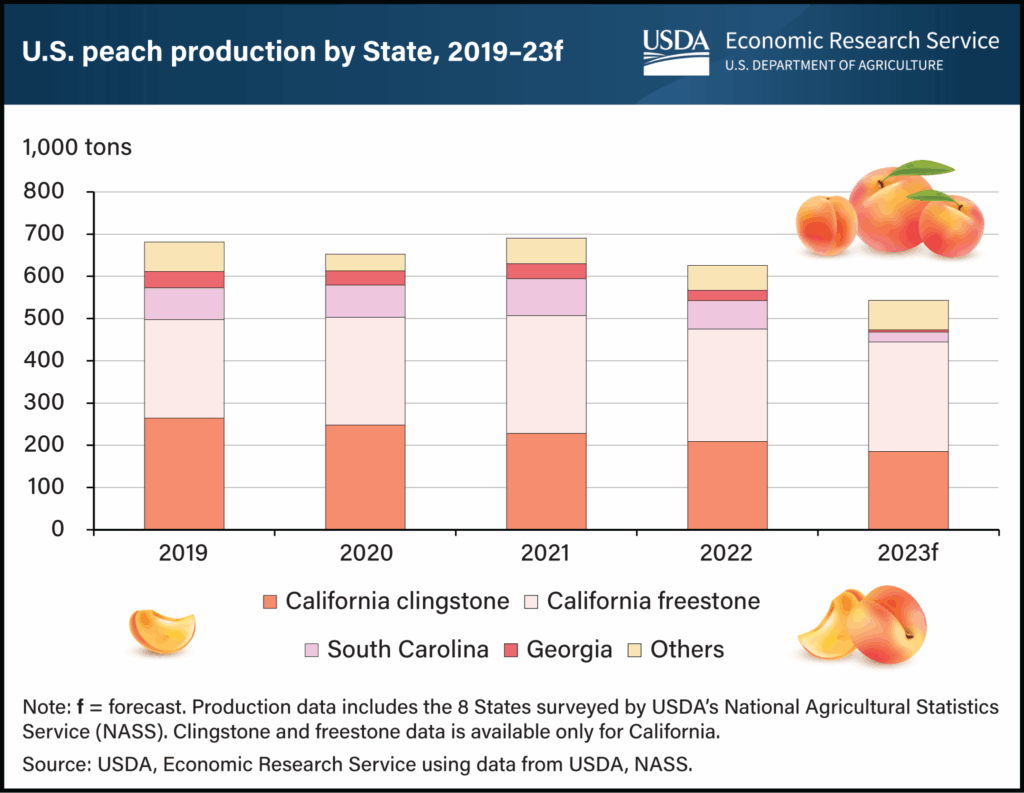
In U.S. barbecue, most peach wood comes as pruned orchard limbs or removed trees from major growing states—California (the clear leader), followed by South Carolina and Georgia—so availability often follows farm cycles rather than firewood markets, per the USDA.
Interesting side note: despite its “Peach State” moniker, South Carolina produces 2-3x more peaches per pound than Georgia, and both states pale in comparison to California in terms of peach production.
Peach wood is moderately heavy at about 3,500 lbs per cord (≈27.5 million BTU), lighter than oak or hickory but still providing good heat output. As a fruitwood, it is moderately dense and seasons to a target moisture around the “teens” to low-20s by percent.
Unlike traditional hardwood seasoning practices, peach wood performs exceptionally well at slightly higher moisture levels (20-25% versus the standard 15-20%), with some competition pitmasters advocating for “semi-green” or even fresh usage to capture natural fruit sugars.
Flavor Profile of Peach Smoke
Peach’s wood smoke flavor is mild, sweet, and a little floral—stronger than apple for some noses, gentler than cherry for others. On a practical spectrum, think fruitwoods (apple/peach/cherry) → oak/pecan → hickory → mesquite. Mainstream guidance places peach among the “mild fruit woods” suited to lighter meats.
While there might be some slight flavor differences in the peach vs apple wood or the peach vs cherry wood debate, truth is, you’re likely to be equally pleased with any.
Peach wood performs optimally in the 225°F to 275°F range typical of low-and-slow barbecue. At these moderate temperatures, the wood burns cleanly and helps set a gentle mahogany bark while allowing its natural sugars to caramelize gradually, creating the signature sweet smoke flavor without harsh or acrid notes.
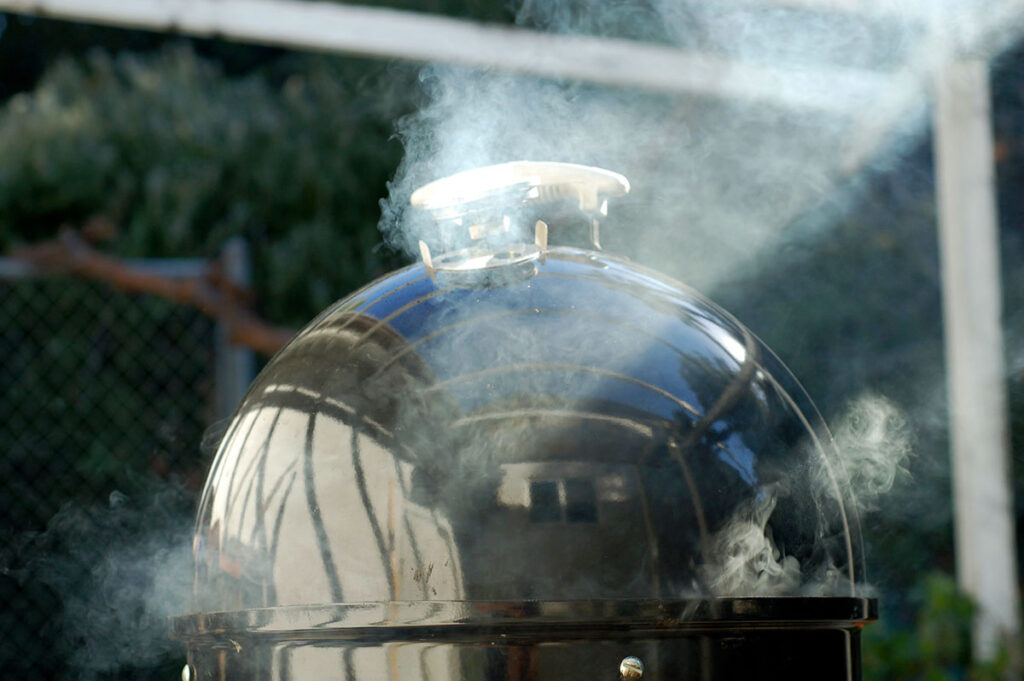
The key to keeping that sweetness clean is airflow: you want a small, lively fire that makes thin blue smoke rather than billowing white. As Meathead puts it, “The best tasting smoke is practically invisible, thin, and pale blue… Let the wood burn!”
Mixon, however, prefers to smoke with green peach wood. He told the Greenville News that “I do not season fruitwood. Fruitwood has got sugar saps in it. If you let it dry out, it’s still great fuel — still good wood to barbecue with. But the flavor you’re looking for is going to come from the sugar saps. It needs to be used when it’s green. You can’t do that with hardwoods. You do that with hardwoods and you’re going to wind up with a bitter flavor on the meat.”
That said, beginners may want to try this experimentally at first.
History and Regional Use
Peach wood’s role in barbecue has roots in orchard country, particularly the Southeastern U.S. where pitmasters historically used what was available.
In Georgia and South Carolina, using peach wood became a natural way to infuse local flavor into barbecue pits. When a fruit tree died or was pruned, that hardwood became fuel for the pit. While not the primary traditional wood for Southern barbecue (that belongs to hickory and oak), it served as a natural accent.
Competition and TV exposure helped peach jump from orchard towns to the broader BBQ world; Mixon’s frequent praise kept it in the conversation for pork cooks.
Best Meats to Smoke with Peach
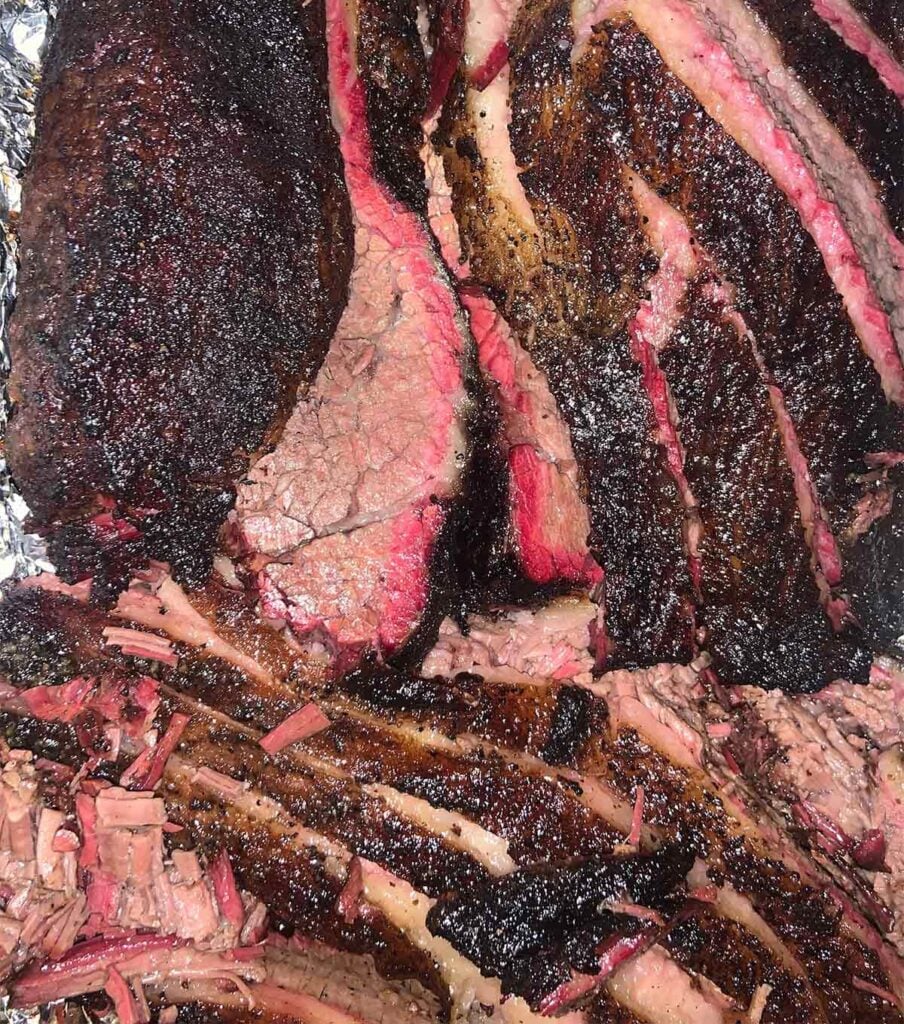
Peach wood excels with pork, poultry, and seafood—proteins that benefit from its mild sweetness without flavor competition. Aaron Franklin, in his Masterclass, specifically “recommends [fruit woods including peach] for fish, poultry, and pork” rather than beef applications where stronger woods prove more suitable.
The natural culinary pairing of peaches with pork works really well. The wood’s natural sugars caramelize during smoking, enhancing pork shoulder, ribs, and ham with complementary sweetness,” according to TheOnlineGrill.com. Similarly, poultry benefits from peach wood’s gentle profile, which preserves delicate chicken and turkey flavors while adding subtle fruitiness.
Primary Recommendations:
- Pork (ribs, shoulder, ham) – The natural culinary pairing of peaches with pork creates exceptional results as the wood’s natural sugars caramelize during smoking, enhancing the meat with complementary sweetness that doesn’t compete with pork’s rich flavors.
- Poultry (chicken, turkey) – Peach wood’s gentle profile preserves delicate poultry flavors while adding subtle fruitiness, making it ideal for whole birds, thighs, or wings where you want enhancement rather than masking.
- Seafood (salmon, trout, other fish) – The mild sweetness complements fish without overwhelming delicate flavors, particularly effective for fatty fish that can handle longer smoking times.
Secondary Applications:
- Beef (when blended) – While not ideal as a standalone option for beef, peach works fine blended with oak or hickory for brisket and roasts, where oak provides base heat and peach adds aromatic complexity.
- Competition versatility – Teams frequently use peach across multiple meat categories (pork ribs, pork shoulder, chicken) because its forgiving nature makes it difficult to over-smoke, providing consistency crucial in competitive environments.
Blending Recommendations: When you need more backbone for long cooks (whole shoulders or brisket-length sessions), blend peach with oak for heat or a touch of hickory for deeper smoke notes.
For quick ideas across proteins, see our wood pairings by meat.
Buying and Selecting Peach Wood
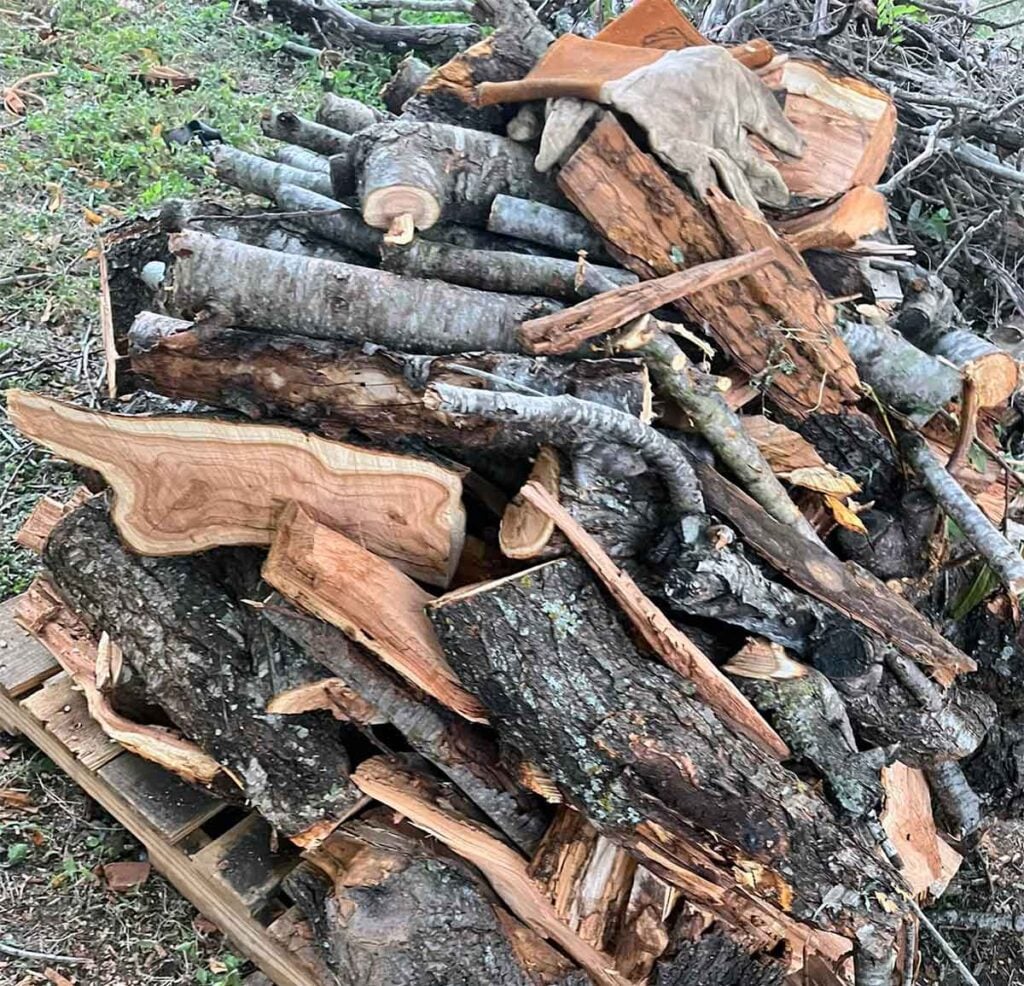
If you can find it, look for clean, untreated wood sold as splits, chunks, or pellets. Avoid rotten, moldy or painted wood. Dry, seasoned wood is the default, but green peach wood can be used. Kiln-dried is sometimes a convenient option but naturally dried (or even green, per Mixon) is a better choice.
Wondering where to buy peach wood?
Truth is, peach wood is relatively hard to find online. Myron Mixon sells bagged chunks, however. On Amazon, you can find a handful of peach options, including chunks and chips, hiding among the more common hardwoods.
For most backyard cookers, peach wood chunks the size of a chicken egg up to a lemon are versatile. Keep the bark to your preference; it’s fine to use if clean.
Preparation and Use
- Offsets (stick-burners): Build a small coal bed, add pre-warmed splits, and maintain clear exhaust for blue smoke. Run peach for flavor and add a steadier wood (e.g., oak) to hold temp.
- Kettle/kamado: Nestle 2–3 chunks along the charcoal path. The Snake Method makes low-and-slow easy in a kettle.
- Pellet grills: Peach pellets are subtle; if you want a nudge more smoke, start the cook at a lower pellet-smoker setting before raising the temp.
- Gas/electric: Use a smoker box or foil packet with dry chips or a pellet tube. Don’t soak chips—steam isn’t smoke, and soaked chips waste time driving off water.
Mixing woods is common. Peach blends beautifully with other woods.
“I’ll take my oak and hickory and mix it with some pecan or maybe some fruit wood like apple or cherry or peach,” noted pitmaster Malcom Reed on the A Bar Above podcast.
Simple Blend Ratios
- Ribs: 70% peach / 30% hickory — gentle sweetness from peach with a touch of hickory depth.
- All-purpose / long cooks: 50% peach / 50% oak — steady heat from oak with clean, sweet peach aroma.
Rationale: Use peach for mild, sweet smoke, then add hickory for a little extra punch or oak for heat stability and longer burn, adjusting the split to your pit and taste.
Why Peach Wood Creates Sweet Smoke Flavor
Peach wood may seem simple, but a lot of science is happening when it burns and flavors your barbecue.
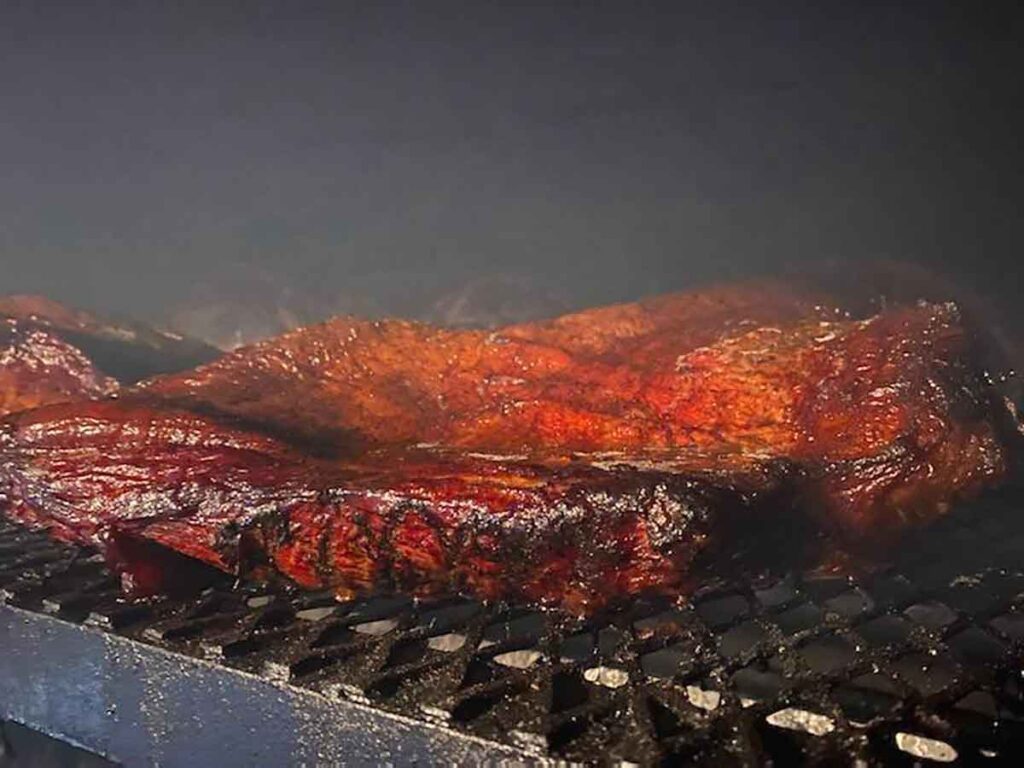
When wood heats, hemicellulose and cellulose break down, and lignin yields flavor molecules—guaiacol (smoky taste) and syringol (smoky aroma). Fruitwoods like peach (an angiosperm) tend to produce plenty of syringol, which noses identify as “that good smoke smell.”
Flavor compounds are delicious only when combustion is clean. Good airflow keeps particle size small and the smoke faint blue; smoldering fires make larger particles that taste ashy.
Why is peach wood known for “clean” combustion?
Peach burns clean because it’s a tight-grained fruitwood with low resin and sap. Properly seasoned, it makes thin blue smoke—little soot or creosote—so flavor stays sweet, not acrid. It also throws solid heat, promoting complete combustion and a good coal bed. The result: bright orange coals, fine gray ash, and clean-tasting barbecue.
The smoke ring comes from nitric oxide (and some CO) in combustion gases binding with myoglobin near the surface—peach will make one if your fire is clean and the meat is moist early in the cook.
Competition Context
In competition BBQ, peach wood holds special status for judge-friendly smoke. Teams use it strategically for delicate categories like chicken and ribs where over-smoking gets penalized. The sweetness tends to produce pleasant aroma and mild taste that allows rubs, sauces, and meat to stand out – crucial when judges take only one or two bites per entry.
Competition expert Will Hair of the SmokeMasters Championship BBQ Team explained to The Tasting Table that peach wood “is used in conjunction with stronger hardwoods like hickory to balance out the intensity, so that foods don’t turn bitter from lengthy cook times.” This approach treats peach wood as a balancing ingredient rather than the main flavor driver.
It’s hard to find a judge who complains that the barbecue is too lightly smoked or too sweet-smelling. Typically, the complaints come when hickory or mesquite have been overdone and turned the skin bitter. With peach, that risk is minimal.
Cultural Notes
Peach wood carries Southern cultural significance, connecting barbecue to agricultural heritage in Georgia and South Carolina’s peach country. Using peach wood represents resourcefulness and regional pride – farm families would use pruned orchard wood rather than waste it. In Georgia, where the peach is the state symbol, some BBQ joints invoke peach imagery and use peach wood as homage to local bounty.
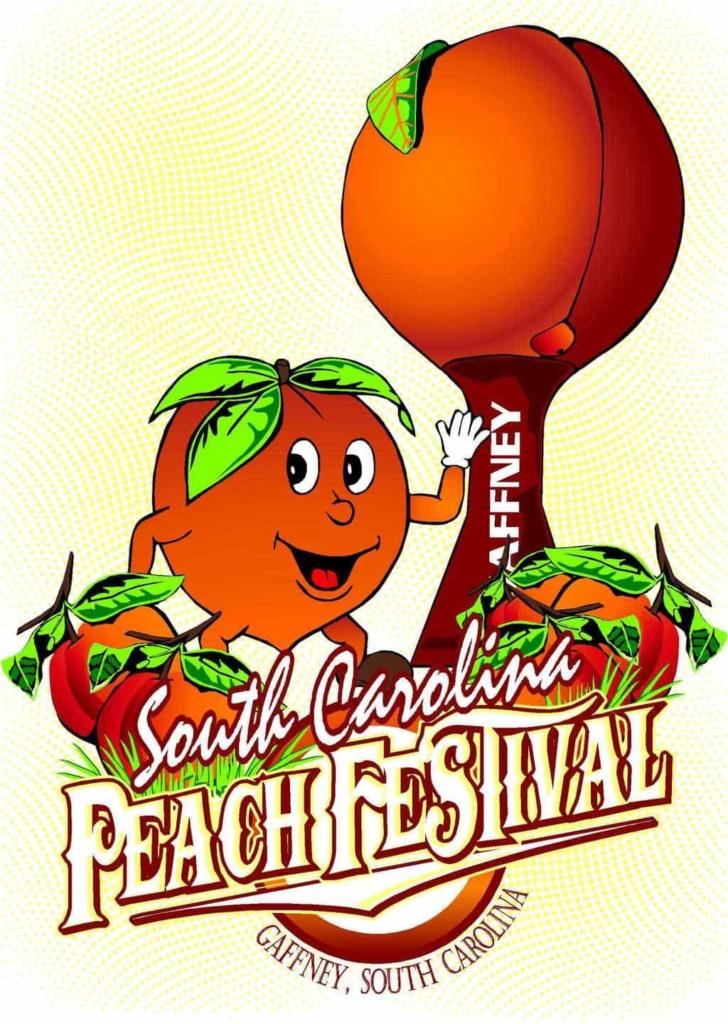
In South Carolina’s BBQ culture specifically, peach wood use is not as dominant as hickory, but it pops up in certain contexts. For instance, in the state’s Midlands and upstate (where peach orchards abound along the Ridge), you’ll hear of mustard-sauce BBQ restaurants perhaps incorporating a bit of peach wood for smoking their pork. It’s not usually advertised, but locals might note, “He uses some peach wood in the pit for aroma.” It adds a point of differentiation, even if subtle.
No matter where it’s used, it’s rarely the dominant fuel—hickory and oak still lead. It’s a quiet local signature rather than a headline.
Outside the South, peach has become a “boutique” fruitwood among enthusiasts—part of the broader apple/cherry/peach trend for milder smoke. In short, it signals resourcefulness, local flavor, and the softer side of Southern barbecue.
Peach vs. Other Woods
| Wood | Flavor Strength | Smoke Flavor Notes | Color effect (bark/skin) | Burn Character | Best Uses | Where It’s Iconic |
|---|---|---|---|---|---|---|
| Peach | Mild | Sweet, fruity, floral; very forgiving | Light golden-brown; faint blush on poultry; gentle mahogany on longer cooks | Lights easily; burns clean but faster than oak | Pork ribs/shoulder, chicken, turkey, fish | Southeast orchard country (GA, SC) |
| Apple | Mild | Lightly sweet and fruity | Pale gold/amber; lightest of the three; clean look on poultry and ribs | Even, gentle smoke | Poultry, pork chops, St. Louis–style ribs | Widespread in orchard regions |
| Cherry | Mild-to-medium | Sweet with a touch of tang; adds color | Reddish mahogany; most pronounced color; noticeable on chicken skin and rib bark | Steady once lit; moderate speed | Pork loin, chicken, mixed with peach for ribs | Upper Midwest, Northeast |
| Hickory | Medium-strong | Classic bacon-like smoke; can turn bitter if heavy | Deep brown bark; can darken quickly if heavy; classic mahogany on long cooks | Hot, long-burning | Pork shoulder, ribs, beef when blended | Carolinas, Appalachian South |
Peach Wood for Smoking: FAQ
Peach wood delivers a mild, sweet flavor with fruity aroma that’s subtly floral – enhancing meat’s natural taste rather than covering it. You’ll notice gentle sweetness on pork or chicken without harsh or bitter aftertaste, making it very approachable even for those who typically don’t enjoy “smoky” flavors.
All three are mild fruitwoods, but peach offers more distinctive aromatic qualities than apple while staying similarly gentle. Cherry provides comparable sweetness with stronger color enhancement. Peach has uniquely sweet, almost “incense-like” fragrance that sets it apart from apple’s more generic fruitiness.
Excellent for pork and chicken where its mild sweetness complements natural flavors perfectly. For beef, peach works well solo for mellow smoke profiles or blended with oak/hickory for more robust flavor. Many pitmasters use oak as base heat and add peach chunks for aroma on brisket.
No – soaking is an unhelpful myth. Wood absorbs minimal water past the surface, and wet wood creates steam rather than flavorful smoke while cooling your fire. Use dry peach wood for clean combustion and proper smoke production.
Unlike most woods, experts like famed Pitmaster Myron Mixon advocate using “semi-green” (or even fresh) peach wood at higher moisture content (20-25%) to capture natural fruit sugars. However, properly seasoned wood remains the safer choice for consistent results.
About the author
James Roller documents South Carolina barbecue for Destination BBQ and authored Going Whole Hog. He researches techniques, interviews pitmasters, creates tools, and curates reliable sources so home cooks can cook barbecue safely and confidently at home.
More about James.See something that needs a tweak? Send a correction.
« See All BBQ Terms