Snake Method
Learn the snake method for long, steady kettle cooks, how to lay the briquette trail, set vents, and avoid spikes for hands-off ribs and pork
What is the Snake Method?
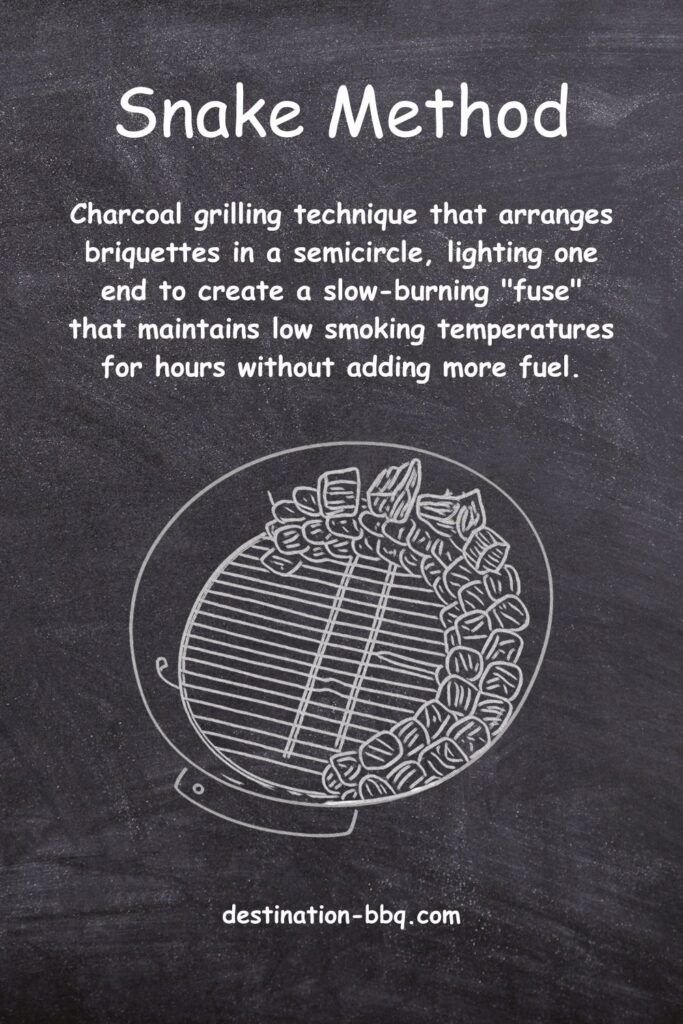
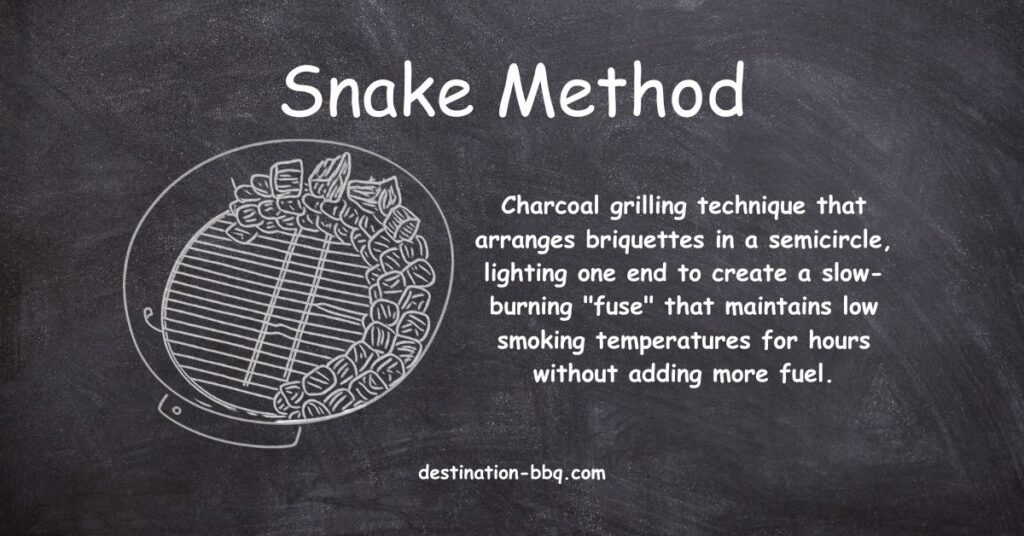
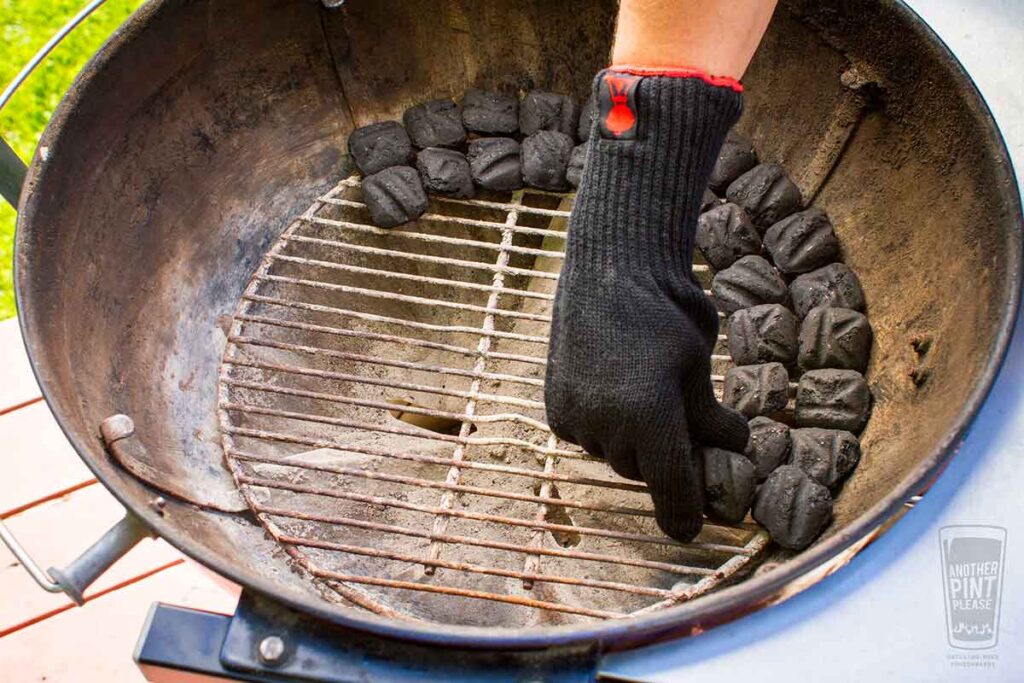
The Snake Method is a charcoal arrangement technique that transforms kettle-style grills into effective smokers by creating a semicircular formation of unlit charcoal briquettes around the grill’s perimeter.
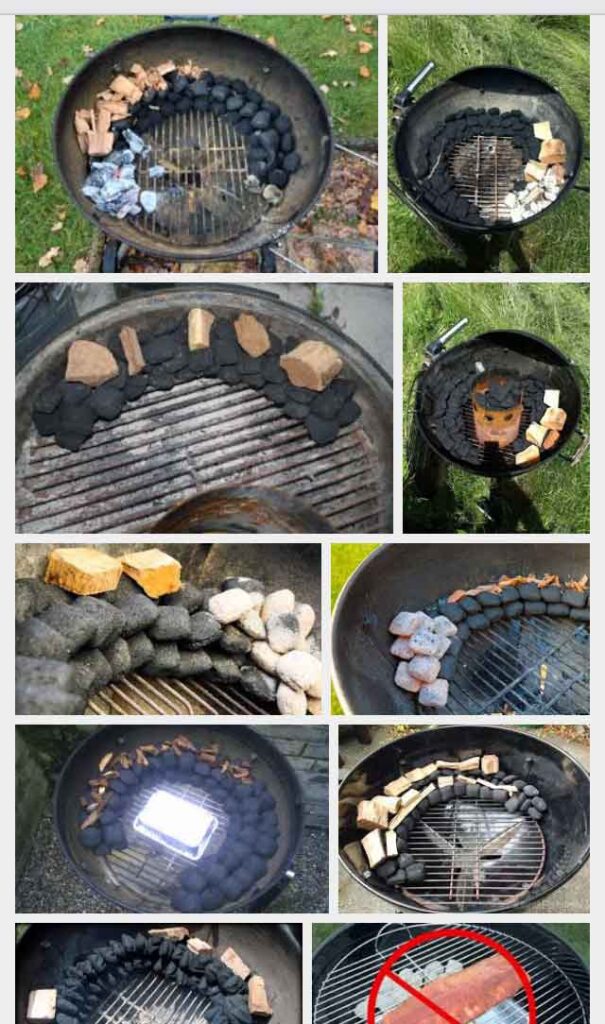
The snake method works by building a half-circle ring of charcoal around the inside edge of your circular charcoal grill. You then place a couple lit briquettes at one end of the ring – or snake – that will continuously ignite the adjacent charcoal briquettes. This controlled combustion process maintains steady temperatures between 225-275°F for up to 6-12 hours without requiring additional fuel, making low and slow barbecue accessible to home cooks using standard equipment.
Key Takeaways
- Accessibility and Cost-Effectiveness: The Snake Method transforms standard kettle grills into capable smokers without requiring expensive equipment, making low and slow barbecue accessible to home cooks with basic charcoal grills.
- Realistic Performance Expectations: Professional testing shows 6-8 hour burn times are more realistic than the often-cited 12+ hours, making the method ideal for ribs, pork shoulders, and chicken rather than very large cuts requiring extended cooking.
- Temperature Control Through Airflow: Success depends on proper vent management and charcoal configuration, with the 2:1 arrangement providing the most predictable results for beginners while advanced modifications can improve smoke quality.
- Strategic Application for Specific Cuts: The method works best for medium-duration cooks (4-8 hours) and serves as an excellent learning platform for understanding indirect cooking principles before investing in dedicated smoking equipment.
“Using one of the smartest charcoal techniques out there—the charcoal snake method—you can transform a basic kettle grill (like the standard 22-inch Weber) into a surprisingly effective, hands-off smoker that holds a steady temperature for hours, with almost no effort.”
— Leah Colins, Senior Culinary Editor, Serious Eats
Understanding the Snake Method
Historical Origins and Development
The snake method is one way to perform a low and slow cook on a charcoal grill. It is a variation of the Minion method named after Jim Minion.
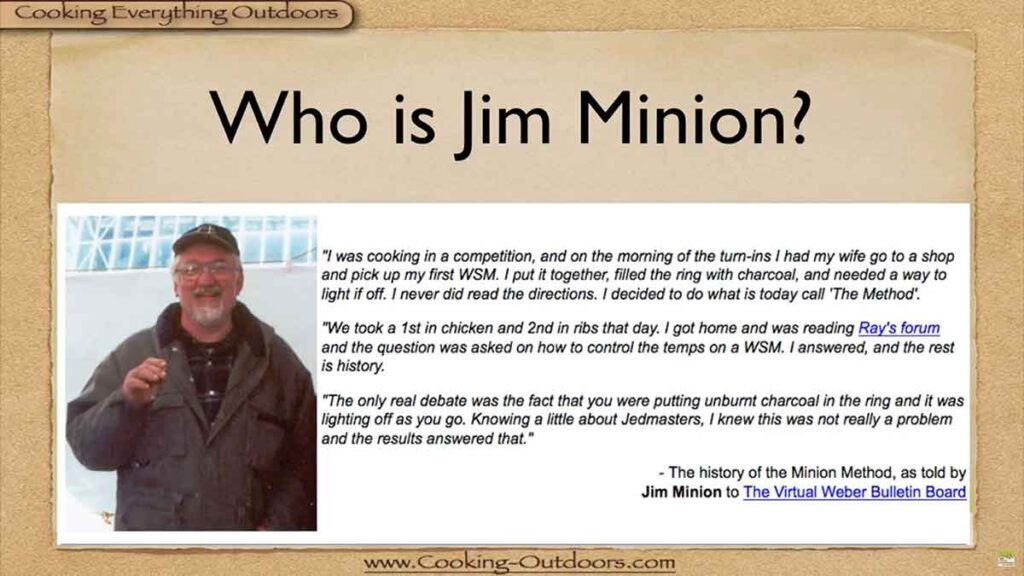
The technique emerged as barbecue enthusiasts sought to adapt the Minion Method’s progressive ignition principle to kettle grills. While Jim Minion’s original approach involved filling a smoker’s firebox with unlit charcoal and placing lit coals on top, the Snake Method arranges fuel in a linear pattern optimized for circular grills.
The method gained widespread recognition through online barbecue communities in the early 2000s, with Weber kettle enthusiasts documenting and refining the approach. Barbecue educator Steven Raichlen notes that this technique allows home cooks to “let your grill do the heavy lifting” by providing consistent heat without constant attention.
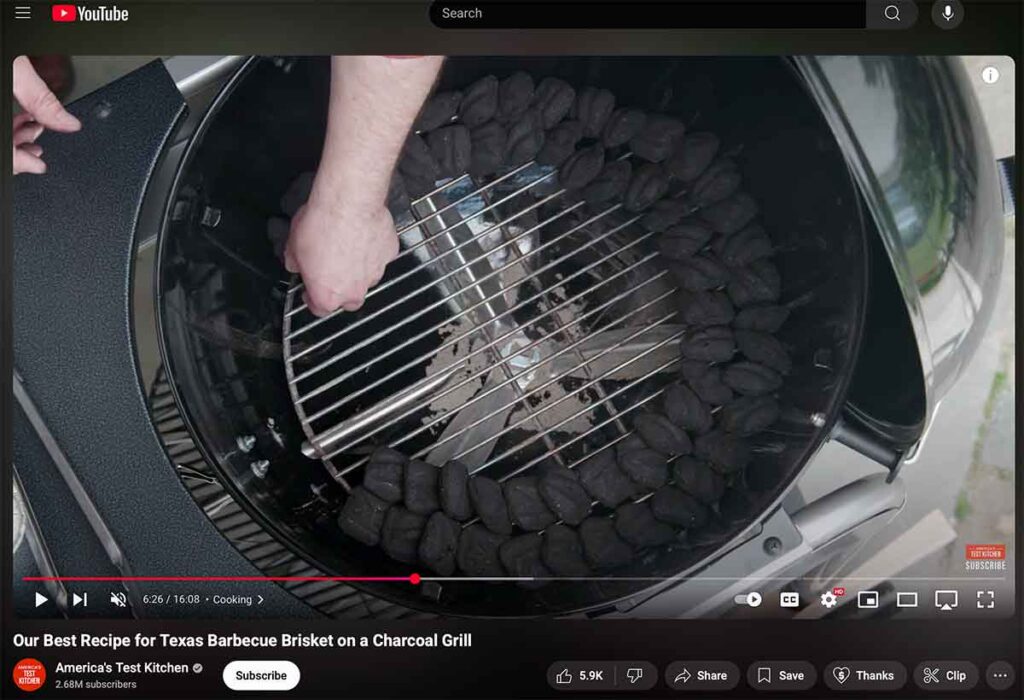
The snake method’s popularity surged as sources like Cook’s Country, America’s Test Kitchen, and Serious Eats validated its effectiveness for achieving professional-grade results on basic equipment.
Technical Principles and Physics
The Snake Method operates on controlled combustion through strategic charcoal placement and airflow management. The core principle involves creating a slow-burning “fuse” that gradually ignites adjacent charcoal, preventing the temperature spikes common in traditional charcoal grilling.
Charcoal Configuration Options
The most common arrangement is in a 2:1 layer (2 rows on the bottom and 1 row on top). 2:2 or 2 rows on the bottom and 2 rows on top can add a longer cook time and burns hotter.
Airflow and Temperature Control
Temperature regulation relies primarily on intake and exhaust vent adjustment. Start with both vents wide open. Once your temperature gauge hits the 200°F mark, start with your bottom vent to adjust the temperature. Close it slightly to slow the draw of oxygen through the cooker and settle on target temp.
The positioning of the exhaust vent opposite the lit charcoal creates a convection current that draws smoke across the cooking surface, ensuring even heat distribution and consistent smoke exposure.
Practical Setup and Implementation
Setup Configurations and Best Practices
The foundation of successful Snake Method execution lies in proper charcoal arrangement and precise ignition. For a standard 22-inch Weber kettle, those using this approach typically arrange their briquettes in specific patterns optimized for different cooking durations and temperatures.
Standard Configuration Process:
- Base Layer Construction: Create two parallel rows of briquettes against the grill’s perimeter, forming a semicircle
- Stacking Pattern: Add a second layer, creating the classic 2×2 arrangement (two wide, two high)
- Gap Management: Leave a 3-4 briquette gap at one end for initial ignition placement
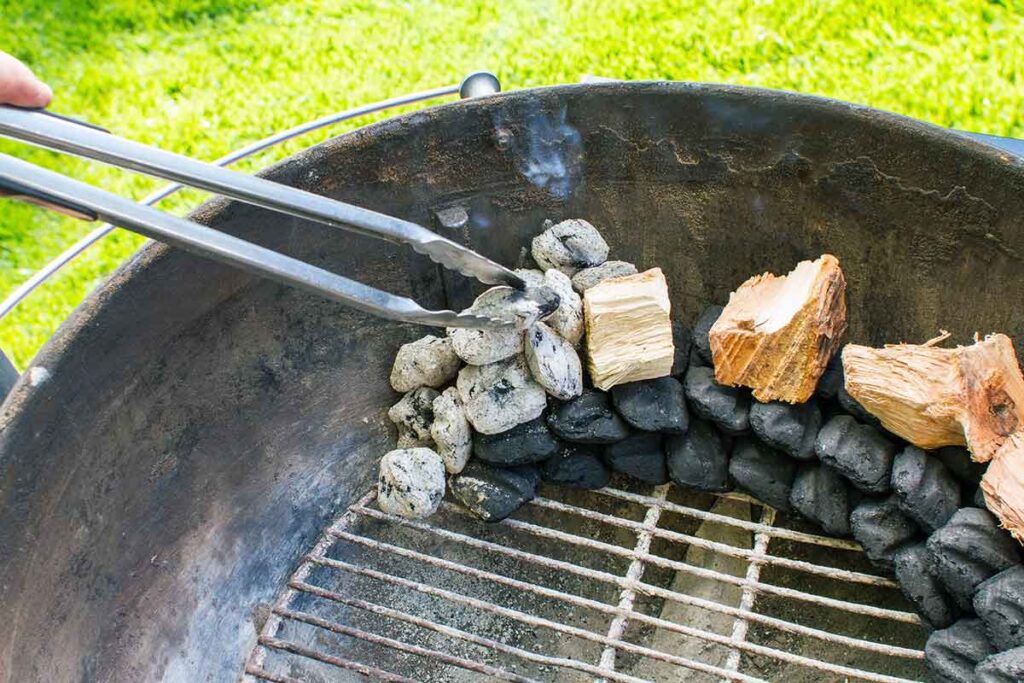
- Wood Integration: Position hardwood chunks every 6-8 briquettes along the snake’s length
Professional testing by Raichlen of the BarbecueBible.com revealed that ignition quantity significantly affects performance: “A snake started with just 4 lit coals took quite a while to reach 200°F but burned steadily, whereas starting with 8 lit coals got up to temperature faster but ran hotter (peaking around 290°F).” This finding emphasizes the importance of matching ignition intensity to desired cooking temperatures.
Wood Placement Strategy: Strategic wood placement ensures consistent smoke production throughout the cook. As barbecue authority Raichlen notes, wood chunks should be positioned “so they ignite at different intervals to provide consistent smoke flavor throughout the cook, avoiding overwhelming acrid smoke from too much wood burning at once.” Many place heavier wood concentration near the snake’s beginning, where initial smoke development is most critical.
Fuel Type Considerations
The main reason briquettes are used for snakes is because they’re uniform and predictable. Where-as lump charcoal will come in a variety of shapes and sizes. While lump charcoal can work, its irregular shapes may cause unpredictable burn patterns and temperature fluctuations.
Advanced Techniques and Modifications
Improved Smoke Production
A big issue I have with this method is that the fire often isn’t burning hot enough to smolder wood to produce thin blue smoke. All I do is add more charcoal so it’s a 1:2:2 arrangement – so a row of 2 on bottom, another row of 2, and then 1 row on top.
This modification addresses the common problem of inadequate heat for proper wood combustion, ensuring clean smoke production throughout the cook.
Extended Cooking Strategies
Professional testing reveals realistic performance expectations. The results? The snake method lasted a solid 6 hours. Not long enough for a whole brisket. So, it might be better for pork ribs than a brisket. For longer cooks, pitmasters employ several strategies:
- Snake Reversal: Extending burn time by reversing direction
- Supplemental Fuel: Adding unlit briquettes mid-cook
- Hybrid Approach: Finishing on gas grill after smoke phase
Performance Expectations and Limitations
Realistic Burn Duration
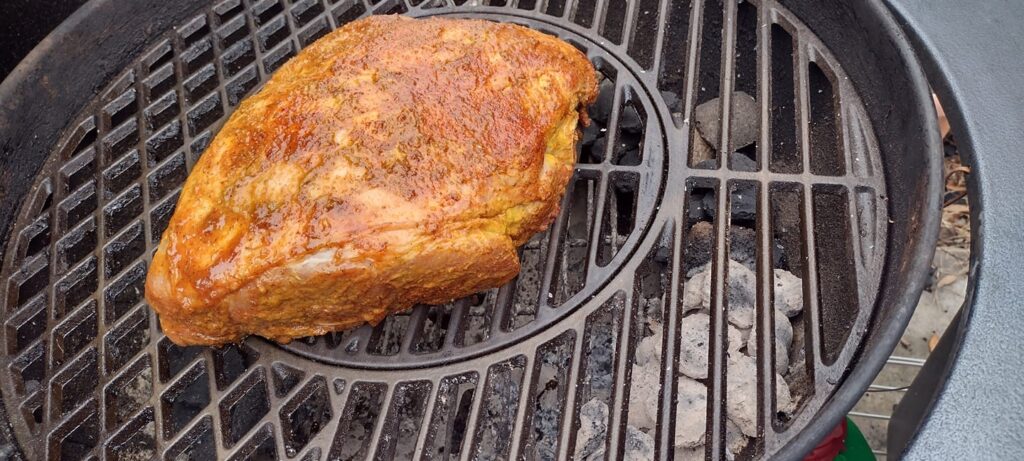
While some sources claim 12-15 hour burns, professional testing establishes more conservative expectations. Roughly 4-8 hours in my 22″ Weber kettle with Kingsford Original briquettes. Factors affecting duration include:
- Ambient temperature and weather conditions
- Elevation and atmospheric pressure
- Charcoal type and quality
- Vent settings and airflow management
Optimal Applications
The Snake Method excels for specific barbecue applications:
- Ideal: Pork ribs (4-6 hours), pork shoulder (6-8 hours), whole chicken (3-4 hours)
- Challenging: Large briskets (12+ hours), multiple large cuts; estimate cook time with our brisket calculator
- Excellent: Learning platform for beginners, consistent results for experienced cooks
The Snake Method controls the heat—choosing the right wood sets the bark and flavor. Try our interactive tool for meat-wood pairings to match your meat with the best smoke note.
Troubleshooting Common Issues
Temperature Management and “Set-and-Forget” Operation
The Snake Method’s primary advantage lies in its minimal intervention requirements once properly established. As noted by those who use the snake method, “No briquettes or wood to add. The grill lid was only opened to spray the pork,” during successful multi-hour cooking sessions. This hands-off capability represents a significant departure from traditional charcoal management techniques.
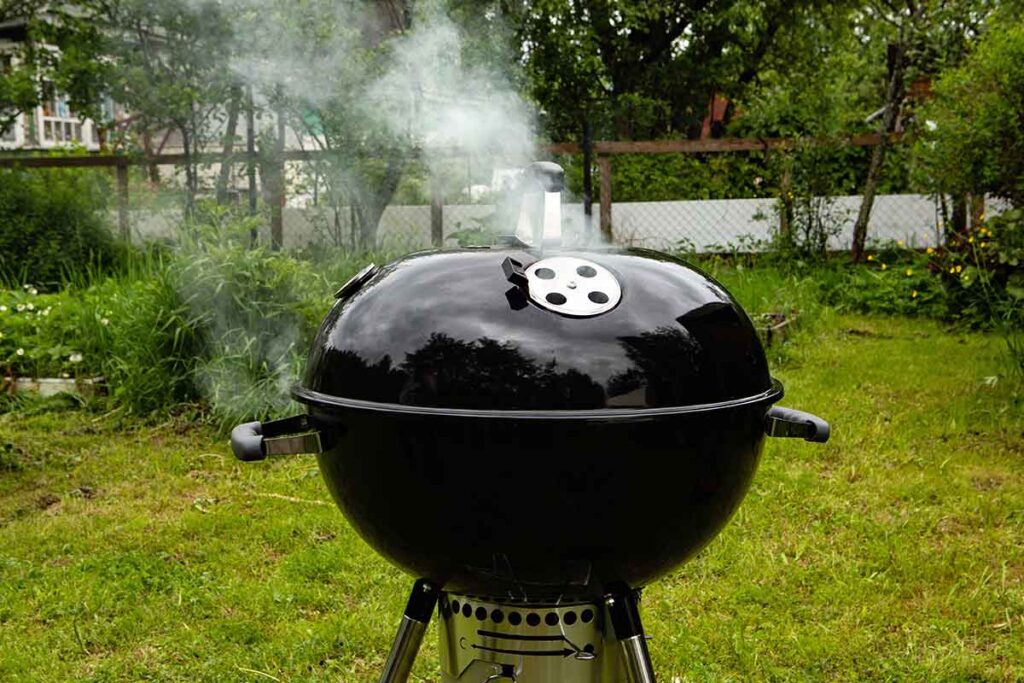
Vent Control Protocol: Temperature regulation relies on strategic airflow management rather than fuel additions:
- Initial Setup: Start with both vents open and light a small batch of briquettes in a charcoal chimney, then pour them onto one end of the snake so the fire creeps steadily along the curve
- Temperature Targeting: Once your temperature gauge hits the 200°F mark, start with your bottom vent to adjust the temperature. Close it slightly to slow the draw of oxygen through the cooker and settle on target temp
- Exhaust Positioning: Position the grill lid so the top vent is opposite the lit charcoal to create proper convection currents
Professional testing confirms the method’s stability: temperatures were monitored and maintained within acceptable ranges for extended periods with minimal adjustment. The technique embodies what experts call “set it and forget it” barbecue, allowing those using this method to “confidently walk away for hours” while maintaining steady heat and smoke production.
Advantages and Limitations Analysis
Primary Advantages: The method’s appeal stems from its accessibility and fuel efficiency. By burning only a small section of coals at any time, this stretches charcoal loads over extended cooking periods rather than maintaining entire baskets of burning fuel.
Serious Eats emphasizes that this approach demonstrates “you don’t need a fancy rig or professional pitmaster setup to make excellent barbecue at home.”
Practical Considerations: While highly effective, the Snake Method does present some operational considerations.
Temperature fluctuations are normal and manageable – the fire may start around 225°F and climb over 300°F at peak burn when multiple coals are simultaneously active. However, extensive testing shows these variations average out, with final results remaining consistent with steady-temperature cooking methods.
Fuel quality significantly impacts performance, with uniform briquettes providing more predictable results than irregular lump charcoal. Quality concerns about continuously igniting fresh charcoal during cooking have been thoroughly tested, with competition-level practitioners confirming no detectable off-flavors when using proper charcoal and maintaining adequate airflow.
About the author
James Roller documents South Carolina barbecue for Destination BBQ and authored Going Whole Hog. He researches techniques, interviews pitmasters, creates tools, and curates reliable sources so home cooks can cook barbecue safely and confidently at home.
More about James.See something that needs a tweak? Send a correction.
« See All BBQ Terms