Spare Ribs
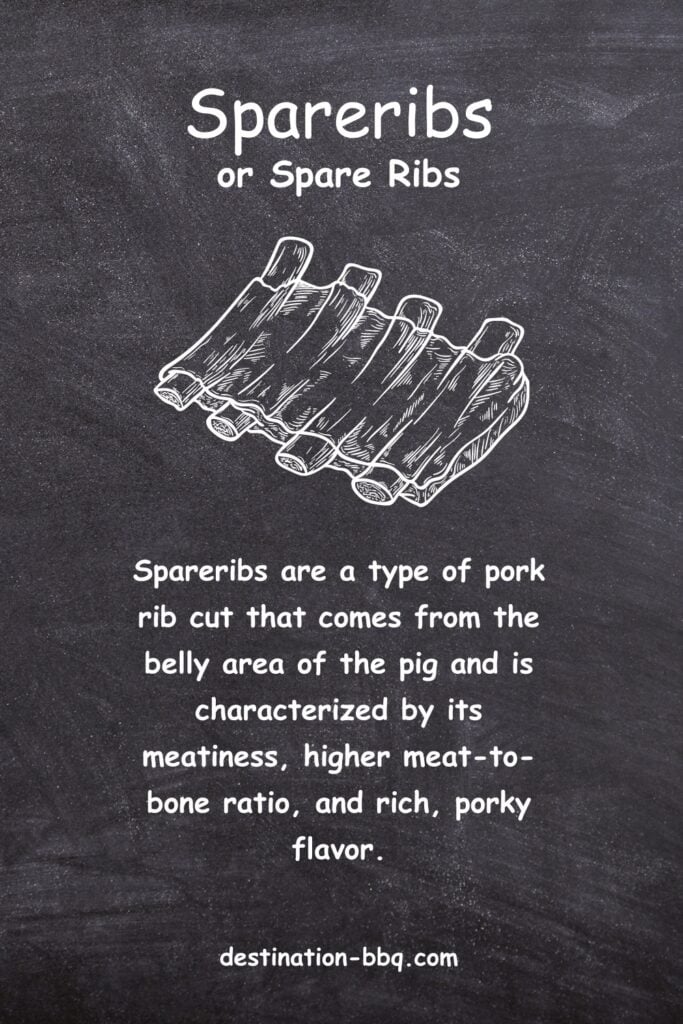
Learn how spare ribs differ from baby backs, how many to buy, and time and temp cues for a clean bite, whether you smoke, grill, or wrap
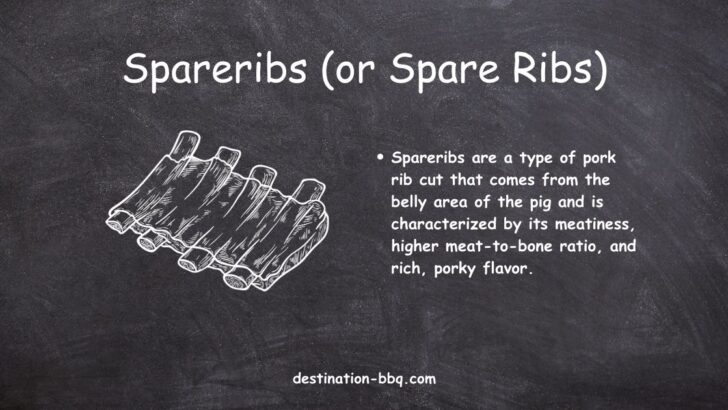
What are Spare Ribs?
Spare ribs (or spareribs) are a type of pork ribs cut from the lower portion of a pig’s ribcage, towards the belly and breastbone. They consist of longer, flatter rib bones (usually 11–13 per slab) with meat and fat layered in between. In a BBQ context, spare ribs are prized for their rich flavor and succulent, fatty meat, though they contain more connective tissue and require longer, slower cooking than leaner baby back ribs. When cooked low and slow—typically smoked or grilled indirectly—spare ribs yield tender, flavorful results beloved by pitmasters and backyard enthusiasts alike.
Key Takeaways
- Cut and comparisons: Spare ribs come from the belly-side rib section with longer, flatter bones and more intermuscular fat; St. Louis–style ribs are spare ribs trimmed for a neat rectangle; knowing the cut helps set expectations for size, flavor, and cook time versus baby backs.
- Buying and prep: Choose even-thickness slabs around three pounds, avoid shiners, trim to St. Louis style for easier slicing and even cooking, remove the membrane on the bone side, and season well.
- Cooking approach: Pick one pit temperature and hold it steady: 225°F for about 5–6 hours, 250°F for about 4.5–6 hours, or 275–300°F for about 3.5–5 hours; then decide doneness by bend, toothpick, and clean-bite tests, wrapping only after the bark sets and glazing near the end.
- Planning and flavor: Figure roughly three bones per adult with sides (four if ribs are the focus), pair base woods like hickory or oak with a touch of apple, cherry, or peach, and follow the storage/reheat guidance to keep leftovers moist with bark intact.
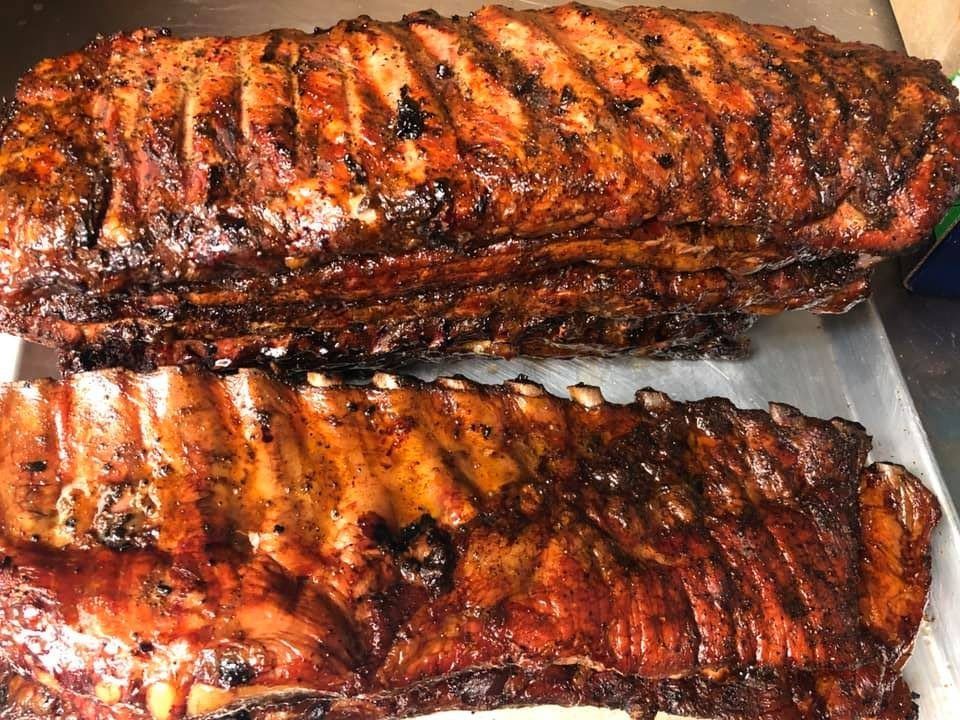
Quick-Start: Portions, Time & Temp
- Pick one pit temp and hold it steady. These are options, not steps.
- 225°F: about 5–6 hours; slower bark set with very tender results.
- 250°F: about 4.5–6 hours; balanced time and texture, wrap after bark sets if desired.
- 275–300°F: about 3.5–5 hours; monitor color and moisture, a light spritz helps.
- Doneness cues: rack bends deeply when lifting with only slight surface cracking at the bend, toothpick slides in easily, bone ends exposed ¼-½ inch.
- Wrap option: foil or paper after bark sets to soften texture and reduce time.
- Sauce timing: glaze in the last 15–20 minutes to avoid burning sugars.
- Rack basics: most racks have 11–13 bones and serve about 2–3 adults with sides.
- With sides: plan 3 bones per adult; 1–2 for kids.
- Rib-forward meal: plan 4 bones per adult.
- Quick planner: 4 guests → 1 rack; 6 → 2 racks; 8 → 2 racks; 10 → 3 racks; 12 → 3 racks; 16 → 4–5 racks.
- Buying tips: even thickness end to end, avoid shiners, target 2.5–3.5 lb racks for consistent results.
For a fuller planning breakdown across rib types and serving styles, see the ribs per person guide.If you’re cooking spare ribs for a group, our rib planner helps turn those per-person rules into full racks to buy.
Understanding Spare Ribs
Imagine a slab of pork ribs sizzling over hickory coals, the fat slowly rendering as a deep mahogany bark forms on the surface. Those are spare ribs, unpretentious yet loaded with potential. They may not have “baby” in their name, but spare ribs hold a big place in the barbecue world, from casual backyard cookouts to high-stakes competition pits. As Tasting Table writer Matthew Spina notes, spare ribs “deliver more flavor for a lower price” than their baby back counterparts, thanks to their higher fat content and generous meat between the bones.
In other words, if you know BBQ, you know that fat is flavor, and spare ribs have plenty of it.
Origin and Anatomy of Spare Ribs
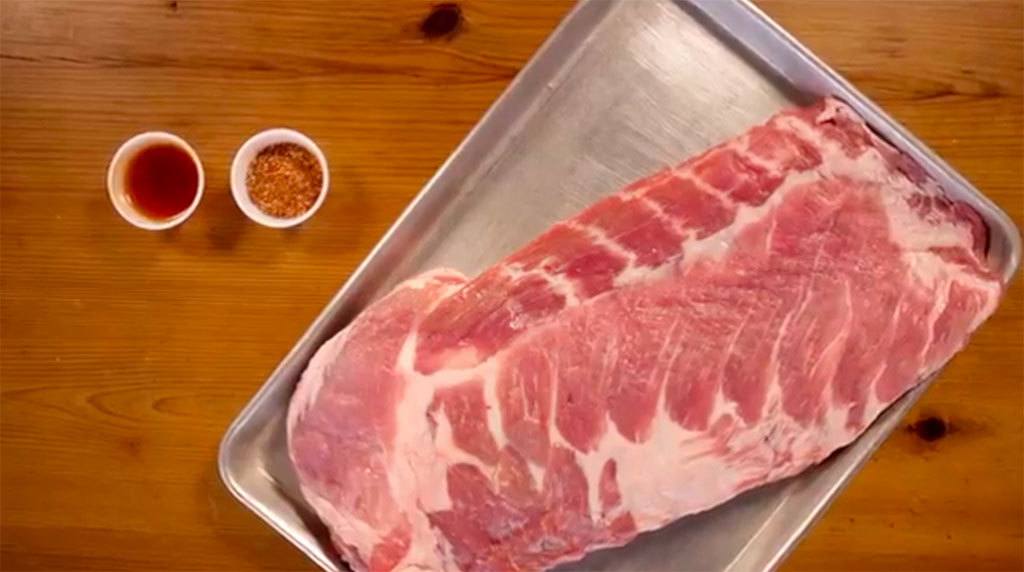
Spare ribs are cut from the lower rib section, connecting to where the baby back ribs end and running down toward the sternum. On one end of a spare rib slab, you’ll see exposed bone where it met the baby back ribs. On the opposite end (toward the breastbone) is the rib tip section, a section of meat and cartilage at the bottom of the slab.
According to Brett Warshaw writing for Eater, full spare ribs slab typically weighs about 2.5–3.5 pounds (about half of that weight is bone and cartilage) and can feed two hungry adults. The bones in spare ribs are longer, flatter, and straighter than the curved bones of baby backs, and there’s more meat between the bones rather than on top of them.
That meat is generally well-marbled with fat, which bastes the ribs from within during cooking. In fact, butchers often remove the pork belly (used for bacon) from this section, leaving behind a thinner layer of meat on the ribs but plenty remains between the bones.
Because of this, spare ribs have a slightly lower meat-to-bone ratio than baby backs and “contain more bone than meat,” (per Wikipedia) but the higher fat content makes them very flavorful and keeps them moist during long cooks.
A whole spare rib slab will also include a strip of gristle and small bones (the rib tips) and a flap of meat on the back side called the skirt. Pitmasters often trim these off to create the popular St. Louis style ribs, which are spare ribs with the rib tips, skirt, and sternum bone removed for a neat, rectangular rack.
(Don’t toss those trimmings. Rib tips can be cooked separately as a snack, and many consider them a delicacy in their own right!)
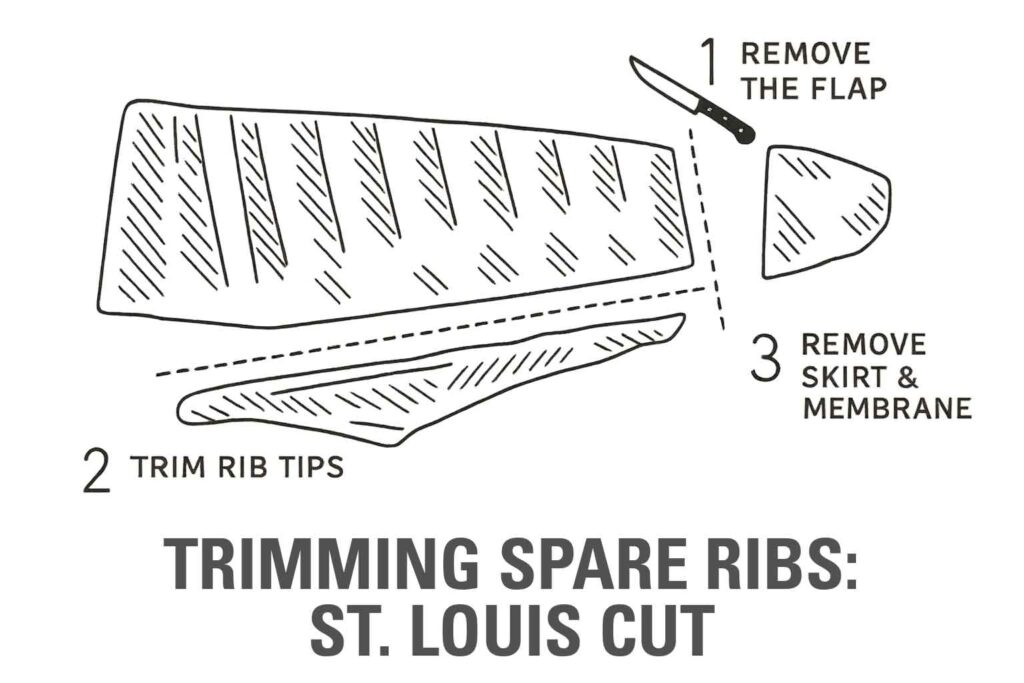
Did you know? The term “spareribs” doesn’t mean extra ribs at all – it comes from the German “Rippenspeer,” meaning “spear ribs,” referring to how this cut was traditionally roasted on a spit or spear. Over time, the word morphed through Middle English to ribspare and eventually spare ribs. Fittingly, some say it also describes the cut being “spare” of meat after the belly is removed. In any case, whether you spell it “spareribs” or “spare ribs,” you’re talking about the same thing.
Peggy Trowbridge Filippone, The Spruce Eats
How Spare Ribs Differ from Baby Back Ribs
Both spare ribs and baby back ribs come from the pig’s ribcage, but they’re distinct cuts. Baby backs are shorter, curved ribs from the loin area, naturally tender with lean meat on top of the bones. Spare ribs extend from the belly side, with longer, flatter bones and more richly marbled meat tucked between them.
Because of that fat and connective tissue, spare ribs take longer to cook but reward patience with deeper flavor. Baby backs usually finish in 4–5 hours at 225°F; spares often need 5–6 hours or more. Some cooks call baby backs easier for beginners, while others prefer the succulence of spares.
As Bon Appétit observed, baby backs may be “the chic rib,” but many rib lovers insist the St. Louis cut, a tidy version of spare ribs, is the real prize.
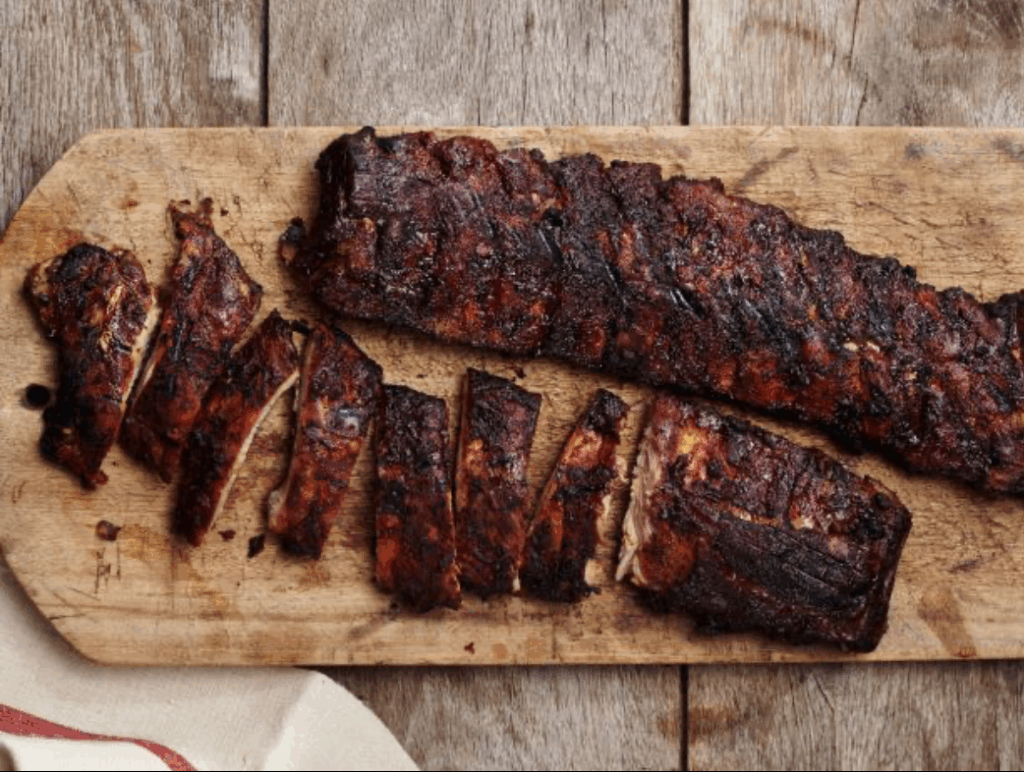
Spare Ribs vs Baby Back vs St. Louis: Size, Fat, Cook Time
Here’s how spare ribs vs baby back (vs. St. Louis ribs) differ in size, fat, and typical cook time.
| Feature | Spare Ribs | Baby Back | St. Louis–Style |
|---|---|---|---|
| Cut location | Belly/breastbone side with cartilage and rib tips intact | Upper ribs along the loin/backbone | Spare ribs trimmed (cartilage/tips removed) to a rectangular rack |
| Trim & shape | Longer, tapered rack with tips | Shorter, curved bones | Flat, even, easy to slice |
| Typical rack weight | ~3.0–4.0 lb (untrimmed) | ~1.5–2.5 lb | ~2.5–3.5 lb |
| Meatiness & fat | Meatiest with higher fat | Leaner, less fat | Meaty with moderate fat |
| Cook time (275–300°F indirect) | ≈ 5–6.5 hr (3-2-1 common) | ≈ 4–5 hr (2-2-1 as a starting point) | ≈ 4.5–6 hr (2.5-2-0.5 or 3-2-1 variants) |
| Texture & flavor | Richer pork flavor, bigger chew | Tender, milder pork flavor | Tender + meaty, balanced flavor |
| Best for | Big flavor, value, rib tips/burnt ends | Quicker cooks, glaze-forward ribs | Clean slices, even cooking, comps |
| Price (typical) | Usually lowest per lb | Highest | Mid |
Note: St. Louis–style ribs are simply spare ribs trimmed for uniform shape and easier slicing.
Historical & Regional Traditions
In the 19th century, ribs were often an afterthought in hog butchering, sometimes cooked as part of the whole hog, other times discarded in favor of hams and loins. But as Robert Moss explained in Serious Eats, ribs became a “trash-to-treasure” cut in the early 20th century, when meatpackers and rib houses began serving them on their own. From then on, spare ribs took center stage in American barbecue culture.
Different regions showcase them in distinct ways. Memphis barbecue built its identity on ribs, whether served “dry” with a robust spice rub or “wet” with a tangy mop sauce. World champion pitmaster Melissa Cookston once explained, “The region itself is wet barbecue… we like sauced ribs” (The Tasting Table). In Kansas City, pitmasters brush spare ribs with thick, sweet sauces until they’re lacquered and caramelized.

On Chicago’s South Side, rib tips are smoked until tender and sold by the box, a regional specialty born from trimming whole slabs into St. Louis cut. Even in beef-centric Texas, spare ribs hold a proud spot beside brisket and sausage in the state’s celebrated “holy trinity” of barbecue meats.
Across the South, spare ribs remain a fixture at pig pickings and community barbecues. Their generous size and deep flavor make them ideal for feeding a crowd, whether sauced, rubbed, or served straight with a pile of collard greens and cornbread on the side.
How to Select, Trim, and Remove the Membrane
Choosing Racks: When buying spare ribs, look for slabs with even thickness and good meat coverage. Avoid racks where the bones are visible through the top surface. These “shiners” tend to fall apart on the pit. Fresh ribs should be pinkish-red with firm, white fat. Many are sold vacuum-sealed; a faint odor when you first open the package (the “purge”) is normal and dissipates quickly, but a strong sour smell or grayish meat indicates spoilage.
Sizes are often labeled by weight: “3½ and down” for smaller racks under 3½ pounds, or “5 and up” for larger ones. For backyard cooking, medium racks around 3 pounds are easier to manage and cook evenly. Competition cooks often hand-pick slabs that are uniform in length and width, which makes for a better-looking turn-in box.
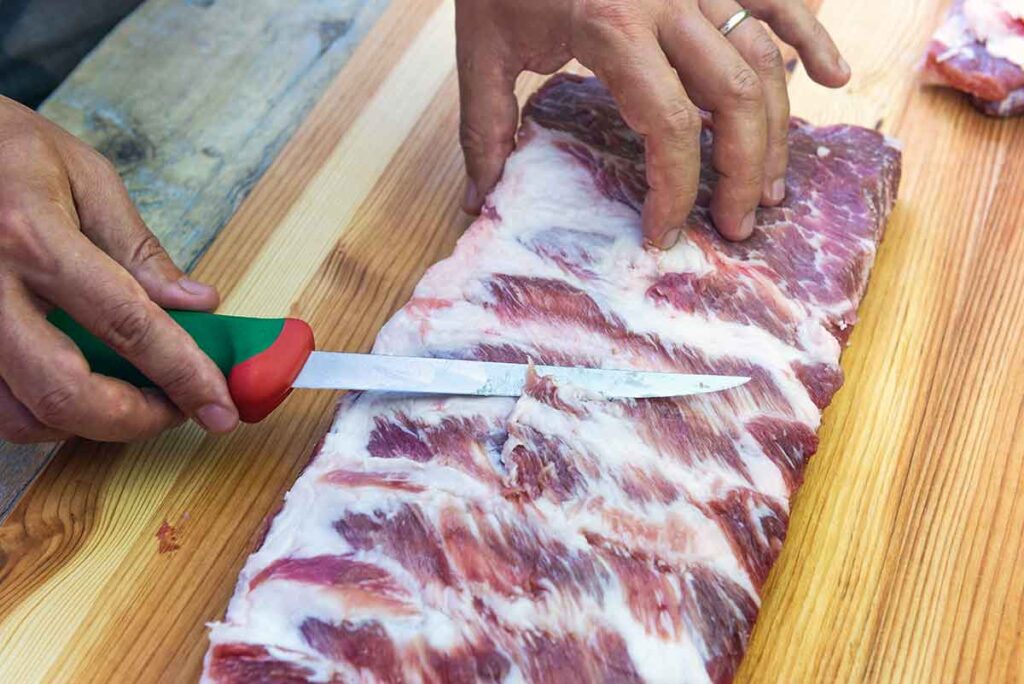
Trimming and Prep: A whole slab includes rib tips and a skirt of meat on the underside. To create St. Louis style ribs, trim away the tips and skirt so the rack is squared off. St. Louis vs spare ribs is mostly about trimming: St. Louis racks are squared up from spare ribs for even cooking and easier slicing. Save the trimmings for beans or snacks; many pitmasters argue rib tips are the best bites on the hog.
How to Remove Rib Membrane
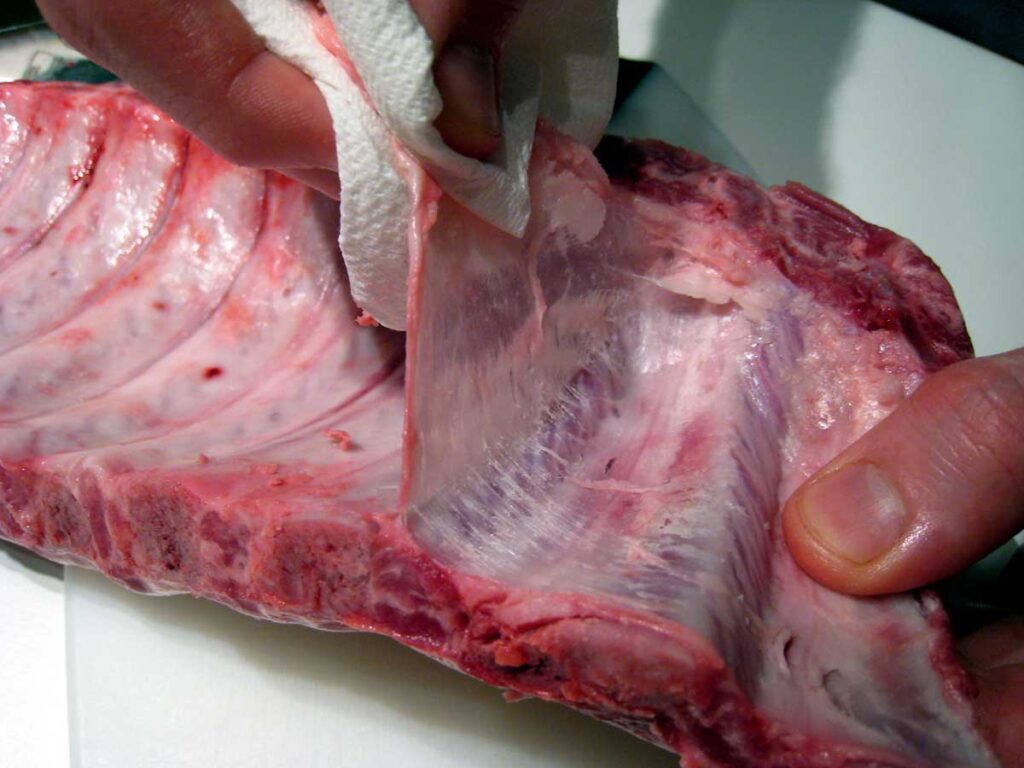
Membrane removal: Loosen an edge with a butter knife, grip with a paper towel, then peel in one sheet.
Before seasoning, one crucial prep step is to remove rib membrane from the bone side for a better bite. As a KCBS judge Christie Vanover from Girls Can Grill explained on the Weber Grill blog, removing it ensures the ribs “pull from the bone more gently” and prevents a chewy layer from forming.
Season the ribs generously with a dry rub. Salt, pepper, paprika, garlic, onion powder, and a little brown sugar are common choices. Some cooks add a light mustard slather to help the spices stick, though it won’t affect flavor. Let the seasoned ribs rest at least 30 minutes (or overnight in the fridge) so the rub can draw moisture to the surface and begin flavoring the meat.
Cooking Techniques and Tips
Spare ribs shine when cooked low and slow. The sweet spot for most pitmasters is around 225°F, hot enough to melt fat and gelatinize collagen but gentle enough to keep the meat moist. As Meathead Goldwyn explains, “the meat roasts low and slow, liquefying the collagen in connective tissues and melting fats” (AmazingRibs.com).
Smoker & Grill Setup
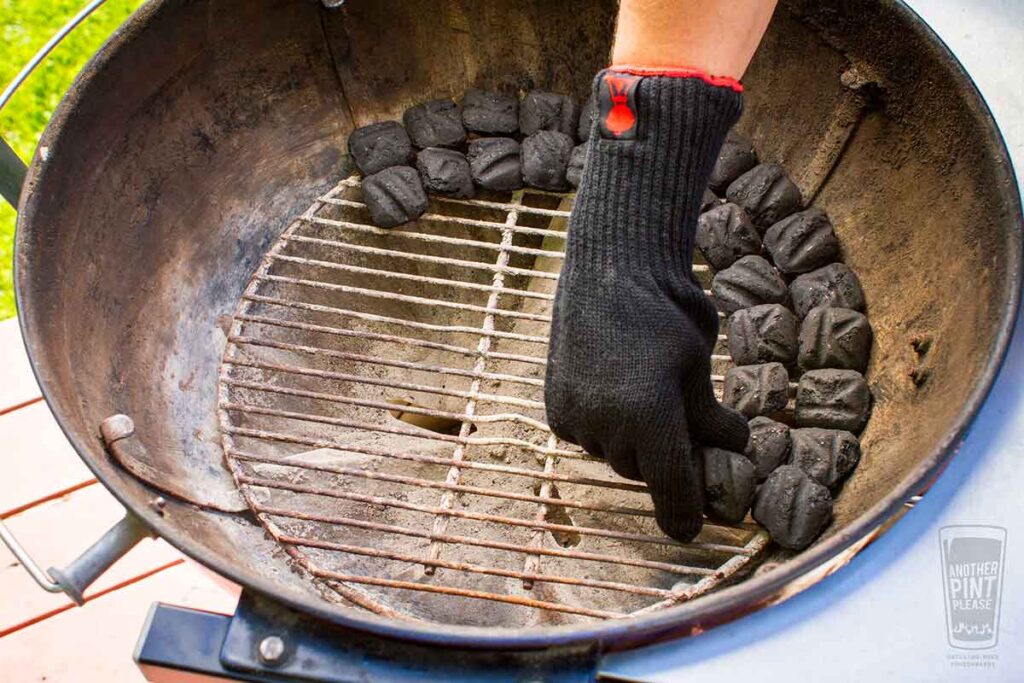
Whether you’re using an offset stick burner, a pellet smoker, or a charcoal kettle, the setup should be indirect. On a kettle, that usually means arranging coals on one side for a 2-zone fire or building a slow-burning snake method around the edge. (Alternatively, you could try simply banking the coals.) Add chunks of hickory, oak, or fruitwoods like peach or apple for that clean blue smoke.
For nice smoke flavor, many start with hickory or oak and add fruitwood; see our guide to pick the best wood for spare ribs for your pit.
3-2-1 Ribs: When It Helps (and When It Doesn’t)
The 3-2-1 ribs approach can produce soft, saucy ribs; use it when you want a forgiving path to tenderness. Backyard cooks often rely on the 3-2-1 method — three hours unwrapped in smoke, two hours wrapped in foil with a splash of liquid, then one final hour unwrapped to set sauce. This nearly guarantees fall-apart tender ribs, which many home guests love. But on the competition circuit, that level of tenderness can be a penalty. As champion pitmaster Sterling Ball once quipped, “I’d like to kill the man who came up with the 3-2-1 method.” Judges prefer ribs with a clean bite, not meat “falling off the bone.”
Rodney Scott’s Approach
South Carolina’s James Beard winner cooks spare ribs low and slow – about 200–250°F – setting the thicker end toward the hotter area of the grill; he seasons right before they hit the heat with a light sprinkle of Rodney Scott’s rib rub (don’t rub it in), then goes “mop, flip, mop” with his BBQ sauce once the bones show good color; he pulls the racks when they pass the bend test and give a clean bite with a little tug. Follow the full sequence in Rodney Scott’s ribs recipe.
Franklin’s Approach
Aaron Franklin, of Austin’s legendary Franklin Barbecue, favors a more restrained process. “I prefer to start with full spare ribs, meat side up, and cook at moderate temperatures until the surface has a nice mahogany color,” he told Tasting Table. Once the bark sets, he spritzes to “wash excess smoke off,” then wraps the ribs tightly with sauce and a splash of apple cider vinegar. After another two hours in the wrap, he aims for an internal temp around 200–205°F, unwrapping briefly at the end to firm the bark.
Testing Doneness
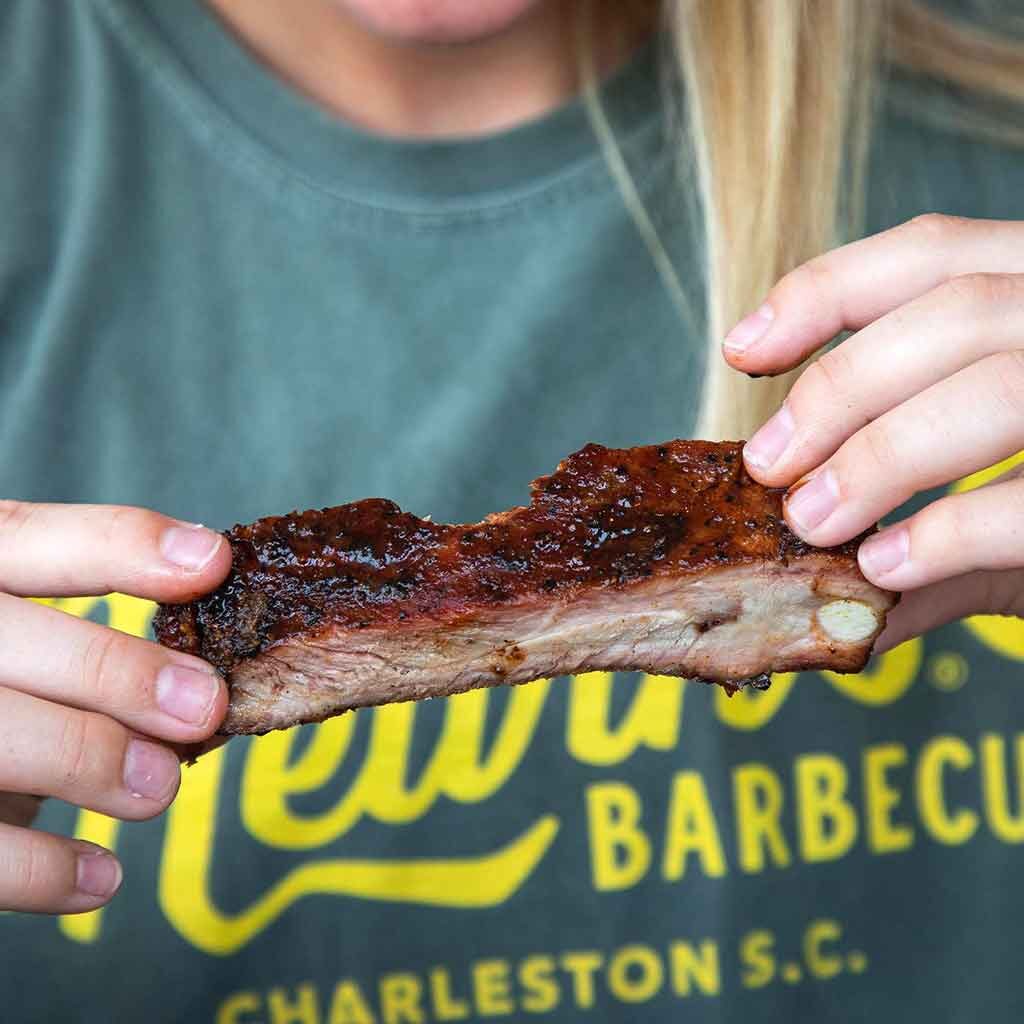
Internal temperature may provide clues, but getting an accurate temperature with ribs, even with the best instant read thermometers, is tricky. Collagen breaks down around 195–205°F, so if you’re in that range, you may be good.
The real test is touch. Pick up the slab with tongs and use the bend test.
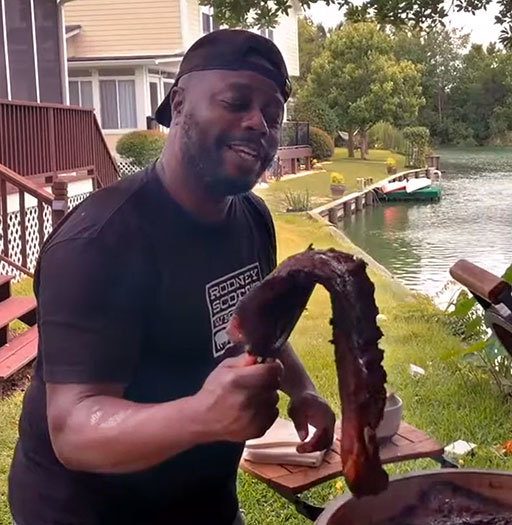
As Meathead notes, using the bend test, you’ll know the ribs are done if they bend significantly, starting to crack on top. A toothpick (often called the toothpick test) should slide between the bones with little resistance. Judges often remind cooks that ribs should “bite off the bone cleanly” rather than fall off completely. At home, you can decide whether you like a competition-style bite or a softer, fall-apart rib.
Pro Tip: When slicing spare ribs, flip the rack meat-side down on your cutting board. This lets you clearly see the bones so you can cut between them without hacking through bone. For St. Louis racks, slice into individual ribs or pairs. For untrimmed spare ribs, note that once you get past the main bones, you’ll hit the cartilage of the rib tips. You can slice through that section to serve the rib tips separately. Always use a sharp knife and cut straight down between bones for clean presentation.
Home vs. Competition Spare Ribs
For backyard hobbyists, don’t be intimidated by the competition talk, At home, the “perfect” rib is the one you like best. Spare ribs are forgiving thanks to their higher fat content, so they stay juicy even with longer cooks or a little extra heat. Many home pitmasters rely on the 3-2-1 method for tenderness, while others smoke them unwrapped for about five hours, spritzing with apple juice or vinegar along the way. The fun lies in experimenting until you find your own style.
On the competition circuit, ribs are about precision as much as flavor. Teams often trim spare ribs to uniform St. Louis racks, clean up the bones for appearance, and layer flavors with rubs, butter, and sauce during the cook. Judges expect a glossy finish, an even smoke ring, and ribs that bite cleanly from the bone — never falling off. As Aaron Franklin reminds us, mastering that balance “really takes some practice.”
Spare Ribs FAQ: Buying, Portions, Storage
The best wood for spare ribs depends on taste, but hickory or oak with a touch of apple, cherry, or peach is a reliable blend. Hickory and oak bring a classic profile, while fruitwoods like cherry, apple, and peach add a gentler, slightly sweet smoke that suits pork. For more ideas across proteins, see our BBQ Wood Selector and adjust to your taste.
No. Country-style ribs are usually cut from the shoulder blade end or from the loin, so they are meaty strips with little or no rib bone. They cook more like pork chops or shoulder steaks. Use quicker grilling or a braise and do not follow spare-rib time and temperature guidelines.
Enhanced pork has a salt and phosphate solution injected for moisture, often 8 to 12 percent by weight. Go lighter on salt in your rub, expect slightly faster cooking, and watch browning since sugars can darken sooner. Check labels for phrases like “contains up to X% solution.” Choose non-enhanced racks when possible.
Yes. Trim the tips to create a St. Louis–style rack, then smoke the tips alongside until probe tender. Cube them for rib-tip burnt ends, simmer them into stock or beans, or dice them into greens. Tips are cartilage-rich, so give them extra time and slice across the grain for the best bite.
Refrigerate within 2 hours, using shallow containers for faster cooling. Keep for 3 to 4 days, or freeze for 2 to 3 months. Reheat covered at 250 to 300°F with a splash of apple juice or broth until the meat reaches 165°F (per USDA) in the thickest location. Uncover briefly or use a short broiler pass to reset bark. Avoid long microwave reheats, which soften the crust.
About the author
James Roller documents South Carolina barbecue for Destination BBQ and authored Going Whole Hog. He researches techniques, interviews pitmasters, creates tools, and curates reliable sources so home cooks can cook barbecue safely and confidently at home.
More about James.See something that needs a tweak? Send a correction.
« See All BBQ Terms