Apple
See how apple wood’s gentle, sweet smoke pairs with pork, poultry, and fish, how it burns, and when to blend it with stronger woods
What is Apple Wood for BBQ?
Apple wood comes from the apple tree (Malus domestica), a dense fruit-tree hardwood prized in barbecue for its gentle, sweet smoke and steady burn. Seasoned apple logs burn hot and cleanly, producing long-lasting coals with very little resin or soot. Its smoke flavor is delicate – subtly fruity or caramel-like – so cooks often use apple wood to enhance pork or poultry without overwhelming them.
Key Takeaways
- Apple wood produces a mild, sweet, and fruity smoke that enhances pork, poultry, and fish, sits on the gentler end of the smoke spectrum, and works well either alone or blended with stronger woods.
- It is a dense hardwood that burns hot and clean, but faster than oak or hickory, so larger splits or frequent replenishing are needed for long cooks, and only seasoned or kiln-dried wood should be used.
- Achieving the best flavor requires thin blue smoke from clean combustion, avoiding the myth of soaking chips, and taking advantage of apple’s versatility in different cookers from offsets to pellet grills.
- In both backyard and competition barbecue, apple wood is valued for its subtle sweetness, reliable balance, and judge-friendly profile, making it a common choice for ribs, chicken, and blended smoke strategies.
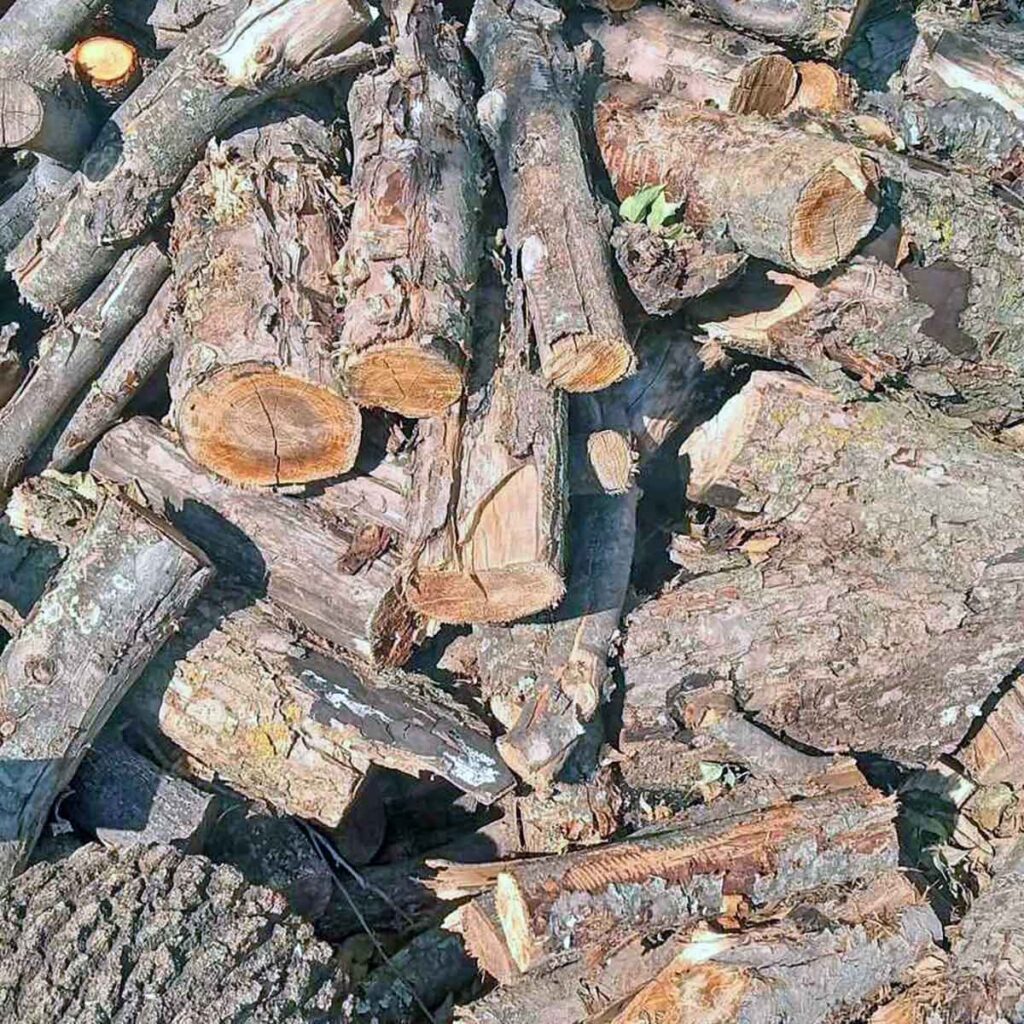
“If I was on a desert island I would want a bag of apple chunks and a bag of small apple chips or pellets. I would use the chunks for steady slow‑release smoke, and the chips or pellets for quick smoke.”
~ Meathead Goldwyn, publisher of AmazingRibs.com
Understanding Apple
Apple Wood Characteristics for BBQ Smoking
Apple wood is the heartwood of the common apple tree (Malus domestica, in the rose family). Native to temperate regions of Asia and Europe, apple trees are cultivated worldwide in orchards.
Per The Wood Database, the average dried weight of apple is around 50+ lb/ft³. Apple wood is stronger and denser than softwoods but splits reasonably easily. When seasoned to about 15–20% moisture, it lights more readily than very dense woods.
According to a study on wood properties as fuel, apple wood produces more BTUs per cord than many other woods. Apple is listed at 26.5 million BTUs/cord, compared to 24 for oak vs 27.7 for hickory, which influences its burn rate and heat output.
The online wood retailer Glamorwood notes that apple firewood, “is known for its low resin content. This means it burns clean, producing little smoke and emissions. It’s healthier to cook with because it doesn’t make soot or bad smells.”
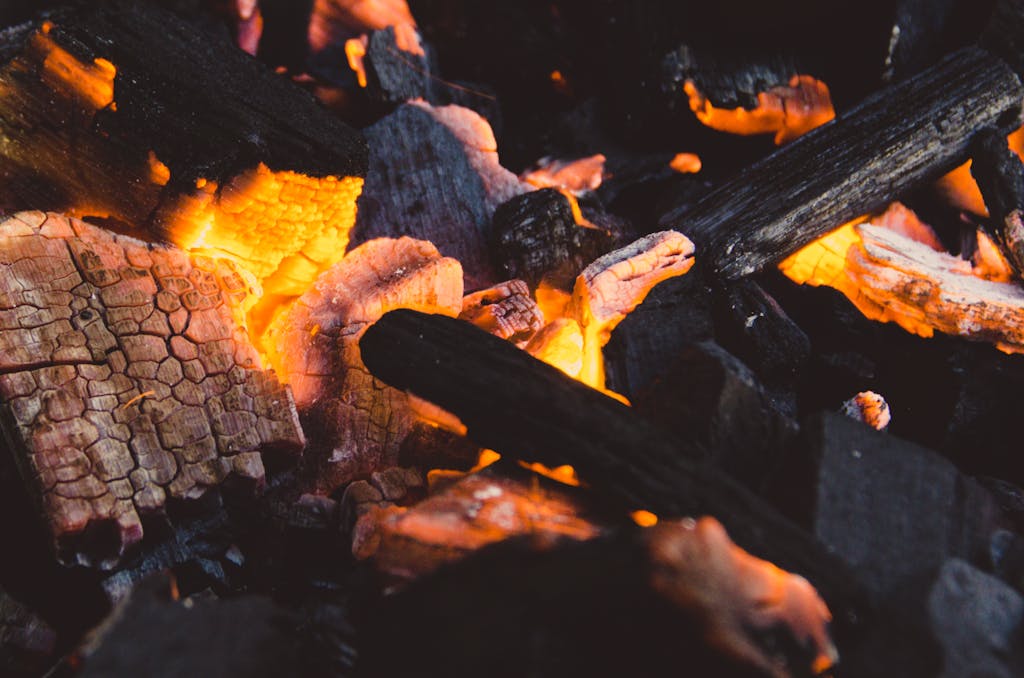
Apple wood burns hotter and faster than oak or hickory, delivering high BTU output over a shorter period. Its minimal resin content ensures a pristine, clear burn while leaving a reliable coal bed for long cooks.
Flavor Profile
“Apple is mild and rarely tries to take center stage,” notes Meathead.
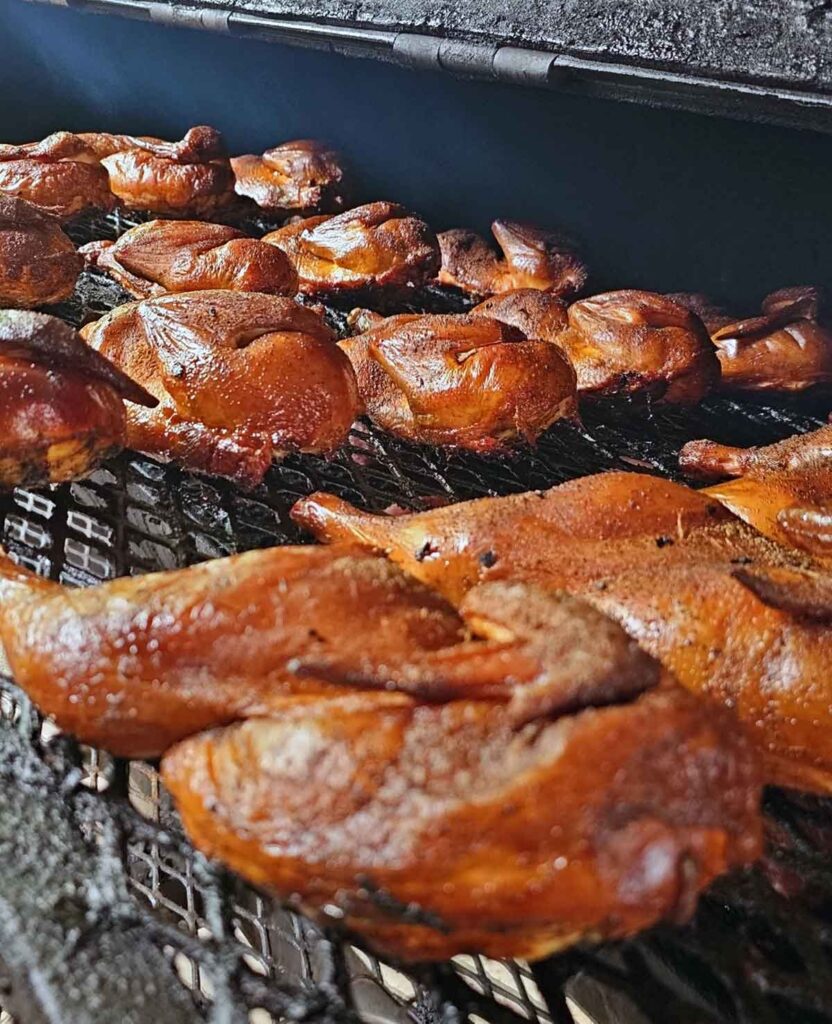
Apple smoke is gentle and sweet, often described as lightly fruity or caramel-like. It enhances the natural flavor of meat rather than dominating it and tends to create a light, reddish-brown bark over longer cooks.
Unlike hickory or mesquite, apple has little risk of bitterness if burned cleanly. On the smoke spectrum, it sits with cherry and other fruitwoods at the mild end.
One guide notes, “Applewood is mild and sweet, lending a mellow flavor” to meat, especially pork and poultry.
History and Regional Use
Apple wood doesn’t anchor any single barbecue region the way post oak does in Texas or hickory in the Carolinas. Instead, it naturally shows up in orchard-rich areas.
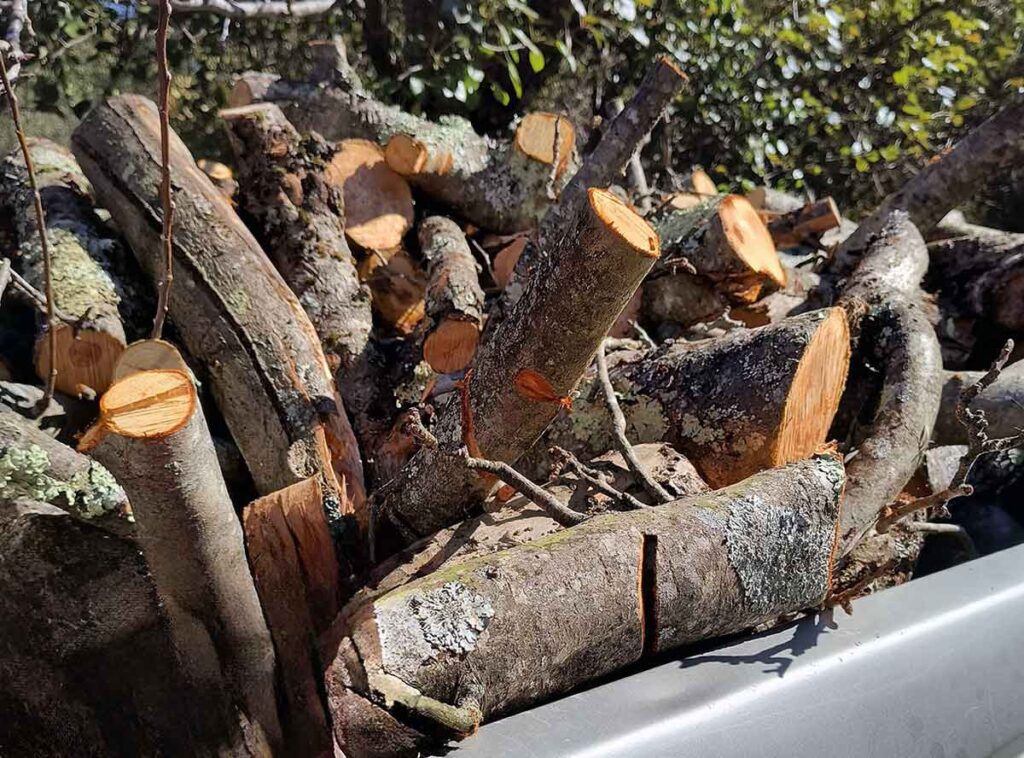
Farmers often used pruned apple limbs or felled trees for fuel, which found their way into the pit. In the Midwest, pitmasters favored apple wood for ribs and ham, where its fruitiness matched pork perfectly.
Internationally, fruitwoods such as apple have long flavored European hams and sausages.
Best Meats for Apple Wood Smoking
Apple wood’s mildness makes it ideal for lighter proteins and moderately fatty cuts.
- Pork: ribs, shoulders, hams.
- Poultry: chicken, turkey.
- Seafood and vegetables: a touch of smoke without harshness.
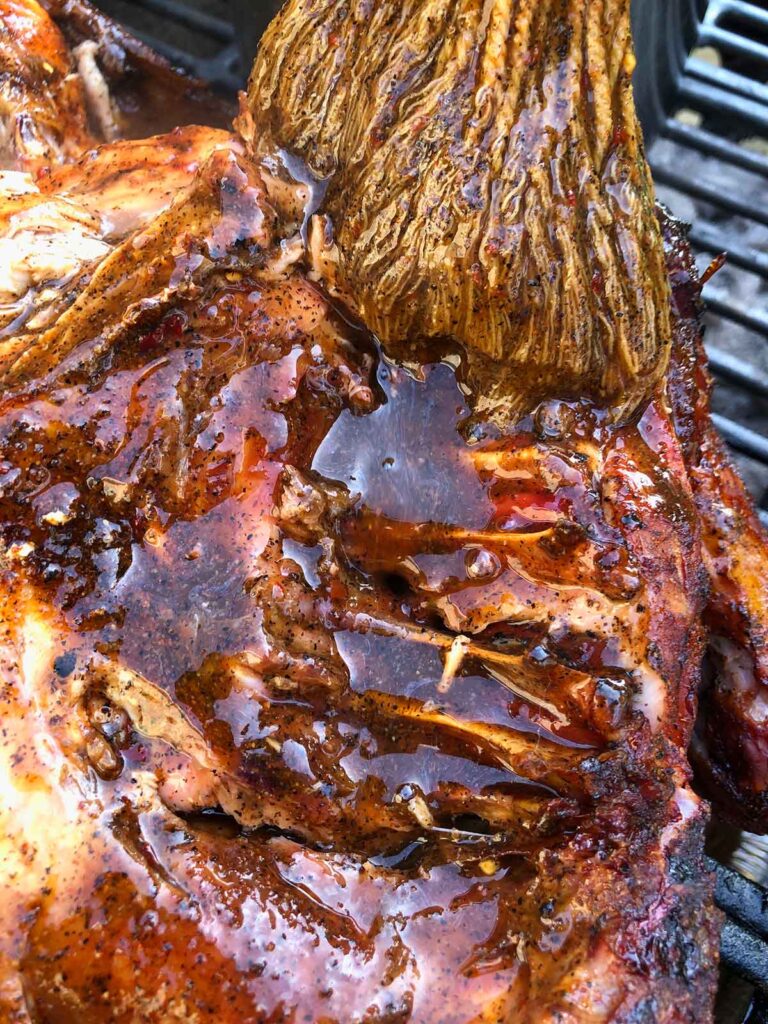
Because apple is lighter than oak or hickory, many cooks blend it when smoking beef brisket or other bold cuts.
For full suggestions, see our BBQ Wood Selector.
Buying and Selecting

Choose naturally seasoned (or kiln-dried in a pinch) apple wood to ensure clean burning.
- Moisture should be below 20%.
- Bark should be intact but free of mold or fungus.
- Avoid wood that has been painted or chemically treated.
Apple is widely sold as chunks, splits, chips, or pellets. For long cooks, larger pieces last longer and produce more stable heat. Pellet users can find apple-flavored fuel at nearly every supplier.
How to Use Apple Wood in Your Smoker
Apple wood works across all smoker setups.
- Offset or kamado: use splits or chunks directly on the coals.
- Kettle grill: the Snake Method keeps heat and smoke steady.
- Gas or electric smoker: place chips in a smoker box, foil packet, or pellet tube.
- Pellet grill: apple pellets are widely available.
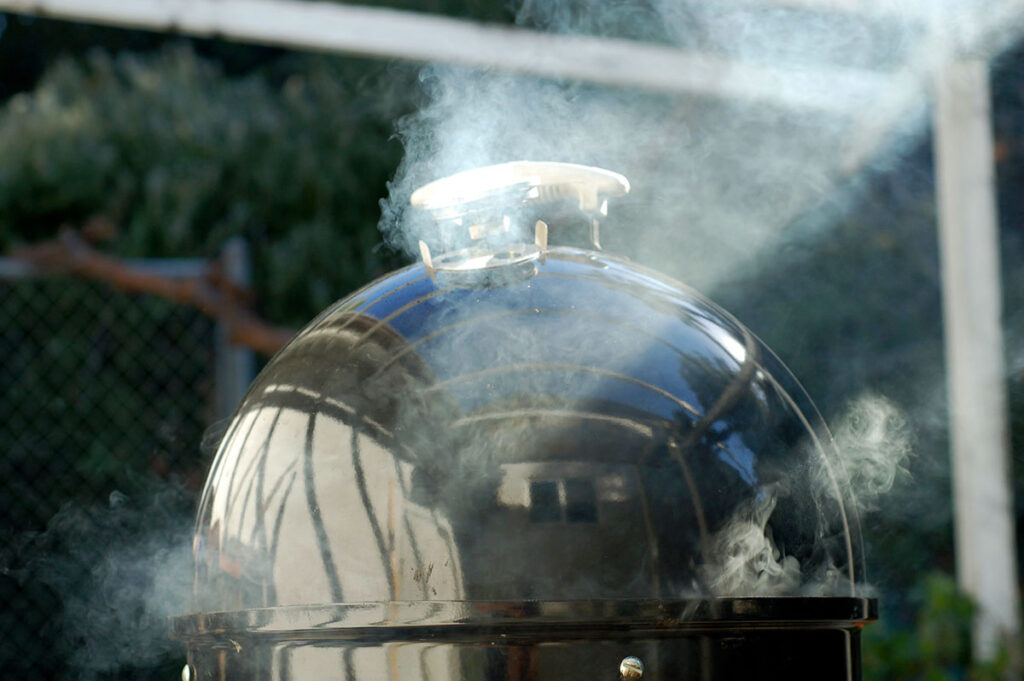
The goal is always thin blue smoke. That faint haze means clean combustion and avoids bitterness.
Some cooks soak wood chips, but this is a myth. Soaked wood produces steam, not smoke, and can cool the fire. Always use dry wood.
Apple also blends well with other woods:
- Oak for longer burn and stronger heat.
- Cherry or pecan for extra sweetness and richer color.
“Wood is the primary flavor that we’ve got on barbecue,” Aaron Franklin said in Franklin Barbecue. Apple, used alone or in blends, adds just enough sweetness to lift the meat’s natural flavor.
Cooking Science
When apple burns, its chemistry drives the flavors we taste.
- Cellulose and hemicellulose break down into sugars, adding sweet and fruity aromas.
- Lignin produces phenolic compounds like syringol and guaiacol, which bring smoky and vanilla notes.
Clean combustion also generates nitric oxide, which reacts with meat pigments to form the smoke ring. Meanwhile, apple’s sweet smoke contributes to the bark, the dark, flavorful crust prized on pork and brisket.
Apple burns faster than oak or hickory, so more wood may be needed for very long cooks.
Competition Context
In barbecue competitions, apple is valued for its balanced and judge-friendly flavor. It is mild enough for chicken and ribs but rarely used alone for brisket.
Teams often blend apple with oak or hickory to add depth without overpowering. Judges tend to reward its subtle sweetness and clean burn.
In fact, renowned competition pitmaster Harry Soo does this and shares an interesting technique for how he uses apple and hickory in ways most never think to. He uses a standard wood layout of four chunks of Hickory and four chunks of Apple, placed at the bottom of the Weber Smokey Mountain smoker for steady smoke over long cooks. Over this he will place his lump charcoal.
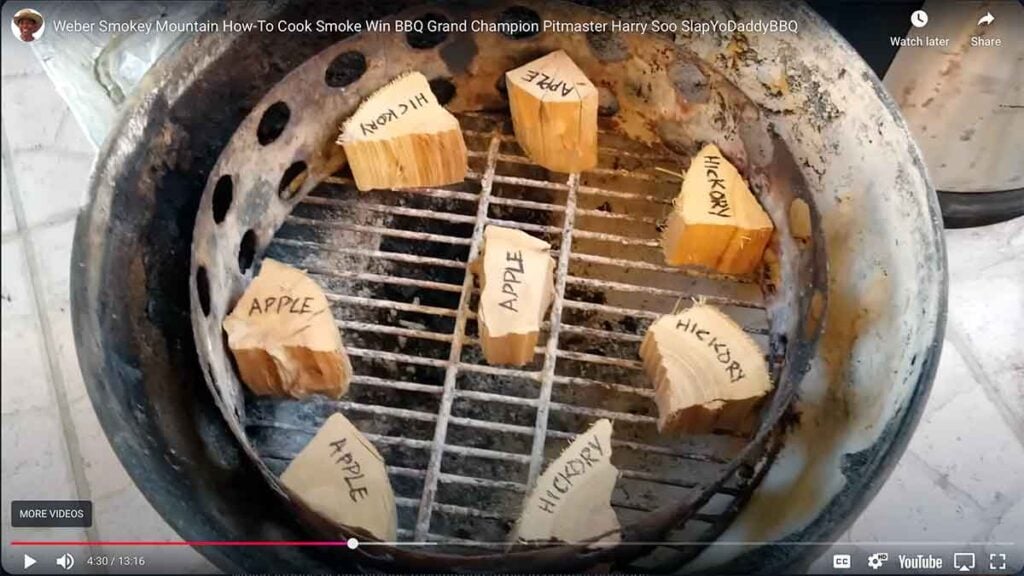
He stresses the important technique of putting the wood underneath the charcoal for smoldering instead of stacking it on top, which is a common beginner mistake:
“A lot of beginners pitmasters are misinformed—they throw the chunks of wood on top—they will never work. The magic of smoking is done by putting the wood underneath,” Soo said. “This setup will allow me to burn for about up to 16 hours to provide the perfect amount of smoke for my barbecue.”
Cultural Notes
In Southern cookouts, apple wood often shows up as part of a mix with hickory or oak, adding orchard sweetness to traditional styles.
Elsewhere, apple-smoked bacon and hams are staples of American tables. In Europe, apple wood continues to play a role in smoked sausages and country hams.
Apple Wood vs Other Smoking Woods Comparison
| Wood | Flavor Strength | Smoke Flavor Notes | Burn Character | Best Uses | Where It’s Iconic |
|---|---|---|---|---|---|
| Apple | Mild | Sweet, fruity, lightly caramel | Burns hot but shorter-lived | Pork, poultry, fish, vegetables | Orchard regions, Midwest BBQ |
| Hickory | Strong | Bold, bacon-like, savory | Long-lasting heat and coals | Pork shoulder, ribs, beef | Carolinas, Southern BBQ |
| Oak | Medium | Clean, woody, versatile | Steady burn, balanced heat | Brisket, pork, general use | Central Texas BBQ |
| Cherry | Mild | Sweet, fruity, rich color | Moderate burn | Pork, poultry, ham | Midwest, blends with apple |
Apple Wood Smoking FAQ
Apple generally burns shorter than oak or hickory. Expect 2–4 hours from chunks, vs. 4–6 hours for similar oak. For long cooks, use larger splits, replenish periodically, or blend with slower-burning oak to keep heat and smoke steady.
Match to cooker and cook length. Chunks (2–4″) suit kettles, kamados, and offsets for multi-hour cooks. Chips are best in a gas-grill smoker box or foil packet for quick sessions. Pellets are for pellet grills—consistent but lighter smoke. Place wood so it lights gradually and watch for thin blue smoke.
Yes, but only if the tree hasn’t been treated with pesticides and the wood is properly seasoned for 6-12 months until moisture drops below 20%. Fresh “green” apple wood produces harsh, bitter smoke. Properly dried wood sounds hollow when knocked together. Store-bought seasoned apple wood eliminates safety concerns and ensures consistent smoking results.
Yes. Apple’s mild, sweet smoke flatters ribs, shoulders, hams, whole chickens, and turkey without turning harsh. On a kettle or kamado, 2–4 chunks are plenty. If you want a touch more backbone, blend a little oak or hickory while keeping smoke clean and light.
Apple is subtle by nature. Use 2–4 chunks instead of 1–2, ensure thin blue smoke (not thick white), and focus smoke during the first 3–4 hours while the bark forms. For a bolder profile, blend a small amount of hickory or oak without choking airflow.
About the author
James Roller documents South Carolina barbecue for Destination BBQ and authored Going Whole Hog. He researches techniques, interviews pitmasters, creates tools, and curates reliable sources so home cooks can cook barbecue safely and confidently at home.
More about James.See something that needs a tweak? Send a correction.
« See All BBQ Terms