Can You Make Ribs the Day Before?
Make ribs the day before by cooking them fully, chilling them safely, then reheating and finishing them when it’s almost time to eat
The hard part is not just cooking ribs. It is trying to cook ribs and host people at the same time. The smoker needs attention. Guests start showing up. The kitchen fills up. Before long, you are managing pans, sauce, drinks, and questions about when the ribs will be ready.
Yes, you can make ribs the day before. The safest way is to cook the ribs fully, cool them safely, refrigerate them overnight, reheat them covered to 165°F, then finish them uncovered for sauce, bark, or char.
Before you settle on a timeline, make sure you know how many racks you are cooking. Use the Rib Calculator to plan how many racks to cook first. That number changes more than cook time. It affects how many pans you need, how much fridge space to clear, how long the ribs take to cool, and whether you’ll need to reheat and finish in batches.
Day-before ribs are not usually better than ribs served fresh off the smoker. Same-day ribs tend to have better bark and a fresher bite. But make-ahead ribs can still eat well, and they can make the day of the party a whole lot easier.
Quick answer
- Yes, you can make ribs the day before. The safest default is to cook them fully, cool them safely, refrigerate, reheat to 165°F, and finish uncovered.
- Same-day ribs usually have better bark. Making them ahead is about making party day easier, not making better ribs.
- Do not partially cook ribs and finish them the next day. USDA guidance warns against partial cooking and finishing later.
- Build in extra time. Multiple racks take longer to cool, reheat, and finish than one rack.
The safest way to make ribs the day before
The easiest mistake is thinking you can cook ribs partway today, refrigerate them overnight, and finish cooking them tomorrow. That is not the plan.
The safer plan is to treat them like cooked leftovers. Finish the cook today. Cool the ribs quickly. Refrigerate them cold. Bring them back up to a safe temperature tomorrow. Then use the final few minutes to bring back sauce, bark, or char.
This same cook-cool-reheat approach works for pork ribs and beef ribs. Baby backs, spare ribs, St. Louis style ribs, beef back ribs, and big beef plate ribs do not cook, cool, or reheat at the same pace, but the safety sequence does not change: cook fully, cool safely, refrigerate cold, reheat to 165°F, and finish late.
For most hosts, that means:
- Cook the ribs all the way until tender.
- Let them rest briefly.
- Cut racks in half if that helps them cool and fit in the fridge.
- Move the ribs into shallow pans or smaller portions so they cool faster.
- Cover and refrigerate them at 40°F or colder.
- Reheat them covered to 165°F.
- Finish uncovered with sauce, grill heat, smoker heat, or the broiler.
The key word there is fully. Fully cooked, chilled, and reheated is a different job from partly cooked, chilled, and finished later.
Which make-ahead rib plan should you use?
You have a few ways to get work done before people show up. They do not all give you the same balance of safety, texture, and timing.
If you need the ribs mostly done before guests arrive, choose the full-cook-ahead method. If you only need an hour or two of cushion, cooking the ribs the same day and holding them hot usually keeps the bark in better shape.
Option 1: cook fully the day before, chill, reheat, and finish
This is the plan I’d use for most ribs I need to make ahead because it gives you control without stopping the cook in the middle. Before the ribs go on, make sure you have enough shallow pans and fridge space. You do not want to finish late in the evening and realize the only place for hot ribs is one deep, crowded pan.
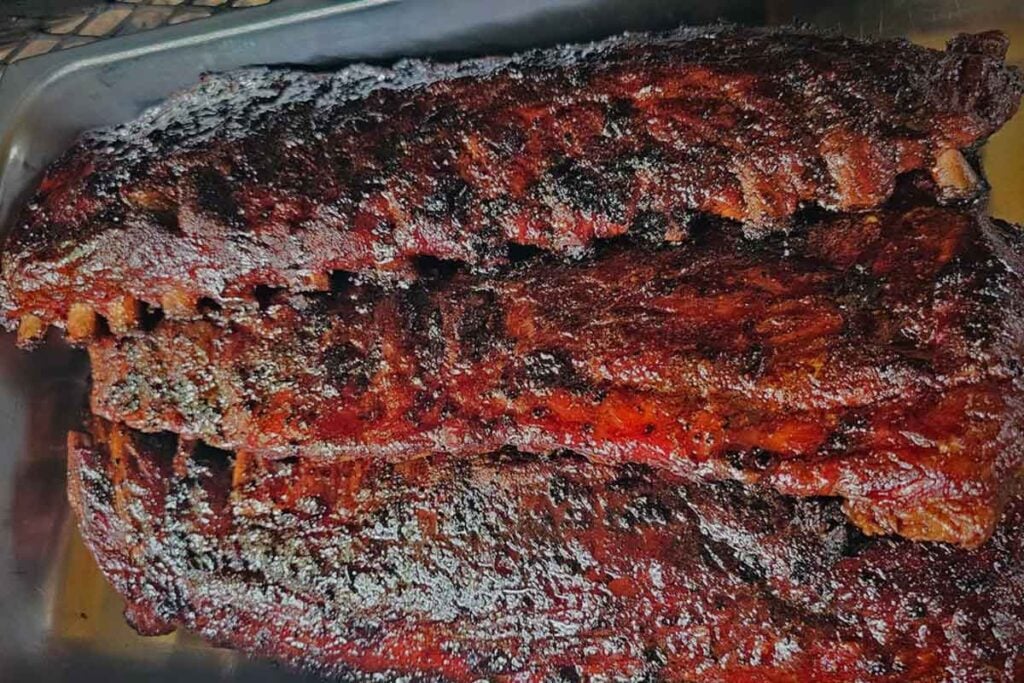
- Trim and season the ribs. You can season the ribs the day before or earlier on cook day. Keep them refrigerated until they are ready to cook.
- Cook the ribs until tender. For pork ribs, do not pull them just because pork can be safe at 145°F with a 3-minute rest. That number from USDA FSIS fresh pork guidance is a safety minimum for whole pork cuts, not the finish line for tender ribs. Beef ribs have their own texture cues and can take longer, especially big plate ribs, but the make-ahead rule is the same: cook them fully before you cool and refrigerate them.
- Rest briefly. Let the ribs settle long enough that they are not steaming hard when you wrap or pan them. Do not let a short rest turn into a long room-temperature hold.
- Cool promptly. Once the short rest is over, start cooling. If full racks are awkward, cut them into half racks so they fit shallow pans better.
- Use shallow pans or smaller portions. A deep pile of hot ribs cools slowly. That is where people get into trouble. Spread the ribs out and get them into the refrigerator promptly so they can cool faster. Cover tightly once the heavy steam has settled.
- Refrigerate at 40°F or colder. Get the cooked ribs into the refrigerator within 2 hours, or within 1 hour if the temperature is above 90°F. Keep them wrapped tightly or covered so they do not dry out overnight.
- Reheat covered to 165°F. The next day, use gentle heat and keep the ribs covered until the center is hot. Probe the thickest meaty section, not just the edge of the rack.
- Finish uncovered. Once the ribs are hot, uncover them and finish for sauce, bark, or char. This can happen on the grill, in the smoker, or under the broiler.
- Serve or hold safely. If they finish early, hold them at 140°F or warmer. Finishing a little early and holding safely is usually a better problem than serving ribs that are still cold in the center.
Several racks take longer than one rack. Beef ribs can stretch the timeline even more because they are usually thicker and heavier than pork ribs. Start reheating earlier than the shortest estimate you find, especially if the oven or grill will be full. You can always hold hot ribs safely for a short stretch. You cannot serve ribs that are still cold in the middle.
Option 2: cook same day, finish early, and hold safely
If fresh texture matters more than getting all the cooking done the day before, this is often the better choice.
Cooking ribs the same day and finishing early can give you better bark than cooking them the day before. The catch is that you need a way to keep the ribs at 140°F or warmer without drying them out. Holding means the ribs are already cooked and hot. Reheating means chilled ribs have to come back up to temperature.
Those are not the same job.
If you cook the ribs the same day, build in a cushion. Finish the ribs early, hold them hot, then put them back over heat for a few minutes if the bark softens or the sauce needs a fresh glaze. FDA buffet guidance says hot food should stay at 140°F or warmer, and some warmers only hold food around 110°F to 120°F, so check the actual temperature instead of trusting the equipment.
For longer holds, warmer temperatures, and meal timing, use the full guide on how to keep ribs warm for a party.
Why partial cooking ribs the day before is risky
This comes up often because the idea sounds so handy: smoke the ribs partway today, chill them, then finish tomorrow.
I would not make that your plan. If you use the 3-2-1 method for ribs, do not treat the last step as something to save for tomorrow. Either finish the ribs fully today or cook them fresh tomorrow.
USDA FSIS grilling guidance warns against partially grilling meat or poultry and finishing it later. The pork-specific guidance also says not to brown or partially cook pork, refrigerate it, and finish cooking later. That is the line this page follows.
The reason is simple enough. Partial cooking can warm meat into the range where bacteria grow quickly without cooking the ribs all the way through.
Seasoning the ribs ahead is fine. Cooking the ribs fully ahead is fine. Partially cooking, chilling, and finishing tomorrow is the one to take off the table.
The safer substitute is also simple: cook the ribs all the way today, cool them properly, refrigerate them, then reheat them tomorrow like cooked leftovers. That gives you the breathing room without leaving the ribs half-cooked overnight.
Reheat gently, then finish uncovered
The goal is not to run through every possible reheating method here. For day-before ribs, the basic plan is simple: warm them gently while covered, make sure the center reaches 165°F, then use the final few minutes for sauce, bark, or char.
A covered pan or tight foil helps the ribs heat more evenly and hold onto moisture. Add a small splash of apple juice, broth, saved pan juices, or thin sauce if the ribs look dry, but do not drown them.
Use a thermometer and check the thickest meaty section, not just the edge of the rack. This matters even more with beef ribs, where one thick section can lag behind the rest of the pan. Once the ribs are hot in the center, uncover them and finish briefly on the grill, in the smoker, in the oven, or under the broiler.
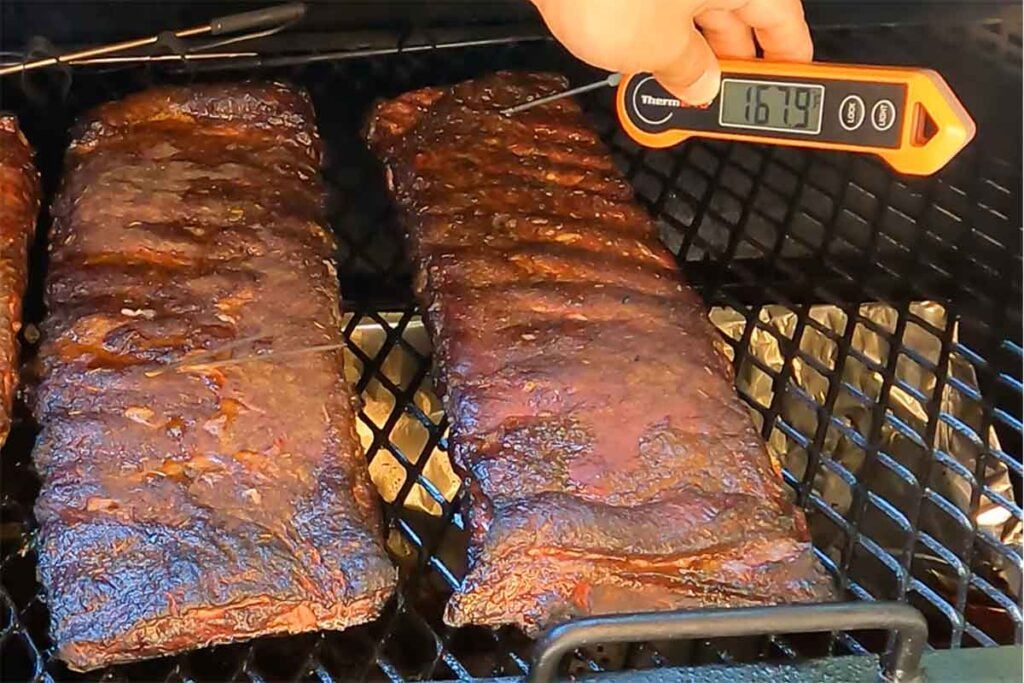
If you want a full method-by-method breakdown, including oven, grill, smoker, water bath, and other options, see our guide on how to reheat ribs without drying them out.
When to sauce ribs if you are making them ahead
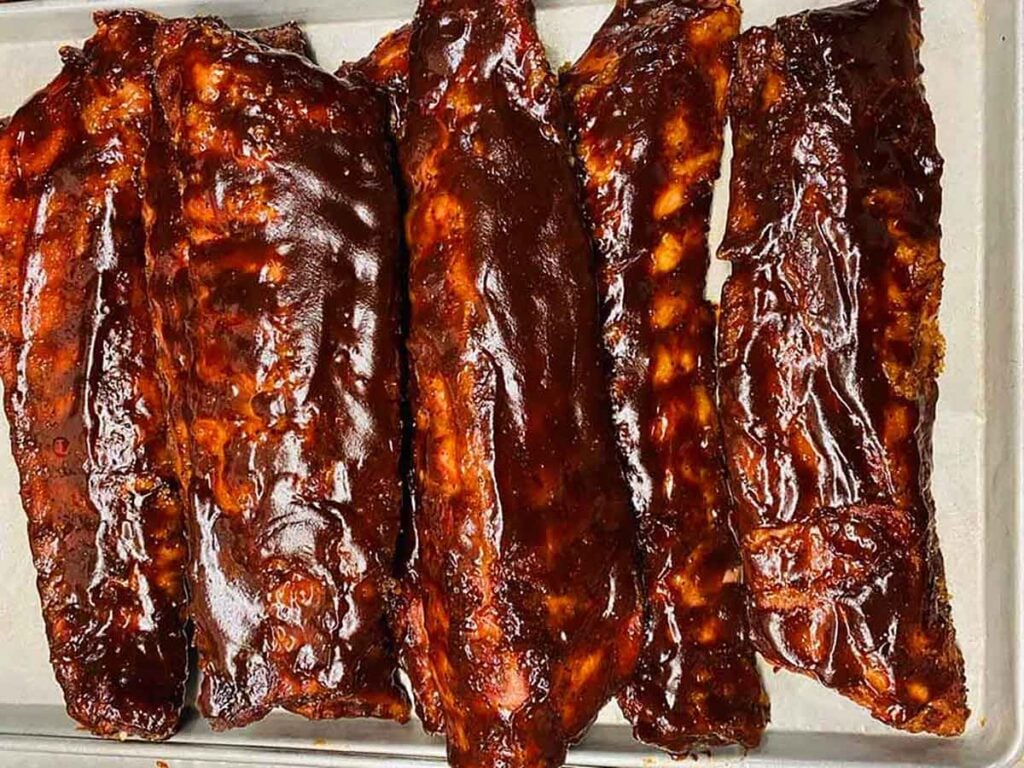
Sauce usually does better at the end, not before the overnight rest.
If you sauce heavily before refrigerating, the sauce can dull, thicken, or turn sticky during storage. Then, when you finish the ribs the next day, the sugar in the sauce can burn before the meat is hot and ready.
For most hosts, the better move is:
- Dry-rub ribs: Reheat covered, then finish uncovered to refresh the surface.
- Sauced ribs: Reheat covered, then brush on a light final glaze close to serving.
- Sticky or sweet sauce: Keep the final heat brief and watch closely.
- Thin vinegar-style sauce: Use it lightly during reheating or when you serve, depending on the style of rib you are serving.
The ribs need to be hot first. Sauce comes after that.
Food safety rules for making ribs ahead
This is the part where the numbers matter. You do not need to panic over them, but you do need to respect them.
USDA FSIS leftovers guidance says cooked leftovers can generally stay in the refrigerator for 3 to 4 days and should be reheated to 165°F. When I’m feeding guests, I’d rather cook ribs the night before than make them several days ahead. One day ahead gives you the timing help without making the ribs taste too much like leftovers.
Keep these numbers straight:
- Cold storage: Keep cooked ribs at 40°F or colder in the refrigerator.
- Reheating: Reheat leftovers to 165°F as measured with a food thermometer.
- Hot holding: Hold finished ribs at 140°F or warmer.
- Cooling time: Refrigerate cooked ribs within 2 hours, or within 1 hour if the temperature is above 90°F.
- Cooling the ribs: Use shallow pans or smaller portions so the ribs cool faster.
- Thermometer check: Probe the thickest meaty section, especially with bigger racks or stacked pans.
- Chafers and slow cookers: Use them for holding hot ribs only if they can maintain 140°F or warmer. Do not use them to reheat cold ribs.
The USDA FSIS danger zone guidance is the reason for the caution. Food spends too much time between 40°F and 140°F when it cools slowly, reheats slowly, or sits in a warmer that is not actually warm enough.
Planning fridge space, pans, and timing for several racks
Reheating a few leftover ribs is one thing. Reheating several racks for guests is different.
Before the cook starts, clear refrigerator space and make sure you have enough pans, foil, lids, or wrap. You do not want to discover late in the evening that your finished ribs only fit in one deep pan stacked three layers high.
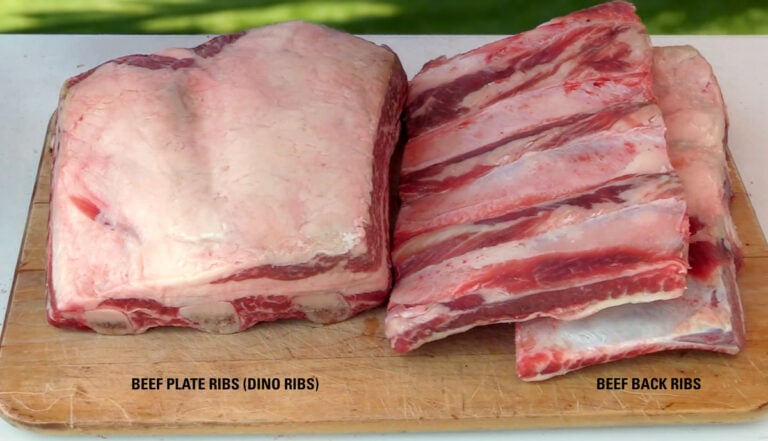
Beef ribs make this even more important. Beef back ribs and big plate ribs are not the same size or thickness, so they will not cool or reheat the same way. If you are not sure which beef rib cut you have, check the beef back ribs vs dino ribs guide before you plan the timing.
A better plan:
- Cut racks in half if needed. Half racks fit better in shallow pans and smaller coolers.
- Use shallow pans. University of Minnesota Extension recommends shallow containers, ideally 2 inches deep or less, so food cools faster.
- Do not stack hot ribs deep. Heat gets trapped in the middle.
- Cover tightly after the steam settles. Tight wrapping helps keep the ribs from drying out and limits air exposure.
- Reheat in batches. One crowded oven full of stacked ribs is how you end up with hot edges and a cold center.
- Finish in batches. Reheat first, then sauce or crisp in smaller groups.
- Start earlier than you think. You can safely hold hot ribs that finish early. You cannot serve ribs that are still cold in the middle.
Cooked, refrigerated meat can taste a little different when reheated. That is often called warmed-over flavor. Tight wrapping, vacuum sealing, sauce or juices, and sticking to one day ahead help keep that from becoming the first thing people notice.
Transporting ribs made the day before
Taking ribs to someone else’s house changes the plan because now you have to keep them cold enough or hot enough while they ride in the car.
For most hosts, cold transport is safer and easier. Keep the ribs at 40°F or colder in a cooler with plenty of ice or frozen packs, then reheat them at the destination. That avoids trying to keep ribs safely hot in a car without knowing what temperature they are actually holding.
Hot transport can work, but only if you reheat the ribs first and can verify they stay at 140°F or warmer the whole time. If you cannot check that, do not guess.
Pack the simple things too:
- foil
- sauce or glaze
- a thermometer
- tongs
- sheet pans or foil pans
- a brush for sauce
- extra towels or gloves for hot pans
Before you leave, know whether you will have an oven, grill, smoker, or broiler at the destination. A cooler full of cold ribs is only helpful if you have a real way to reheat them once you get there.
The thermometer is the one piece people tend to forget. It is also the thing that tells you whether the ribs are hot enough to serve.
Common make-ahead rib problems and fixes
Most make-ahead rib problems come from the same few places: too much heat, not enough covered time, crowded pans, or trying to finish before the center is hot.
| Problem | Likely cause | Best fix |
|---|---|---|
| Ribs are dry | They reheated too hot, too long, or uncovered | Reheat covered next time with a small splash of broth, apple juice, pan juices, or thin sauce. |
| Bark is soft | Wrapped ribs steamed during reheating | Reheat covered first, then finish uncovered on the grill, smoker, or under the broiler for a few minutes. |
| Sauce burned | Sauce went on too early or the final heat was too direct | Sauce late, use a light glaze, and watch closely during the final finish. |
| Ribs are cold in the center | Too many racks were stacked together or reheating started too late | Keep reheating covered until the thickest section reaches 165°F. |
| Ribs are falling apart | They were cooked very soft, then reheated too long | Use a gentler reheat next time and keep the final uncovered finish short. |
| Refrigerator is crowded | Full racks and deep pans take too much room | Cut racks in half and use shallow pans or tightly wrapped portions. |
| Not enough oven or grill space | Everything is trying to reheat and finish at once | Reheat in covered batches first, then finish smaller batches for sauce and bark. |
| Ribs finished early | The timing cushion worked, but now you need to hold them | Hold only if you can keep them at 140°F or warmer, then put them back over heat for a few minutes if needed. |
If the ribs are cold in the center, fix that before you worry about bark. Texture matters, but safe and hot comes first.
FAQs about making ribs the day before
These are the questions that usually come up once people realize the day-before plan can work.
Yes. Smoke the ribs until they are fully cooked and tender, cool them safely, refrigerate them overnight, then reheat them covered to 165°F the next day. Once they are hot in the center, uncover them and finish for sauce, bark, or char. The important part is not to smoke them halfway and finish cooking tomorrow.
Cook ribs fresh when you can, especially if bark and a just-cooked bite matter most. Making ribs the day before is mostly about making the party easier. The ribs can still be good, but they usually will not eat quite like ribs served right off the smoker.
Yes. Seasoning ribs the night before is a good choice if you want less prep on cook day but still want to cook the ribs fresh. Trim, rub, cover, and refrigerate the raw ribs at 40°F or colder, then cook them fully the next day. It saves prep time, not cook time.
Cooked ribs can generally stay in the refrigerator for 3 to 4 days, but the night before is usually better when you are feeding guests. Keep them wrapped or covered at 40°F or colder. If you cook them two days ahead, they are more likely to taste like leftovers when reheated.
Reheated ribs should reach 165°F when you are treating them as leftovers. Check the thickest meaty section with a thermometer, especially if you reheated several racks together. Do not rely on bubbling sauce, warm bones, or hot edges. The outside can look ready before the center is hot.
No. A cooler hold only works if you can prove the ribs stay at 140°F or warmer the whole time. Most home cooks cannot verify that overnight. For next-day ribs, cool them safely, refrigerate them, then reheat them before serving.
Final takeaway
Yes, you can make ribs the day before. Fully cook them, cool them safely, refrigerate them cold, reheat them covered to 165°F, and finish them close to serving so they still look and taste like barbecue.
Build in more time than you think you need.
A pan of hot ribs safely holding early is a whole lot easier to manage than ribs that are dry, cold in the middle, or still waiting on the finish when everyone is ready to eat.
Corrections
We work to keep Destination BBQ accurate and useful. If you notice a food safety issue, broken link, outdated source, or anything that needs correction, please let us know.
Sources
- USDA FSIS: Leftovers and Food Safety and USDA FSIS: Danger Zone: support the 3 to 4 day refrigerator window, 165°F reheating guidance, 40°F to 140°F danger zone, and 2-hour/1-hour rule.
- USDA FSIS: Grilling and Food Safety and USDA FSIS: Fresh Pork From Farm to Table: support the warning against partial cooking and finishing later, along with the pork safety minimum of 145°F plus a 3-minute rest for whole pork cuts.
- FDA: Serving Up Safe Buffets: supports hot holding at 140°F or warmer, cold holding at 40°F or colder, and the caution that some warmers do not hold food hot enough.
- University of Minnesota Extension: Safe food temperatures: supports the shallow-container cooling guidance, including the recommendation to use containers ideally 2 inches deep or less.
- ThermoWorks: The best method for reheating BBQ leftovers and ThermoWorks: Are Your Ribs Done?: support the 165°F leftover reheating target, water-bath reheating context, and the distinction between pork safety and pork rib tenderness.
- Pork Information Gateway: What is warmed-over flavor?: supports the brief quality note about cooked, refrigerated meat tasting different after reheating.
This page uses federal food-safety guidance for safety rules and barbecue temperature references for practical cooking context.
About the author
James Roller documents South Carolina barbecue for Destination BBQ and authored the SC BBQ cookbook Going Whole Hog. He wrote this guide for the cook trying to get ribs ready before guests arrive, without guessing on food safety or drying out dinner. The advice follows published food-safety guidance, then applies it to the way ribs actually get cooked, cooled, reheated, and served at home.