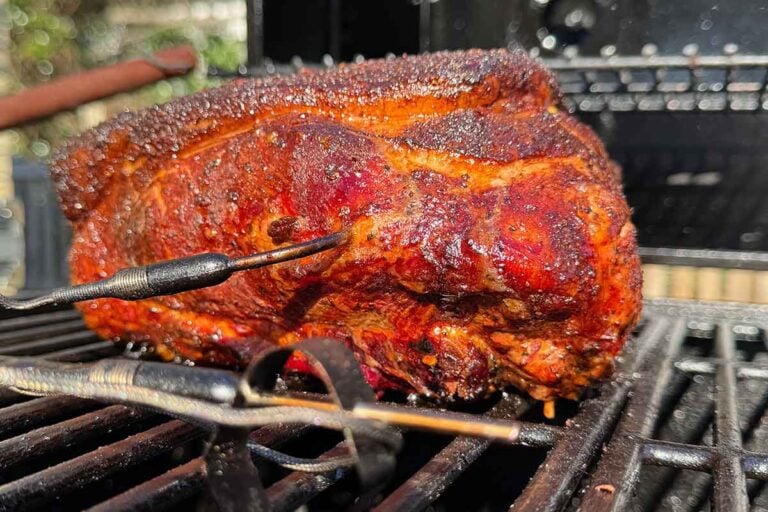
Beef Back Ribs vs Dino Ribs
Know how beef back ribs vs dino ribs differ before you buy, including what to ask for and whether to count racks, bones, or 3-bone plates
Two packages of beef ribs can look close enough to confuse you, especially when the label is vague. One may be a rack of beef back ribs. The other may be the big beef plate short ribs BBQ folks call dino ribs. Those are not the same thing, and you should not buy them the same way.
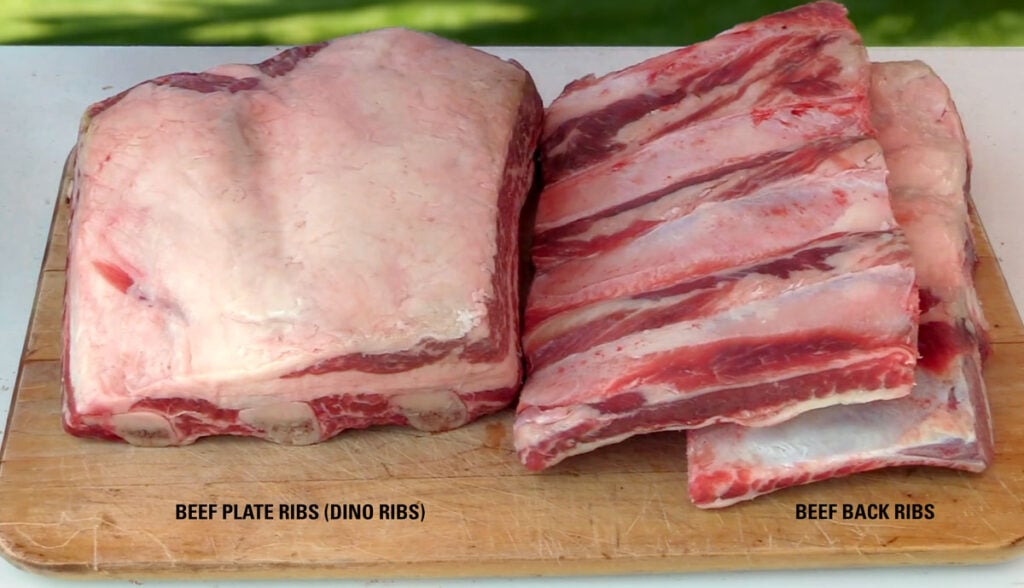
Beef back ribs are not dino ribs. Dino ribs is the common BBQ name for beef plate short ribs, usually the big 3-bone cut with thick meat sitting over wide bones. Beef back ribs are rack-style ribs from the rib and prime-rib area, with most of the meat between the bones.
This is about buying and portions, not how to cook the ribs. Before you buy, you need to know which cut you are looking at, what the label actually means, and whether you should be counting racks or big individual bones.
Quick answer
- Beef back ribs are not dino ribs.
- Dino ribs is the common BBQ name for beef plate short ribs.
- Beef back ribs have most of their meat between the bones.
- Beef plate short ribs have thick meat sitting over large, wide bones.
- With back ribs: start with the rack, then check how many bones and how much meat you are really getting.
- With dino ribs: start with the number of big bones you need, then work back to how many 3-bone plates to buy.
- For a better buying estimate: use the Rib Calculator.
To keep the labels straight, I checked the USDA IMPS cut specs and Texas A&M meat-science references against real retail label examples from the meat case. The buying advice here is practical guidance, not lab-style yield testing, because beef ribs vary by trim, bone size, and how much meat is left on the rack or plate.
What’s the difference between beef back ribs and dino ribs?
The easiest way to separate them is to look at where the meat sits.
Beef back ribs come from the rib section, near the prime rib and ribeye area. Once the ribeye muscle is removed, what remains is a rack of rib bones with meat mostly tucked between them. The USDA’s Institutional Meat Purchase Specifications for Fresh Beef identify beef back ribs as IMPS/NAMP 124.
Dino ribs usually means beef plate short ribs. These come from the short plate and carry a thick layer of meat over larger bones. The same USDA specifications identify beef plate short ribs as IMPS/NAMP 123A.
That difference changes how you shop. With back ribs, you start with the rack and check how many bones it has. With dino ribs, you start with the number of big bones you need and then figure out how many 3-bone plates that requires.
What beef back ribs are
Back ribs can look like a lot in the package, but the rack can be a little deceiving.
Beef back ribs come from the rib area, directly under the ribeye roll. Texas A&M’s meat science page for 124 beef rib, back ribs explains that they usually include seven bones from ribs 6 through 12 and that the major muscles are the intercostal muscles between the bones.
That matters at the meat case. A rack may look long and impressive, but the meat is not stacked thickly on top. It is mostly between the bones. If the rack is thin, it may not be as filling as it looks.
Back ribs are still worth buying when they are meaty enough. They work well when you’re serving other meats too, or when a full dino rib bone would be too much for each person. Just do not assume a big-looking rack equals a lot of food. The number of bones can help you identify the cut, but it still does not tell you how many people the ribs will feed.
If you are thinking through racks for a group, the guide to how many racks of ribs to buy can help before you head to the store.
What dino ribs are
Dino ribs are the big beef ribs people usually picture from Texas-style barbecue.
More formally, they are beef plate short ribs. Texas A&M’s page for 123A beef plate short ribs describes them as coming from ribs 6 through 8, with bones often 8 to 12 inches long. For barbecue, they are commonly called 3-bone beef ribs.
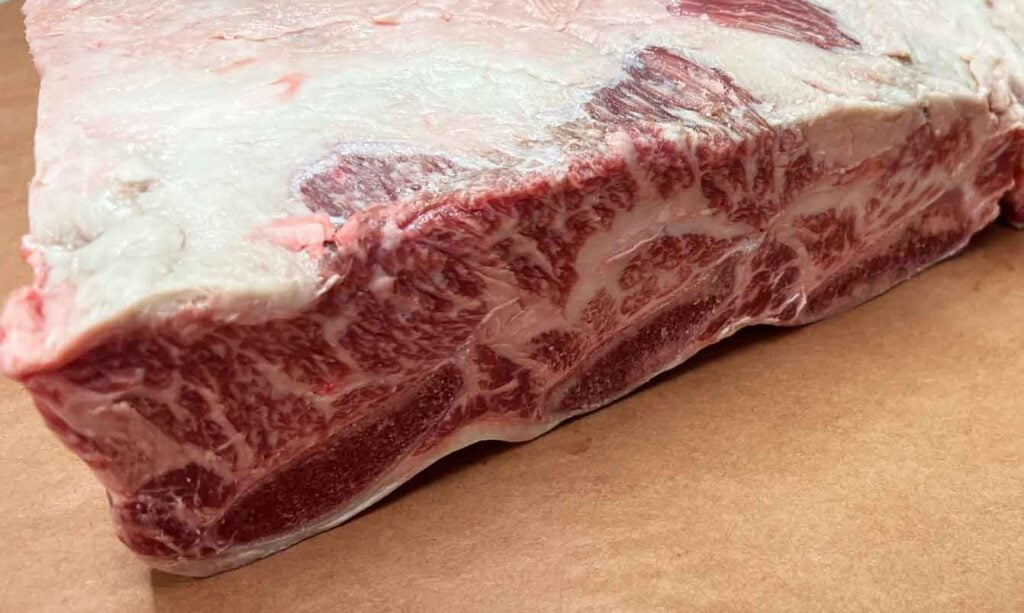
The most obvious difference is where the meat sits. On plate short ribs, most of the meat sits on top of the bones, which is why one rib can carry a thick, rich slab of meat. That is also why one large plate-rib bone can be a full adult serving when it is the main thing on the plate.
At the store or butcher counter, dino ribs may be labeled several ways:
- Beef plate short ribs
- Plate short ribs
- Short plate ribs
- Beef plate ribs
- 3-bone beef ribs
- Dino ribs
The Beef. It’s What’s For Dinner Plate Short Ribs page lists “Dino Ribs” as an alias for Plate Short Ribs. If you are calling a butcher, ask for beef plate short ribs or short plate ribs. If the butcher uses cut numbers, IMPS/NAMP 123A is the one you want.
How to tell them apart at the meat case
If the label does not settle it, the meat usually will.
Back ribs look more like a rack. They are flatter, more curved, and the meat sits mostly in the spaces between the bones. You may see them as a full rack, half rack, or partial rack.
Dino ribs look taller and meatier. The bones are bigger and wider, and the meat sits on top of them. You may see a whole 3-bone plate, a split plate, or individual large bones.
Here is the plain test:
- Meat mostly between the bones: probably beef back ribs
- Thick meat over large bones: probably beef plate short ribs or another short-rib cut
- Thin strips cut across several bones: flanken, LA galbi, or kalbi, not whole back ribs or the big plate ribs BBQ cooks usually mean by dino ribs
- Boneless strips: not beef back ribs and not whole dino ribs
What the package label may say
This is where the store can make things harder than they need to be.
The Beef. It’s What’s For Dinner Back Ribs page lists back ribs as IMPS/NAMP 124 and gives aliases like Beef Rib Back Ribs, Beef Riblets, Beef Ribs, Finger Ribs, and Rib Bones. That is all back-rib territory.
Plate short ribs have their own label mess. The Plate Short Ribs page from Beef. It’s What’s For Dinner lists “Dino Ribs,” “Flanken Style Ribs,” and “Short Ribs” as related retail names. That overlap is the warning. A package can use short-rib language and still not be the big barbecue rib you’re trying to buy. Flanken-style ribs are thin strips cut across the bones, not a whole 3-bone plate or the big single bones most BBQ cooks mean by dino ribs.
Short ribs can come from more than one place and can be cut more than one way. You may see plate short ribs, rib short ribs, chuck short ribs, English-cut ribs, flanken-cut ribs, and boneless short ribs under similar wording, which is why the package needs one more look before you buy.
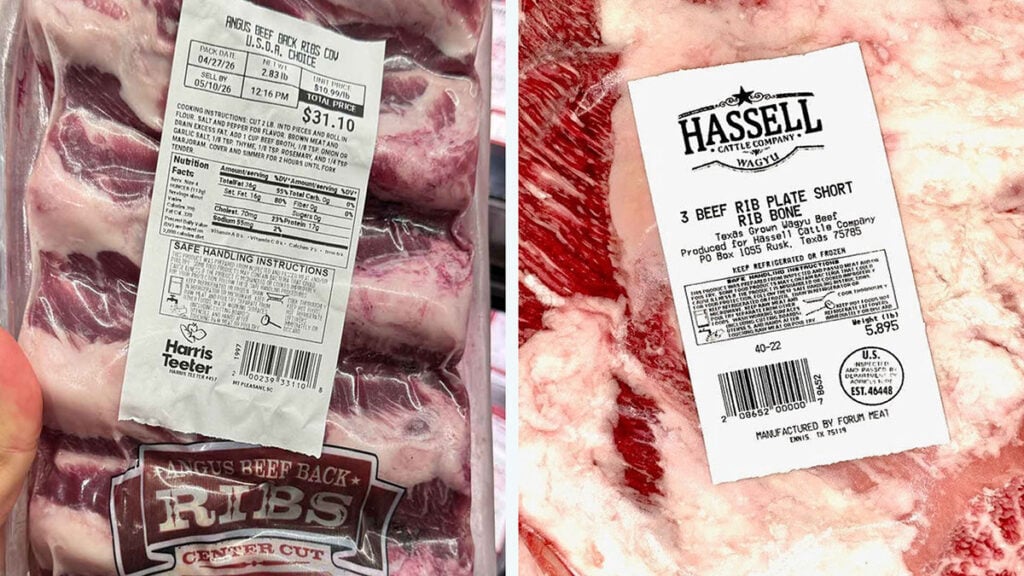
Use this table as a quick label check before you assume you have the right ribs.
| Label you see | What it usually means | What to check before buying | Use in the Rib Calculator? |
|---|---|---|---|
| Beef back ribs | Back ribs from the rib and prime-rib area | Count the bones and make sure the rack looks meaty enough for your meal | Yes |
| Beef rib back ribs, rib bones, or beef riblets | Another name for beef back ribs | Look for a curved rack with meat mostly between the bones | Yes |
| Beef plate short ribs, plate short ribs, or short plate ribs | Usually the dino rib cut | Confirm whether you are buying a whole 3-bone plate or individual bones | Yes, if they are plate ribs |
| 3-bone beef ribs or dino ribs | Usually beef plate short ribs | Look for thick meat sitting over large, wide bones | Yes, if they are plate ribs |
| Beef short ribs or short ribs | Too vague by itself | Ask whether they are plate, rib, chuck, English-cut, flanken-cut, or boneless | Only if they are the big beef plate ribs used for barbecue |
| English-cut short ribs | Individual short-rib pieces cut parallel to the bone | Do not treat them like a full rack or full 3-bone plate | No |
| Flanken, LA galbi, or kalbi | Thin short ribs cut across the bones | The short-rib wording can overlap, but these are thin strips cut across the bones, not whole back ribs or big dino ribs | No |
| Boneless short ribs | Boneless pieces, often from chuck at retail | Buy these only if you want boneless short-rib pieces, not racks or big bone-in ribs | No |
| Country-style beef ribs | Usually boneless strips cut to look rib-like | Treat separately; these are not true bone-in beef ribs | No |
The vague label is the one to slow down on. If the package only says “short ribs,” ask what kind of short ribs they are before you buy. You can start with the simple question: “Are these dino ribs?” Many butchers will know what you mean, but if you get a blank look, ask whether they are the big 3-bone beef plate short ribs. If you want the specific cut number, IMPS/NAMP 123A is the one you’re looking for.
Why you count beef back ribs and dino ribs differently
Once you know which cut you’re buying, the next question is what to count: the rack, the big bones, or the 3-bone plate.
With beef back ribs, start with the rack. Then check how many bones it has and how much meat is really on it. A full rack is often seven bones, but a thin rack may not be as filling as it looks because most of the meat is between the bones.
With dino ribs, start with the number of big bones you need. Then work back to how many 3-bone plates you need to buy. If you need four big bones, one 3-bone plate will not get you there. If you need six, you are probably buying two plates.
Pounds are worth checking, but they should not be the only way you plan. Bone size, trim, fat, and meat placement can make two packages with the same weight feed people differently. That is why it helps to understand that bones can matter more than pounds.
From there, use the Rib Calculator in beef mode to estimate the number of racks, big bones, or 3-bone plates to buy. It also lets you account for kids, leftovers, and whether beef ribs are the main meat or one part of a bigger spread.
Beef back ribs vs dino ribs at a glance
Use this table when you need the side-by-side answer fast. The official cut references come from USDA IMPS, and the meat-placement details are supported by Texas A&M’s beef rib pages.
| What to compare | Beef back ribs | Dino ribs, or beef plate short ribs |
|---|---|---|
| What they are | Rack-style beef ribs from the rib and prime-rib area | Large beef plate short ribs, often sold as a 3-bone plate |
| Butcher/spec name | IMPS/NAMP 124 | IMPS/NAMP 123A |
| Where the meat is | Mostly between the bones | Thick meat over large, wide bones |
| Typical appearance | Flatter, more curved rack with less meat on top | Taller, meatier slab with large oval bones |
| Common labels | Beef back ribs, beef rib back ribs, beef ribs, rib bones, beef riblets | Beef plate short ribs, plate short ribs, short plate ribs, 3-bone beef ribs, dino ribs |
| How you usually buy them | Whole rack, half rack, or partial rack | Whole 3-bone plate, split plate, or individual large bones |
| How they serve | Several bones per adult in many settings | One large bone can be a full adult serving when it is the main thing on the plate |
| How to count them | Start with the rack, then check bones and meatiness | Start with the big bones you need, then convert to 3-bone plates |
| Best fit | Other meats on the table; easier sharing | Big beef ribs as the main meat, smaller groups, and single-bone servings |
| Use in the Rib Calculator? | Yes, choose beef back ribs | Yes, choose beef plate ribs |
The table’s main point is simple: treat beef back ribs as something you buy by the rack and dino ribs as a cut you plan by big bones and 3-bone plates. That changes how you read the label, how you count servings, and how you decide what to buy.
How many beef ribs to buy
The safer move is to plan generously. Beef ribs vary too much by bone size, trim, appetite, and what else you are serving to trust a tight guess.
Food & Wine’s beef rib guide gives a useful outside starting point: about 2 to 3 bones per person for thinner back ribs, and about one large plate-rib bone per adult. Treat that as a starting point, not a promise. For broader serving-size context, see ribs per person by serving style.
When beef ribs are the main dish
For beef back ribs, lean generous. A full rack can look like plenty, but if the rack is thin, it may not be enough once it’s served. If back ribs are carrying the meal, round up rather than counting every bone as a full serving.
For dino ribs, I’d usually start with one large plate-rib bone per adult when the bone is served whole as the meal’s main meat. Yes, a very large bone can sometimes be shared, especially with plenty of sides. But if people are expecting a big beef rib, do not make “one bone feeds two” your default plan.
When beef ribs are one of several meats
If you are also serving brisket, pork, chicken, sausage, or heavy sides, you can plan lighter on the ribs. Just be careful not to cut it too close.
Back ribs are easier to share in that kind of spread because people can take one or two bones. Dino ribs can still work, but you may want to slice the meat off the bone and serve it in smaller portions.
When beef ribs are an appetizer or starter
Back ribs fit this job more naturally because the bones are smaller. Dino ribs are usually too large to treat as a casual starter unless you slice the meat off the bone.
If the count feels uncertain, buy a little more. Leftovers are usually easier to handle than coming up short. If you do end up with leftovers, the guide to reheat beef ribs explains why thick plate ribs need more time than pork ribs.
Which one should you buy?
The right cut depends on what you want the ribs to do at the table.
- You want big beef ribs as the main event: Buy beef plate short ribs, the cut commonly called dino ribs. Plan the big bones first, then figure out how many 3-bone plates you need.
- You want easier portions for more people: Beef back ribs are usually easier to share, as long as the racks are meaty enough.
- You are serving several meats: Either cut can work. Back ribs are easier bone by bone. Dino ribs are often better sliced off the bone for sharing.
- You are shopping at a grocery store: Read the label carefully. Back ribs may be easier to find, but a vague “short ribs” label does not tell you enough.
- You are calling a butcher: Ask for beef plate short ribs or short plate ribs if you want dino ribs. Ask for beef back ribs if you want a rack of beef ribs.
- You are figuring out what to buy: Identify the cut first, then use the Rib Calculator to get a better buying estimate.
For help thinking through grocery-store packs, warehouse-club packs, and butcher-counter orders, see buying ribs for a crowd.
Cuts that are not covered here
A few beef rib labels sound close enough to cause trouble. These cuts can still make good food, but you should not buy or count them like beef back ribs or whole beef plate short ribs. They are not rack-style beef back ribs or the big bone-in plate ribs most BBQ cooks mean by dino ribs.
Cuts not covered here
- Chuck short ribs: a separate short-rib cut, not the same as beef plate short ribs
- English-cut short ribs: individual short-rib pieces, not a whole rack or full 3-bone plate
- Flanken / LA galbi / kalbi: thin cross-cut short ribs meant for a different style of cooking and serving
- Boneless short ribs: boneless short-rib pieces, not racks or big bone-in barbecue ribs
- Country-style beef ribs: boneless strips cut to look rib-like, not true bone-in ribs
The Rib Calculator supports beef back ribs and beef plate short ribs, not these other beef rib cuts.
If you have one of those other cuts, you may still have a good meal. You just need to buy and serve them differently.
Shopping checklist
This is the part to use before you put beef ribs in the cart. Slow down for one minute and make sure the package matches the meal you are planning.
Shopping checklist
- Read the exact label: look for beef back ribs, beef plate short ribs, plate short ribs, short plate ribs, 3-bone beef ribs, or dino ribs.
- If it only says “beef ribs” or “short ribs”: ask whether they are back ribs, plate ribs, chuck ribs, English-cut, flanken-cut, or boneless.
- Check how they are sold: whole rack, half rack, whole 3-bone plate, split plate, individual bones, or several pieces in one pack.
- Count the bones: back ribs are often a 7-bone rack or partial rack; plate ribs are commonly a 3-bone slab or individual large bones.
- Look at the meat: meat mostly between the bones points to back ribs; thick meat over big bones points toward plate short ribs or another short-rib cut.
- Match the ribs to the meal: dino ribs for big centerpiece bones; back ribs for rack-style eating and easier sharing.
- Round up rather than down: use the calculator result first, then buy the nearest real package size above your target.
If you are right on the edge, use the calculator and then round up to the next package that actually exists in front of you.
FAQs about buying beef back ribs and dino ribs
You can substitute beef back ribs for dino ribs only if you adjust how many ribs you buy. Back ribs have less meat on top of the bones, so the same number of bones will not go as far as beef plate short ribs. If a recipe or menu expects one big dino rib per adult, plan more back-rib bones or add another meat.
If the package only says beef short ribs, do not assume they are dino ribs. Short ribs can be plate, chuck, rib, English-cut, flanken-cut, or boneless. Look for thick meat sitting over large, wide bones, or ask the butcher whether they are beef plate short ribs or short plate ribs before you buy.
No. Chuck short ribs are not the same as the beef plate short ribs usually called dino ribs. They can be good ribs, but they do not follow the same big 3-bone plate pattern. If you want dino ribs for barbecue, ask for beef plate short ribs, short plate ribs, or IMPS/NAMP 123A.
Beef back ribs have less meat because they come from the ribeye/prime-rib area after the ribeye muscle has been removed. What remains is mostly rib bones with meat tucked between them. Dino ribs are beef plate short ribs, where most of the meat sits thickly over the large bones. That is why they serve so differently.
Think about beef back ribs by the rack and dino ribs by the big bones. Back ribs usually take several bones per adult because the meat sits between the bones. Dino ribs can serve more generously per bone, especially when they are the main meat. For help deciding what to buy, use the Rib Calculator.
Bottom line
Beef back ribs are rack-style beef ribs. Dino ribs are beef plate short ribs.
That one distinction solves most of the confusion. Back ribs have most of the meat between the bones, so start with the rack and buy generously. Dino ribs carry more meat on each large bone, so start by counting the bones you need and then work back to how many 3-bone plates to buy.
Identify the cut first. Then use the Rib Calculator to turn that choice into racks, big bones, or 3-bone plates to buy.
If you’re planning more than ribs, the BBQ tools and calculators page keeps the site’s main planning helpers in one place.
Corrections and editorial standards
- Spotted something wrong or outdated? Send a correction here: Corrections & Updates
- How we handle sources, testing, and updates: Editorial Standards
- Media or general notes: Email the publisher
Sources
- USDA AMS: Institutional Meat Purchase Specifications, Fresh Beef Series 100 — official IMPS definitions for beef back ribs, beef plate short ribs, and related beef short-rib cuts.
- Texas A&M Meat Science: 124 Beef Rib, Back Ribs — supports the back-rib anatomy, typical seven-bone rack context, and meat-between-the-bones explanation.
- Texas A&M Meat Science: 123A Beef Plate, Short Ribs, Trimmed — supports the 3-bone plate-rib description, ribs 6 through 8, long bone range, and meat-over-the-bones explanation.
- Beef. It’s What’s For Dinner: Back Ribs — supports common retail names for back ribs and the IMPS/NAMP 124 reference.
- Beef. It’s What’s For Dinner: Plate Short Ribs — supports common plate short rib names, including “Dino Ribs,” and the IMPS/NAMP 123A reference.
- Food & Wine: How to Cook Beef Ribs — provides outside guidance on how many beef ribs to plan per person and reinforces the difference between back ribs, plate ribs, and other beef short-rib cuts.
These sources support the cut names, meat placement, label guidance, and advice about not buying too tightly.
About the author
James Roller documents South Carolina barbecue for Destination BBQ and authored the SC BBQ cookbook Going Whole Hog. His BBQ guides focus on practical planning questions, including how much food to buy, how to avoid running short, and how to use reliable meat-cut and food-safety guidance without making backyard cooking more complicated than it needs to be.