How Many Racks of Ribs Do I Need?
Plan how many racks of ribs to buy based on the cut, who you’re feeding, and what else you’re serving, not just the half-rack rule
Once you decide ribs are on the menu, the next question is simple: how many racks do I buy? Then you start counting people, and it gets less simple. You buy ribs by the rack, but people eat them by the bone, and different kinds of ribs (baby backs, St. Louis ribs, spare ribs, beef back ribs, and beef plate ribs) don’t feed your group the same way.
For a quick estimate, start with the type of rib and whatever else you’re serving. Baby backs usually take more racks than St. Louis or spare ribs for the same number of people. If you’re also serving pulled pork, chicken, brisket, or another meat, you probably won’t need as many. Just don’t cut it so close that the ribs disappear before everyone gets through the line.
Start with the quick numbers below. If you’re planning for kids, beef ribs, warehouse packs, or leftovers, the Rib Calculator will get you a tighter number.
Quick answer: how many racks of ribs to buy
For adults with ribs as the main dish, these are good starting numbers for each kind of rib:
Quick answer
- Baby back ribs as the main dish: Plan about 1 rack for every 2 adults.
- St. Louis or spare ribs as the main dish: Plan about 1 rack for every 2.5 adults.
- Ribs + another main: Plan closer to 1 rack for every 3 adults, then round up if ribs are a big draw at your cookout.
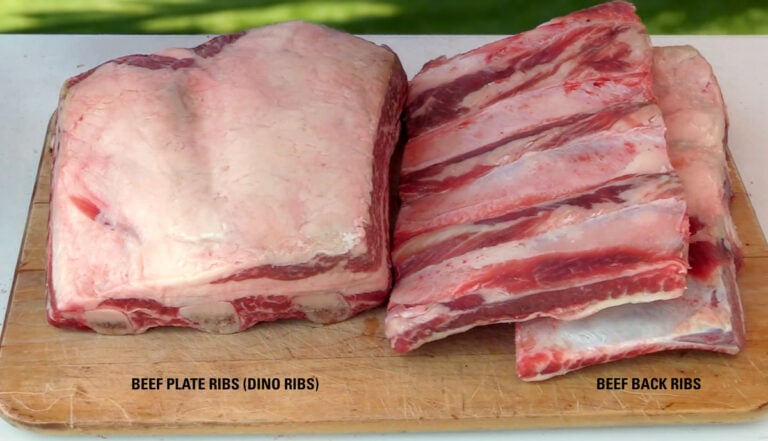
- Beef plate ribs (dino ribs): Count by the bone, not by pork-style rack math. About 1 bone per adult for a main dish.
- When in doubt: Round up. Running a little long on ribs usually means leftovers. Running short means someone at the party may be disappointed. If you have extras, be sure you know how to reheat ribs before those extras turn dry.
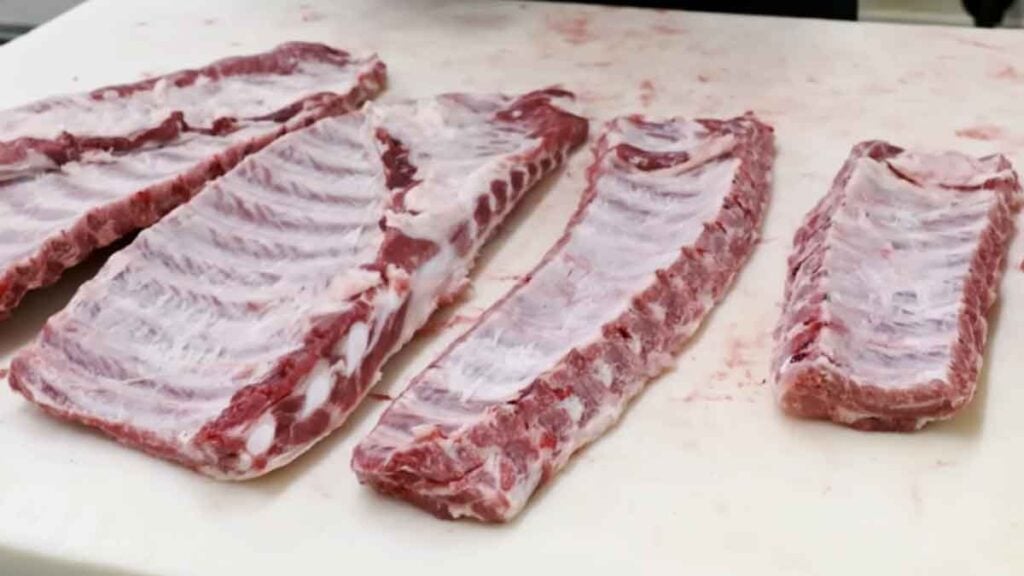
Pork rib racks to buy by number of adults
Use this table when you’re mostly feeding adults and need a quick number before you shop. It is a good starting point, but not necessarily the answer for every situation.
| Adults | Baby back ribs as main | St. Louis or spare ribs as main | Ribs + another main |
|---|---|---|---|
| 10 | 5 racks | 4 racks | 3 to 4 racks |
| 15 | 8 racks | 6 racks | 5 racks |
| 20 | 10 racks | 8 racks | 6 to 7 racks |
| 25 | 13 racks | 10 racks | 8 to 9 racks |
| 30 | 15 racks | 12 racks | 10 racks |
| 35 | 18 racks | 14 racks | 12 racks |
| 50 | 25 racks | 20 racks | 16 to 17 racks |
Use those numbers with these assumptions in mind:
- The table assumes adults, with teens counted as adults.
- It assumes average appetites and a normal spread of sides.
- It does not include a deliberate leftovers buffer.
- The last column assumes another meat is helping feed your guests, not that ribs are the only main dish.
- Beef plate ribs are not in this table. They should be counted by bone, not by the rack.
What about beef ribs? Beef ribs do not fit cleanly into this pork-rib table. Beef back ribs can be bought by the rack, but they do not feed like pork ribs. Beef plate ribs, the big bones some people call dino ribs, should be counted by the bone.
Why the half-rack rule is only a starting point
Half a rack per person works well enough when you’re serving baby back ribs as the main dish for a group that’s mostly adults. That is why people repeat it. It is simple, easy to remember, and usually close enough to keep you out of trouble.
The catch is that it treats every rack like the same amount of food.
A rack of baby backs is not the same as a rack of St. Louis ribs. A full spare rib slab is not the same as a neatly trimmed St. Louis rack. A beef back rib rack is not the same as a 3-bone beef plate. You buy ribs by the rack, but people eat them by the bone.
Even within pork racks, bone counts vary. Under USDA/AMS institutional purchasing specs, spareribs must contain at least 11 ribs, while pork loin back ribs must have at least 8. Texas A&M Meat Science notes that intact loin back rib sections can run 12 to 15 bones depending on how they were cut, and that St. Louis-style racks commonly vary as well. For a plain-English cut breakdown, see how many ribs are in a rack. That is why “12 ribs per rack” is a useful shortcut for mental math, not a guarantee you can plan around.
That is also why rack count, bone count, and package weight are not all the same question. If you want to think through the serving side first, start with ribs per person and how many bones each guest is likely to eat. If you are standing at the meat case looking at package weights, remember the bones vs. pounds problem: weight alone can point you in the wrong direction.
The half-rack rule can also break down when:
- your racks are small or thin
- you have a lot of teenagers
- you are not serving many sides
- ribs are the food your guests are looking forward to
- the meal is self-serve
- you are serving beef plate ribs
- you round the number down instead of up
That is why the table above works better than a universal half-rack rule. It gives you a rack count based on the ribs you’re actually buying.
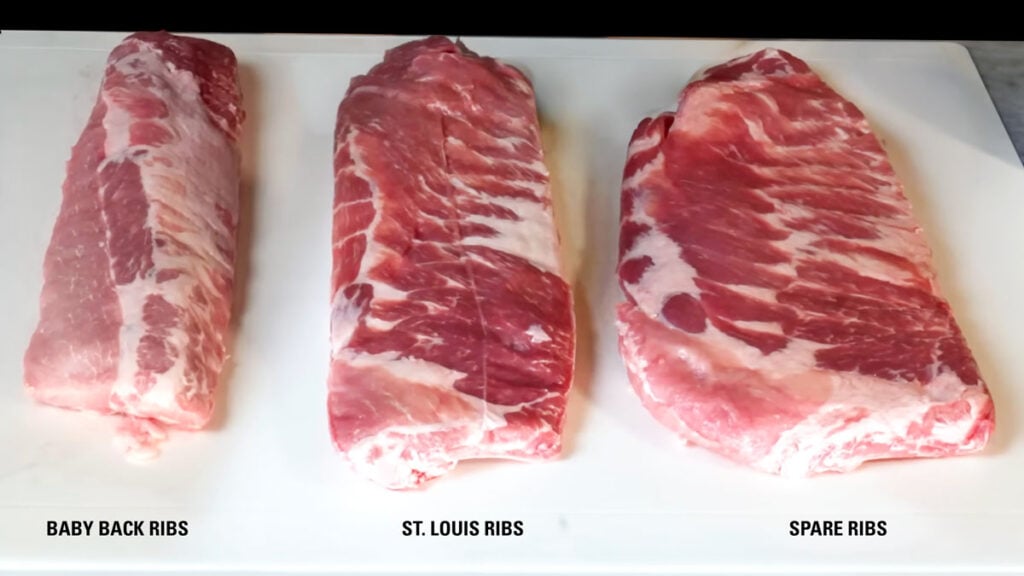
Baby back, St. Louis, spare, and beef ribs do not feed the same
This table is only about how much to buy, not which rib tastes best or how to cook each type. It shows why the number of racks you need changes when the type of rib changes.
| Cut | How you usually buy it | Main-dish starting point | How many adults it feeds | If ribs share the table | What to watch |
|---|---|---|---|---|---|
| Baby back ribs | Whole rack | About 6 bones per adult | About 2 adults per rack | About 3 bones per adult | Smaller, leaner racks usually mean more racks for the same number of guests |
| St. Louis ribs | Whole rack | About 4 bones per adult | About 2.5 adults per rack | About 2 to 3 bones per adult | Trimmed spare rib with a more uniform shape |
| Spare ribs | Whole rack | About 4 bones per adult | About 2.5 adults per rack | About 2 to 3 bones per adult | Fuller and less uniform; check the actual racks before you commit |
| Beef back ribs | Whole rack | About 3 bones per adult | About 2 to 3 adults per rack | About 2 bones per adult | Meat is mostly between the bones, not on top |
| Beef plate ribs | Individual bone or 3-bone plate | About 1 bone per adult | Count by bone, not rack | About 1 bone for 2 adults | Often confused with beef back ribs; they are a different cut |
Baby back ribs come from the loin area and are smaller and leaner than spare ribs. That is why they work out closer to a half rack per adult when ribs are the main dish, and why you need more racks of baby backs for the same number of people than you would with St. Louis or spare ribs.
St. Louis ribs are spare ribs trimmed into a more even rectangle. Texas A&M Meat Science describes them as made from spare ribs after the sternum, cartilage, and attached lean are removed. For planning, they usually feed a little more per rack than baby backs do, and the shape is more consistent at your store.
Spare ribs in their untrimmed form are similar to St. Louis in yield but more irregular in shape. Rack size varies more noticeably at the store, so it is worth checking the actual racks before you commit to a count.
Beef back ribs and beef plate ribs need to be counted differently. Texas A&M describes beef back ribs as a rack cut from the rib section, while beef plate short ribs are the big bones many people call dino ribs. They are not the same cut and they do not plan the same way. If you are choosing between them, the beef back ribs vs. dino ribs guide covers that in detail.
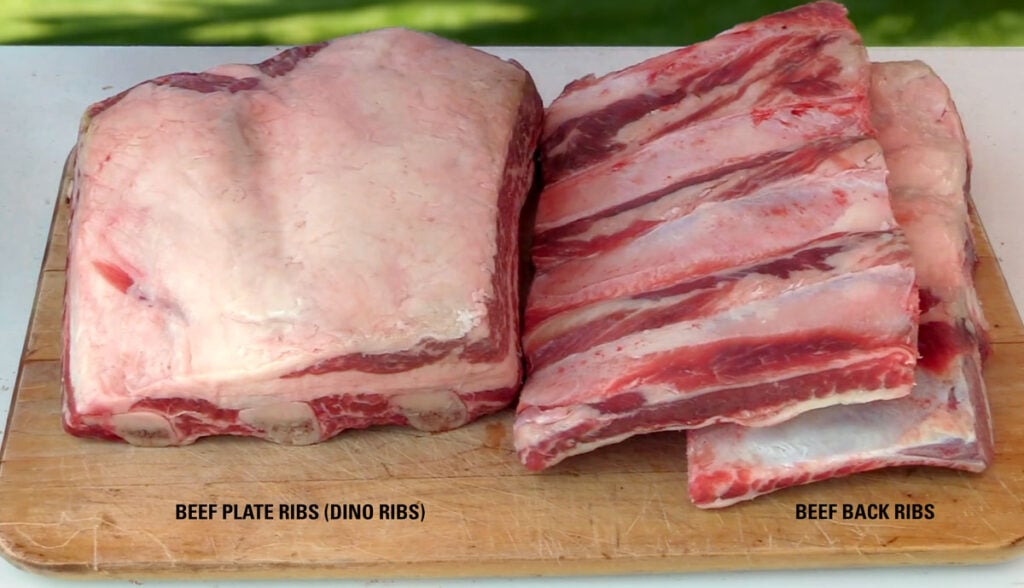
Beef back rib meat sits primarily between the bones, not on top of the bones the way pork rib meat does. Plan toward the lower end of the 2 to 3 adults per rack range if these are the main meat.
Beef plate ribs are sold as individual bones or in 3-bone plates at specialty butchers and some warehouse clubs. A single bone is large enough to serve as a full adult main-dish portion. Count from there, not from pork-style rack math.
Ribs as the main dish vs. one of several meats
The same number of people can need very different rack counts depending on what else you’re serving.
If ribs are the main dish, plan like people came for ribs. Use the full main-dish numbers from the table. This is not the moment to shave off a rack looking for savings.
If ribs are sharing the table with pulled pork, chicken, brisket, burgers, or sausage, use the “Ribs + another main” column. But there is a difference between “we’re also having ribs” and “everybody is waiting on the ribs.” If ribs are the thing your guests care about most, don’t cut the number too much. That column assumes ribs are something people are actually coming back for, not just a small bonus.
For appetizers or starters, you can plan lighter still. Figure around 2 to 3 bones per adult rather than 4 to 6. That works when ribs are sliced and passed before a main meal, not when they are the centerpiece of that meal.
Sides help, but they do not solve a short rib count. People who came for ribs will notice when the ribs are gone, no matter how good everything else on your table is.
How to count kids, teens, and big eaters
Count teens as adults. That is the safer assumption, especially when the meal is self-serve or ribs are the main thing on the menu.
Kids under 12 generally eat lighter than adults. How much you adjust depends on the number of kids you’re feeding, and that is where a table gets less useful. If your party is a real mix of adults and kids under 12, use the Rib Calculator rather than trying to force the table to fit.
Give yourself more cushion when:
- several of the guests are hungry teenagers
- it is a game-day crowd
- people are serving themselves
- you are not serving many sides
- ribs are what people are coming for
- you know your group eats a lot of ribs
In those situations, I’d rather buy one more rack than hope the table stretches. If the count is close, round up to the next whole rack or the next practical pack size.
How to buy ribs once you know the rack count
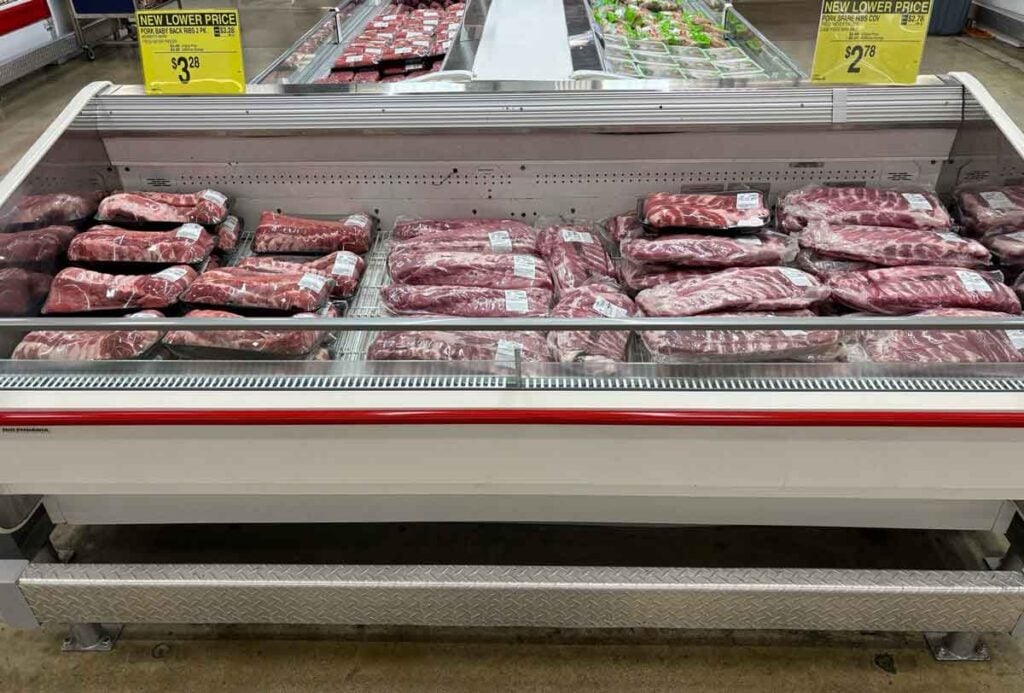
You may know you need 8 racks, but the store may only have 2-packs, 3-packs, or racks that are smaller than expected. Here is what to check before you buy.
Whole-rack rounding. If your number comes out to 7.2 racks, you are buying 8. Racks do not come in fractions. Round up to the nearest whole rack. If a warehouse pack pushes your count a little higher, that is usually the more practical buy.
Pack sizes. Grocery stores often sell pork ribs as single racks or 2-packs. Warehouse clubs tend to package them in larger multi-rack cryovac packs, though what is in a given case can change. Check what is actually on the shelf before you build your plan around a specific pack count. For a full look at navigating your store, warehouse club, or butcher, the guide to buying ribs for a crowd covers that in detail.
Weight as a cross-check. Pounds are a useful check when the racks look unusually small or trimmed. But raw weight alone does not tell you how many people a rack will feed, because racks vary in bone count and trim. Rack count and bone count are the better primary tools. For more on that, bones vs. pounds explains why weight can mislead you.
Beef plate ribs. These are sold by the bone or in 3-bone plates. The plate is what you buy, so count the bones you plan to serve instead of treating it like a pork rack.
Food safety note
Extra ribs are fine, but don’t let cooked ribs sit out all afternoon. Refrigerate leftovers within 2 hours, or within 1 hour when the temperature outside is above 90°F. Reheat leftovers to 165°F before serving again. The USDA FSIS leftovers page has the full guidance.
Make sure you have room to cook the ribs
Before you buy 15, 20, or 25 racks, make sure your smoker can actually hold them. Rack count tells you how much food to buy, but grate space, rib size, and whether you cook them flat or upright can change what fits in one batch.
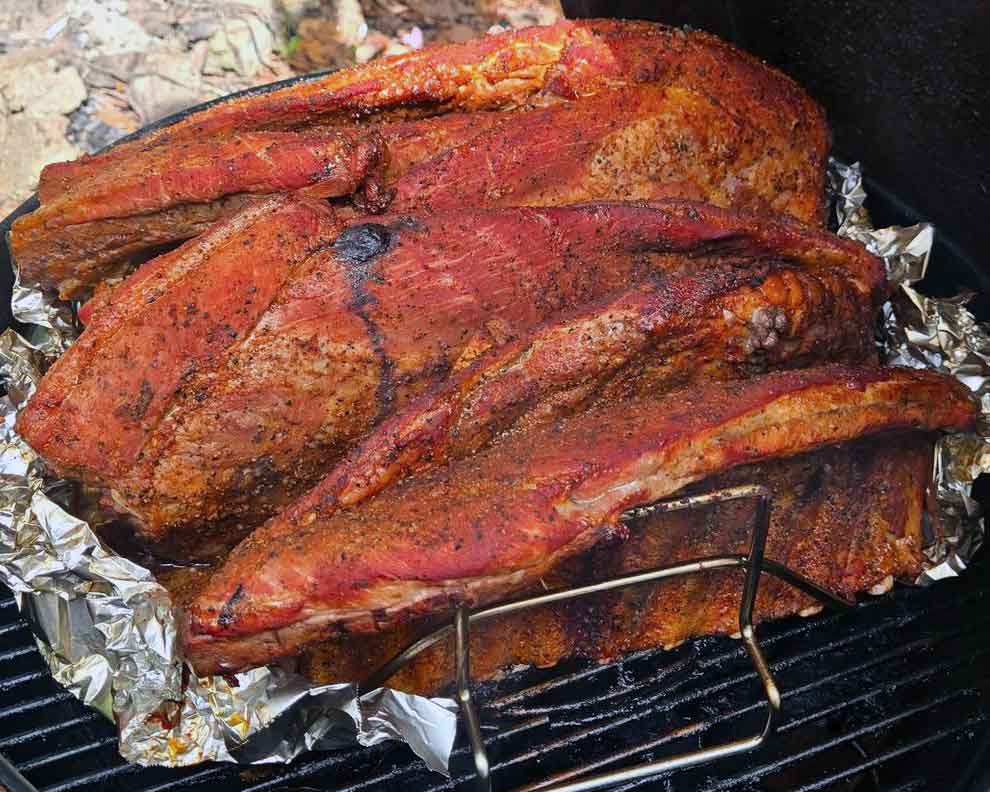
If your rack count is more than your cooker can handle at once, plan on cooking in batches, using rib holders, borrowing cooker space, or choosing another meat to help carry the meal. If batches are part of the plan, decide how you will keep ribs warm while the later racks finish.
Rack count examples
Most real parties are not as neat as a table. Here are four common scenarios.
12 adults, baby backs as the main dish. One rack per 2 adults puts you at 6 racks. If the racks look small in the case, you are not serving many sides, or you want leftovers, buy 7.
20 adults, St. Louis ribs alongside pulled pork. The main-dish number for St. Louis ribs and 20 adults is 8 racks, but pulled pork on the same table means ribs are no longer carrying the whole meal. Six to 7 racks is where I’d start. Go closer to 7 if ribs are what your guests are most looking forward to. Don’t go below 6 hoping the pulled pork picks up the difference.
25 people at a family gathering, with adults and kids. Say 5 of those 25 are kids under 12. For planning purposes, that is closer to feeding 22 or 23 adults. For St. Louis ribs as the main dish, the table puts 25 adults at 10 racks; for 22 or 23, that adjusts down modestly. Buy 9 racks, or 10 if your group loves their ribs.
50 adults with ribs as one meat in a larger BBQ spread. The “Ribs + another main” column puts you at 16 to 17 racks. If ribs really are one of several meats on your table, 16 can work. If you advertised the ribs when you sent the invite, plan closer to 17 or 18.
Common mistakes when buying ribs for a crowd
Most rib-planning mistakes come from using the right rule in the wrong situation.
- Using baby back math for St. Louis or spare ribs. Baby backs usually need more racks for the same number of adults. Applying baby back counts to St. Louis ribs can make you overbuy. Going the other direction means running short.
- Treating beef plate ribs like pork racks. Beef plate ribs are big individual bones or 3-bone plates. Count them that way.
- Assuming every rack has 12 bones. That is a handy shortcut, not a promise. Retail slabs vary.
- Rounding down. If your math lands between racks, buy the next whole rack.
- Forgetting teens. Teens usually eat closer to adults than to younger kids. Count them as adults.
- Counting on sides to rescue an underbuy. Sides help, but they do not make up for a rib table that runs out before everyone gets through the line.
- Ignoring pack sizes. Your number on paper may not divide neatly into the way ribs are packed at your store or warehouse club. Build that into your plan before you shop.
- Forgetting smoker space. Fifteen racks on paper may not fit your cooker in one batch. Check your grate space before you buy, especially if you plan to cook the ribs flat.
When to use the rib calculator for a tighter count
Use the table above when you’re mostly feeding adults, buying one cut of pork ribs, and need a fast number before you head to the store.
Use the Rib Calculator when the table leaves too much guessing: kids under 12, more than one rib cut, beef ribs, leftovers you actually want, Costco or Sam’s packs, or a butcher order. The table gets you close. The calculator helps when close is not good enough.
FAQs about buying ribs
Half a rack per person is usually enough when you’re serving baby back ribs as the main dish and mostly feeding adults. It is less reliable for St. Louis ribs, spare ribs, beef ribs, meals with adults and kids under 12, or meals with several meats. For those situations, start with the ribs you’re buying, what else you’re serving, and whether people are serving themselves.
Use rack count for buying pork ribs, bone count for serving portions, and pounds only as a cross-check. Rack size, bone count, trimming, and meatiness all vary, so raw weight alone can mislead you. Beef plate ribs are the clearest exception: plan those by the bone, not by pork-style rack math.
Buy at least one extra rack when ribs are the food people are most excited about, when the meal is self-serve, or when you want to make ribs ahead for leftovers on purpose. For larger groups, round to the next practical pack size instead of shaving the count down. Extra ribs are easy to cool, save, and reheat; a short rib table is harder to fix.
If you’re also serving pulled pork, chicken, brisket, or sausage, plan closer to 1 pork rack for every 3 adults. That assumes the other meat is doing real work on the plate, not just sitting there as a small option. If ribs are still what people are most excited about, round up rather than cutting the count too close.
If your store sells ribs only in 2-packs, 3-packs, or warehouse cryovac packs, round up to the nearest practical package. Do not force the plan to match an exact fractional rack count. Check the actual racks before you buy, because pack size, rack weight, and trim can vary from one case to another.
Corrections and editorial standards
- Spotted something wrong or outdated? Send a correction here: Corrections & Updates
- How we handle sources, testing, and updates: Editorial Standards
- Media or general notes: Email the publisher
Sources
This guide combines practical rib-planning experience with published meat-cut references and food-safety guidance. The rack counts are conservative planning estimates based on rib cut, typical bone counts, retail packaging, and practical experience feeding groups, not lab-style yield testing.
- USDA/AMS Institutional Meat Purchase Specifications, Fresh Pork Series 400 — source for pork rib cut specifications, including minimum rib-count references for spareribs and loin back ribs
- Texas A&M Meat Science: Pork Loin Back Ribs — supports the discussion of baby back rib bone-count variation and cut characteristics
- Texas A&M Meat Science: Pork Spareribs, St. Louis Style — supports the explanation of St. Louis ribs as trimmed spareribs
- Texas A&M Meat Science: Meat Selection for Barbecuing — supports the distinction between common barbecue rib cuts, including beef back ribs
- Texas A&M Meat Science: Beef Plate Short Ribs, Trimmed — supports the explanation of beef plate ribs/dino ribs and why they should be counted by bone
- USDA FSIS: Leftovers and Food Safety — source for cooling leftovers within 2 hours, the 1-hour rule above 90°F, and reheating leftovers to 165°F
Planning estimates are meant to help you buy with a little cushion, not predict exactly how much every guest will eat or how each rack will cook down.
About the author
James Roller documents South Carolina barbecue for Destination BBQ and authored the SC BBQ cookbook Going Whole Hog. His BBQ guides focus on practical planning questions, including how much food to buy, how to avoid running short, and how to use reliable meat-cut and food-safety guidance without making backyard cooking more complicated than it needs to be.