Wrapping Pork Butt: Foil vs Butcher Paper vs No Wrap
See how each wrap choice affects pork butt bark, moisture, and timing so you can match the method to the meal
You do not need a one-size-fits-all answer here. You need the right answer for the cook in front of you.
If you want the fastest, most forgiving path, use foil. If you want a middle ground, use butcher paper. If you care most about bark and have real time to spare, go with no wrap. None of those is best every time, but when supper has to land on time, foil is usually the safer bet.
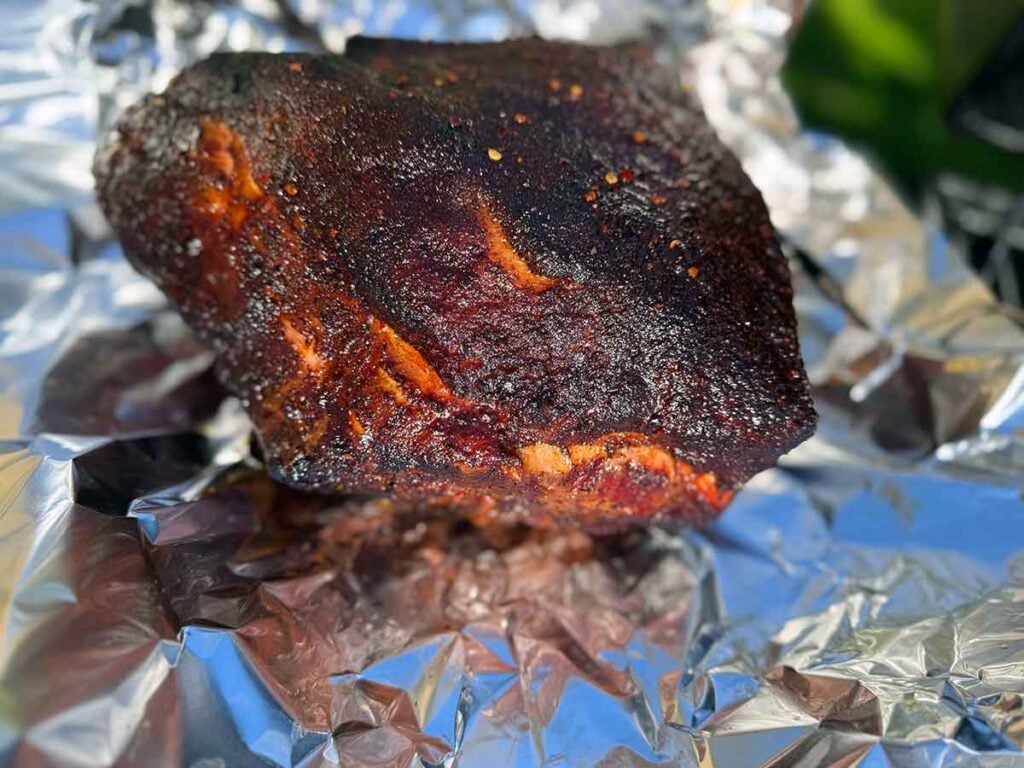
Foil, butcher paper, or no wrap: which should you use for pork butt?
Here is the fast answer. Choose the method that protects what matters most for your cook.
Which wrap should you use today
- Use foil if getting done on time matters most, guests are coming, or you want the most forgiving path
- Use butcher paper if you want a middle ground between bark and getting done on time
- Use no wrap if bark is the top priority and your schedule has real cushion
For pulled pork, softer bark is often easier to live with because the pork gets pulled and mixed with juices before serving.
That is the main tradeoff. Foil buys you speed and predictability. Paper buys you balance. No wrap buys you bark. That matches my own cooks, too. When the serving time matters more than perfect bark, foil is the method I trust most.
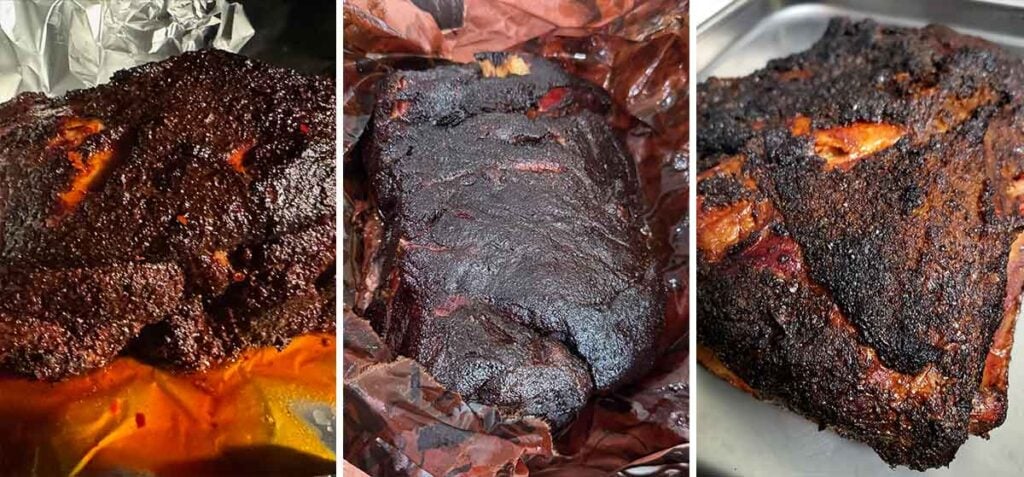
For pulled pork, foil makes more sense than a lot of brisket-first advice makes it sound. Once the pork is pulled and mixed with its juices, softer bark is often not as big a problem as it would be on sliced brisket. If you are cooking for yourself and have all day, bark may win. If people are waiting to eat, the clock may matter more.
What wrapping changes in a pork butt cook
This is the part people tend to miss. Wrapping is not magic. It changes how the cook behaves.
A pork butt stalls because moisture on the surface evaporates and cools the meat. Our pork butt stall guide goes deeper on that slowdown. AmazingRibs gives a solid overview, and ThermoWorks explains why wrapping helps push through it. Once you wrap, you reduce that evaporative cooling.
The cooker stops spending as much energy drying the surface and can spend more energy heating the meat. This is the same basic idea people often call the Texas Crutch: wrapping meat to reduce evaporative cooling and help it move through the stall.
Foil and butcher paper do not do that equally. Foil seals much tighter, traps more moisture, and usually moves the cook along faster. Butcher paper breathes more, so it gives you some stall relief without sealing the pork as tightly.
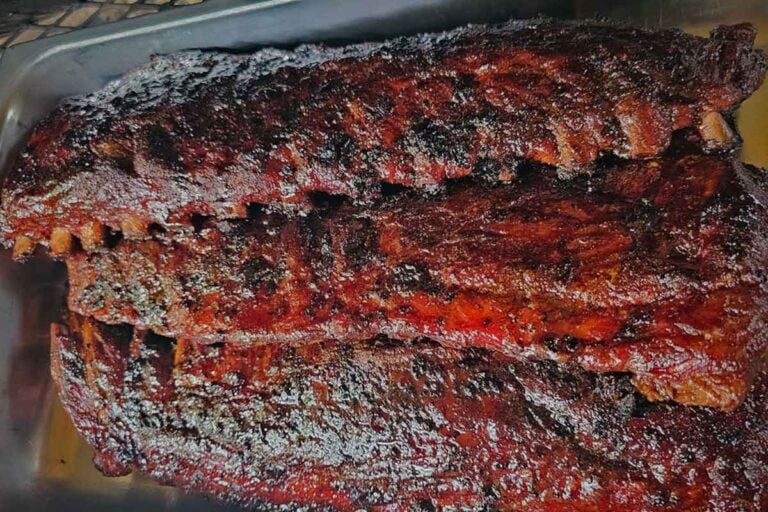
That is why the bark changes too. A tight foil wrap softens bark the most because the surface sits in a wetter environment. Butcher paper usually preserves bark better than foil because it lets more moisture escape. No wrap leaves the bark alone, but it also leaves you fully exposed to the stall.
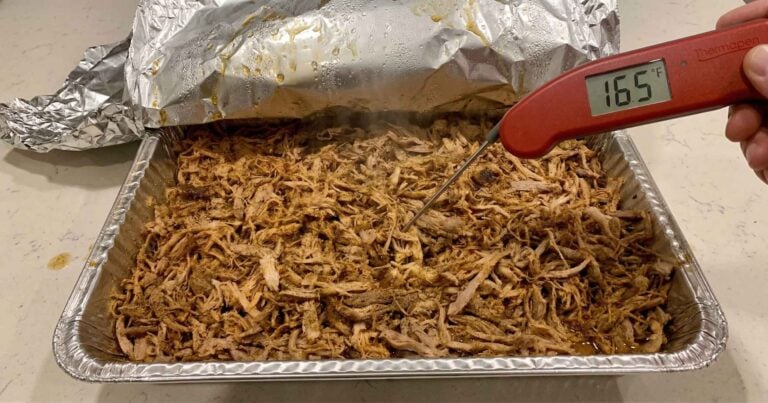
Juices matter here as well. Foil captures more rendered fat and meat juices. If you save those and mix some back into the pork after pulling, the finished meat can seem noticeably richer and moister. That is one reason foil works so well for sandwiches, bigger cooks, and meals that need to be ready on time.
One more thing: wrapping does not turn a tough pork butt tender by itself. Safe is not the same as pullable. Use tenderness as the final check, not temperature alone.
FoodSafety.gov lists 145°F with a 3-minute rest as the safe minimum for whole cuts of pork, but pulled pork usually goes much higher so the collagen has time to soften. Texas A&M Meat Science is useful here if you want to understand why that is.
Foil vs butcher paper vs no wrap at a glance
If you are deciding in the middle of a cook, this is the table to use. Focus on three columns first: bark result, finish-time predictability, and best for.
| Method | Bark result | Stall effect | Speed effect | Juice capture | Finish-time predictability | Best for | Biggest downside |
|---|---|---|---|---|---|---|---|
| Foil | Softens bark the most | Pushes through the stall the fastest | Usually the fastest of the three | Excellent | Best of the three | Cooks where the pork needs to be done by a specific time, parties, first-timers, easier holding, sandwiches, saving juices | You give up the firmest bark |
| Butcher paper | Usually firmer than foil, softer than no wrap | Helps through the stall, but less than foil | Moderate help | Some | Better than no wrap, less than foil | Cooks who want bark but still need some help with the clock | It may not move things along quickly enough if you are already behind |
| No wrap | Best bark potential | No help through the stall | Usually the slowest | Little to none | Least predictable | Bark-first cooks with real flexibility | Longest cook and highest schedule risk |
There is one practical variation worth knowing: a foil pan or tray with a foil cover behaves much more like foil than paper. It can be especially handy when you want easy juice capture for pulled pork.
When to wrap pork butt
Do not treat one internal temperature as the rule. Bark first, temperature second.
That is the part I would not rush. I want the bark to look darker and drier, and I want the rub to stay put when touched lightly.
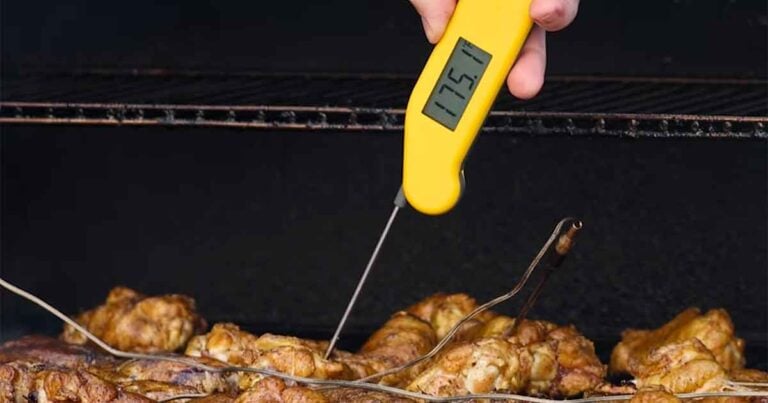
For most backyard cooks, that means wrapping sometime after the bark has set, often in the mid-150s through around 170°F. The exact moment depends on your cooker, the humidity, how dark the bark already is, and what you are trying to protect.
Here is the simpler way to think about it:
- Wrap earlier if you need help getting done sooner
- Wrap later if you want better bark
- Do not wrap just because the thermometer says a certain number if the bark still looks pale or dry rub wipes off too easily
That is where many people get tripped up. A pork butt can hit a familiar stall temperature and still not be ready to wrap. If the surface is not set yet, wrapping too early can leave you with soft bark and a pot-roast feel on the outside.
If the full cook-length question is what you are really solving, see the pork butt timing guide by pit temperature and weight. That page is the better place for full schedule planning.
When foil makes the most sense
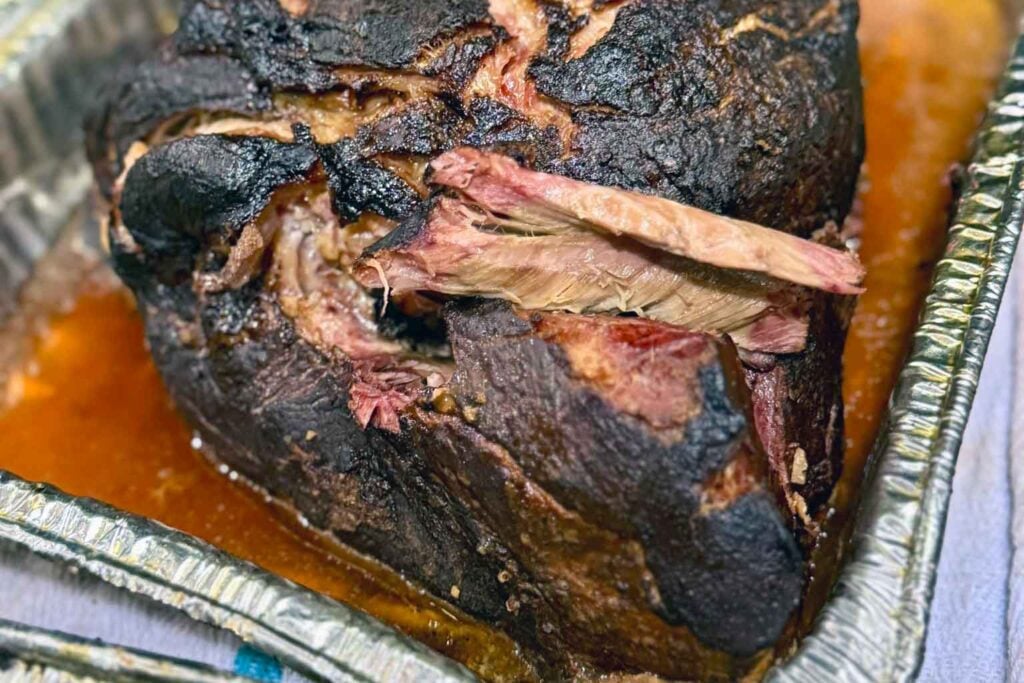
If you are cooking for a fixed mealtime, feeding a crowd, or just want the less stressful option, foil is hard to beat. It gives you the most help getting through the stall, holds onto juices, and makes it easier to get tender pork finished on time.
Foil makes the most sense when:
- guests are coming and you need the pork done on time
- this is your first pork butt and you want a more forgiving option
- you are cooking multiple pieces and want easier holding later
- you are serving sandwiches and plan to mix juices back into the pulled pork
- the bark already looks good enough and you would rather protect the timeline
That is the upside. The tradeoff is bark. Foil usually softens it more than paper or no wrap.
For sliced meat, that can be a bigger sacrifice. For pulled pork, it is often easier to live with. Once the pork is shredded and tossed with some of its juices, the practical benefits of foil often matter more than keeping every square inch of bark firm.
Also, foil gives you options. You can wrap tightly on the grate, or you can move the pork to a foil pan or tray and cover it. That second version is less tidy, but it is very handy when you want to keep every drop of juice for later.
If you want to see a real foil-wrap approach in action, take a look at this Pawleys Island pulled pork recipe, which uses a wrapped finish with added liquid.
When butcher paper makes the most sense
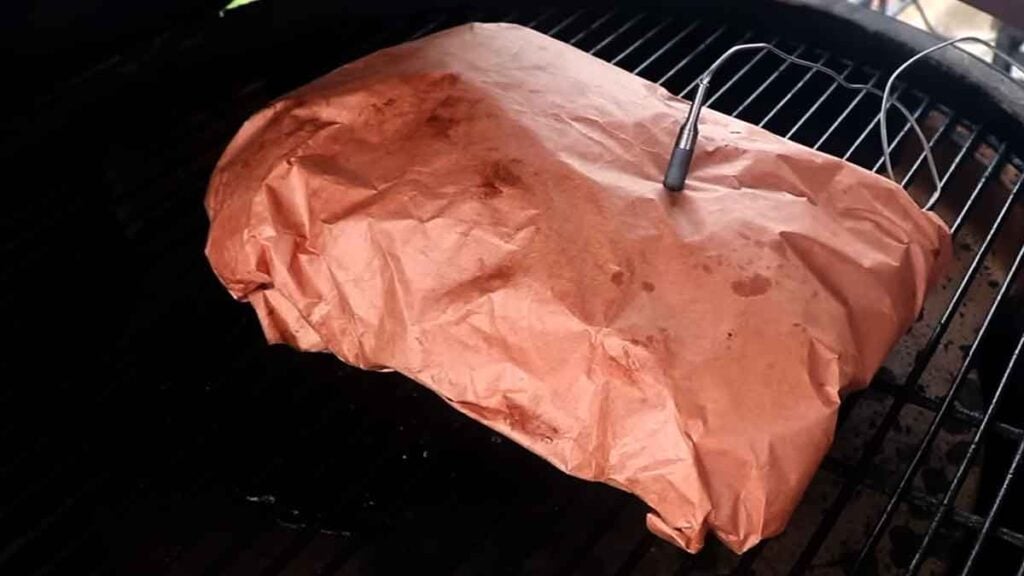
This is the middle-ground choice.
Butcher paper makes sense when you want some help getting done on time but are not ready to give up as much bark as foil usually costs. It protects the pork, helps it move through the stall, and still lets some vapor escape.
That matters because the main difference is not just speed. It is also surface texture. Paper usually keeps the bark drier and firmer than foil, even though it still softens it some compared with no wrap.
Use butcher paper when:
- you want a compromise between bark and timing
- the bark already looks good and you mostly want to protect it
- you are not badly behind, but would like some help through the stall
- you are serving the pork as the main thing on the plate and bark texture matters a little more
Butcher paper quick caution
- Use plain, food-grade, uncoated butcher paper
- Do not use waxed paper or freezer paper
- If you are already running behind, paper may not move things along enough
Paper is the compromise option, not the emergency catch-up option.
Jess Pryles has a good plain-English note on peach or pink butcher paper if you want a quick material check before buying.
Just remember that compromise cuts both ways. It usually preserves bark better than foil and can shorten the stall some, but it is not the move I’d count on if you’re running out of time.
When no wrap is the right call
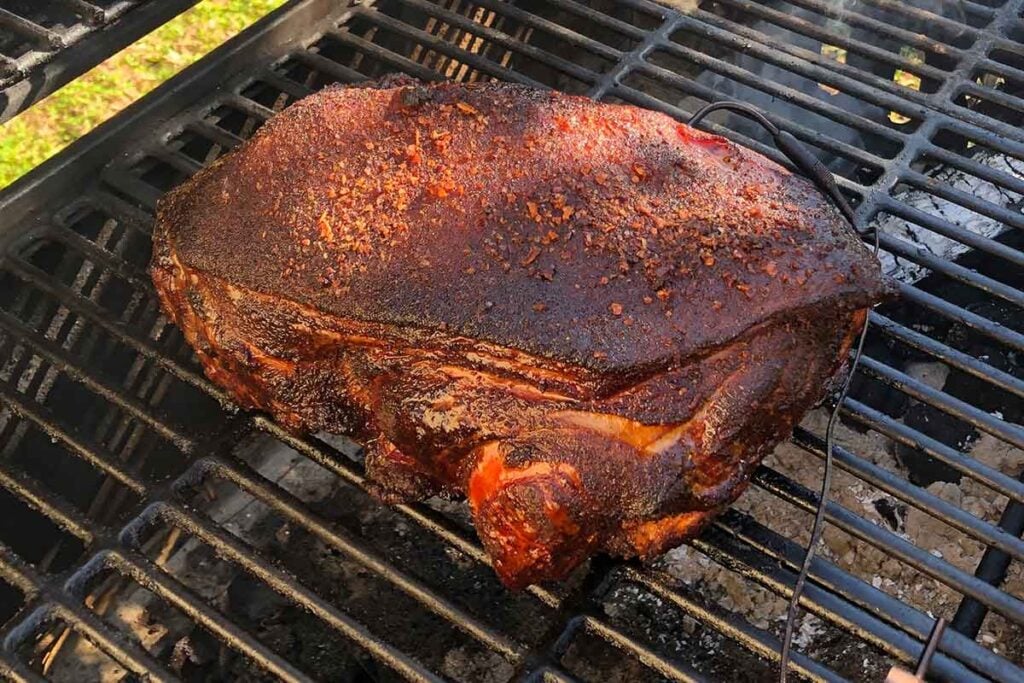
Choosing not to wrap doesn’t prove anything. It is just a choice with consequences.
The reason to skip wrapping is simple: you want the strongest bark possible, and you have enough cushion to let the pork take its time. That can make sense, especially if you like a darker, firmer outside and you are not trying to hit one exact serving time.
No wrap makes the most sense when:
- bark is your top priority
- you have real flexibility in your schedule
- you are cooking overnight and have a wide holding window afterward
- you do not mind a longer stall and a less predictable finish
The tradeoff is time. No wrap gives you the least control over the clock. If weather changes, airflow changes, or the butt simply decides to linger in the stall, there is not much help coming from the wrap.
Some pulled-pork cooks still prefer no wrap because they like the bark that much. That is fair. Just do not confuse “best bark” with “best choice for your cook.” If people are waiting on supper, bark alone may not be the thing worth protecting most.
Which wrap method fits your cook?
If you are still torn, match the method to the situation instead of trying to pick a universal winner.
| Situation | Best fit | Why |
|---|---|---|
| I need this done on time | Foil | It usually gives the most help through the stall and the cleanest finish-time control |
| I care most about bark | No wrap | It gives you the best bark potential, as long as your schedule can absorb the longer cook |
| I want a balance | Butcher paper | It usually lands between foil and no wrap on both bark and timing |
| I am cooking overnight | No wrap or foil | No wrap works if your morning has cushion; foil works if you want more control over when it finishes |
| I want easier holding | Foil | Wrapped pork is usually easier to hold hot, and foil does the best job of trapping juices |
| I am serving sandwiches | Foil | Captured juices and a softer bark are often less of a problem once the pork is pulled and piled on buns |
| I am plating the pork as a main dish | Butcher paper or no wrap | Bark texture tends to matter a little more when the pork is the star of the plate |
| This is my first pork butt | Foil | It is usually the most forgiving choice when you want less guesswork |
If you also need help with start time, quantity, or how wrap choice changes the plan, use the Pulled Pork Calculator. That is the better tool for the timing and crowd side of the job.
Common mistakes when wrapping pork butt
This is where people usually get tripped up. The mistakes are not complicated, but they can change the cook fast.
| Problem | What usually happened | What to do next |
|---|---|---|
| Wrapped too early | The bark had not set yet | Next time wait for better color and a drier, more set surface before wrapping |
| Bark turned soft | The wrap trapped too much moisture, or the pork stayed wrapped too long | Vent the wrap briefly after the cook, or finish uncovered for a short stretch to re-firm the bark |
| Bark got too dark before tender | You waited too long to wrap, or the cooker was running harder than you thought | Wrap sooner once the bark looks right, even if the internal temperature is a little lower than expected |
| Paper leaked or tore | The paper was thin, wet, poorly folded, or not true food-grade butcher paper | Double-wrap with stronger paper, or switch to foil if schedule control matters more than bark |
| Still running behind schedule | Paper or no wrap did not move the cook along enough, or the butt simply stalled longer than expected | Move to foil, tighten the wrap, and build in a holding window next time |
| Not sure whether to unwrap before resting | You are trying to choose between bark and moisture | Usually rest wrapped; only unwrap if you specifically want to dry and re-firm the bark first |
That is the better way to think about mistakes on this cook. Most of them are not ruin-your-day errors. They are just tradeoffs you did not mean to make.
Resting and holding after foil, paper, or no wrap
Once the pork is done, holding is your next concern.
If you wrapped during the cook, you usually do not need to unwrap before the rest. Resting wrapped helps hold heat and moisture. The main reason to open it first is if the bark is softer than you want and you would like to let steam escape for a few minutes, or put the pork back on the cooker briefly to dry the surface a bit.
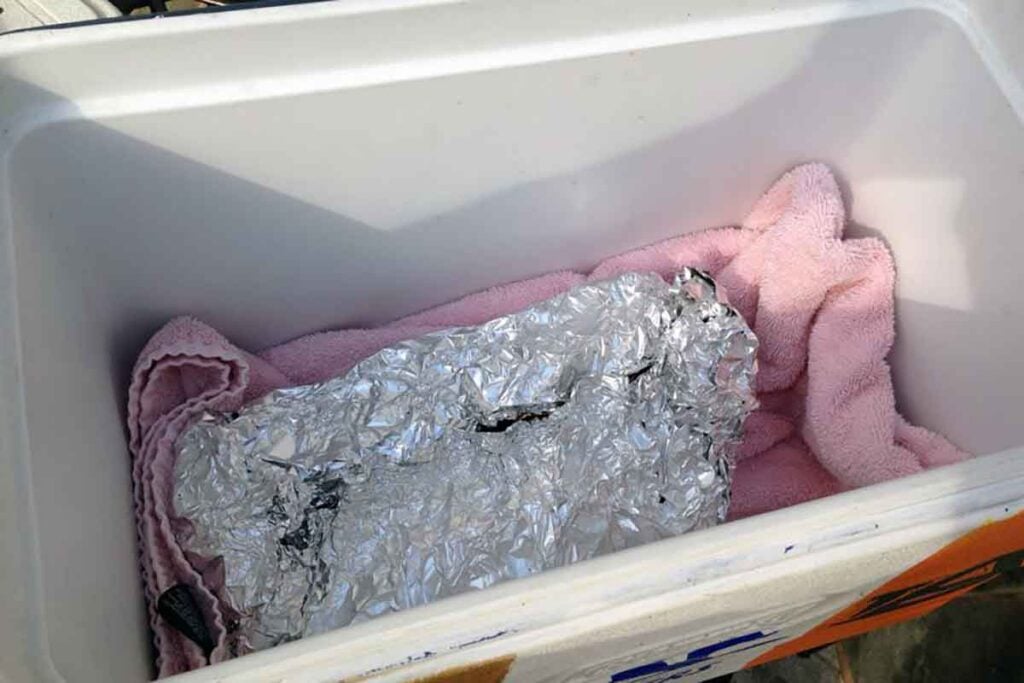
That sounds simple, but it helps to keep two things separate:
- Resting is about letting the meat settle before pulling
- Holding is about keeping finished pork hot until it is time to serve
Those are not the same job.
Wrap choice affects that second job. This is one reason I lean toward foil when I’m cooking for a group. Foil is usually easiest to hold because it seals well and keeps juices close to the meat. Butcher paper can work, but it does not trap moisture as aggressively. No-wrap pork usually needs more care once it comes off because there is no built-in protection holding heat and moisture around it.
This is also where food safety matters more. Wrapping is not a food-safety shortcut. If you are holding cooked pork for service, keep it at 140°F or warmer under FDA buffet guidance. And if the pork is sitting out, remember the 2-hour rule, or 1 hour above 90°F.
If you are planning for guests, finishing early is the better problem to have. A late finish creates stress fast. When in doubt, plan to finish early and hold.
If you need the full setup for coolers, ovens, roasters, and safe serving temps, see how to keep pulled pork warm without drying it out.
FAQs about wrapping pork butt
Wrapping does not erase smoke flavor, but it does reduce new smoke contact once the meat is sealed. That usually matters less later in the cook because the bark has already formed and the surface has taken on most of its smoke. For more smoke flavor, focus on the unwrapped part of the cook before the bark sets.
Yes. If the bark is already getting darker than you want but the meat is not tender yet, you probably waited too long. Wrapping at that point can protect the bark from getting darker and help the pork finish more predictably. Next time, wrap when the bark looks set, not after it starts looking overdone.
Yes. If butcher paper is not moving the cook along fast enough, switching to foil is a practical fix. Foil traps more moisture and reduces evaporative cooling more aggressively, so it usually helps more with the clock. The bark may soften, but finishing on time often matters more.
You can add liquid, but you do not have to. Foil usually captures rendered fat and meat juices on its own. A small splash of stock, apple juice, or vinegar sauce can add moisture, but too much liquid can soften the bark and make the outside feel more braised than smoked.
Yes. A foil pan covered tightly with foil behaves more like a foil wrap than butcher paper. It is especially useful if you want to catch juices, move the pork more easily, or simplify holding after the cook. The tradeoff is the same as foil: the bark will usually soften more.
Only if the bark is softer than you want. Most of the time, resting wrapped protects heat and moisture. If bark texture matters more, open the wrap briefly to vent steam, or return the pork to the cooker uncovered for a short stretch. Watch it closely so the surface does not dry out.
Corrections and editorial standards
- Spotted something wrong or outdated? Send a correction here: Corrections & Updates
- How we handle sources, testing, and updates: Editorial Standards
- Media or general notes: Email the publisher
Sources
- AmazingRibs: What Causes the BBQ Stall — explains evaporative cooling and why large cuts can stop climbing in temperature during a cook
- ThermoWorks: BBQ 101, An Introduction to Smoked Meat — supports the discussion of stall behavior, wrapping, collagen, and temperature management
- FoodSafety.gov: Safe Minimum Internal Temperatures — provides the food-safety baseline for whole cuts of pork and reheated leftovers
- Texas A&M Meat Science: Barbecue Science — explains collagen, gelatin, and why barbecue tenderness requires more than reaching a safe temperature
- FDA: Serving Safe Buffets — supports the 140°F hot-holding guidance for cooked pork
- FoodSafety.gov: 4 Steps to Food Safety — supports the 2-hour rule, the 1-hour rule above 90°F, and shallow-container cooling guidance
- Jess Pryles: What is Peach Paper? A BBQ Trend Explained — provides a practical explanation of pink butcher paper and how it differs from foil
We cite authoritative references and note when guidance is based on first-hand cooking experience.
About the author
James Roller documents South Carolina barbecue for Destination BBQ and authored the SC BBQ cookbook Going Whole Hog. He has cooked pork butts both wrapped and unwrapped for home gatherings and barbecue events, where timing, holding, bark, and moisture all matter. This guide is not based on formal lab-style testing. It combines published food-safety guidance, barbecue science sources, and practical notes from real cooks.