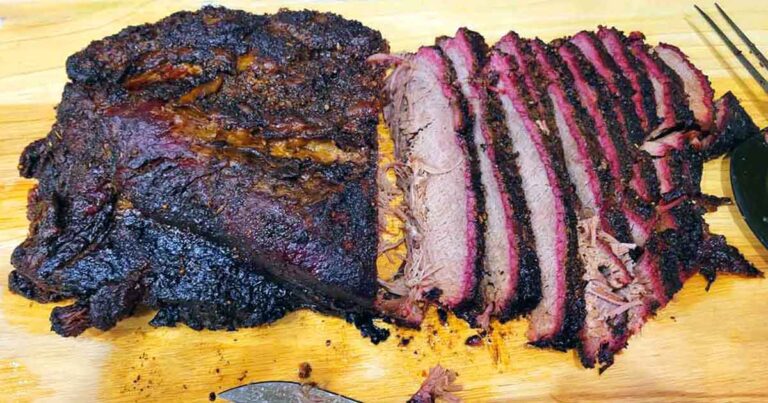
How to Keep Pulled Pork Warm for a Party Without Drying Out
Pick the holding method that fits your setup so the pork stays hot, moist, and safe until people eat
Your cook is done, but the party starts later. What do you do? Holding pulled pork for a party is different from reheating leftovers. Once the pork is done, especially if your pork butt finished early, you need to keep it hot, moist, and safe until it’s time for people to eat.
For most home cooks, the best move is usually to finish early, hold the pork butt whole and wrapped for as long as practical, then pull it closer to service. If you only need to bridge a shorter gap, a preheated insulated cooler, often called a faux Cambro, works well.
If the hold may run longer or your timing is less predictable, a warm oven is usually the more controllable option. However you do it, the rule that matters most is simple: keep the pork at 140°F or above and check it with a thermometer.
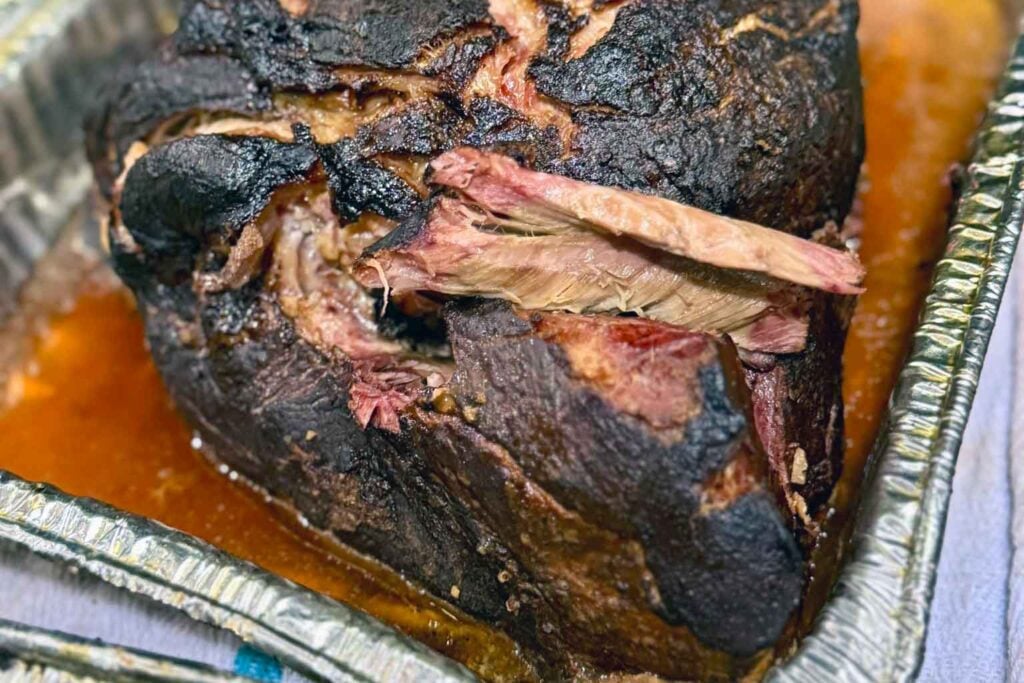
Here is the quick version:
Quick answer
- For the best quality, hold the pork whole and wrapped when you can, then pull it closer to serving time.
- For a shorter same-day hold, a preheated insulated cooler is often the easiest move.
- For a longer or less predictable hold, a warm oven is usually the safer, more controllable choice.
- If the pork is already pulled, keep only a small covered batch in service and hold the rest hot in reserve.
- Use a thermometer and keep the pork at 140°F or above.
That’s really it. From here, it’s just about picking a holding method that fits your situation and avoiding the little mistakes that dry pork out.
Finish early and hold safely
Trying to make pork finish at the exact minute guests arrive sounds nice, but in real life it is one of the easiest ways to create stress. Pork butt has a mind of its own. The stall can drag on, two pieces of similar weight can finish at different times, and weather or pit swings can slow things down. That is why finishing early and holding safely is usually the smarter play.
What has usually worked best for us is finishing early, holding the butt whole and wrapped, and pulling it closer to serving time.
This is also where it helps to separate holding from reheating. Holding means the pork is already hot and cooked, and you are keeping it hot until service. Reheating means the pork has already been chilled and must come back up to serving temperature. Those are not the same job, and they do not follow the same rules.
The safety guidance for hot holding is pretty clear. The USDA, FDA, and CDC all point home cooks to the same basic idea: keep hot food at 140°F or above, and do not trust time alone when a thermometer can tell you what is really happening.
If you are planning a party and want help, use the pulled pork calculator to estimate how much raw pork to buy, how much cooked pork you will likely have, and how much time to allow. If your bigger problem is still getting the pork done on time, see our guide to the pork butt stall and our advice on when to wrap pork butt. This page picks up once the pork is done or nearly done.
Hold it whole or pull it first?
This matters more than it may seem at first. If the pork is still whole and wrapped, it is almost always easier to keep moist. The meat has less exposed surface area, the juices stay trapped in the wrap, and you are not letting steam escape from thousands of loose shreds every time somebody lifts a lid.
That is why, when practical, holding the butt whole and pulling it closer to service is usually the best move for quality. You can open the wrap over a pan, catch the juices, pull the meat, and mix some of those juices back in right before it goes out. ThermoWorks makes that point well in its pork butt guide, and it matches how a lot of experienced barbecue cooks handle an early finish.
There is one tradeoff to be aware of. A long wrapped hold can soften the bark some. That is normal. For a party, most people will gladly take slightly softer bark if the pork stays moist and tender.
Pull first only when it makes the job easier, such as when:
- you need the pork portioned into service pans
- you are using a roaster or slow cooker
- you are feeding people over an open-house window and want smaller refill batches
- you do not want to pull meat while guests are arriving
A good middle ground is to keep one butt whole in reserve and pull it later, while the first batch goes into service. That gives you better moisture retention without slowing down the line.
Pulled pork holding methods compared
The best setup depends on how long until people eat, whether the pork is still whole, and what equipment you actually have. Use the table below as a planning guide, not a substitute for checking the actual food temperature with a thermometer.
| Method | Best for | Plan around | Hold this way | Main strength | Main risk | Key watch-out |
|---|---|---|---|---|---|---|
| Insulated cooler/faux Cambro | Finished early, no power, short transport | Shorter same-day holds, often around 2 to 4 hours | Whole wrapped butt | Simple, effective, and easy for home cooks | Temperature slowly drops, especially if opened often | Preheat the cooler and keep it closed |
| Warm oven | Longer or less predictable holds at home | The safest choice for longer controlled holds | Whole wrapped butt or tightly covered pans | Most controllable home option | Can dry or overcook if the oven runs hot | Use the lowest reliable setting and verify with a thermometer |
| Electric roaster | Medium to large pulled-pork batches | Good for service windows and buffet support | Pulled pork in covered pan or insert | Good capacity and easy to manage | Edges can dry or scorch | Keep covered and stir gently only as needed |
| Slow cooker on warm | Small batch service | Best for shorter holds once the pork is already hot | Pulled pork | Easy for a small family or side station | Some warm settings run too cool | Do not trust the dial, check the actual temperature |
| Covered foil pans, hotel pans, or chafers | Serving line, open-house service, larger gatherings | Best for rotating small hot batches | Pulled pork | Clean service flow | Drying and sitting too long | Keep backup pork hot and ready and replace pans instead of topping off |
A good rule of thumb is this: if the pork is still whole and you are only a few hours early, the cooler or oven usually wins. If the pork is already pulled and service may stretch out, covered pans plus hot backup batches are usually easier to manage.
Which holding method fits your party
If you’re deciding on the fly, this helps narrow it down fast.
Which method fits your party
- Under 2 hours until people eat: if the pork is still whole and wrapped, an insulated cooler can work well. If it is already pulled, keep it covered and hot in a roaster, slow cooker, or warm oven.
- About 2 to 4 hours: a cooler can still work for whole pork if it goes in hot and the cooler stays shut, but a warm oven gives you more control if the timing feels uncertain.
- Longer than 4 hours or a loose service window: favor the warm oven or another actively controlled holding setup over a passive cooler.
- Already pulled: keep only a small covered batch in service and hold the rest hot in reserve.
- Serving outdoors or over several hours: think in refill batches, not one giant pan.
- Cooked the day before: that is no longer hot holding. Reheat to 165°F first, then hold hot for service.
That covers most backyard party situations. Here’s how each one works.
The five best ways to keep pulled pork warm
Any of these can work. The key is using the right one for your situation.
Insulated cooler or faux Cambro
For many home cooks, this is the easiest same-day move when a pork butt finishes early and is still whole. The cooler hold works best when the butt is wrapped, still very hot, and left alone.
Warm the cooler first with hot water, then empty and dry it. Put down a towel or two, set the wrapped butt inside, add more towels around it if needed, and close the lid. The goal is not to turn the cooler into an oven. The goal is to slow heat loss long enough to bridge the gap to service.
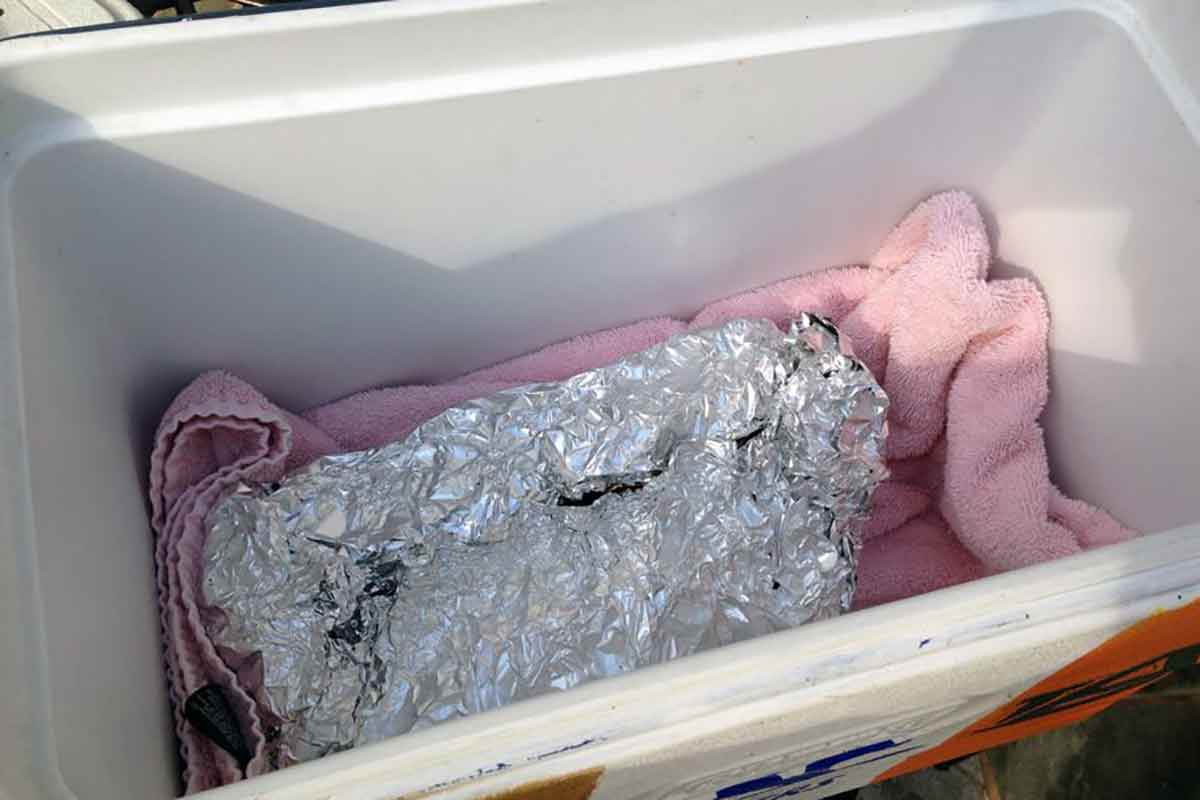
Think of the cooler as a short same-day hold, not an all-day plan. It can work well for a few hours if the pork goes in hot, the cooler is preheated, and the lid stays shut.
How long can pork butt stay in a cooler? Usually only as a short same-day hold. Think a few hours, not an all-day plan, and let the thermometer decide whether the pork is still holding at 140°F or above.
This method is especially good when:
- the pork is done a few hours early
- you want to free up the oven
- you are transporting the pork a short distance
- you plan to pull it later, not immediately
The biggest mistake here is opening the cooler again and again to check on it. Every peek gives away heat. If the hold is stretching longer than expected or the internal temp is trending toward 140°F, move the pork to a warm oven or other active holding setup. The Virtual Weber Bullet has a helpful explainer on holding barbecued meats, and its advice lines up well with how many home pitmasters use a faux Cambro.
Warm oven
If I had to name the most dependable home setup for a longer hold, this would be it. A warm oven takes a lot of guesswork out of the process.
To keep pulled pork warm in the oven, keep the pork wrapped if it is still whole. If it is already pulled, hold it in a tightly covered pan. Use the lowest reliable oven setting you have, or the warm setting if your oven has one. The key is not the number printed on the knob. The key is whether the pork itself stays at 140°F or above without drying out.
A warm oven is the better choice when:
- the hold may last longer than you first hoped
- guests may eat over a broad window
- you do not want to gamble on a passive hold
- you are managing more than one butt and want steady backup
The FDA’s buffet safety guidance is useful here, especially for the idea of keeping backup hot dishes ready to rotate into service. At home, just remember that covered is your friend. A pan left open in the oven is asking to dry out.
Electric roaster
An electric roaster can be a very practical middle ground for larger home parties, church meals, neighborhood gatherings, and similar setups where you are serving pulled pork in pans rather than keeping whole butts tucked away.
This is usually a better tool for already pulled pork than for a whole butt. Preheat it first, load the pork hot, keep it covered, and check the temperature in the center, not just near the edges. If the pork seems dry, stir in a bit of reserved juice or a small amount of warm finishing liquid. Do not automatically pour in broth just because the roaster exists.
Electric roasters shine when:
- you need capacity
- you want a simple self-contained holding setup
- you are serving from the kitchen or a side table
- you want hot reserve pork ready to refill smaller pans
The weak spot is edge drying. The pork closest to the hot wall of the unit can get tired before the middle does, so keep the lid on and stir gently only when needed.
Slow cooker or Crock-Pot on warm
For smaller batches, a slow cooker or Crock-Pot on warm can work fine, but it is not magic. Some warm settings hold safely, and some do not. That is why the thermometer matters more than the label.
This method works best when the pork is already hot and you need a smaller serving station for a family gathering or a side table. It is also useful when you want to keep only part of the batch out while the rest stays in reserve.
Use a slow cooker on warm when:
- you are holding a small amount of pulled pork
- the pork is already hot
- you want a compact serving setup
- you plan to check the temperature periodically
What you do not want to do is put cold pulled pork in the slow cooker and hope it warms up safely. The USDA’s slow cooker food safety guidance is very clear on that point. Reheat chilled leftovers to 165°F first, then transfer them hot to a preheated slow cooker to hold for service.
Covered foil pans, hotel pans, and chafers
These are service tools more than long holding tools. They are excellent when people are actively eating, but they are not where your whole batch should sit for hours if you want the pork to stay its best.
This is the setup that makes sense when:
- you are serving buffet style
- people may eat over a longer window
- you need a clean line for buns, sauce, and sides
- you are helping with a church, school, or community event
The trick is to think in small, covered batches. Put out the first pan, keep the rest hot and covered until you need it, and swap in a fresh hot pan when the first one gets low. The FDA advises the same general approach for buffets: keep portions smaller and replace dishes rather than adding new food to an old pan. That matters for moisture as much as safety.
If you set one giant pan out at the start and let it sit open, it will not improve with age.
How to keep pulled pork moist during service
Holding is only half the job. Service is where a lot of good pulled pork starts to slip. Lids stay off too long, steam escapes, edges dry out, and someone gets nervous and dumps in too much liquid.
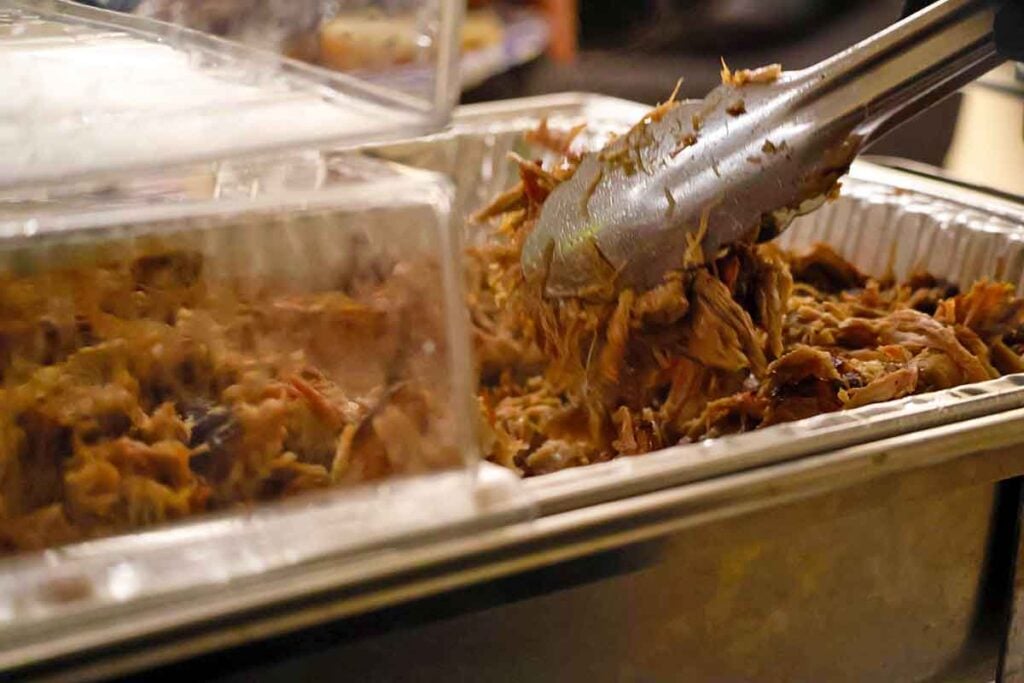
A few simple practices help keep the pork moist:
- Hold whole when you can. This is still the biggest quality move.
- Save the wrap juices and mix some back in after pulling. ThermoWorks specifically recommends this, and it is one of the easiest upgrades you can make.
- Keep service pans covered whenever people are not actively serving from them.
- Use smaller pans and refill them as needed instead of exposing the whole batch at once.
- Keep reserve pork hot in the oven, cooler, roaster, or another covered holding setup.
- Add liquid only when needed. A little reserved juice can help. Too much extra liquid can flatten the texture and wash out the bark.
If you are serving for two to four hours, the best approach is usually to think in batches. The first batch goes out. The second stays hot and covered. The third stays whole if possible. That way, the pork people eat at the end of the party still has a fair shot at tasting like the pork people ate at the beginning.
Food safety rules that matter for parties
You do not need a food-safety lecture to hold pulled pork well. You just need a few rules you can actually remember and use.
The first is the big one: keep hot pork at 140°F or above. For a home party, that is the number to go by. You may see 135°F in foodservice discussions because it appears in the FDA Food Code for retail and commercial hot holding, but for home cooks, 140°F is the safer number to stick with.
The second rule is that time still matters if the pork drops into the danger zone. The USDA and FDA both treat 40°F to 140°F as the range where bacteria grow quickly. If pulled pork sits in that range for more than 2 hours, it should be discarded. If you are serving outdoors and the ambient temperature is above 90°F, that drops to 1 hour. If you know the pork has been in the danger zone too long, do not try to save it for service.
The third rule is to use a thermometer instead of guesswork. Check the thickest part of a whole butt or the center of the pan, not just the top layer. A lid can feel hot while the food under it is cooler than you think. After the pork goes into an oven, roaster, or slow cooker, check the center after 30 to 45 minutes to make sure your setup is really holding at 140°F or above, then keep checking it periodically.
The fourth rule is to remember why this matters. The CDC’s guidance on C. perfringens is especially relevant here because this bug is often tied to large batches of meat that were cooked and then held at unsafe temperatures for groups. That sounds a lot like party food when things go wrong.
Common mistakes when holding pulled pork
Most holding problems come from a handful of avoidable habits. If you stay away from these, you are already ahead.
- Trying to land the cook exactly at serving time instead of finishing early and giving yourself a buffer
- Pulling every butt right away even though whole wrapped pork usually holds better
- Trusting a “warm” setting without checking the actual food temperature
- Putting the whole batch out at once instead of rotating smaller covered pans
- Opening the cooler too often and bleeding off heat
- Letting one buffet pan limp along for hours rather than replacing it
- Pouring in lots of broth or sauce too early when the pork may not need it
- Confusing reheating with holding, especially with day-before pork
A lot of the time, the fix is not fancy. It is simply covering the meat, checking the temperature, and keeping more of the batch in reserve until it is needed.
What to do if you cooked the day before
If the pork was chilled overnight, you are no longer dealing with hot holding. You are dealing with make-ahead and reheating.
You can still do it. It just works a little differently. Chill the pork safely, then follow our guide to making pulled pork ahead and our method for reheating pulled pork without drying it out. Reheat chilled pork to 165°F, then hold it hot for service.
That is also why a slow cooker is not the place to slowly warm up cold leftovers from the refrigerator. It can be a useful holding tool after reheating, but it is not the safest first step.
Final 60 to 90 minutes before guests eat
This is the window where a little attention pays off. You’re not reinventing anything. You’re just setting yourself up for an easy finish.
Final 60 to 90 minutes before guests eat
- Check the thickest part of the meat, or the center of the pan, with a thermometer.
- Confirm the pork is holding at 140°F or above.
- Decide whether to pull now or keep the next butt whole until later.
- Preheat your service setup, whether that is a roaster, slow cooker, oven, or chafer.
- Open wrapped pork over a pan so you catch the juices.
- Mix reserved juices back in if the meat needs them.
- Load only the first covered batch into service.
- Keep reserve pork hot and covered until you need it.
- Replace service pans instead of topping off old ones.
- If serving outdoors or over a long window, keep an eye on both the clock and the thermometer.
If you do those things, you will avoid most of the problems people run into at party time.
The bottom line
The best way to keep pulled pork warm for a party is usually to finish early, hold the meat whole and wrapped when you can, and pull it closer to service. For shorter same-day holds, a preheated cooler can work beautifully. For longer or less predictable holds, a warm oven is usually the steadier option. If the pork is already pulled, think in covered batches, not one giant open pan.
Don’t make this harder than it needs to be. Keep the pork hot, keep it covered, keep some meat back in reserve, and trust the thermometer more than the clock. That is how you give yourself breathing room and still put good pulled pork in front of people when it matters.
Still planning the cook? Start with our guide to the best cut for pulled pork. Then see how much pulled pork a pork butt yields and how many sandwiches per pound of pulled pork you can expect.
FAQs about holding pulled pork
The best transport method is to move the pork hot, tightly covered, and well insulated, then keep the container closed until you arrive. For home cooks, the key is not the clock but the food temperature: USDA guidance says hot food should stay at 140°F or above, so check it on arrival instead of assuming it stayed hot enough. If the pork was chilled first, reheat it to 165°F before transport or service.
Yes, but only for a short same-day hold and only if the pork stays at 140°F or above. USDA guidance supports insulated containers for hot food, but already pulled pork is a tougher cooler hold than a whole wrapped butt because it sheds heat faster and gets exposed every time the lid opens. For a longer or less predictable hold, a warm oven or roaster is the steadier option.
Not automatically. Extra liquid does not make pulled pork safer to hold; temperature control does. Keep it covered and at 140°F or above. If the meat seems dry, start with a small amount of warm reserved juices first. Use broth or sauce only if needed, and add it lightly.
Corrections and editorial standards
- Spotted something wrong or outdated? Send a correction here: Corrections & Updates
- How we handle sources, testing, and updates: Editorial Standards
- Media or general notes: Email the publisher
Sources
- USDA FSIS: Danger Zone (40°F to 140°F) — consumer guidance for hot holding and limiting time in the danger zone
- FDA: Serving Up Safe Buffets — buffet and party-service guidance on hot holding, thermometer use, and replacing smaller batches
- CDC: Preventing C. perfringens Food Poisoning — relevant for large batches of meat held for groups
- USDA FSIS: Slow Cookers and Food Safety — supports reheating-before-holding guidance for chilled pork
- FDA Food Code 2022 — provides the commercial hot-holding baseline that the article distinguishes from home guidance
- ThermoWorks: How to Cook BBQ Pork Butt — practical support for wrapping, saving juices, and pulling workflow
- The Virtual Weber Bullet: Holding, Storing & Reheating Barbecued Meats — useful practical reference for faux Cambro and holding workflow
We cite authoritative references and note when testing is based on first-hand experience.
About the author
James Roller documents South Carolina barbecue for Destination BBQ and authored the SC BBQ cookbook Going Whole Hog. He and his wife, Heather, have cooked and served pulled pork for home gatherings and know how much easier a party feels when the meat finishes early, holds safely, and stays hot until people are ready to eat. This guide does not reflect formal lab-style testing. It draws on published food-safety guidance and practical hot-holding advice, checked against real-world barbecue experience.