How Many Pulled Pork Sandwiches Per Pound?

How many pulled pork sandwiches per pound depends on portion size, but 3 to 4 regular sandwiches or 6 to 8 sliders is a practical range
Plan on 3 to 4 regular pulled pork sandwiches per cooked pound. If you portion exactly 4 ounces per bun, one pound makes 4 sandwiches; fuller 5-ounce portions make about 3. For sliders, plan on 6 to 8 per cooked pound.
The math is simple: 1 pound equals 16 ounces. Divide 16 by the ounces of pulled pork you put on each bun. A 4-ounce sandwich gives you 4 per pound. A 5-ounce sandwich drops you to about 3. A 2 to 3-ounce slider pushes you up to 6 to 8.
All of that math is based on cooked pulled pork, not the raw weight of a pork butt before cooking.
Quick answer
If you just need a quick starting point, use this table and start with the row that matches your bun and portion style.
| Scenario | Pork per sandwich | Approximate sandwiches per cooked pound | Typical bun size | Best-fit use case |
|---|---|---|---|---|
| Standard sandwich | 4 oz | 4 per pound | 3.5 to 4-inch bun | Backyard barbecue, tailgate, most home cooks |
| Lighter sandwich with slaw or heavy sides | 3 to 4 oz | About 4 to 5 per pound | 4-inch bun | Slaw on the bun, fuller side spread |
| Standard but generous | 5 oz | About 3 per pound | 4-inch bun | Bigger eaters, lighter sides |
| Hearty sandwich | 6 oz | About 2 to 3 per pound | 4.5 to 5-inch bun | Restaurant-style, meat-forward sandwich |
| Slider, standard | 2 to 3 oz | 6 to 8 per pound | 3-inch slider bun | Most slider bars and home slider recipes |
| Slider, light | 2 oz | 8 per pound | 3-inch slider bun | Appetizers, kids, party trays |
These counts assume cooked pulled pork and are rounded conservatively for planning. If you are between two portion sizes, use the lower sandwich count so you do not run short.
Bun counts for common amounts of cooked pulled pork
If your real question is how many buns to buy, use these cooked-meat estimates and round up rather than down.
- 1 pound: about 3 to 4 regular sandwiches or 6 to 8 sliders
- 2 pounds: about 6 to 8 regular sandwiches or 12 to 16 sliders
- 5 pounds: about 15 to 20 regular sandwiches or 30 to 40 sliders
- 10 pounds: about 30 to 40 regular sandwiches or 60 to 80 sliders
For regular full-size buns, buy the higher bun count shown here, especially if guests are serving themselves or the buns run large.
What changes how many pulled pork sandwiches you get per pound
A pound can make very different numbers of sandwiches depending on bun size, how heavily you build each one, and what else is on the plate.
How much pulled pork per sandwich?
Think in ounces:
- 1 pound = 16 ounces
- 4 ounces per sandwich = 4 sandwiches per pound
- 5 ounces per sandwich = just over 3 sandwiches per pound
- 2 to 3 ounces per slider = about 6 to 8 sliders per pound
Once you know your ounces-per-bun target, the rest gets much easier.
Bun size, sides, and serving style
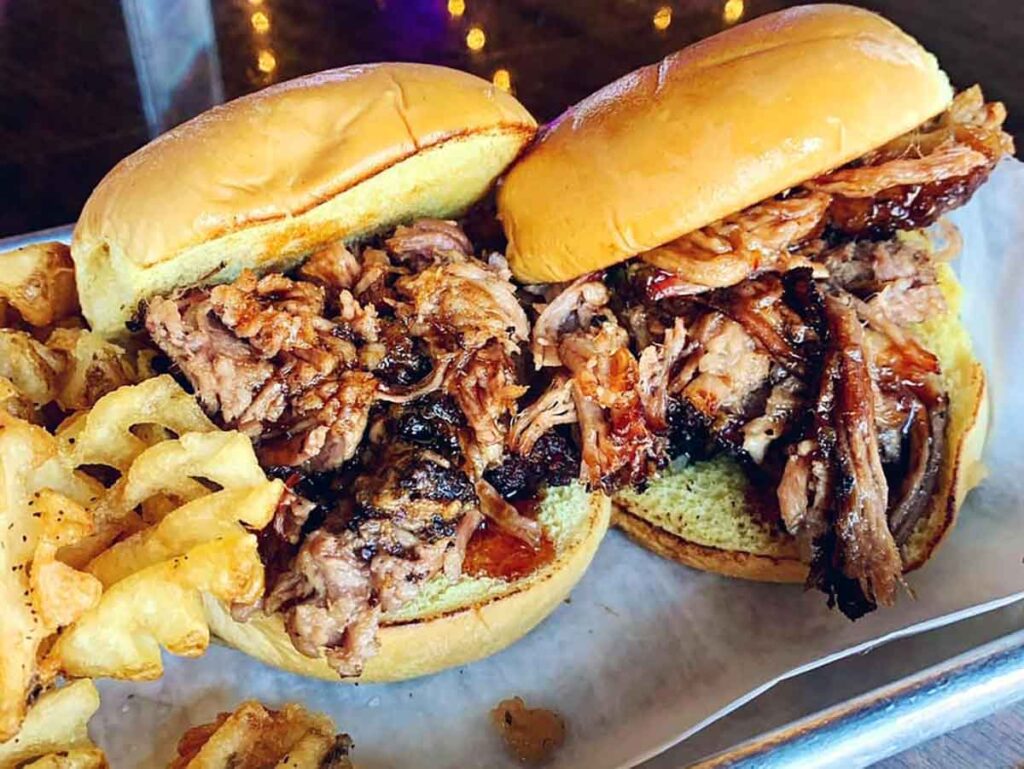
That is the starting point, but bun size, sides, and serving style can move the count.
Bun and portion size matter most. Published examples vary. One Maryland Department of Agriculture slider recipe uses 2 ounces of BBQ pork on a slider roll, while Oklahoma State’s BBQ pork sandwich uses 3 ounces on a bun and a UConn pulled pork sandwich uses 4 ounces. That is why sliders can stretch closer to 6 to 8 per pound, while regular sandwiches often land closer to 4 per pound unless you build them heavier.
What else is on the plate matters too. If you are serving slaw on the bun or heavier sides like beans, mac and cheese, or potato salad, you can often stay on the lighter end of the portion range. For side ideas, browse our BBQ recipes. If the sandwich is carrying more of the meal and the sides are lighter, people usually build a fuller sandwich.
Serving style changes the math. Portioned sandwiches are easier to plan because the meat stays fairly consistent from bun to bun. Self-serve pulled pork is less predictable. People tend to pile on more than they think, especially with regular buns, bigger eaters, or a toppings setup nearby.
That is why different sources sometimes give different answers and both can still be reasonable. They may be picturing different buns, different portion sizes, or different serving styles. The safest move is to plan sliders and full-size sandwiches separately and use a cautious estimate when the setup points that way.
Why regular buns often land closer to 3 to 4 sandwiches per pound
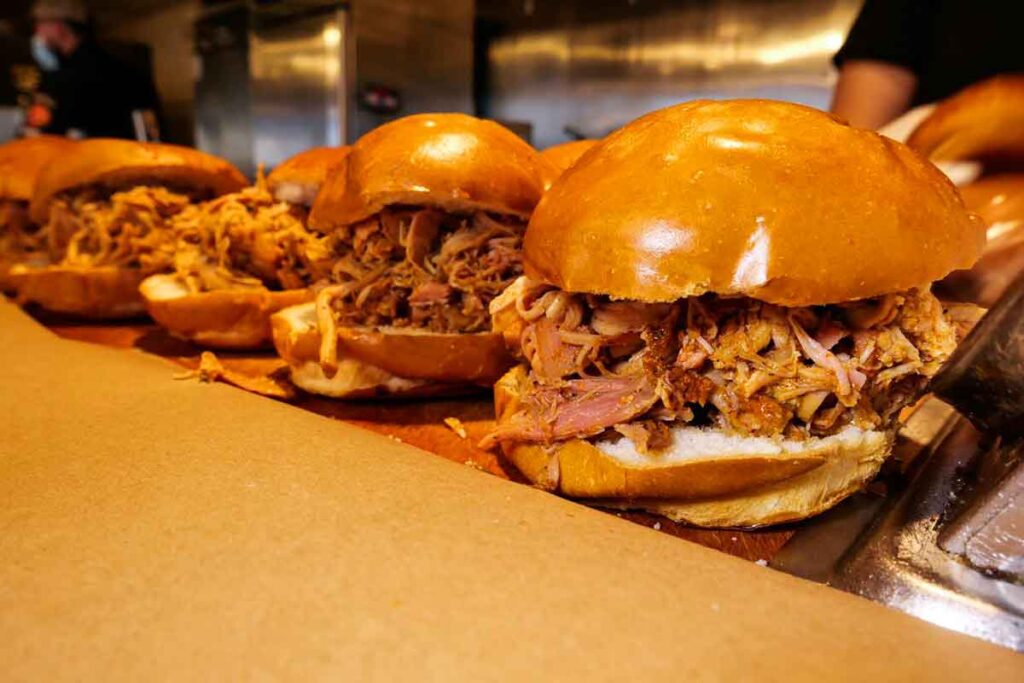
The base math is still 4 sandwiches per pound. That is just 16 ounces divided by 4 ounces each.
But regular buns in the real world often pull people toward a slightly heavier portion. Simply put, when people serve themselves, they tend to pile fuller sandwiches than they say they will. Once the meat portion creeps toward 4.5 to 5 ounces, that same pound is no longer making 4 neat sandwiches. It is making something closer to 3. That is why 3 to 4 sandwiches per cooked pound is the most useful planning range for standard buns.
If you want one safe default, use this:
Plan on about 3 sandwiches per cooked pound for regular full-size buns unless you know you are building lighter sandwiches.
That advice is especially helpful when:
- guests are serving themselves
- the buns are on the larger side
- you expect hearty eaters
- the sandwich is the main focus of the meal
How many people does a pound of pulled pork feed?
One cooked pound of pulled pork usually feeds about 2 to 3 people when you are serving standard sandwiches. That works out to roughly 6 ounces of cooked pork per person, allowing for fuller sandwiches, uneven self-serve portions, and the possibility that someone comes back for seconds.
For lighter slider-style servings with plenty of other food, one pound may stretch closer to 4 people. For full plates or generous portions, it may feed only about 1.5 to 2.
That is why one pound can make 3 to 4 regular sandwiches but still be a 2-to-3-person planning amount. Sandwich-count math assumes a fixed amount on each bun. Crowd planning has to account for how people actually serve themselves.
Cooked pounds vs raw pounds
This page is talking about cooked pulled pork, not raw pork shoulder.
That matters because raw pork loses weight during cooking. Fat renders. Moisture cooks off. Trimming and bone weight can also affect what you end up with. So if you are starting with uncooked meat, you cannot just use the raw package weight and assume that is your sandwich count.
That is where the pulled pork calculator comes in. It is built to help with cooked need, raw-buy math, recommended purchase, and timing. This page picks up once you know how many cooked pounds of pulled pork you will have.
If your bigger question is really pork butt yield, that is a separate step from sandwiches-per-pound math.
A small note on holding and leftovers
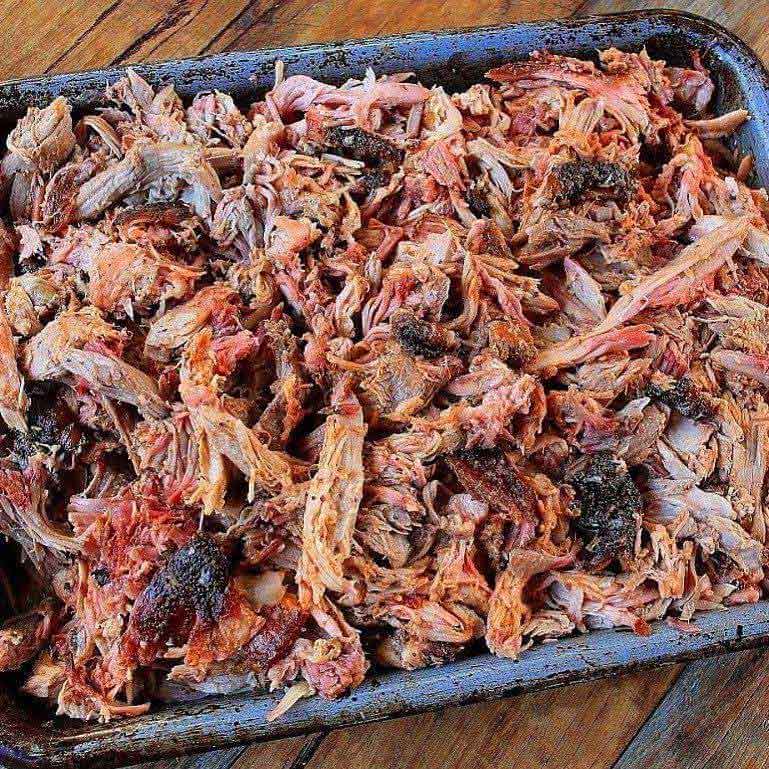
This page is mostly about sandwich yield, but food safety still matters once the pork is cooked.
Keep hot pulled pork at 140°F or warmer if it is sitting out for service. Refrigerate leftovers within 2 hours, or within 1 hour if the weather is above 90°F. When reheating leftovers, bring them back to 165°F.
If service and leftovers are your bigger issue, the more useful questions are how to keep pulled pork warm, make pulled pork ahead, and reheat pulled pork.
When this page is enough and when to use the calculator
Use this page when you already know how much cooked pulled pork you have and just need to turn it into sandwich counts, slider counts, bun counts, or a lighter-vs-fuller portion decision.
Use the pulled pork calculator when you need raw-buy math, piece count, timing, or a little extra planning buffer for a crowd.
If you still need cook timing, see how long to smoke pork butt after you settle your sandwich count.
And if your planning questions have you wondering about the best cut for pulled pork, when to wrap pork butt, or how the pork butt stall works, those are separate questions from sandwiches-per-pound.
Once you know your sandwich count, you can always finish with a proven pulled pork recipe and work backward from there. For a classic South Carolina finish, try this mustard sauce recipe.
In the end, the simplest answer is still the most useful one: 1 cooked pound often makes about 4 standard sandwiches, 3 to 4 is the safer planning range for regular buns, and 6 to 8 is a practical slider range. That gets you close fast, and it keeps you from buying too few buns or piling too much meat on each one.
Corrections and editorial standards
- Spotted something wrong or outdated? Send a correction here: Corrections & Updates
- How we handle sources, testing, and updates: Editorial Standards
- Media or general notes: Email the publisher
Sources
- NIST Metric Kitchen for the base math that 1 pound equals 16 ounces and 1/4 pound equals 4 ounces
- Maryland Department of Agriculture: Apple Berry Pork Slider with Roasted Jalapeño Slaw as one official example of a 2-ounce pulled pork slider with slaw
- Oklahoma State Cooking for Kids: BBQ Pork Sandwich as one official example of a 3-ounce pulled pork sandwich on a bun
- California Department of Education: Pulled Pork BBQ Sandwich as a standardized food-service example of a lighter pulled pork sandwich with coleslaw
- UConn: Hawaiian BBQ Pulled Pork Sandwich as one university example using 4 ounces of pulled pork per sandwich
- North Dakota State Extension: A Pocket Guide to Meals in the Field for the broader planning anchor that a standard meat serving is often around 4 to 5 ounces
- USDA FSIS: Danger Zone for holding cooked pork at 140°F or warmer during service
- USDA FSIS: Leftovers and Food Safety for refrigerating leftovers within 2 hours, or within 1 hour if temperatures are above 90°F
- FoodSafety.gov: Safe Minimum Internal Temperatures for reheating leftovers to 165°F
Note: Sandwich counts on this page are practical planning ranges built from basic serving math and published sandwich examples. There is not one universal standard for pulled pork sandwiches per pound, so bun size, portion size, slaw, sides, and serving style all affect the final count.
About the author
James Roller documents South Carolina barbecue for Destination BBQ and authored the SC BBQ cookbook Going Whole Hog. He and his wife, Heather, have cooked and served pulled pork for home gatherings for years, so they’ve portioned plenty of pork for sandwiches and sliders. This guide is not based on formal lab-style testing. It is built from published guidance, serving math, and notes from our own cooks.