Best Cut for Pulled Pork: Pork Butt vs Picnic Shoulder vs Fresh Ham
Compare pork butt, picnic shoulder, and fresh ham so you can choose the best cut for pulled pork and avoid confusing meat-case labels
If you want the safest bet, buy pork butt. It is the best pork roast for pulled pork because it gives you the most reliable path to moist, classic, easy-shredding barbecue. Picnic shoulder can still be a good choice in the right hands, and fresh ham is a real option with deep regional roots, but both come with more tradeoffs than many shoppers expect.
This guide will help you sort out the labels, understand what actually changes from cut to cut, and choose the one that fits your cook before you move on to planning the rest.
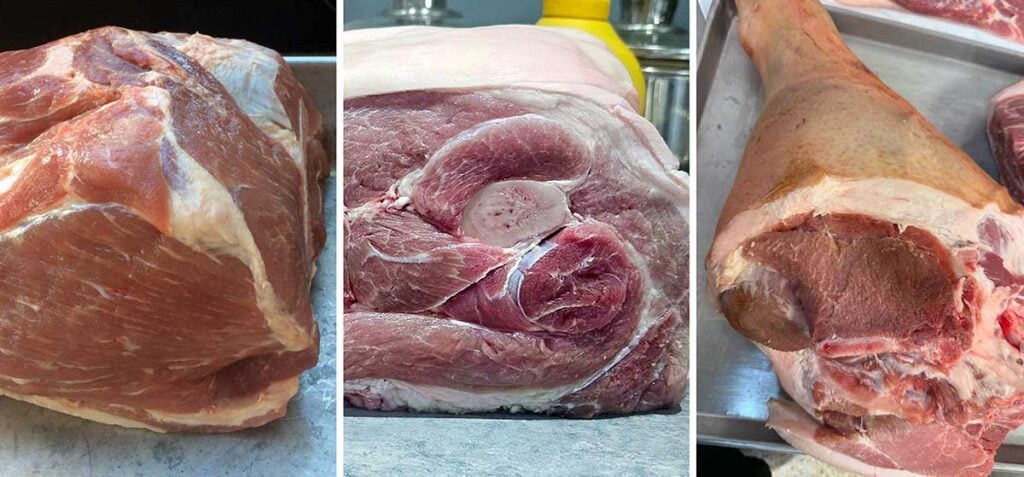
What is the best cut for pulled pork?
The short answer is simple: pork butt is the best default cut for pulled pork for most people. It gives you the best shot at moist, classic, easy-shredding barbecue.
It comes from the upper part of the shoulder, not the rear of the pig. It also usually has the best mix of marbling, connective tissue, and overall shape for low-and-slow cooking, which makes it more forgiving. That is what gives you the classic pulled pork result most backyard cooks want.
Picnic shoulder is still a legitimate second choice. It can make very good pulled pork, especially if price or availability pushes you that way, but it is usually less convenient and a little less foolproof.
Fresh ham is real too, and in some South Carolina barbecue traditions it is not unusual at all. But it is leaner, more technique-sensitive, and usually not the cut I’d tell somebody to grab if they’re standing there unsure.
Pork butt vs picnic shoulder vs fresh ham at a glance
Here’s the quick side-by-side before we break down the tradeoffs.
| What matters | Pork butt / Boston butt | Picnic shoulder | Fresh ham |
|---|---|---|---|
| Where it comes from | Upper shoulder | Lower shoulder | Uncured hind leg, not cured ham |
| Fat and marbling | Usually the richest and most forgiving | Usually a little leaner and less evenly marbled | Leaner overall, with less cushion for error |
| Bone and skin | Often sold bone-in or boneless, usually skinless | Often bone-in and frequently skin-on at retail | Can be large and bone-in, with more variation by cut and trim |
| How it cooks | Most forgiving and easiest to get tender | Can cook well, but shape and skin can make it less convenient | Needs more moisture awareness and more careful handling |
| How it pulls | Classic pulled pork texture | Still shreddable, but usually less easy and less uniform | Can pull, but often gives a leaner, less buttery result |
| Best for | First-time cooks and anyone wanting the classic result | Budget-minded cooks or cooks who specifically want the picnic cut | Cooks going after a leaner, fresh-ham-based barbecue |
| Main watch-out | Mostly label confusion, not performance | More trimming, skin handling, and less convenience | Easier to dry out and not a 1:1 shoulder substitute |
| Bottom-line verdict | Best default choice | Good second choice with tradeoffs | Interesting niche option, not the safest starting point |
Why pork butt is the default best choice
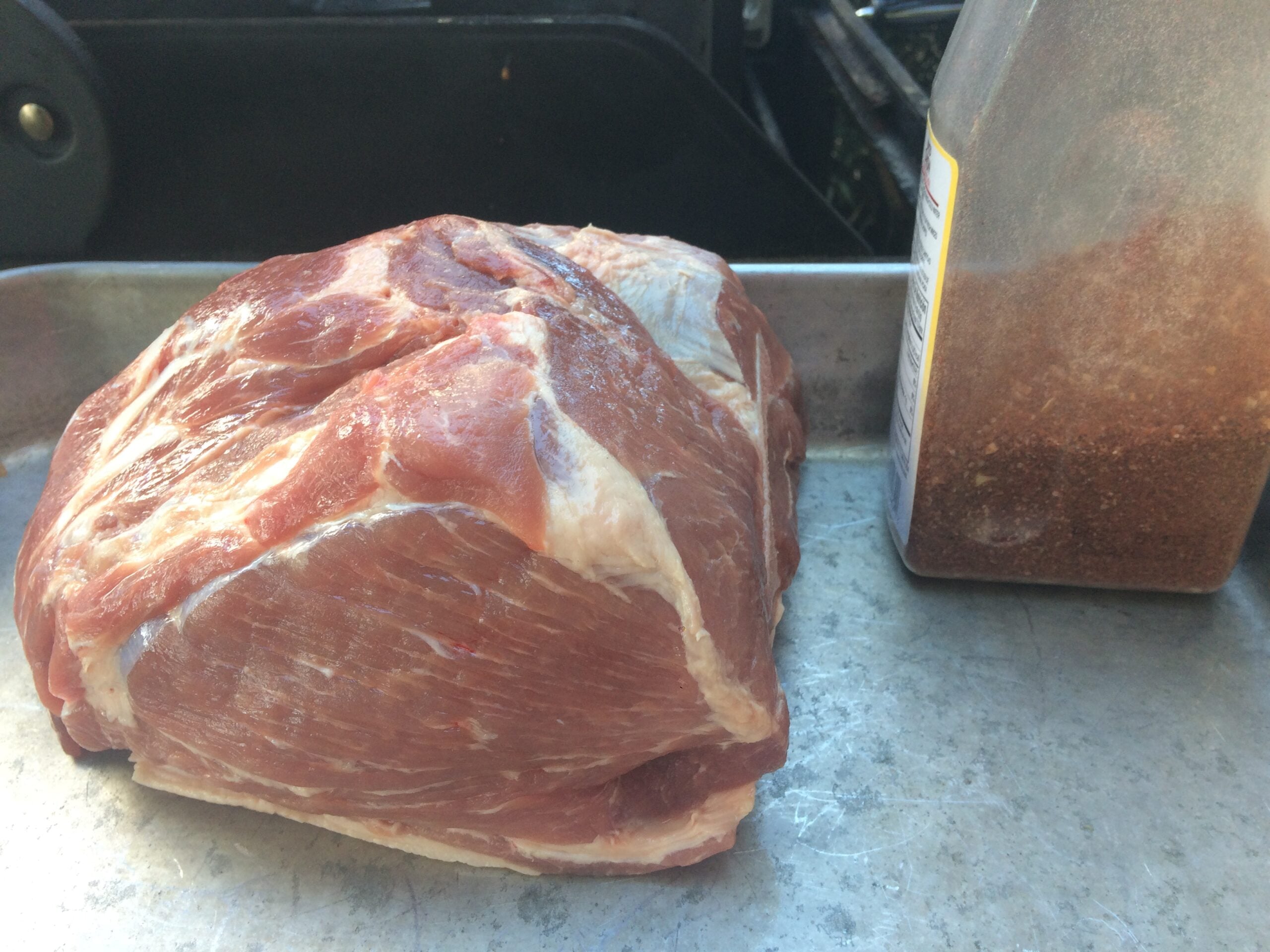
Here’s why pork butt usually wins.
Where it comes from
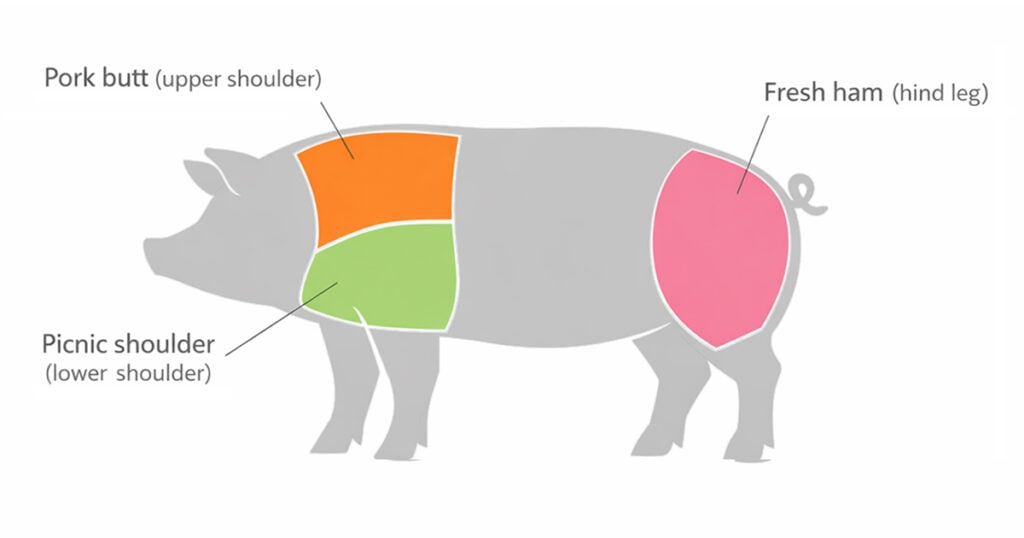
Pork butt, often labeled Boston butt, comes from the upper shoulder. If you want a simple anatomy breakdown, South Dakota State University Extension’s pork cut guide shows how the shoulder is separated into butt and picnic.
That matters because the butt is the part of the shoulder most associated with the pulled pork result people usually mean when they ask this question.
Why it usually pulls better
Iowa State Extension describes Boston butt as a well-marbled roast from the top of the shoulder. Put simply, it gives you a little more margin for error. That extra fat helps the meat stay moist, soften, and shred well during a long cook.
That does not mean it is impossible to dry out a butt, or that every single butt cooks the same. It means the cut is more forgiving when compared with picnic shoulder or fresh ham.
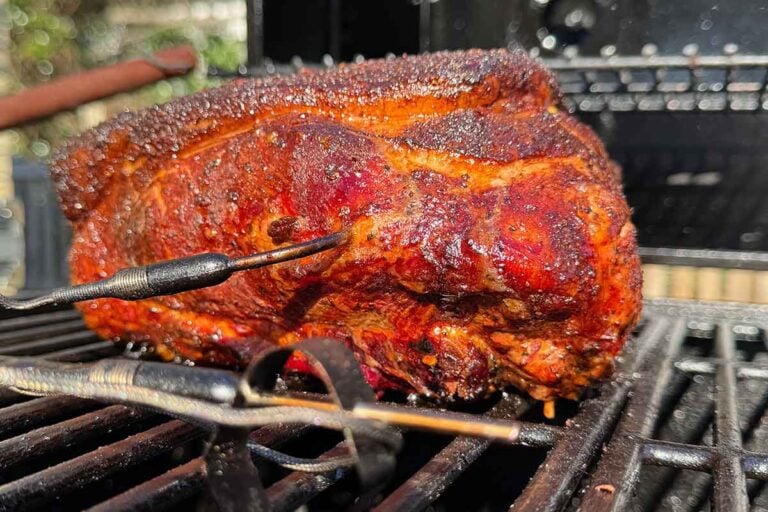
If you want to see that default choice in action, the Pawleys Island pulled pork recipe is a good example of a bone-in Boston butt cook built around the classic pulled pork result most folks want.
Bone-in vs boneless
Bone-in and boneless pork butt can both work well, so this is not a place to overcomplicate things.
A bone-in butt gives you a familiar shape and a bone that can act as one doneness cue when the meat is fully tender. A boneless butt is easier to portion, easier to fit into some cookers, and often easier to handle if you are buying more than one. I would choose based on convenience, shape, and availability, not on myths about one automatically tasting better than the other.
When picnic shoulder is worth considering
Picnic shoulder can be good for pulled pork, but it helps to go into that choice with your eyes open.
Why some cooks still choose it
Picnic shoulder comes from the lower part of the shoulder, and it can absolutely make good barbecue. Sometimes it is the cut the store actually has. Sometimes it is priced better. Sometimes a cook wants that specific cut because they know how they like to handle it.
So this is not a throwaway choice. It is just not the easiest one for most folks.
The skin-on tradeoff
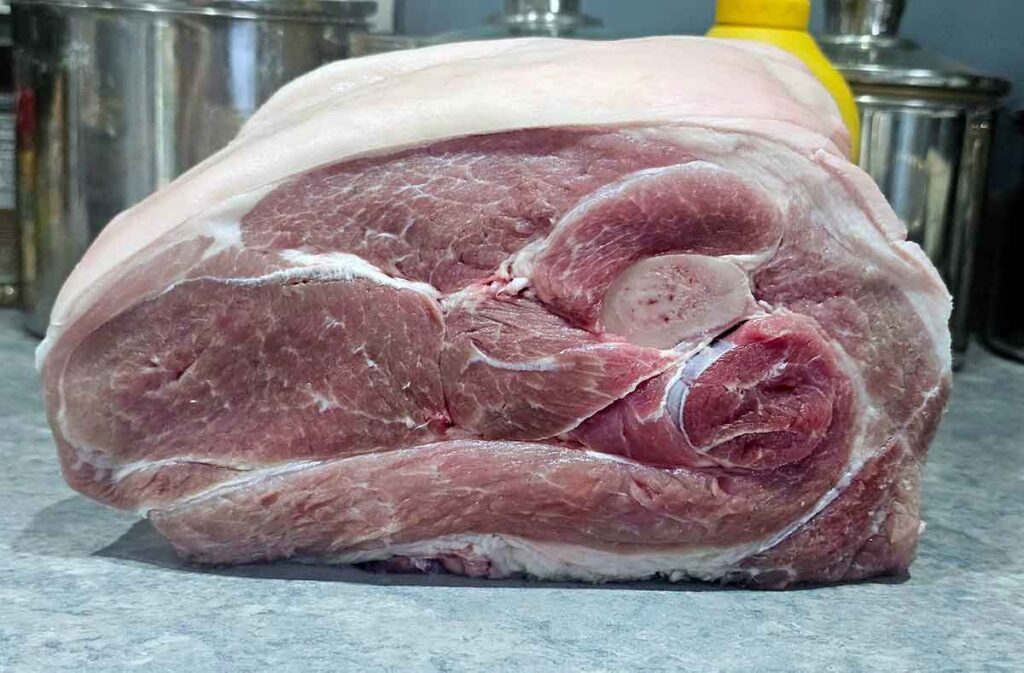
One of the biggest differences is that picnic shoulder is often sold skin-on, or at least more often than pork butt in many meat cases.
That can be a plus if you specifically want to work with the skin or you have a use for it. But for classic pulled pork, skin usually means more handling, more trimming decisions, and one more thing standing between you and an easy, straightforward cook.
Who should choose picnic shoulder
Picnic shoulder makes the most sense if you already know what you’re buying and why.
It can be a reasonable choice if:
- pork butt is unavailable
- picnic shoulder is meaningfully cheaper and you are comfortable doing a little more work
- you do not mind a cut that may be less uniform
- you are choosing it intentionally, not because the label just says “pork shoulder” and you assumed it was basically the same thing
That last point matters. A lot of shoppers use “pork shoulder” as shorthand for one cut, when in reality that label can blur together butt and picnic in ways that are not very helpful.
Can you use fresh ham for pulled pork?
Yes, you can use fresh ham for pulled pork. It just is not the easiest path. In some parts of the South, pitmasters still do exactly that.
What fresh ham is, and what it is not
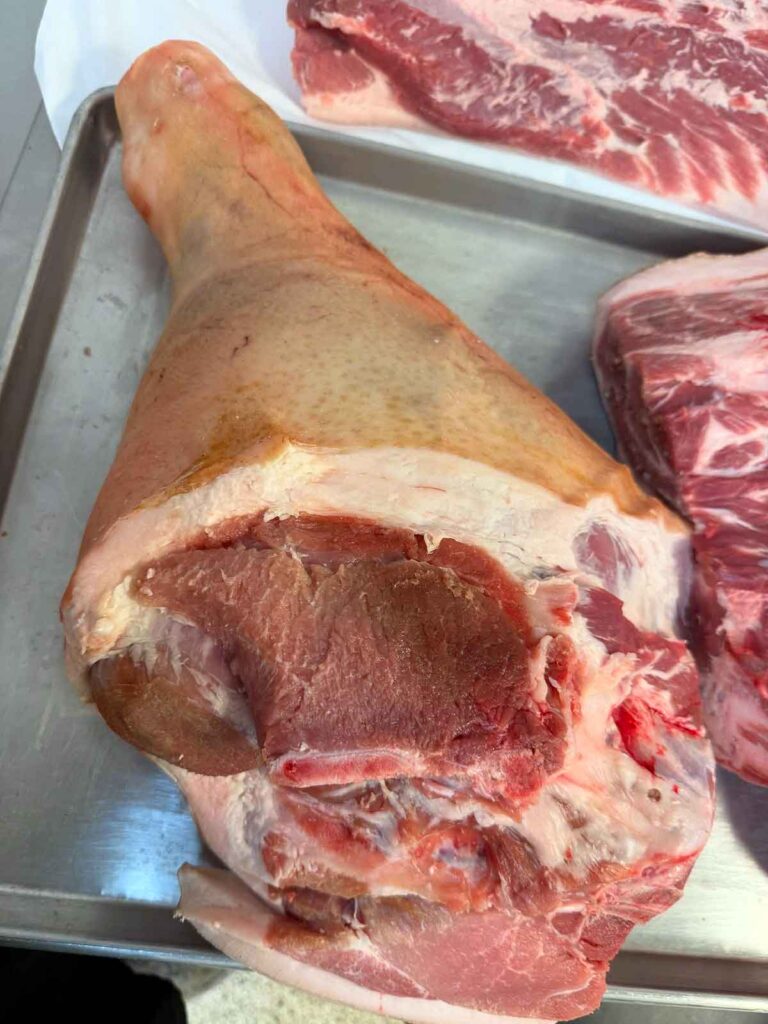
Fresh ham is the uncured hind leg of pork. According to USDA guidance on ham labels, “fresh” or “uncured” ham is not the same thing as the cured holiday ham many readers picture first.
When you buy fresh ham, you are not buying a ready-flavored, ready-cured product. You are buying a large, leaner pork cut that behaves differently from shoulder.
Why it cooks differently
Fresh ham can be pulled, but it is not a 1:1 shoulder substitute.
Because it is leaner, it gives you less room for error before it starts to dry out. It can still make very good barbecue, especially when the cook is planned with that cut in mind, but more of the outcome is in your hands. Moisture management, technique, and expectations all matter more.
It also helps to separate “safe” from “ready to pull.” FoodSafety.gov lists whole pork roasts as safe at 145°F with a 3-minute rest, but that is not a pulled-pork temperature. In other words, 145°F tells you the roast is safe, not that it is ready to pull. For pulled pork, cooks usually take it much higher so it will actually shred.
When fresh ham makes sense
Fresh ham makes the most sense when you are choosing it on purpose.
Around South Carolina, making barbecue with fresh ham is not as odd as it might sound to readers used to hearing only about pork butt or shoulder. In fact, some well-known BBQ joints around the state still cook hams, including Maurice’s Piggie Park BBQ in Columbia, Price’s, and Hite’s.
That local tradition also lines up with outside reporting. In a Splendid Table story on South Carolina smoked fresh ham, Tucker Shaw notes that fresh ham is leaner than shoulder and can be harder to find in ordinary grocery cases. That same tradition also pairs well with this Maurice’s mustard sauce recipe.
Fresh ham tends to make the most sense when:
- you want a leaner pulled pork result
- you want to cook the kind of ham-based barbecue some South Carolina joints still serve
- you are cooking for a style of barbecue that is not trying to mimic the richest shoulder-based result
- you understand that the cut may need more care than pork butt
Fresh ham is interesting, real, and worth discussing. It is just not the cut I would hand to a reader who says, “I just want the best cut for classic pulled pork.”
What to look for at the store
The meat case is where a lot of confusion starts, so this is the part worth slowing down for.
Is pork shoulder the same as pork butt?
Not exactly. If you are trying to sort out pork shoulder vs pork butt, the short version is that pork butt is part of the shoulder, but it is not the whole shoulder.
A pork butt, often labeled Boston butt, comes from the upper part of the shoulder, which is why pork shoulder is not the same as Boston butt. A picnic shoulder comes from the lower part. So when a package says pork shoulder, that wording can be too broad on its own because it may mean butt, picnic, or at least leave you guessing which one you are actually buying.
For pulled pork, that difference matters. If you want the most forgiving, classic choice, do not stop at the words pork shoulder. Look for a label that tells you clearly whether it is pork butt/Boston butt or picnic shoulder before you buy.
Store labels are not always as clear as they should be, so think of these names as clues, not guarantees. If the package wording is vague, make sure you know whether it is butt or picnic before you buy.
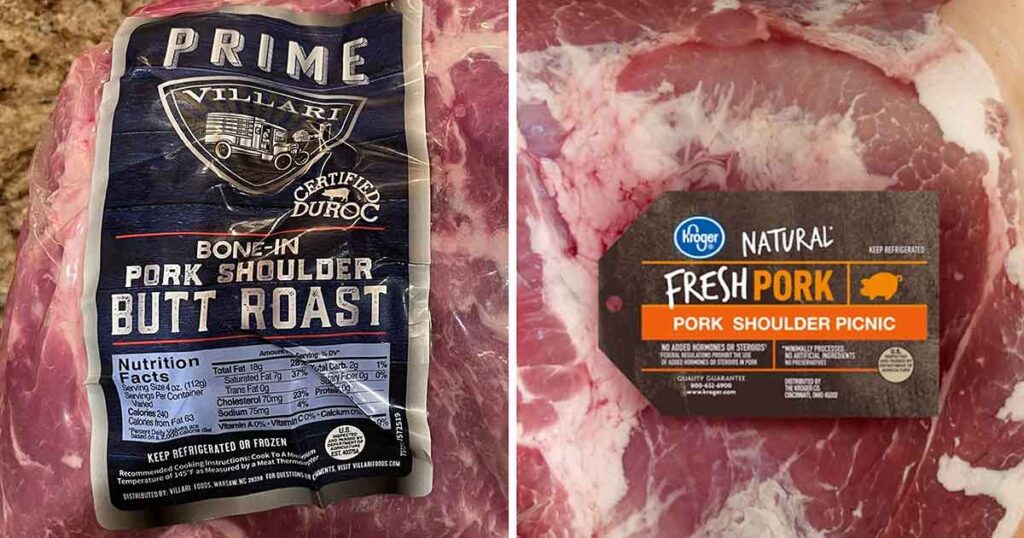
Labels that usually mean butt
If you see these terms, you are usually in pork butt territory:
- Boston butt
- pork butt
- Boston roast
- blade roast
- shoulder butt
Those are the labels most likely to point you toward the right roast for reliable pulled pork.
Labels that usually mean picnic
If you see these terms, stop and read a little more closely:
- picnic shoulder
- picnic roast
- pork shoulder picnic
- picnic ham
This is where readers sometimes buy a picnic shoulder while assuming they bought the easier, more classic pulled pork cut.
Labels that can be too vague
The broad label pork shoulder is not always specific enough on its own.
Since the shoulder primal includes both butt and picnic, treat that wording as incomplete unless the package tells you which one it actually is. If your goal is classic pulled pork and the label is vague, confirm whether you’re buying a Boston butt or a picnic shoulder roast before you head to the checkout.
What to scan for besides the name
Once you know which roast you’re looking at, look at the package itself.
Check for:
- whether it is bone-in or boneless
- whether the skin is on
- how evenly the meat is shaped
- whether the marbling looks fairly well distributed
- whether the package is plain fresh pork or something enhanced, pre-seasoned, or solution-added
If you can, choose plain fresh pork over a roast labeled enhanced, injected, or solution-added so you start with a cleaner baseline for seasoning, salt, and moisture control.
Those details do not change the cut itself, but they do change how convenient the cook may feel once you get home.
How these cuts differ in yield, cook behavior, and practicality
This is where the cut you buy starts to matter more.
Yield is directional, not a promise
Different cuts do not give you the same usable pulled meat per raw pound, which is one reason butt is usually the easier cut to plan around.
The USDA Food Buying Guide includes institutional reference yields for different pork cuts, and those numbers support the general idea that butt is usually the more dependable classic pulled-pork buy. But those are reference yields, not promises for your exact cook, your exact trim, or your exact finished texture.
If your next question is how much usable meat you’ll get, the pork butt yield guide and pulled pork sandwiches per pound guide can help.
Cook behavior changes with the cut
Pork butt is usually the most forgiving because it gives you more internal fat and a more familiar pulled-pork structure.
Picnic shoulder can still get there, but it often asks for more trimming, more skin handling, and a little more patience with an uneven shape. Fresh ham can absolutely be cooked into tender barbecue, but because it is leaner, it gives you less margin for error.
That is also why I would not treat all three cuts as if they cook the same. Once you choose pork butt, it makes sense to move to a butt-specific timing resource like the pork butt timing guide instead of assuming every shoulder-adjacent cut will behave the same way.
At that point, the question is less which cut to buy and more whether to wrap the butt and how to handle the stall.
Practicality matters too
The best cut is not only about texture. It is also about how easy the whole process feels.
Pork butt usually wins on practicality because it is:
- easier to shop for once you know the name
- easier to explain to other people helping with the cook
- easier to fit into the “classic pulled pork” expectation
- easier to scale without as many trim and skin questions
Which cut should you choose?
So what should you buy?
Quick chooser
- Choose pork butt if you want the easiest, most forgiving, most classic pulled pork result
- Choose picnic shoulder if you understand the tradeoffs and are comfortable with more trimming, more skin questions, or a less convenient shape
- Choose fresh ham if you are intentionally going after a leaner, fresh-ham-style cook and do not mind a more technique-sensitive path
- If you are unsure, buy pork butt
Once you know which cut you want, move on to the pulled pork calculator so you can figure out how much to buy and how much time to allow without guessing.
From there, the next practical questions are whether to make pulled pork ahead, how to keep pulled pork warm, and how to reheat pulled pork without drying it out.
Best cut for pulled pork FAQs
Not if you want classic pulled pork. Pork loin and tenderloin are much leaner than pork butt, picnic shoulder, or fresh ham, so they do not have the same built-in cushion for a long cook. You can cook them well, but they are better suited to slicing than shredding into moist, traditional pulled pork.
For classic smoked pulled pork, many cooks either remove the skin or loosen it so rub and smoke can reach the meat more directly. That is one reason Boston butt is the more common choice. If you want crisp skin or crackling, you can keep the skin involved, but for the simplest pulled-pork path, picnic shoulder usually takes a little more handling.
If you have the choice, plain non-enhanced pork is usually the better buy. A roast labeled enhanced, injected, or solution-added already contains added liquid and salt, which can make your rub and final seasoning harder to control. But it is not a deal-breaker. If enhanced pork is what the store has, you can still make good pulled pork. Just read the label and go lighter on added salt.
Corrections and editorial standards
- Spotted something wrong or outdated? Send a correction here: Corrections & Updates
- How we handle sources, testing, and updates: Editorial Standards
- Media or general notes: Email the publisher
Sources
- South Dakota State University Extension: Pork carcass fabrication, primal and retail cuts — supports shoulder anatomy and the butt vs picnic breakdown
- Iowa State Extension: Beef and Pork Whole Animal Buying Guide — supports the description of Boston butt as a well-marbled roast from the top of the shoulder
- USDA FSIS: Hams and Food Safety — supports fresh ham and uncured ham labeling guidance
- FoodSafety.gov: Safe minimum internal temperatures — supports the safe minimum temperature for whole pork roasts and the safety-vs-tenderness distinction
- USDA Food Buying Guide yield tables — supports directional yield differences across pork cuts
- The Splendid Table: The Unsung Cut: America’s Test Kitchen takes on South Carolina smoked fresh ham — supports the South Carolina fresh-ham tradition and notes that fresh ham is leaner than shoulder
- Destination BBQ: Maurice’s Piggie Park BBQ — supports the South Carolina fresh-ham barbecue context cited in the body
- Destination BBQ: Price’s — supports the South Carolina ham-serving example cited in the body
- Destination BBQ: Hite’s — supports the South Carolina ham-serving example cited in the body
We cite authoritative references and note when testing is based on first-hand experience.
About the author
James Roller documents South Carolina barbecue for Destination BBQ and authored the SC BBQ cookbook Going Whole Hog. This guide does not reflect formal lab-style testing. It is built from published guidance, meat-case labeling standards, and practical barbecue experience to help home cooks understand the tradeoffs between pork butt, picnic shoulder, and fresh ham before they buy.