How to Reheat Pulled Pork Without Drying It Out
Bring leftover pulled pork or make-ahead batches back to life with gentle heat, a little moisture, and the right reheating method
Pulled pork is easy to dry out if you reheat it too aggressively. For most people, the best default is to warm it in a covered dish in the oven with a small splash of liquid, then stop when your thermometer is reading at least 165°F in a couple of spots. That keeps the pork moist, heats it evenly, and gives you more control.
After that, pick the method that fits what you’ve got. A small batch on the stovetop can work beautifully, vacuum-sealed portions often do especially well in a sous vide-style hot-water bath, and the microwave is fine when speed matters more than perfection. The key in every case is the same: gentle heat, a little moisture, and not reheating more than you need.
Best way to reheat pulled pork without drying it out
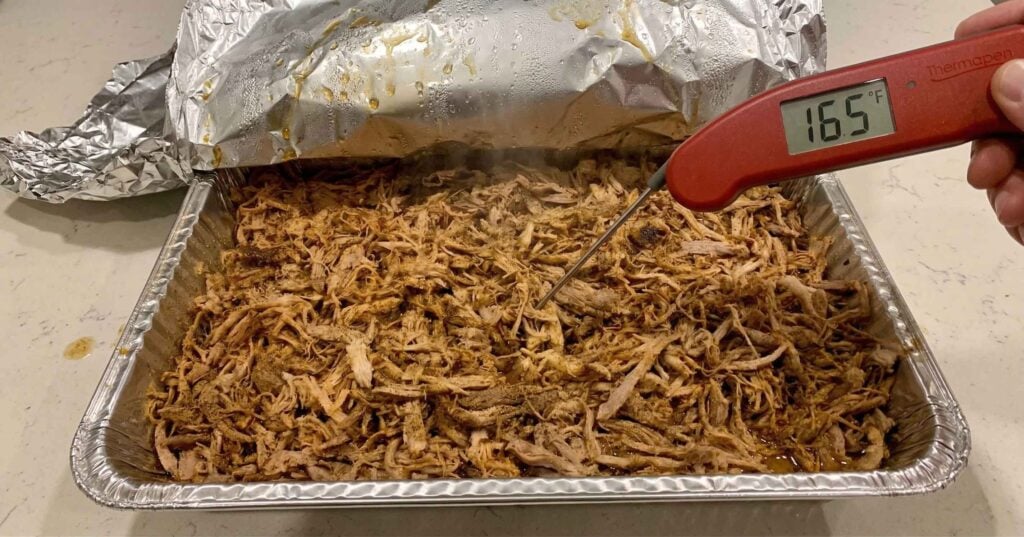
If you want one clear starting point, use the oven.
Spread the pulled pork in a shallow baking dish, loosening any tight cold clumps. Add a light splash of saved juices, broth, or apple juice, cover the pan tightly, and reheat at 325°F until it is hot all the way through. Check with a thermometer in a couple of spots, stir if needed, and keep reheating until those spots are reading 165°F. That matters because leftovers follow a different safety rule than fresh pork cuts. Fresh pork cuts can be cooked to 145°F, but reheated leftovers should reach 165°F, according to FoodSafety.gov.
For most family-size batches, the oven is the best bet because it heats the pork gently, holds moisture well in a covered dish, and is easier to scale than the stovetop or microwave. The main exception is vacuum-sealed pulled pork, since a sealed bag in hot water can protect moisture especially well. USDA’s reheating guidance also supports the 325°F oven approach.
Quick answer
- Best default for most people: reheat pulled pork in a covered pan in a 325°F oven
- What keeps it moist: shallow pan, tight cover, and a small splash of saved juices, broth, or apple juice
- When to stop: when the pork is hot all the way through and your temperature checks are consistently reading at least 165°F
- Best exception: vacuum-sealed portions often reheat best in a sous vide setup or a similar sealed-bag hot-water bath
- Best small-batch option: low stovetop heat with a lid
- Slow cooker warning: Do not use a Crock-Pot or slow cooker as the first reheating step for cold pulled pork. Reheat it to 165°F first, then transfer it to a preheated slow cooker if you need to hold it hot for serving
Use the thermometer, not the clock.
Choose the best reheating method for your situation
What matters most is how much pork you have, how it’s packed, and what kind of result you want.
| Method | Best for | Batch size | Moisture protection | Texture result | Main watch-out |
|---|---|---|---|---|---|
| Covered oven | Best all-around default | Family meals, trays, several pounds | Tight cover plus a little liquid | Even, dependable, still tender | Deep or crowded pans reheat slowly and unevenly |
| Stovetop | Best for small batches | One to two servings | Lid plus low heat and a splash of liquid | Good control, easy to stop at the right point | High heat can scorch the bottom fast |
| Sous vide/hot water | Best for vacuum-sealed portions | Single portions to a few sealed packs | Very strong because the bag holds in moisture | Often the moistest result | Whether you use a circulator or a simple hot-water bath, do not rely on vague timing. Check the pork itself. |
| Microwave | Fastest single serving | One serving | Cover loosely and add a little liquid | Acceptable, but least forgiving | Hot spots and dried edges |
| Smoker or grill finish | When bark or smoke matters | Small to medium batches | Warm gently first, then finish briefly | Better bark and edge texture | Too much grate time dries the pork out |
| Slow cooker | Holding after reheating | Party service | Works only after pork is already hot | Fine for service, not ideal for texture | Do not use it as the primary reheating step for cold leftovers |
If you are reheating a small batch for lunch, use the stovetop. If you are warming a tray for dinner, use the oven. If the pork is vacuum-sealed, sous vide is hard to beat for moisture retention, whether you are using a true sous vide setup or a simpler sealed-bag hot-water bath. If speed matters more than perfection, the microwave is acceptable for a single serving. And if bark matters to you, think of the smoker or grill as the finishing step after the pork is already hot, not as the main reheating step.
An air fryer can work as a brief crisping step for edges, and an Instant Pot can work in a pinch, but neither is the core method most readers need here. Before you choose a method, though, one question changes the workflow more than any other: are you starting with refrigerated pork or frozen pork?
Reheating pulled pork from the fridge vs from frozen
Whether the pork is cold or frozen changes the plan more than most people think.
From the fridge
Refrigerated pulled pork is the easy path. Reheat only what you need, loosen packed-together meat before warming it, and use either the covered oven, low stovetop, or a sous vide-style sealed-bag reheat depending on the portion size. This is the easiest path if your goal is to keep the texture as close as possible to the first cook.
From frozen
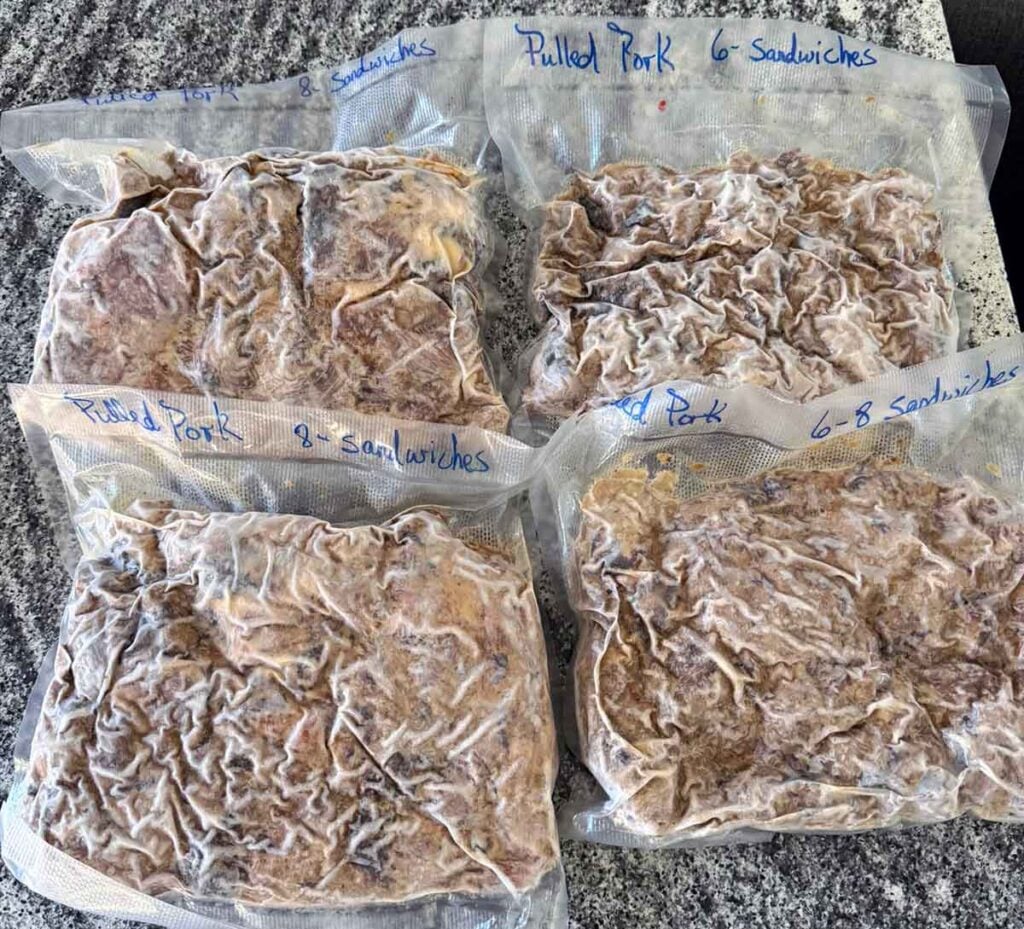
Frozen pulled pork can be reheated safely, but it usually needs more lead time than people think. The safest thawing methods are the refrigerator, cold water, and microwave, according to FoodSafety.gov’s basic thawing guidance. USDA also notes in its leftovers guidance that some frozen leftovers can be reheated without thawing first, but the process takes longer. That means moisture control matters more, not less.
If the pork is headed for the freezer, flatter portions with a little saved liquid are usually easier to thaw and reheat evenly than one big packed container. And if you are intentionally freezing portions because you plan to make pulled pork ahead, that is a separate planning question from how to reheat it well once it is already cooked.
How to keep pulled pork moist while reheating
Keeping pulled pork moist usually comes down to a few simple moves: gentle heat, a covered environment, and just enough added liquid to help the meat warm through without drying out.
Best liquid to add when reheating pulled pork
The best reheating liquid is usually whatever came from the pork in the first place: saved juices, defatted jus, or a little of the drippings. After that, light broth works well, and apple juice can help in a pinch.
A little thin sauce can work, too, especially if that is how you serve it anyway, but reheating liquid and finishing sauce are not the same thing. The first job is to protect moisture while the pork heats. The second job is flavor at the table.
Go light at first. You are not trying to drown the pork. You are trying to create just enough moisture for a covered environment to do its work. If the meat is already sauced, add less. If it seems dry after a first stir, add a little more. Keeping extra liquid on hand is smart, especially for bigger batches.
How to reheat pulled pork in the oven
For most home leftovers, this is the method that has worked best for us.
Use a shallow baking dish or two smaller dishes instead of one crowded deep pan. Pull apart any dense cold lumps with your hands or a fork so the heat can move through the meat more evenly. Add just enough liquid to lightly moisten the pork, not enough to pool it like stew. Cover the dish tightly with foil or a fitted lid, set the oven to 325°F, and reheat until it is hot all the way through. Stir if needed and keep going until your temperature checks are consistently reading at least 165°F.
How long to reheat pulled pork in the oven
At 325°F, a small, shallow batch from the refrigerator often takes about 20 to 30 minutes. A larger or more densely packed tray may need 30 to 45 minutes or longer, and frozen pulled pork will take longer still. Treat those as planning estimates and keep reheating until several spots reach 165°F.
If you are warming a larger tray, stir or turn the pork once partway through so the cooler center has a chance to catch up. USDA’s reheating guidance specifically says oven reheating should be done at no lower than 325°F.
The oven works so well because it gives you a covered space where moisture can stay with the pork instead of escaping. What dries pulled pork out is usually some combination of too much exposed surface area, too much direct heat, not enough liquid, or leaving it in long after it was already hot enough. Reheating in multiple shallow pans instead of one packed pan often solves half the problem before it starts.
If you are reheating pork for buns, this is also a good point to portion only what you need and leave the rest cold for another meal. If you want help planning bun counts once the pork is hot, see how many pulled pork sandwiches per pound.
How to reheat pulled pork on the stovetop
The stovetop is usually the best choice when you only need a small amount and want close control.
Put the pork in a skillet or saucepan over low heat, add a small splash of liquid, cover with a lid, and stir often enough to keep the bottom from catching. This method is especially useful for one or two servings because you can stop the moment the pork is hot enough instead of committing to heating a whole tray. Low heat matters here. A hot pan can dry the edges before the center is warmed through.
If the pork is already sauced, go lighter on added liquid and even lighter on heat. Sauce can scorch before the meat is ready. If the pork seems dry, add moisture in small steps instead of dumping in a lot at once. It is easier to add a little more than to rescue pork that turned soupy.
How to reheat pulled pork with sous vide
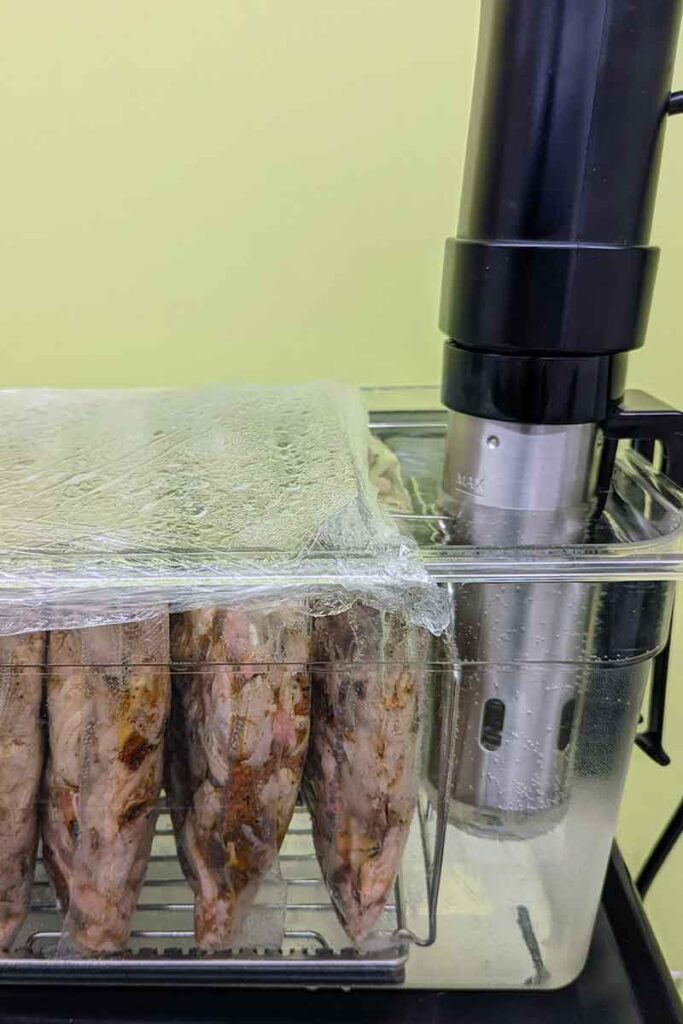
If your pulled pork is already sealed in portions, sous vide is often one of the best ways to protect moisture.
A sealed bag keeps moisture from evaporating while the water warms the pork more gently and evenly than dry air. If you have a sous vide circulator, use it. If not, the same sealed-bag approach can still work in a simple hot-water bath. Either way, keep the pork sealed and warm it through. Then check it and keep going until your temperature checks are consistently reading at least 165°F.
This approach works especially well for freezer portions because it keeps loose shreds from drying out in hot air. ThermoWorks recommends reheating barbecue in water and specifically points to sous vide, though some guidance uses that term more loosely for the same sealed-bag method. What matters most is reheating the pork in a sealed bag in water until it reaches a leftovers-safe temperature.
A few practical things help. Use food-safe bags, keep the seal secure, and portion your pork before freezing whenever possible. One thick brick of frozen pork takes longer and is harder to warm evenly than flatter, smaller packs. If your bigger question is how much extra pork to cook on purpose so you have leftovers to freeze, that is where the pulled pork calculator becomes more useful than this reheating guide.
How to reheat pulled pork in the microwave
The microwave is fine for a quick serving, but it is not the best choice if quality is your main goal.
Spread the pork out in a microwave-safe dish instead of leaving it in a dense mound. Add a small splash of liquid, cover loosely, and heat in short bursts, stirring between rounds so you do not end up with one scorching-hot edge and one cool center. After it rests briefly, check the temperature in more than one spot and keep going until the pork is hot all the way through and your temperature checks are consistently reading at least 165°F. USDA’s microwave guidance also stresses covering food and checking with a thermometer after standing time.
This is the method most likely to dry the pork out if you get impatient. Short bursts beat one long blast every time.
Can you reheat pulled pork in a Crock-Pot or slow cooker?
USDA does not recommend using a slow cooker as the first reheating step for cold leftovers because the food may warm too slowly. Reheat the pulled pork in the oven, on the stovetop, in the microwave, or in a sealed-bag hot-water bath until it reaches 165°F.
Once the pork is hot, you can transfer it to a preheated slow cooker to hold for serving. Keep it at 140°F or above, stir occasionally, and add a small amount of saved juices or broth only if the pork begins to dry out. For more on that part of the process, see how to keep pulled pork warm.
Smoker or grill reheating when bark matters
This method makes the most sense when bark or edge texture matters more than speed.
If you want some bark back or a little smoke on the edges, warm the pork gently first, then give it a brief finish on the smoker, grill, or even under a broiler. That order matters. If you try to use direct heat as the whole reheating plan, the outer shreds can dry out long before the center gets where it needs to be. Warm first, crisp second.
This is also where reheating in chunkier portions can help. Larger pieces generally hold moisture better than a pile of very fine loose shreds. Warm the pork, then pull or chop a little more if you need to before serving. If your next step is turning reheated pork into a full meal instead of just warming leftovers, Pawleys Island pulled pork is a good related recipe to keep in mind.
Food safety for leftover pulled pork
With pulled pork, reheating it well and reheating it safely go together.
The key temperature to remember is 165°F. That is the leftovers number. It is different from the 145°F with a 3-minute rest rule used for fresh pork chops, roasts, and steaks. This is one of the easiest places for barbecue advice to get sloppy, so it is worth being plain about it. FoodSafety.gov’s temperature chart makes that distinction clearly.
Storage matters, too. Cooked leftovers generally belong in the fridge for 3 to 4 days. In the freezer, they stay safe indefinitely if kept continuously frozen at 0°F, but quality drops over time. The cold storage chart is the cleanest source for that quality-versus-safety distinction.
Cooling matters before reheating ever starts. Leftovers should be refrigerated within 2 hours, or within 1 hour if room temperature is above 90°F. Shallow containers help food cool faster and more safely. CDC food safety guidance and FoodSafety.gov’s basic food safety steps are both useful here. If the pork sat out too long, reheating is not the fix.
Do not thaw pulled pork on the counter, and do not treat reheating as a way to fix pork that sat out too long. If it was left out beyond the safe window, you should discard it.
Common mistakes that dry pulled pork out
Most bad reheats come down to a few repeat mistakes, and most of them are easy to avoid.
| Problem | What usually caused it | What to do next |
|---|---|---|
| Dry edges, cool middle | Heat too high or pork packed too deep | Use a shallow pan, cover tightly, and reheat more gently |
| Scorched bottom on the stove | Pan too hot or not enough stirring | Use low heat, add a little liquid, and stir more often |
| Rubbery microwave result | Long heating burst or dense mound of pork | Spread it out, cover it, and use short bursts with stirring |
| Watery, washed-out pork | Too much liquid or too much sauce added too early | Add moisture lightly, then sauce to taste after reheating |
| Tough shreds after finishing on the grill | Tried to crisp before the pork was warmed through | Warm first, then finish briefly for bark or smoke |
| Uneven reheating from frozen | Large frozen block and not enough lead time | Freeze flatter portions and thaw in the fridge when you can |
| Quality keeps getting worse | Reheating the same pork again and again | Reheat only what you need for that meal |
If the pork is already a little dry, your best rescue move is usually gentle heat, a tight cover, and a small amount of liquid added in stages. What usually makes it worse is trying to fix dryness with more heat.
Reheat pulled pork without drying it out checklist
If you just want the short version before dinner, this is the list to follow.
Reheat pulled pork without drying it out checklist
- Reheat only what you need when practical
- Break up dense cold clumps before warming
- Use a shallow pan or smaller portions instead of one deep packed container
- Add a small splash of saved juices, broth, or apple juice
- Cover the pork or keep it sealed so moisture stays in
- Use low heat on the stove and 325°F in the oven
- Stop when the pork is hot all the way through and your temperature checks are consistently reading at least 165°F
- Finish for bark only after the pork is already hot
- Do not use the slow cooker as the primary reheating step
Pulled pork reheating FAQs
A few quick questions still come up even after you know the main methods.
Sometimes, yes. The best fix is gentle reheating in a covered pan with a small amount of saved juices, broth, or another light liquid added a little at a time. Stir, check, and stop as soon as the pork is hot all the way through. More heat usually makes dry pulled pork worse, not better.
You can, but it is usually better not to. Each round of cooling and reheating gives the pork more chances to lose moisture and texture. The safer habit is to portion leftovers and reheat only what you plan to eat. That keeps the quality better and makes it easier to avoid waste.
When possible, reheat pulled pork in chunkier portions rather than very fine loose shreds. Bigger pieces expose less surface area, so they tend to hold moisture better during reheating. That said, either form can work if you use gentle heat, a little liquid, and a covered method, then stop once the pork is fully hot.
Bottom line on reheating pulled pork
If you remember only one thing, remember this: pulled pork reheats best when you treat it gently. A little liquid, a covered environment, and a thermometer will do more for quality than any trick or shortcut.
If you’re still planning the cook, not just the leftovers, the pulled pork calculator can help you plan how much to make, and the pork butt timing guide can help you plan the cook from the start. And if you are still working through choices like the best cut for pulled pork, pork butt yield, when to wrap pork butt, or the pork butt stall, those guides can help with that side of the process, too.
Corrections and editorial standards
- Spotted something wrong or outdated? Send a correction here: Corrections & Updates
- How we handle sources, testing, and updates: Editorial Standards
- Media or general notes: Email the publisher
Sources
- FoodSafety.gov: Safe Minimum Internal Temperatures — supports the 165°F reheating target for leftovers and the distinction from fresh pork minimums
- USDA FSIS: Safe Handling of Take-Out Foods — supports reheating leftovers in an oven set no lower than 325°F
- USDA FSIS: Leftovers and Food Safety — supports refrigerated leftover handling and the point that some frozen leftovers can be reheated without thawing first
- USDA FSIS: Cooking and Reheating in Microwave Ovens — supports covering food, allowing standing time, and checking microwave-reheated food with a thermometer
- USDA FSIS: Slow Cookers and Food Safety — supports not using a slow cooker as the primary reheating step for cold leftovers
- FoodSafety.gov: Cold Food Storage Charts — supports the 3 to 4 day refrigerated storage window and the safety-versus-quality distinction for frozen leftovers
- FoodSafety.gov: 4 Steps to Food Safety — supports thawing and basic leftover food-safety practices
- CDC: Preventing Food Poisoning — supports prompt refrigeration and general food-safety handling principles
- ThermoWorks: How to Reheat BBQ — supports the sealed-bag hot-water / sous vide-style method as a strong quality option for reheating barbecue
We cite authoritative food-safety references and note when method preferences are based on first-hand cooking experience rather than formal lab-style testing.
About the author
James Roller documents South Carolina barbecue for Destination BBQ and authored the SC BBQ cookbook Going Whole Hog. He and his wife, Heather, have cooked and served a lot of pork barbecue over the years, including plenty of pulled pork for family meals, leftovers, and make-ahead gatherings. This guide does not reflect formal lab-style testing. It is a reader-first synthesis of published food-safety guidance and practical reheating methods, checked against hands-on experience from their own cooks.


This guide on how to reheat pulled pork looks so practical and helpful! I love learning simple techniques for keeping pulled pork tender, juicy, and flavorful when reheating leftovers. Such a useful resource for BBQ lovers, meal prep, and easy family dinners!