Maple
Learn how maple smoke tastes, which meats it suits best, how to season and burn it clean, and when blending adds sweetness without overpowering
What is Maple Wood for BBQ?
Maple delivers mild, sweet smoke that enhances rather than overwhelms your barbecue. This hardwood burns cleanly with steady heat, making it perfect for longer cooks where you want subtle flavor enhancement. Most pitmasters reach for maple when smoking delicate proteins like poultry and fish, though it works beautifully with pork and lighter beef cuts too.
Key Takeaways
- Maple wood produces a mild, sweet smoke that complements rather than dominates, making it an excellent choice for pork, poultry, seafood, cheeses, and even vegetables.
- Properly seasoned maple burns hot and steady, delivering clean blue smoke, long-lasting coals, and a reliable heat source that avoids the bitterness of green or wet wood.
- Competition cooks and backyard pitmasters alike often blend maple with oak, hickory, or cherry, creating balanced flavor profiles that judges and guests consistently enjoy.
- Rooted in traditions from New England smokehouses to Canadian syrup country, maple has become a versatile, approachable barbecue wood valued for its consistency and crowd-pleasing character.
“Maple…is a favorite among pitmasters looking to add a slightly sweeter taste to their meats. There are multiple varieties of maple wood, each offering a different sort of sweetness.”
~ Escoffier
Understanding Maple
Maple Wood Types and Characteristics
James St. John, CC BY 2.0, via Wikimedia Commons
_(Newark,_Ohio,_USA)_(25_October_2024)_5.jpg)
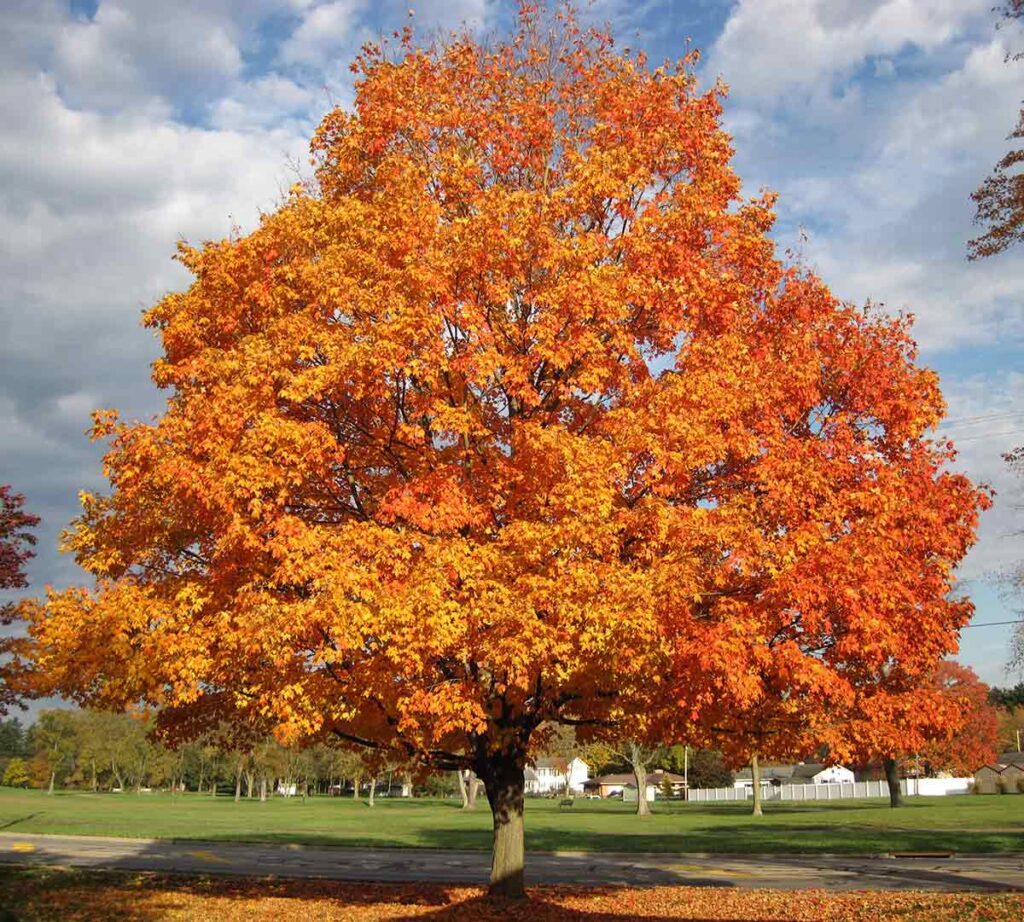
Sugar maple (Acer saccharum) leads the pack as the premier BBQ maple species, prized for both its syrup production and exceptional burning qualities. This eastern North American native grows from Nova Scotia down through the Appalachians, reaching heights of 100 feet with lifespans extending 200-300 years. At 44 pounds per cubic foot when dried, maple ranks among the denser hardwoods, delivering approximately 24 million BTUs per cord – on par with red oak.
Red maple (A. rubrum) produces about 18.1 million BTUs per cord, while silver maple (A. saccharinum) yields around 17 million BTUs. All maple species require 6-12 months of seasoning to reach the critical moisture content below 20 percent.
As University of Tennessee research confirms, “the most important property of good firewood is moisture content” – properly seasoned maple lights easier, burns cleaner, and avoids the bitter, sooty smoke that green wood produces.
Flavor Profile
Maple occupies the sweet end of the smoking wood spectrum, delivering gentle warmth without the assertive punch of mesquite or the bacon-like intensity of hickory. The smoke carries subtle caramelized sugar notes—fitting for wood from syrup-producing trees—but remains savory rather than dessert-sweet. This makes maple an excellent bridge wood that complements rather than competes with your rubs and sauces.
The flavor strength sits comfortably between mild fruitwoods like apple and cherry, and stronger hardwoods like hickory and oak. Unlike some woods that can turn bitter with extended burning, maple maintains its pleasant character throughout long smoking sessions.
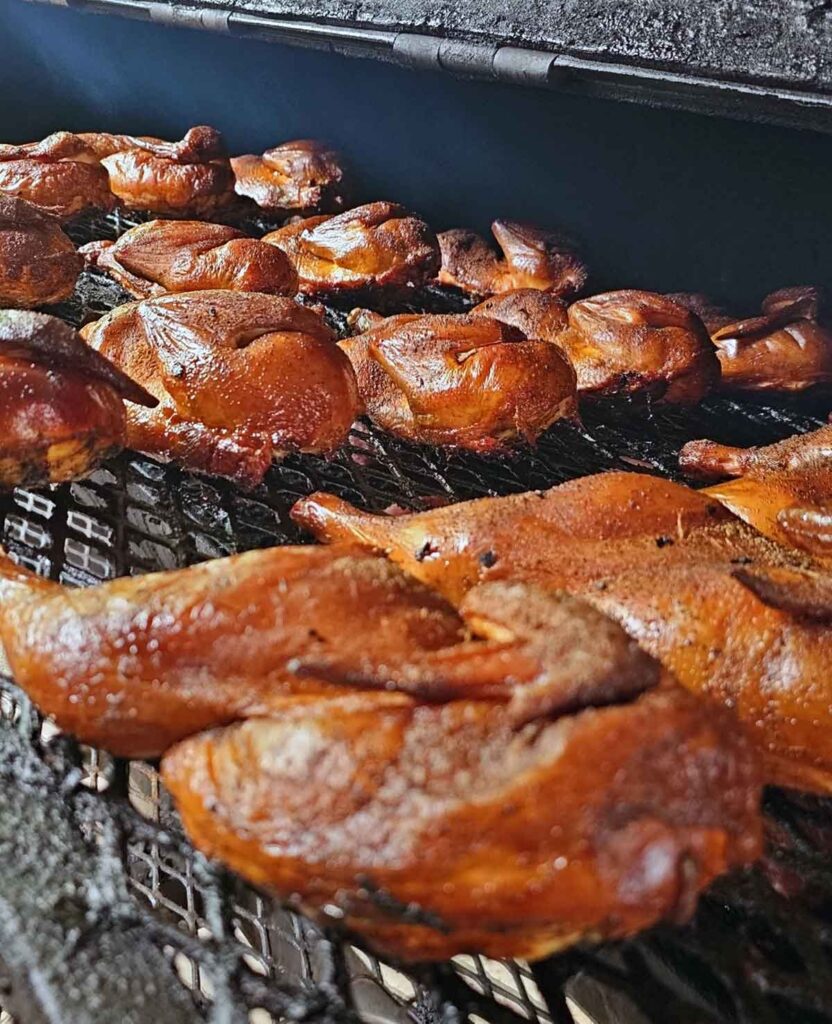
“If you’re looking to experiment, I’d suggest giving maple a try,” Barrett Black, fourth-generation pitmaster of The Original Black’s BBQ told Chowhound. “It’s a lighter, sweeter wood that doesn’t overpower the meat, and after a long smoke, it’ll leave behind a subtle sweetness that’s pretty unique. Maple pairs nicely with pork or chicken, where a little sweetness complements the flavors.”
History and Regional Use
Native Americans first showed European settlers how to tap maple trees for sap, and that same wood found its way into early smoking practices across the Northeast and Great Lakes regions. While maple never claimed the iconic regional status of post oak in Central Texas or hickory in the Carolinas, it became a reliable choice wherever maple forests grew thick.
The name derives from the Latin “acer,” meaning sharp, referring to the pointed leaves. “Saccharum” means sugar, highlighting the species most prized by both syrup makers and pitmasters. Today’s competitive BBQ circuit sees maple used primarily in blends, where its sweetness balances stronger woods without overwhelming judges’ palates.
Best Meats for Maple Wood Smoking
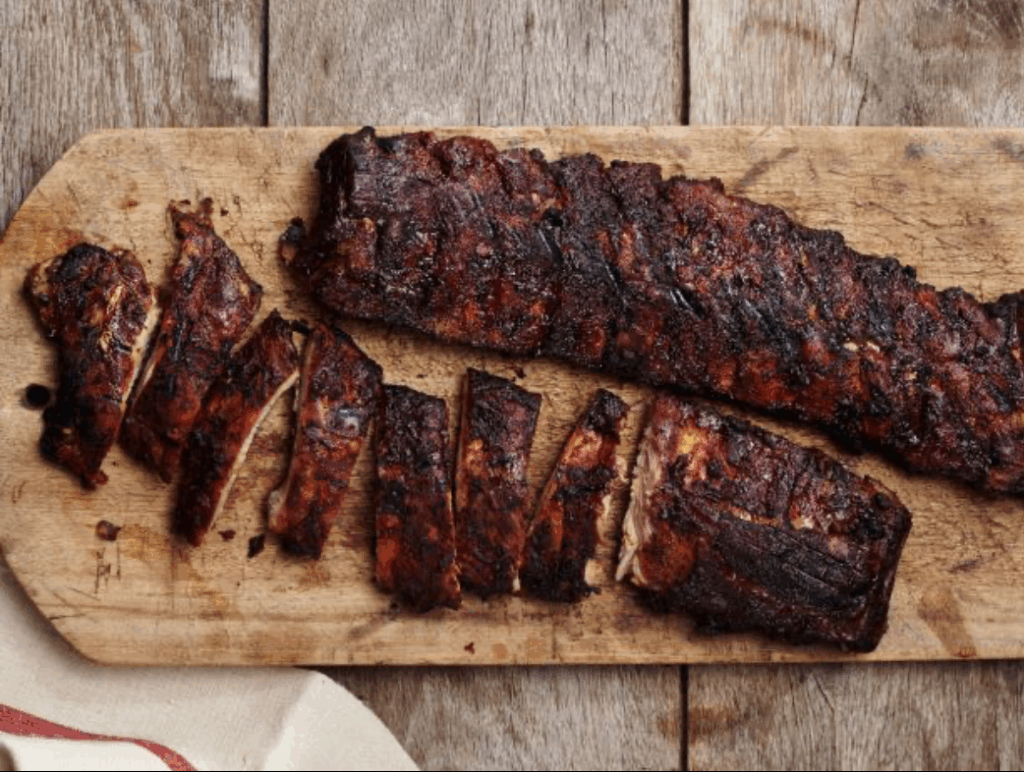
Maple excels with pork, where its natural sweetness amplifies the meat’s rich fat without overwhelming it. Bacon producers frequently use maple wood to create that classic sweet-savory balance, while pulled pork and ribs develop beautiful color and gentle bark under maple smoke. For large cuts like pork shoulder, many pitmasters use oak or charcoal for base heat and add maple chunks for sweetness.
Poultry benefits enormously from maple’s gentle touch. Chicken and turkey take on a golden tint and sweet kiss of smoke that won’t turn the skin bitter – a common problem with heavier woods. Competition teams often favor maple for contest chicken precisely because it enhances without overpowering. Holiday turkey smoked with maple develops subtle flavor that won’t dry out the bird.
“Maple generally has a lot of wood sugar, so it imparts a sweet flavor to the meat you grill,” Noah Kaufman in Epicurious. “It’s on the milder side, so its effects can get lost on strongly flavored food.”
For beef, for example, maple works best as a supporting player. While brisket traditionally uses stronger woods like post oak or hickory, maple can lighten the smoke profile when blended. A 50/50 mix of hickory and maple delivers familiar BBQ flavor with added sweetness and less intensity. Short ribs and meatloaf benefit from maple’s mild touch when you want just a hint of smoke.
Maple’s versatility extends beyond meat to seafood, game birds, cheeses, and vegetables. Salmon, trout, and shellfish handle maple smoke beautifully – think of it as similar to the alder traditionally used for Pacific Northwest fish.
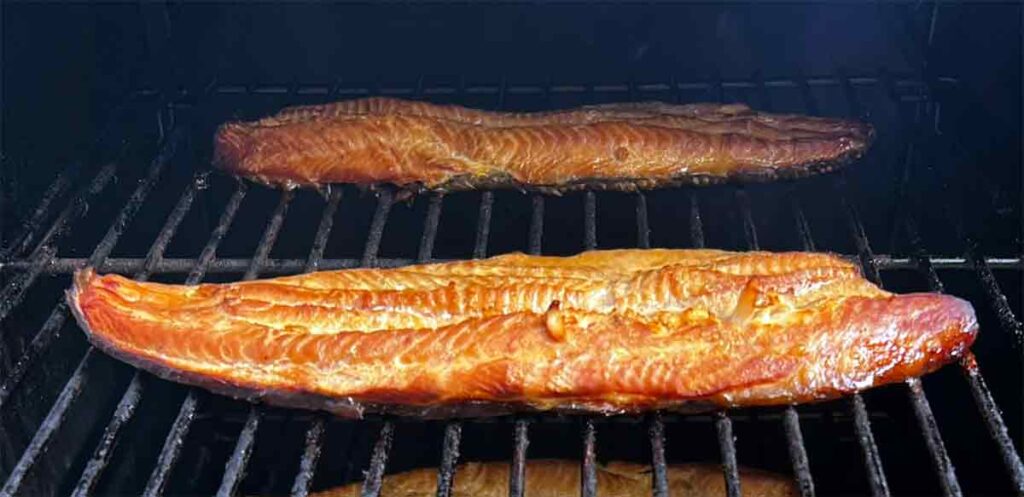
“Sugar maple…is also a fantastic choice for thicker cuts such as tuna steaks or cod filets,” Will Hair of the SmokeMasters BBQ team told The Tasting Table.
Game birds like quail complement lean meats, while cold-smoking applications work wonderfully with cheddar or almonds.
For more pairing ideas, see our BBQ Wood Selector, which breaks down the best woods for pork, poultry, beef, and more.
How to Buy Quality Maple Wood
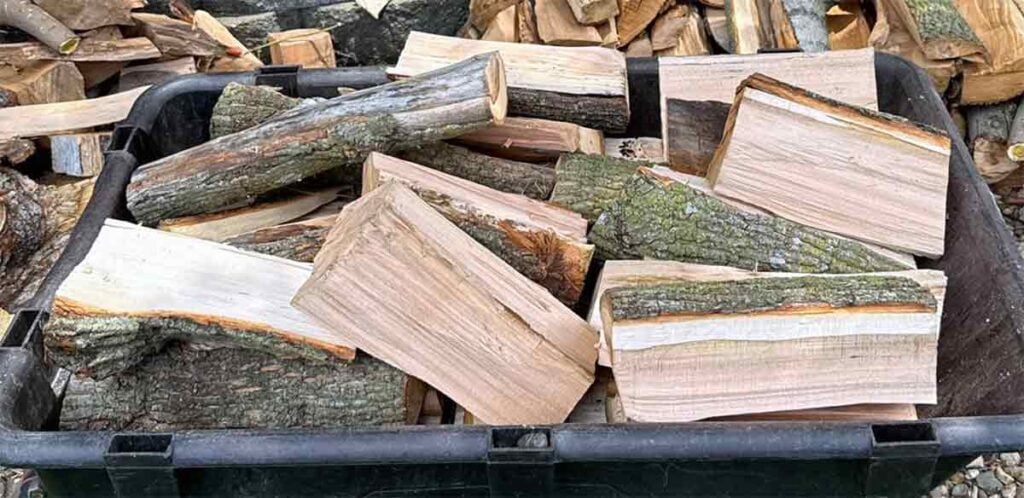
Logs and splits work best for offset smokers and large pits. Look for dry, seasoned wood with light tan color and visible cracks on the ends indicating proper moisture loss. Avoid pieces that feel heavy from water weight or show green sapwood. Kiln-dried options ensure consistent moisture content around 15% and eliminate insects or mold, though they cost more than air-dried alternatives.
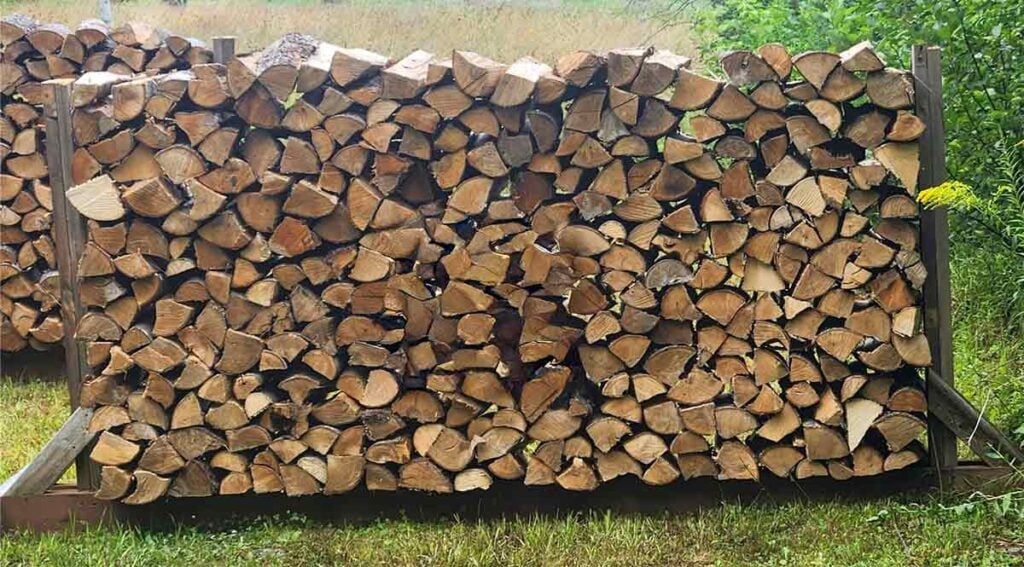
Chunks suit charcoal grills and kamados perfectly. Fist-sized pieces should produce a sharp “clink” when knocked together, not a dull thud indicating excess moisture. Maple chunks should show no mold or rot and fit your smoker’s dimensions. Some remove bark to avoid potential off-flavors, though properly seasoned maple bark typically burns cleanly.
Maple wood chips provide quick smoke bursts for gas grills or short cooks. Don’t soak them – wet wood creates steam, not smoke, and drops cooking temperatures. Use chips in smoker boxes or loose foil packets with holes. For longer sessions, try pellet tubes filled with maple wood pellets.
Pellet users will find many “maple wood” pellets are actually blends – manufacturers often mix maple with oak or alder for consistent burning. Competition blends typically combine maple with hickory and cherry. Choose food-grade pellets without fillers or binding agents, and store them in dry conditions to prevent swelling that jams augers.
How to Use Maple for Smoking
For offset smokers, establish a hot coal bed first – maple’s density requires good heat to ignite properly. Once burning, it produces steady heat and can serve as primary fuel or flavor wood. Many offset cooks run 75% oak for stable heat and 25% maple for sweetness. Add one split at a time, letting each catch fully with blue smoke before adding another to avoid temperature spikes.
Kettle and kamado users should employ maple chunks, typically 2-4 pieces buried in unlit charcoal for the snake method or Minion method. As the fire progresses, each chunk ignites in sequence, providing steady smoke throughout the cook. One chunk per hour of cooking time prevents over-smoking while maintaining flavor.
Gas and electric smoker users can utilize maple wood chips in smoker boxes or foil packets. Don’t soak the chips – this is counterproductive, creating steam rather than smoke and dropping temperatures. Dry wood burns cleaner and produces better flavor compounds. For longer sessions, consider pellet tubes filled with maple wood pellets or successive chip applications.
Maple blends beautifully with other woods. Popular combinations include maple-cherry for sweetness plus color, maple-hickory for balanced intensity, and competition blends using equal parts maple, hickory, and cherry. This “competition blend” provides hickory’s backbone, cherry’s color, and maple’s crowd-pleasing sweetness.
Cooking Science
“Fortunately, wood burns incompletely. Yes—the delicious taste comes from the failure to completely react,” writes Andy Husbands for ScienceDirect. “Partly combusted wood results in larger molecules (e.g., larger than CO2 and H2O molecules) in smoke, and these molecules are responsible for all the smoke flavor. A good pitmaster thus controls the inefficiency of combustion, and inefficiency tastes delicious.”
Good burning technique makes all the difference. When maple gets plenty of oxygen, it burns cleanly and produces that thin blue smoke pitmasters love – barely visible but packed with flavor. Starve it of air, and you get thick white smoke loaded with harsh, bitter compounds that will ruin your food. Maple’s dense structure helps here because it burns steadily when managed properly.
Two visual signs tell you the science is working. That pink smoke ring just under the surface forms when gases from the burning wood react with proteins in the meat – essentially “curing” the outer layer like a ham. This happens early in the cook while the meat is still cool. The dark bark crust develops when proteins and sugars in your rub caramelize with help from smoke particles, creating those complex flavors we prize in barbecue.
Maple’s natural sugar content – higher than most hardwoods due to sap – can contribute subtle caramelized notes when the wood burns properly. These sugars don’t create syrup-like sweetness but may add faint maple-caramel hints to the smoke profile.
Competition Context
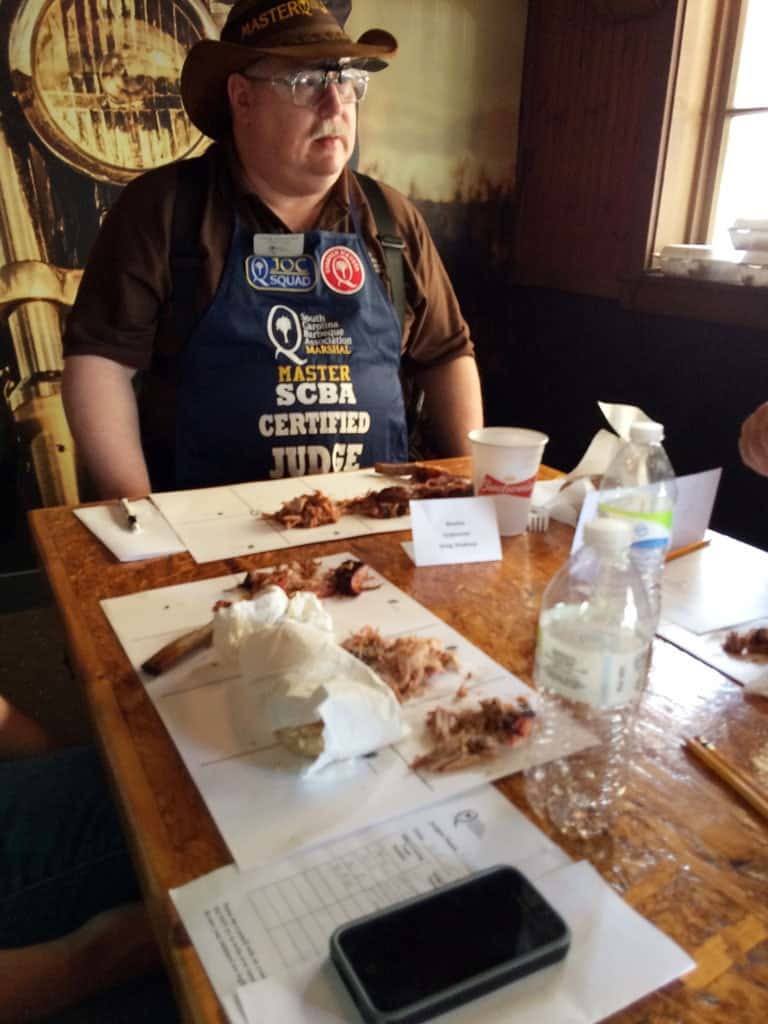
Competition judges sample small bites from multiple entries, making smoke balance critical. Maple’s mild profile reduces the risk of “over-smoked” penalties that stronger woods can incur. Many teams use blended strategies – oak or pecan for base heat with maple chunks for subtle sweetness. The ubiquitous “competition blend” pellets typically contain equal parts maple, hickory, and cherry, designed specifically for judges’ preferences.
Teams often reserve maple for chicken categories, where sweeter, heavily glazed entries pair well with gentle smoke that won’t add bitterness. For pork categories, maple can evoke the classic “hammy” sweet smoke profile that resonates with judges’ expectations of traditional barbecue.
“Hickory will overpower chicken and pork… We prefer the lighter woods,” explains 7-time world BBQ champion Melissa Cookston. This sentiment reflects widespread competitive strategy – maple provides safe smoke layering without risking bitter or creosote flavors that damage scores.
Pellet smoker teams often rely on maple-heavy blends for consistency. One manufacturer describes their competition blend as offering “the richness of hickory, with a touch of sweetness and color from maple and cherry” – precisely what teams need for winning entries that balance tradition with crowd appeal.
Cultural Notes
In New England and eastern Canada, maple connects directly to syrup production heritage. During sugaring season, the same trees providing sap also fueled boiling operations, embedding the sweet, smoky aroma in regional memory. This led to local specialties like maple-smoked cheeses and maple-glazed ribs that celebrate both aspects of the tree.
Upper Midwest traditions incorporate maple into fish smoking, particularly for Great Lakes species like whitefish and trout. The wood’s gentleness suits delicate fish better than aggressive hardwoods. Charcuterie makers in Wisconsin and Michigan often combine maple wood smoke with maple sugar cures for layered sweetness in bacon and ham production.
Southern pitmasters historically used available hardwoods – if storms felled maples, they entered the woodpile alongside hickory and oak. While never achieving hickory’s iconic status, maple provided reliable heat and flavor. Modern Carolina whole-hog operations quietly blend whatever hardwoods work, with maple adding subtle sweetness to primarily oak fires.
The culinary world has embraced “maple-smoked” as a menu descriptor that suggests comfort and subtle sophistication. Chefs employ maple for smoking cocktails, salmon planks, and even cold-smoking applications for cheeses and nuts, capitalizing on its approachable, non-intimidating smoke character.
Maple vs Hickory: Choosing Your Smoke
While hickory delivers the bold, bacon-like smoke that defines traditional Southern BBQ, maple takes a gentler approach with mild sweetness that won’t overpower delicate meats. Hickory burns hotter and longer, making it ideal for large cuts like pork shoulder and beef brisket, but it can easily turn bitter if overused.
Maple burns just as clean but with more forgiving flavor—perfect for beginners who worry about over-smoking. For competition cooks, hickory provides that classic “BBQ taste” judges expect, while maple adds subtle sweetness without masking rubs and sauces. Many pitmasters blend them: start with hickory for backbone, then add maple chunks for balanced sweetness that appeals to both traditionalists and those preferring milder smoke.
Maple vs. Other Woods
| Wood | Flavor Strength | Smoke Flavor Notes | Burn Character | Best Uses | Where It’s Iconic |
|---|---|---|---|---|---|
| Maple | Light–medium | Mild, sweet, smooth | Steady heat; easy to burn clean | Chicken, turkey, pork loin/ribs, salmon | Northeast/Midwest; Pacific Northwest (bigleaf) |
| Hickory | Medium–strong | Bold, nutty, classic BBQ aroma | Hot, long-burning | Pork shoulder, ribs, burgers | Carolinas/Memphis |
| Oak | Medium | Clean, slightly nutty | Very stable heat; long coal bed | Brisket, beef ribs, lamb | Central Texas (post oak) |
| Apple | Light | Sweet, fruity | Moderate burn | Poultry, pork chops, sausages | Upper Midwest/Northeast orchards |
Common Maple Wood Questions Answered
Yes, maple is excellent for beginners because it’s nearly impossible to oversmoke food with it. The wood burns cleanly, lights easily, and maintains pleasant flavor even during long cooks or temperature fluctuations.
Maple excels with pork ribs, bacon, ham, chicken, and turkey, but it’s also excellent for delicate foods like salmon or trout. Many pitmasters mix maple with oak or hickory for beef brisket, using maple’s sweetness to soften the stronger woods’ intensity.
No, maple wood produces mild, savory smoke with subtle sweet notes—not syrup flavor. The smoke tastes like gentle caramelized sugar rather than dessert sweetness, making it perfect for savory barbecue applications.
Maple can be used alone for subtle smoke, but many pitmasters blend it with stronger woods. Common mixes include maple-cherry for sweetness and color, or the popular competition blend of maple, hickory, and cherry, which balances backbone, sweetness, and appealing bark color.
Maple needs 6-12 months of seasoning to reach proper moisture content below 20%. Well-seasoned maple feels lighter, shows cracks on the ends, and makes a sharp “clink” when pieces are knocked together.
About the author
James Roller documents South Carolina barbecue for Destination BBQ and authored Going Whole Hog. He researches techniques, interviews pitmasters, creates tools, and curates reliable sources so home cooks can cook barbecue safely and confidently at home.
More about James.See something that needs a tweak? Send a correction.
« See All BBQ Terms