How Much Sauce for Wings: Tossing and Dipping Amounts
Use these sauce-per-pound rules and a dip-per-person guide to plan tossed wings, dipping bowls, and extra sauce in reserve without running short
If you’re hosting wing night for a group, the goal is simple: everyone gets the flavor they want, and you don’t run out. If you’re wondering how much sauce for wings to plan, the clean rule of thumb is this:
Plan on 2–3 fl oz of wing sauce per pound of wings for a standard tossed coating (about 1/4 to 3/8 cup per pound). This works for most wing sauces, including classic buffalo wing sauce, but thickness matters, so you’ll see quick adjustments below. For a party, keep 10–20% extra sauce warm in reserve so you can top off late batches or heavy saucers without scrambling.
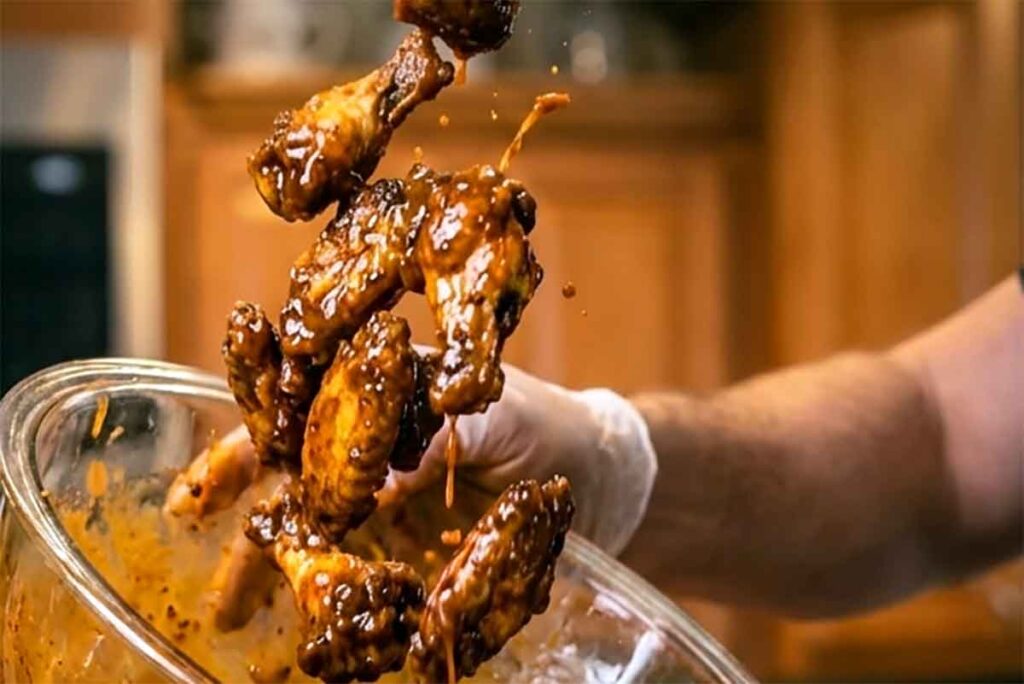
Your biggest decision is tossed vs on the side, because it changes both how much sauce you need and how long wings stay crisp.
From there, you adjust based on your crowd and your style. Lightly sauced wings stay crisp longer and are easier to serve. Extra wet wings bring bigger flavor but soften faster and use more sauce. And if you’re serving sauce mostly for dipping, you’ll want more on the table than you think.
If you still need to figure out how many pounds of wings you’re cooking for your crowd, use the Wing Calculator first, then come right back here to dial in your sauce and dip plan.
Where these numbers come from: This guide combines my real-world wing nights for family and friends with a review of published sauce and dip guidance, including restaurant operator guidance, manufacturer recipes, and catering portion standards (see Sources). Use the ranges as a starting point, then adjust after your first batch based on sauce thickness and how saucy your crowd likes them. All sauce amounts here are fluid ounces (volume).
Quick answer: how much wing sauce per pound of wings
This is the fast planning version. It gives you a realistic range, plus a simple way to avoid the classic hosting mistake of coming up short.
Sauce per pound of wings
- Standard tossed wings: 2–3 fl oz per lb (about 1/4 to 3/8 cup)
- Light coat: 1.5–2 fl oz per lb (about 3–4 Tbsp)
- Extra wet: 4–5 fl oz per lb (about 1/2 to 5/8 cup)
- Bottle check: a 12 fl oz bottle covers about 4–6 lb at a standard coat (thicker sauces cover less)
- Party-proof move: plan your “real” amount, then keep 10–20% extra sauce warm in reserve
Tip: If you’re unsure, start with 2 fl oz per lb, toss, then add sauce in small pours until the wings glisten.
Plan the rest of wing night
- Need to choose what to buy: use the Buying Chicken Wings guide
- Need a party-scale cook plan: use How to Cook Wings for a Crowd
- Need a holding plan: use Keeping Wings Hot & Crispy
Classic buffalo wing sauce as a benchmark
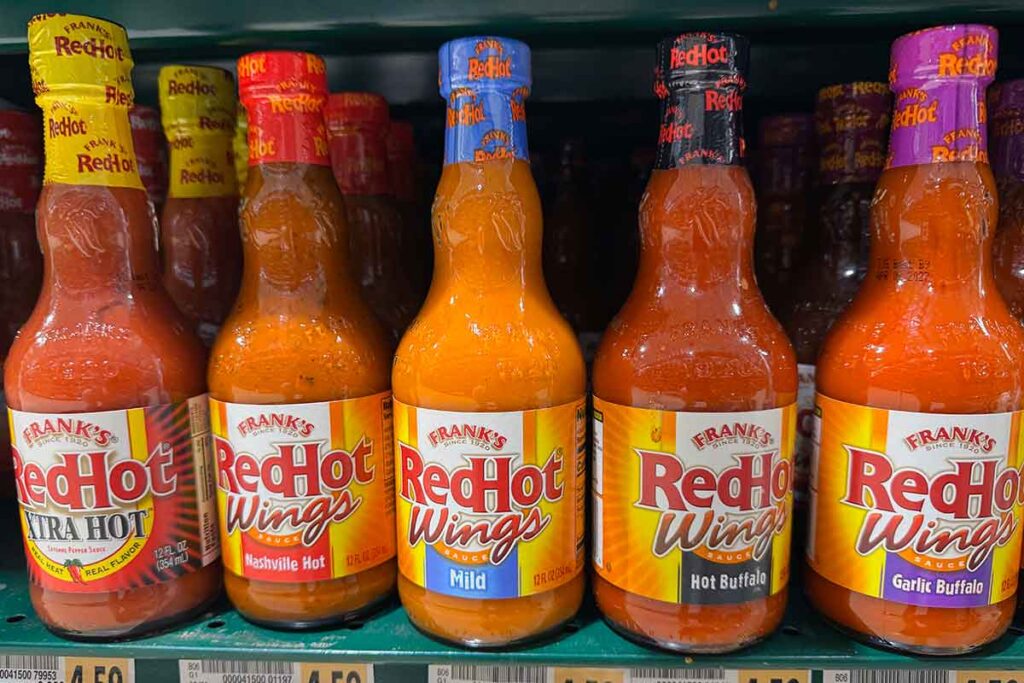
If you want a familiar reference point, buffalo wing sauce is the classic baseline. It’s relatively thin and coats evenly, so it’s a good way to sanity-check your per-pound plan before you start tweaking for thicker sauces.
For example, the measured sauce amounts in Frank’s RedHot Original Buffalo Wings (McCormick) work out to roughly 2.5–3 fl oz per pound when you scale the recipe by weight, which lines up with the standard 2–3 fl oz per pound range above.
Using buffalo wing sauce as the benchmark, here’s what the 2–3 fl oz per pound baseline looks like when you toss a batch.
The baseline: 2–3 fl oz per pound is the classic toss
This section explains what “standard” looks like in the real world, so you’re not guessing when you pour.
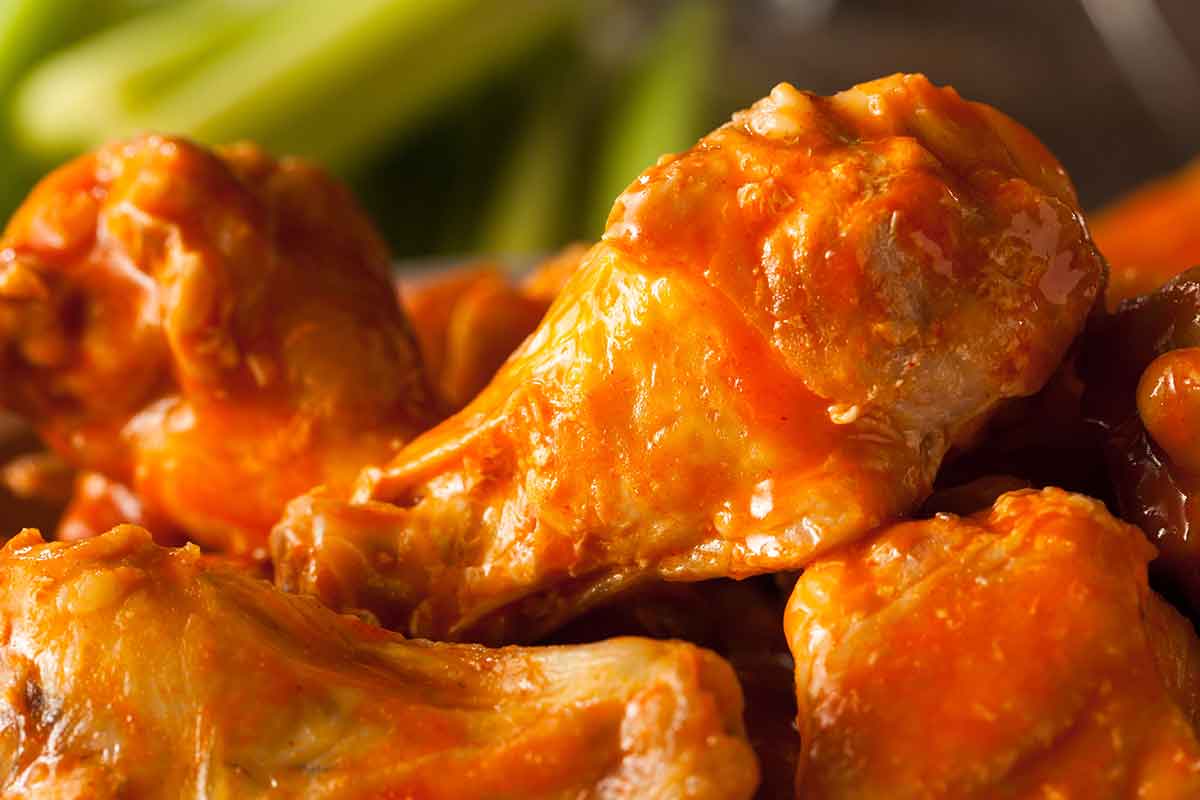
A standard tossed wing is fully coated, glossy, and flavorful, but not dripping and not swimming in sauce at the bottom of the bowl. That’s why 2–3 fl oz per pound works so well: it’s enough to cover the wings evenly without turning the serving tray into a puddle.
A helpful mental anchor: 1/3 cup of sauce is about 2 2/3 fl oz, which lands right in the middle of that standard range. So if you think in cups instead of ounces, “about a third cup per pound” is a solid starting point. That “about 1/3 cup per pound” baseline also lines up with guidance from The Rail (a restaurant publication), which notes that thicker sauces may require more volume for the same coverage.
Biggest swing factors: sauce thickness, how hot the wings are when tossed, and whether guests expect extra sauce for dipping.
Choose your coating level (light, standard, extra wet)
Different groups want different wings. This section helps you decide how saucy to go, and what you’re trading off each way.
Light coat: 1.5–2 fl oz per lb
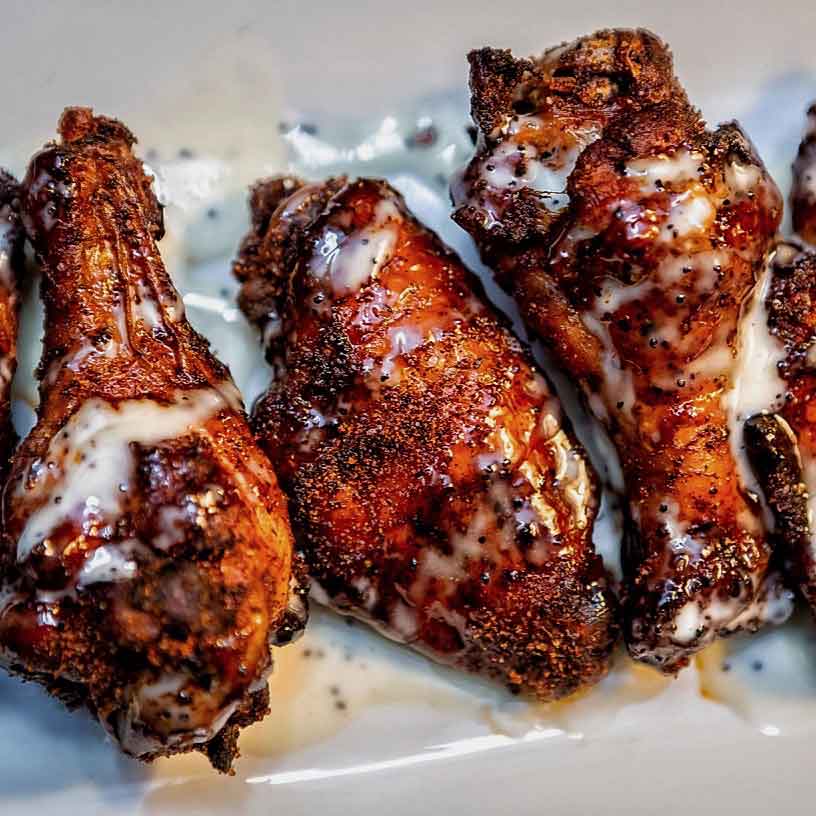
Light coating is a thin glaze. The wings look lightly sauced, not drenched.
- Best for: maximum crispness, cleaner eating, or when you’re offering several sauces and want people to sample more flavors
- Watch-out: some guests will grab dip or extra sauce because light-coated wings don’t carry as much sauce per bite
Standard coat: 2–3 fl oz per lb
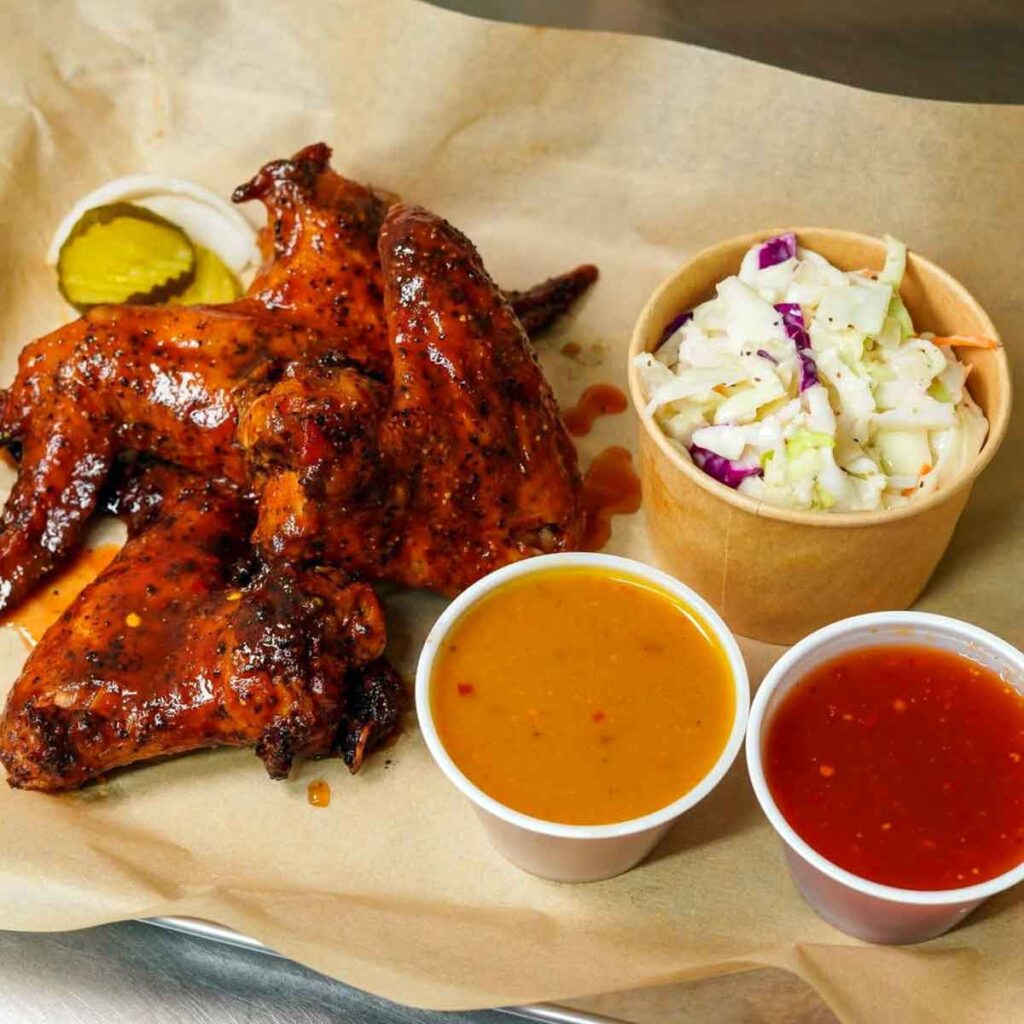
This is the familiar wing-shop style: saucy enough that every bite tastes like the sauce, but not sloppy.
- Best for: classic tossed wings, most crowds, and any time you want the “real” wing experience.
- Watch-out: once tossed, the crispness clock starts ticking (more on timing below). If they sit too long or you’re dealing with leftovers, use our guide to reheat wings crispy.
If you’re using buffalo wing sauce, the standard 2–3 fl oz per pound range is usually a solid fit. If you like wings extra wet, bump toward 4–5 fl oz per pound and sauce right before serving.
Extra wet: 4–5 fl oz per lb
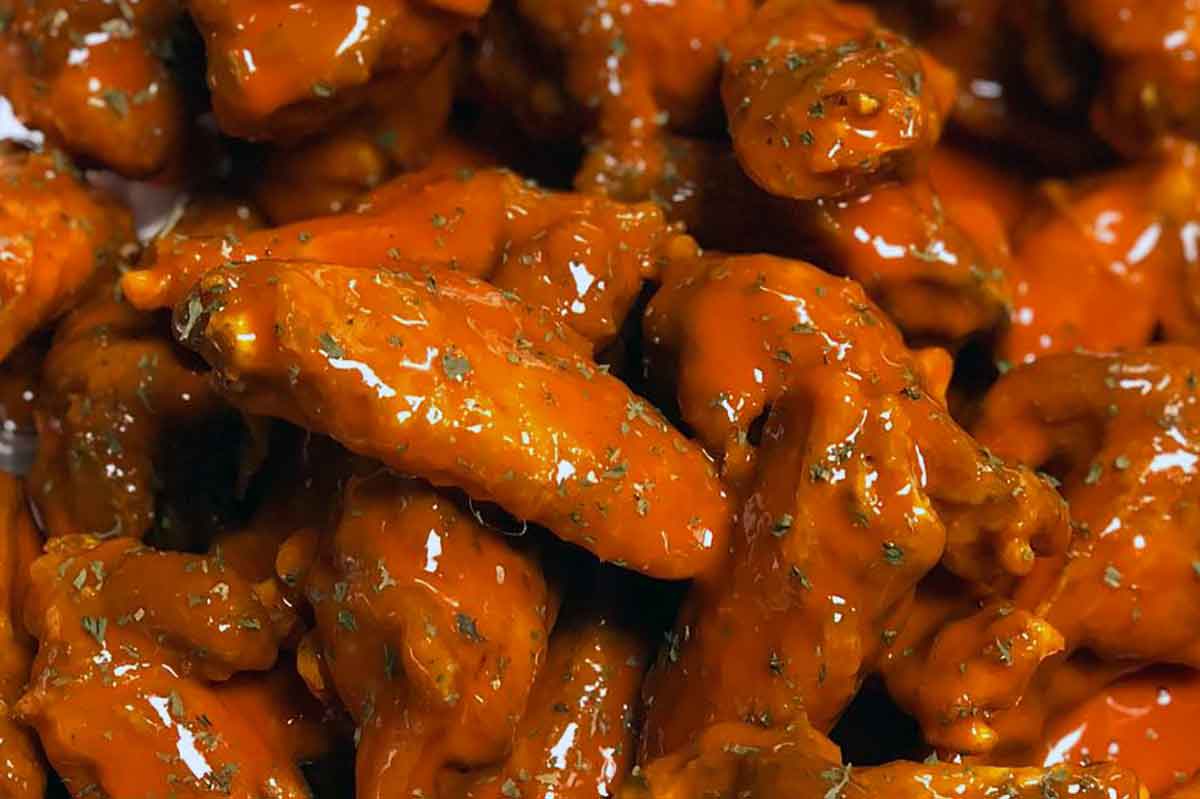
This is bold, messy, and fast-moving. Wings soften quicker because there’s more moisture sitting on the skin.
- Best for: sauce lovers, thicker sauces that don’t spread as easily, and “wet wing” fans
- Watch-out: you need a tighter serving workflow so wings don’t sit around getting soft
Adjust for sauce thickness and style
The per-pound ranges above assume a typical pourable wing sauce. If your sauce is much thinner or thicker, use these quick adjustments so you land in the right zone.
- Thin hot sauces: They spread easily, so start at the lower end of your range. If you want a richer, clingier coat, warm it and add butter, then toss.
- Thick BBQ sauces: They do not spread as easily, so plan closer to the upper end of your range. Warm the sauce so it pours, and toss in smaller batches for even coverage.
- Buttery, emulsified sauces (buffalo-style): These cling well. Start in the standard range, toss, then add in small pours until the wings look glossy.
- Sticky glazes (teriyaki, honey garlic): A little goes a long way, but they can turn wings soft faster. Lightly toss or brush right before serving, and keep extra warm sauce on the side for people who want more.
Sauce scaling table: bottles, cups, and fluid ounces by wing weight
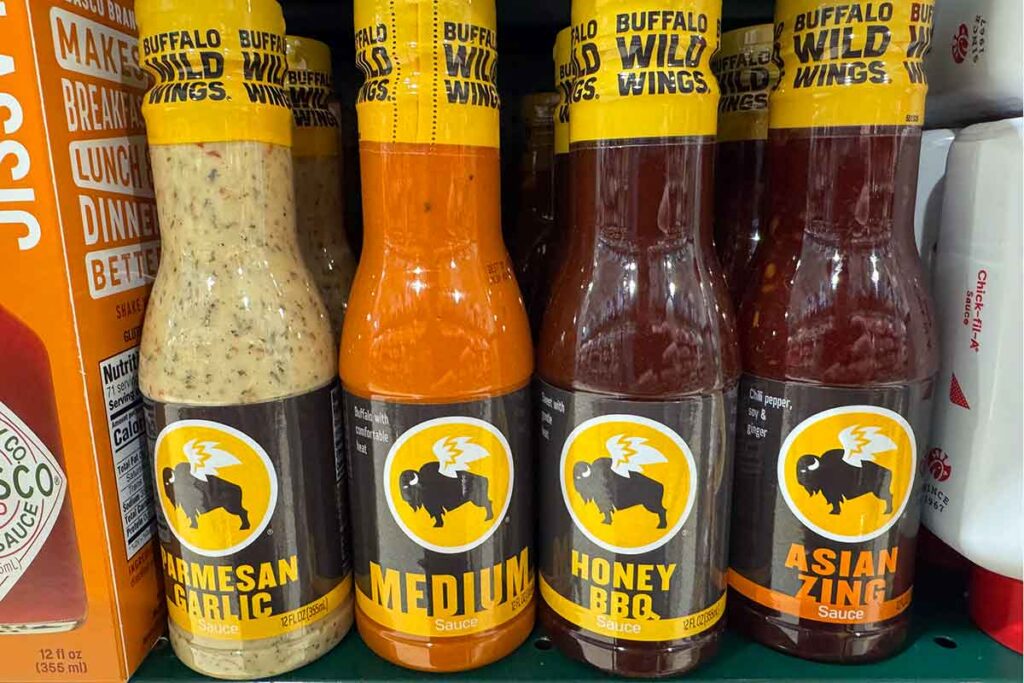
This is the section you’ll use when you’re shopping or prepping the sauce station. It turns the per-pound rule into quantities you can actually buy and measure. Many wing sauces (including many buffalo wing sauces) come in 12 fl oz bottles, which makes the bottle math below easy. If you’re cooking for a crowd, consider buying one extra bottle as backup.
| Wings | Light coat 1.5–2 fl oz per lb |
Standard coat 2–3 fl oz per lb |
Extra wet 4–5 fl oz per lb |
12 fl oz bottles for standard coat |
|---|---|---|---|---|
| 1 lb | 1.5–2 fl oz about 3–4 Tbsp |
2–3 fl oz about 1/4 to 3/8 cup |
4–5 fl oz about 1/2 to 5/8 cup |
About 1/5 of a bottle |
| 5 lb | 7.5–10 fl oz about 1 to 1 1/4 cups |
10–15 fl oz about 1 1/4 to 1 7/8 cups |
20–25 fl oz about 2 1/2 to 3 1/8 cups |
About 1 bottle |
| 10 lb | 15–20 fl oz about 1 7/8 to 2 1/2 cups |
20–30 fl oz about 2 1/2 to 3 3/4 cups |
40–50 fl oz about 5 to 6 1/4 cups |
About 2 bottles |
| 20 lb | 30–40 fl oz about 3 3/4 to 5 cups |
40–60 fl oz about 5 to 7 1/2 cups |
80–100 fl oz about 10 to 12 1/2 cups |
About 4 bottles |
A few practical notes that make this table work in real life:
- The “12 fl oz bottle” rule is a party friend: a typical 12 fl oz bottle of wing sauce works out to roughly one bottle per 5 pounds for a standard coat.
- If your sauce comes in 16 fl oz bottles: that’s 2 cups, which covers about 5–8 lb of wings at the standard 2–3 fl oz per lb range.
- If you’re serving multiple flavors: the total sauce amount stays the same, you’re just splitting it across sauces.
- If you hate running out: buy or make a little extra and hold it warm. Unused sauce is easy to save.
How much extra sauce to keep in reserve
After you plan your coating amount, set aside 10–20% extra sauce and keep it warm. That gives you a clean way to top off late batches or heavy saucers without changing your whole plan mid-party.
- Easy rule: for every 5 lb of wings, keep about 1–3 fl oz extra (roughly 2–6 Tbsp).
- If you’re buying bottles: when your total lands close to the next bottle, round up. Leftover sauce stores easily.
- How to hold it: keep a small container warm for quick top-offs, and keep the rest covered until you need it.
Quick conversions that save you from mid-party math
This section is here because most wing night mistakes are simple measurement mistakes.
- 8 fl oz = 1 cup
- 4 fl oz = 1/2 cup
- 2 fl oz = 1/4 cup
- 1/3 cup is about 2 2/3 fl oz
- A 12 fl oz bottle is 1 1/2 cups
If your brain locks up during hosting, remember this: standard tossed wings are roughly a third cup per pound.
Tossed wings vs sauce on the side
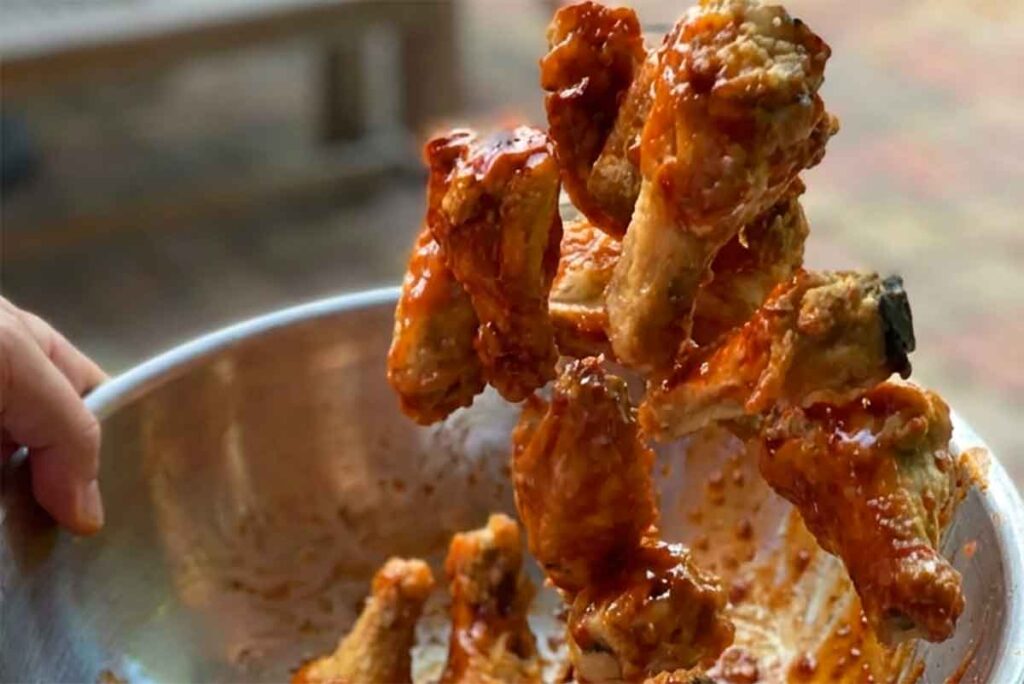
This is a choice that changes everything. This section helps you pick a strategy that fits your party and your crispness expectations.
Tossed wings (classic)
Tossed wings are the “real” wing experience. Every bite tastes like the sauce.
- Best for: classic buffalo-style eating, strong flavor, and a true sauced-wing look
- Plan for: 2–3 fl oz per pound, plus 10–20% extra sauce in reserve
- Crispness reality: tossed wings start to soften fairly quickly once they sit
Sauce on the side (great for long parties)
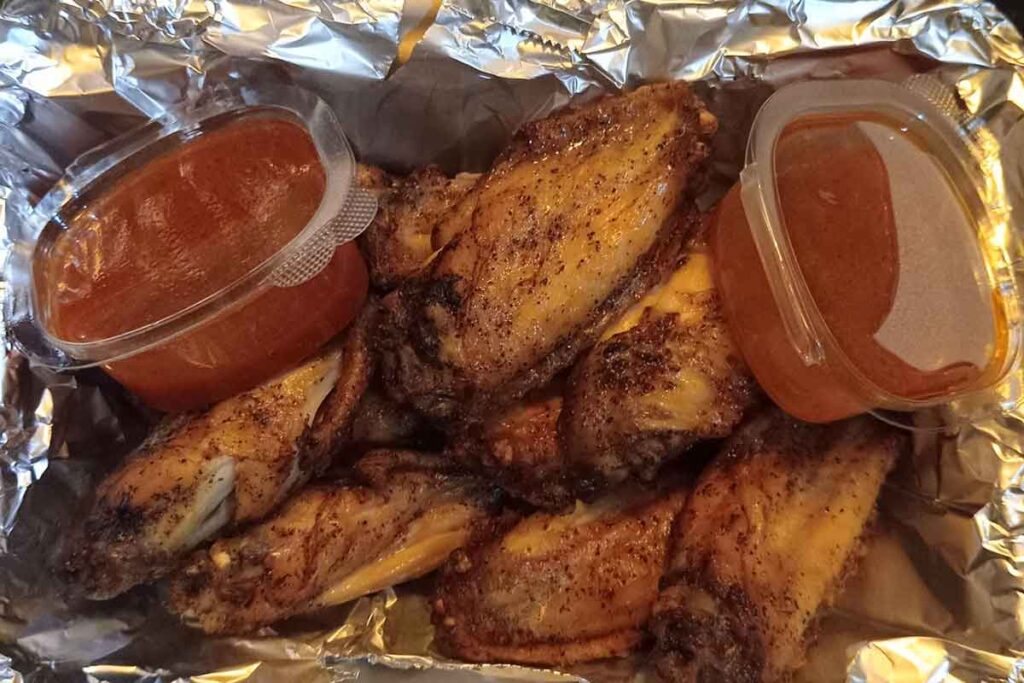
Sauce on the side keeps wings crisp longer and lets guests choose their heat level. In my experience, creamy sauces like Alabama white sauce can work really well on the side for dipping because they cling well and usually don’t soften the skin as quickly. Want to make it? Use our Alabama white sauce recipe.
- Best for: picky eaters, long buffets, multiple sauce options, and crispness-first hosts
- Plan for: about 3 fl oz of wing sauce set out per person (roughly 6 Tbsp) for dipping. If sauce is the main flavor (no toss, no dry seasoning), bump that to 4–5 fl oz per person. If you’re offering multiple sauces, split the total across them.
- Common compromise: lightly toss wings, then serve extra sauce for dipping
If you want the “best of both,” do this: toss lightly, then offer warm sauce on the side. People who want extra can get it, and the wings don’t get soggy as fast.
How much dip for wings (ranch, blue cheese, and friends)
This section is your dip plan, because dip is where hosts often underestimate. Wings are a dipping food, and people are generous with it.
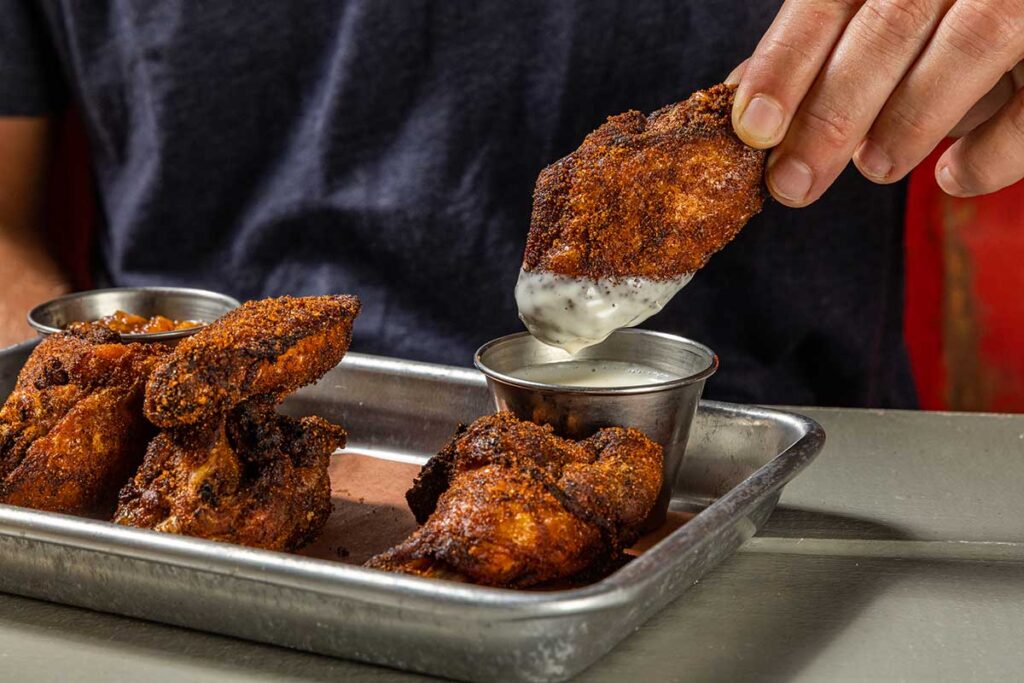
A solid wing-party baseline is about 3 fl oz of dip per person (roughly 1/3 cup each).
That number is intentionally generous. It accounts for heavy dippers, double-dippers (even if you beg them not to), and the reality that some dip gets left in bowls. If you’re serving dry rub wings, plan dip on the higher end since the dip becomes the main “sauce” for a lot of people.
Dip scaling table
Use this table to shop or prep containers without guessing.
| Party size | Total dip fl oz |
Total dip cups |
Easy way to picture it |
|---|---|---|---|
| 10 people | 30 fl oz | 3 3/4 cups | Just under 1 quart |
| 25 people | 75 fl oz | About 9 3/8 cups | A little over 2 quarts |
| 50 people | 150 fl oz | About 18 3/4 cups | A bit over 1 gallon |
Adjustments that actually match real parties
- If wings are heavily sauced: you might land closer to 2 fl oz per person of dip.
- If wings are mostly dry (or sauce is on the side): you can easily need more than 3 fl oz per person, because the dip becomes the main flavor delivery.
- If you’re offering ranch and blue cheese: don’t double the total amount. Most hosts do best by planning the total dip volume, then splitting it (for example, half ranch and half blue cheese).
Wing sauce workflow for a crowd
This is where wing night is won or lost. The best sauce math in the world won’t save you if the wings go soggy or you try to toss 100 wings in one bowl. If you also need a reliable cook method to pair with this plan, start with our smoked chicken wing recipe, and if you’re smoking your wings, see what wood pairs best poultry.
1) Warm the sauce first
Cold sauce can cool the wings and doesn’t cling as nicely. Warm sauce + hot wings = better coating and better texture. Keep sauce warm on the stove or in a heat-safe container, and portion it so you can pour quickly.
2) Toss in batches, not all at once
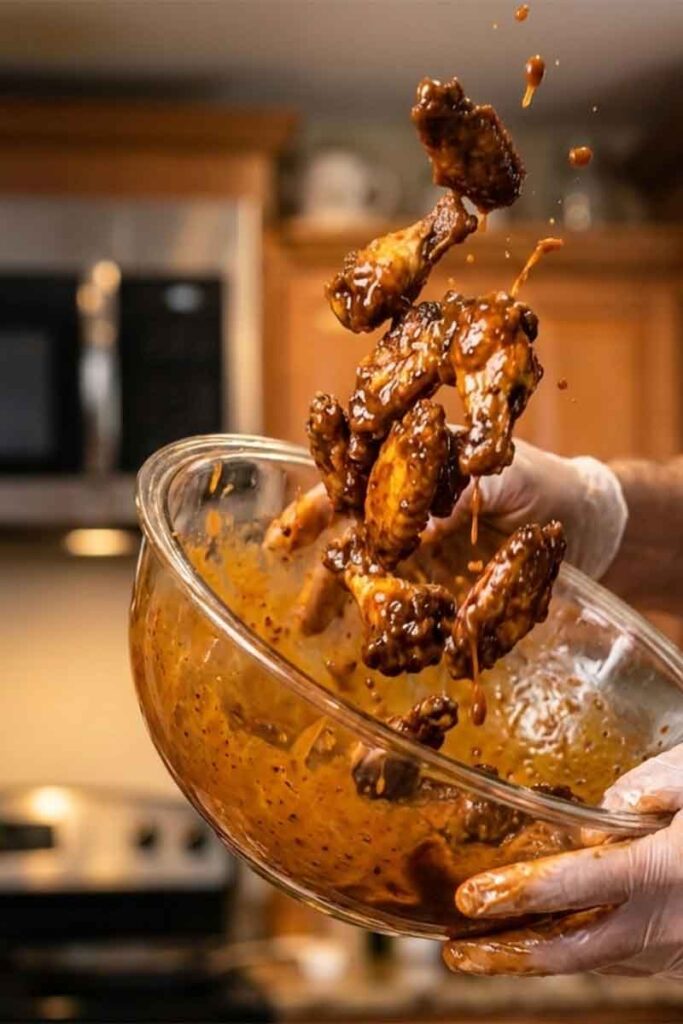
For party-scale wings, think “assembly line,” not “giant salad bowl.” For the most even coating (and the least mess), toss wings in smaller batches so they can actually tumble instead of getting stirred and crushed.
- Easy batch size: Toss wings in batches that fill your bowl no more than halfway. In most home kitchens that’s about 1 1/2–2 lb per batch in a large mixing bowl, or up to 3 lb if you’re using an 8-quart bowl or stock pot.
- Pour sauce in increments: start with a little, toss, then add more only if needed
- Tumble test: If the wings don’t tumble when you toss, the batch is too big. Split it and try again.
- Sauce test: Sticky glazes need smaller batches than thin buffalo wing sauce because they coat unevenly when crowded, so split the batch before you glaze.
A simple approach that works: start with about half the sauce you think the batch will need, toss, then add a little more until the wings glisten.
3) Toss, then plate (don’t let wings sit in the bowl)
This is one of the easiest quality upgrades: once wings are coated, get them out of the sauce bowl and onto the serving tray. Wings sitting in pooled sauce soften fast.
4) Serve in batches if you care about crispness
Sauced wings start to soften after they sit, especially at room temperature. If you can, only put out what will get eaten quickly, then toss and replenish with fresh batches.
A realistic host setup:
- Keep cooked wings warm in a low oven until you’re ready to sauce
- Toss and serve a tray
- Refill with a new tossed tray as the first one empties
If you want a simple schedule to go with this, grab the wing party timeline.
5) Build a sauce station that makes refills easy
Have these ready before the wings are done:
- A big tossing bowl (or two if you have help)
- Tongs (or gloves for tossing)
- Warm sauce portions (measured)
- Empty serving trays lined for quick cleanup
- Plenty of napkins, because sauced wings are messy by nature
Crispness timing: the best wings are sauced right before serving
This section is about managing expectations and making smart choices when wings have to sit.
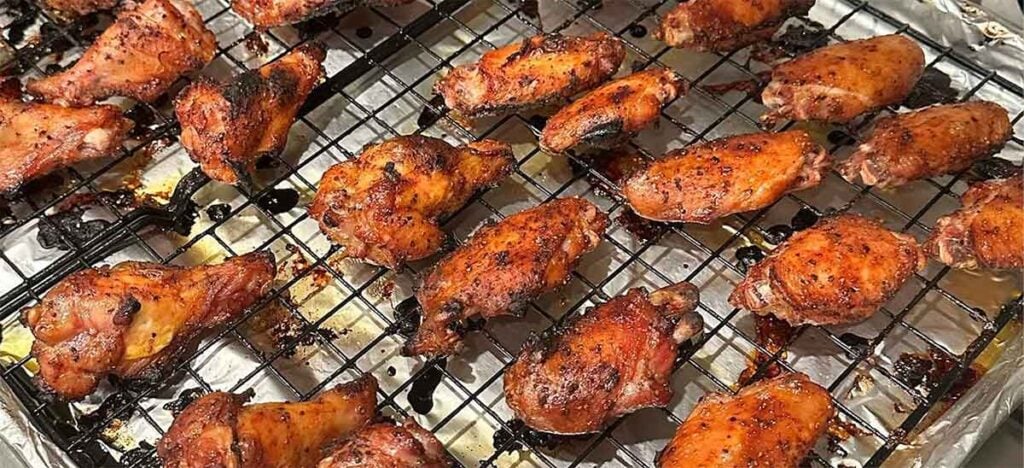
The simplest rule is also the most important: don’t sauce wings far in advance. When wings sit in sauce, the skin absorbs moisture and goes soft. For the best texture, toss wings in warm sauce right before serving and eat them while they’re hot.
If you must hold wings briefly:
- Keep hot wings on a rack in the oven at 140°F or above if they’re being held warm
- Expect texture to soften as time passes, especially for extra wet wings
- For deeper holding strategies, see the Keeping Wings Hot & Crispy guide
Food safety basics for wings, sauces, and dips
This is the “host protection” section. It’s quick, but it matters.
- Cook wings to a minimum of 165°F internal temperature, but for a better bite cook to a higher internal temperature
- If holding wings hot before serving, keep them at 140°F or above
- Keep dips cold at 40°F or colder (small bowls out, cold reserve in the fridge)
- Don’t leave perishable foods out longer than 2 hours (or 1 hour if it’s very hot outside)
- Refrigerate leftover wings promptly and use within 3–4 days
- Reheat leftovers to at least 165°F
Food safety note: Use a quick-read thermometer for wings and keep hot and cold foods out of the danger zone. When in doubt, throw it out.
A very practical dip move: serve dip in smaller bowls and swap them out, keeping the bulk cold in the fridge. If the party runs long, you’ll be glad you did.
Leftover sauce and dip safety
- Use the 2-hour rule: refrigerate perishable dips and sauces within 2 hours (1 hour if it’s hot out).
- Don’t save “double-dip” bowls: if guests dipped into it or a used spoon lived in it, treat leftovers as higher risk.
- Save unopened or clean reserve sauce: keep a small warm reserve for topping off batches, and refrigerate the untouched remainder.
- Leftovers: store wings and leftovers promptly and follow standard leftovers guidance for refrigerated storage.
For official leftovers guidance, see USDA FSIS “Leftovers and Food Safety.”
If you take nothing else from this page, here’s the quick recap: Start with 2–3 fl oz per lb, warm the sauce, toss in batches, and keep a small reserve of sauce and dip. That’s how you host wing night without the panic.
FAQs about wing sauce and dip planning
Use weight whenever you can, because “50 wings” can mean very different totals. If you only have a count, weigh a small sample (like 10 wings), then scale up to estimate total pounds. If you can’t weigh, use the package’s net weight as your best estimate. Apply your per-pound target and keep a small reserve.
First, calculate the total sauce you need for all wings together. Then split that total by popularity: keep the largest share for the crowd-pleaser, and smaller shares for the “try-one” flavors. Hold a bit of extra of the most popular sauce warm so you can refill without redoing your plan.
Warm sauce is easier to toss and clings better, but “warm” is not “boiling.” Use low heat and stir occasionally. For butter-based sauces, gentle heat plus whisking helps prevent separation. Keep only a working portion warm, and leave the backup covered until you need a refill.
Yes. When wings are mostly dry, dip becomes the main flavor delivery for a lot of guests. Start with a generous per-person dip baseline, then bump it up if you know your crowd are heavy dippers or if the wings are spicy. Serve dip in smaller bowls and restock from a cold reserve.
Treat dip like a cold food, not a countertop condiment. Put out small bowls, keep the main supply cold, and swap in fresh bowls as needed. If it’s warm inside or you’re outdoors, consider nesting the dip bowl in ice. When in doubt, discard bowls that have sat out too long.
Sometimes. Smaller pieces have more surface area per pound, so they can “drink” a bit more sauce to look evenly coated. You usually don’t need a whole new formula. Start a little on the saucy side for your coating level and keep a small warm reserve so you can adjust after the first batch.
Corrections and editorial standards
- Spotted something wrong or outdated? Send a correction here: Corrections & Updates
- How we handle sources, testing, and updates: Editorial Standards
- Media or general notes: Email the publisher
Restaurant owners and authorized reps should use the listing update form: Restaurant Listing Update.
Sources
- The Rail: High-volume wing program (restaurant guide) Uses about 1/3 cup sauce per pound as a working baseline and notes that thicker sauces may require more volume for the same coverage.
- Frank’s RedHot Original Buffalo Wings (McCormick) Provides classic buffalo wing sauce proportions that work as a sanity check for sauce volume per pound.
- WebstaurantStore: Catering portion size guide Portion baselines for dips and spreads (tablespoons per person) used to set dip planning ranges.
- FoodSafety.gov: 4 Steps to Food Safety Safe handling basics, including the “2-hour rule” used for buffet timelines.
- USDA FSIS: Safe temperature chart Safe minimum internal temperature for poultry.
- USDA FSIS: Leftovers and Food Safety Safe storage window guidance, including the commonly cited 3–4 day refrigerator window.
Sauce amounts in this guide are fluid ounces (volume). We cite authoritative references and note when guidance is based on first-hand cooking experience.
About the author
James Roller documents South Carolina barbecue for Destination BBQ and authored the SC BBQ cookbook Going Whole Hog. He and his wife, Heather, have cooked and served wings for home gatherings for years. The backbone of this guide is published food safety guidance plus manufacturer and operator sources, and the guidance lines up with practical notes informed by their own cooks.