Buying Chicken Wings for a Party: Whole vs Party Wings, Fresh vs Frozen
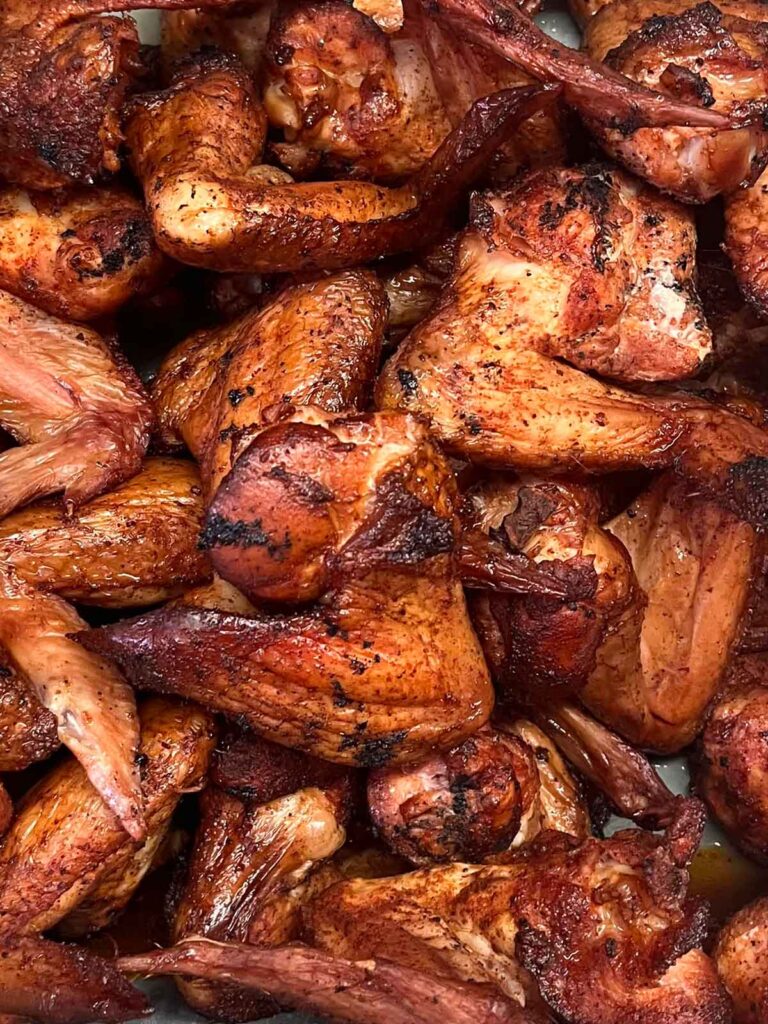
Make buying chicken wings for a party simple with quick picks for whole vs party wings, fresh vs frozen, and the label clues that affect prep and texture
Buying wings for a party usually comes down to four decisions that affect everything else: whole vs party-cut, fresh vs frozen, what the label really means, and how much prep time and fridge space you actually have.
This is a shopping guide. We’ll help you choose between whole vs party-cut and fresh vs frozen, then decode the labels so you know what you’re paying for. If you’re standing in the meat aisle, use the quick picks. If you’re planning ahead, use the comparison table.
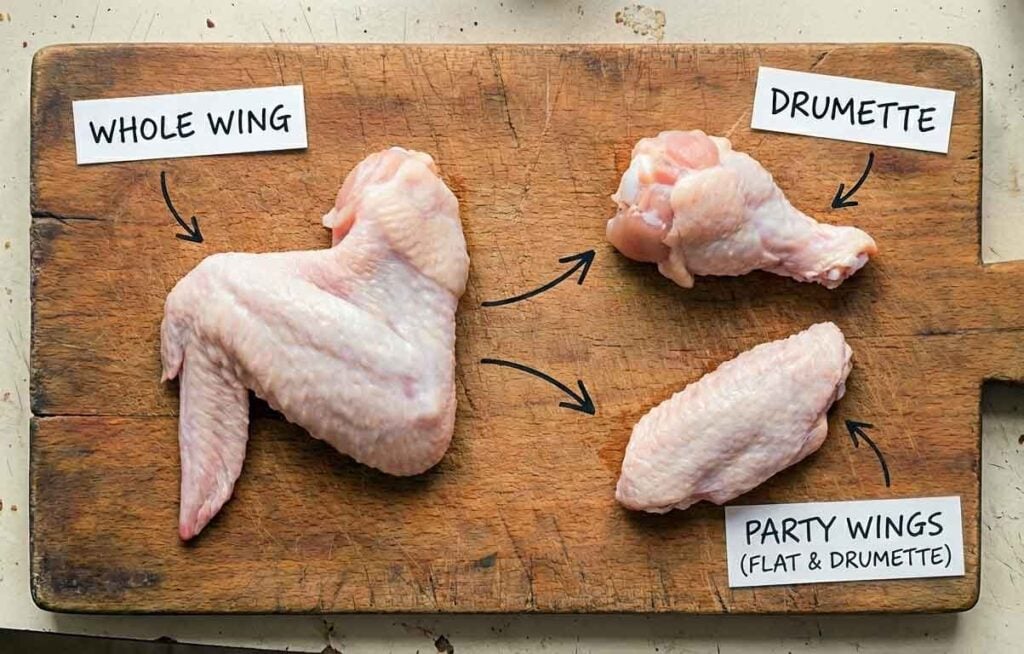
Quick note so we’re talking about the same thing: party wings means flats and drumettes. Whole wings means the full three-part wing (drumette + flat + tip), still connected. So the real decision is whole wings vs flats and drumettes, then fresh vs frozen.
Same thing, different package words: Stores don’t always call party wings the same thing, so here’s the quick translation. If you’re stuck on wingettes vs party wings, they’re usually referring to the same serving pieces. To be sure, look for ‘flats’ and ‘drumettes’ on the label or check the package photo to see if tips are included.
- party wings = flats and drumettes
- wingettes is often used for flats (you’ll also see “flats” on some bags)
- wing sections usually means flats and drumettes, but some products use it more loosely, so check the bag photo or description if you’re trying to avoid tips
- whole wings = drumette + flat + tip, still connected
How this guide was built: I wrote this using USDA/FSIS and food-safety guidance, plus packaging and label research to explain what common wing labels actually mean. It’s also informed by years of cooking wings for groups, where small buying choices can make or break timing and texture.
Limits and variables: I’m not running lab tests here, and exact thaw time depends on fridge temperature, bag thickness, and whether wings are frozen together. When in doubt, start the fridge thaw earlier than you think you need, and use the safe methods and temperature guidance from USDA/FSIS and FoodSafety.gov linked below.
Quick pick guide
If this, buy that
- If you’re frying, air frying, or baking: buy party-cut wings (flats and drumettes) for easier batching and the classic wing-platter experience
- If you’re grilling or smoking big batches: whole wings can work well because there are fewer pieces to manage and they’re less likely to slip through grates
- If you’ll cook within the next 1–2 days: buy fresh wings
- If you’re buying ahead: buy frozen wings and commit to a safe thaw plan
- If you want the least prep hassle: fresh party wings (no thaw plan, no cutting)
- If whole wings are the only option (or the better deal): buy whole wings and plan a short cutting session
Tip: frozen wings need a thaw plan. As a rough planning estimate, start with about 5 hours per pound in the fridge, but party-size bags often take a day or more because pieces freeze together.
If you’re torn, default to party wings unless you’re committed to the grill or smoker.
Not sure which cook method fits your setup and time? Our cook wings for a crowd guide lays out what each method is like when you’re feeding more than a household. Once you’ve picked the wings and method, be sure to figure out how much sauce for wings.
Pros and cons: whole wings vs party wings
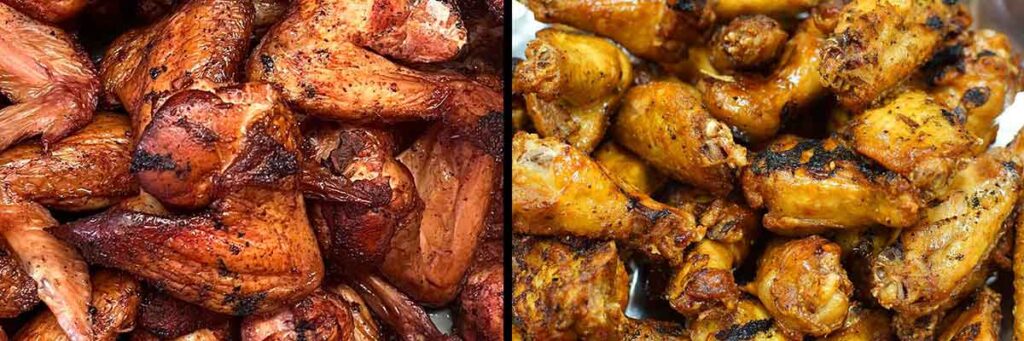
If you’re deciding in the store, this is the trade-off list that matters most when debating party wings vs whole wings.
Whole wings vs party wings in one sentence
Party wings (flats and drumettes) are ready to cook and easy to serve, while whole wings are often easier to manage on a grill or smoker and can stay whole or be cut into party wings first.
- Whole wings: drumette + flat + tip, all connected
- Party wings (sections): drumettes and flats separated, tips removed
Why party wings are the default for most parties
- More predictable batches: smaller pieces tend to cook more evenly, which matters when you’re running repeated batches
- Less prep work: they’re already cut, so you skip the knife-and-cleanup step
- Easier guest experience: flats and drumettes are designed for finger-food eating
- Simpler saucing: more exposed surface area, faster toss-and-serve
When whole wings make sense
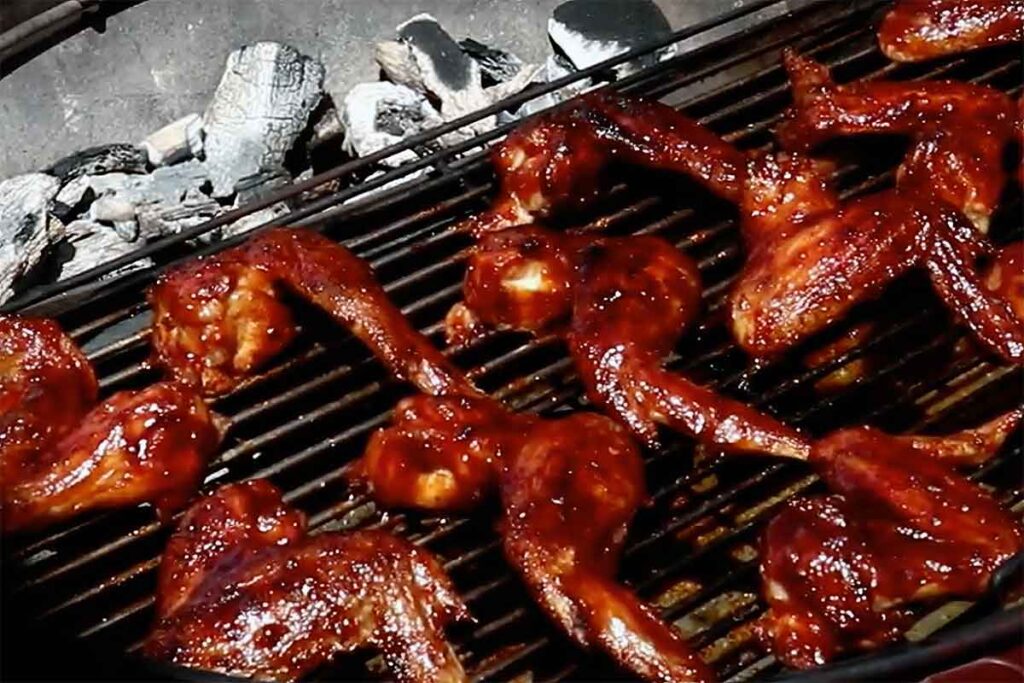
- Grilling and smoking practicality: fewer pieces to turn and manage, and on a grill, 2-Zone Grilling lets you move wings off direct heat if they color too fast
- Less risk through grates: whole wings are less likely to fall or snag compared with smaller pieces
- Smoking note: wings take smoke fast, so aim for Blue Smoke and stick to milder Hardwoods
- Format flexibility: serve whole, or cut later if you decide you want smaller pieces
- Bonus option: keep wing tips for stock if that fits your kitchen routine
If you’re smoking your wings, use our wood selection tool to see which woods work best.
Prep time for cutting whole wings
If you buy whole wings, you’re usually signing up for a quick cutting session. The good news is it goes fast once you get the hang of it: a typical pace for an experienced cook is about 2 pounds in just a couple of minutes, plus cleanup.
To cut them, bend the wing to find the joints, then cut between the joints with kitchen shears or a sharp knife (tip off first, then split drumette and flat). Save the tips for stock, or toss them.
Price-per-pound can be misleading with whole wings because you’re also paying for tips. If you’re comparing value, compare edible pieces (flats/drums) and saved uses for tips (stock).
Bottom line: if ease and classic presentation matter most, pick party wings. If you’re grilling or smoking big batches and can handle a little prep, whole wings can fit.
After you pick whole vs party wings, the wing party timeline helps you map prep, cook, and serve time.
Fresh vs frozen wings
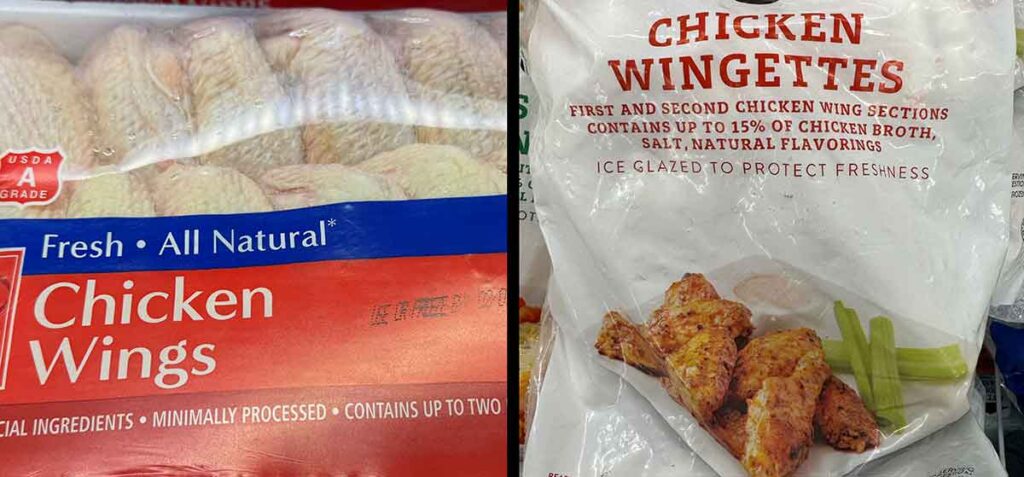
Fresh isn’t automatically better. For fresh vs frozen chicken wings, the real difference is how far ahead you’re buying, how much thaw time you have, and what the label tells you about water, glaze, and processing.
Here’s the easiest way to decide: are you buying for this weekend, or stocking up ahead of time?
If you’re cooking within a day or two, either can work fine. If you’re buying ahead, frozen is usually the easiest way to keep your timeline under control.
One quick label note: in the meat case, “fresh” usually means the wings aren’t frozen solid right now, not that they’ve never been frozen. Some stores also sell previously frozen wings that were thawed for the case.
Not sure if they were frozen before? Ask at the counter, and watch for “previously frozen” wording on the sign or label.
Storage windows and planning
Storage windows below come from the FoodSafety.gov cold storage chart:
- Fresh wings: plan to cook within 1–2 days in the fridge
- Frozen wings: at 0°F, poultry stays safe indefinitely, but quality can start declining after about 6 to 9 months. For best quality, plan to use them within about 9 months.
If you’re shopping more than a day or two out, frozen wings plus a fridge-thaw plan is usually the least stressful way to get there.
Moisture, texture, and why frozen can feel “wetter”
Frozen wings are often protected by a light ice glaze, and they can thaw with more surface moisture. A thin glaze is normal, especially on IQF wings. If you see thick frost or the bag is one solid block, you might be paying for extra ice and it can hint at temperature swings in storage or transit. Not a deal-breaker, but it is a planning detail. See “Individually quick frozen and ice glazed” in the Wing label decoder.
What to do about it: plan for drainage and drying so you don’t steam the skin when you cook.
- thaw in a container so meltwater is contained
- after thawing, drain well and dry thoroughly before cooking for better texture and better browning (the Maillard reaction starts faster on drier skin)
If you do end up with leftovers (or wings that softened after saucing), use our guide to reheat wings crispy.
Safe thawing methods for bulk wings
Refrigerator thawing at 40°F or below is the safest default, following USDA FSIS safe thawing methods.
- Fridge thaw (planning estimate): roughly, I estimate around 5 hours per pound, but party-size bags often take closer to a day or more because wings freeze together. Keep them at 40°F or below
- Cold-water thaw (if you must): keep wings sealed, submerge in cold water, and change the water every 30 minutes, then cook promptly
- Never thaw on the counter: higher-risk zone for bacteria growth
- If raw wings sat out over 2 hours (or 1 hour in hot weather), discard them per USDA.
Big, tightly packed bags often take longer than you’d expect, so starting early pays off. If you’re looking for the best way to thaw a big bag of wings, start with a fridge thaw in a rimmed pan and give yourself extra time for tightly packed bags.
Food-safety note: thawing is not “holding.” Keep wings at 40°F or below until you cook, and cook promptly after a cold-water thaw.
Quick comparison: which wings should you buy
The table and card below can help if you’re deciding between whole wings vs party wings or fresh vs frozen chicken wings. If you like to compare tradeoffs, use the table. If you just want a fast call, the 60-second chooser right below it gets you there.
Don’t want to study the table? Choose the line that matches your situation.
Choose your wings in 60 seconds
Consider these situations and decide which makes the most sense for you.
- Frying, air frying, or baking: buy party wings
- Grilling or smoking: consider whole wings if you want fewer pieces to manage
- Buying more than 2 days ahead: choose frozen and plan a safe thaw
- Cooking within 1–2 days: choose fresh
- Don’t want to cut wings: choose party wings
- Whole wings are cheaper or the only option: buy whole and plan a quick cutting session
Once you’ve picked the type of wings, then it’s just a matter of buying the right amount. When you’re ready to convert your wing choice into a shopping quantity, use our Chicken Wing Calculator.
Wing label decoder
A couple of label words can explain why two bags of wings cook and handle differently. Most of the label noise doesn’t matter. The three things that do are added solution, how the wings are frozen (IQF vs one big clump), and size.
Fresh, never frozen, previously frozen
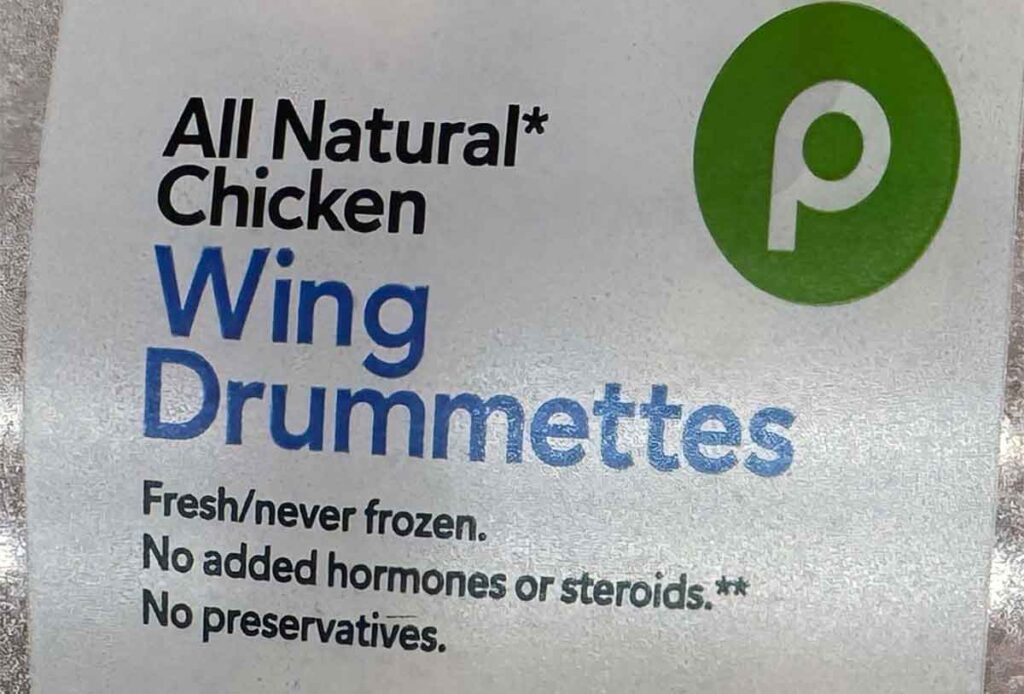
On poultry labels, “fresh” has a specific meaning. FSIS explains it as: the bird has never been colder than 26°F (so it hasn’t been frozen solid). You’ll often see a “keep refrigerated” handling statement on it.
Practical difference for buying:
- fresh means “kept cold,” not necessarily “better” for every cook. It’s mostly about timeline and fridge space. USDA uses ‘fresh’ on poultry differently than most shoppers expect (it refers to temperature history, not ‘never frozen’ marketing).
- never frozen is basically a stronger version of the same idea. If you’re cooking soon, it can be convenient, but it’s often priced higher.
- previously frozen wings were frozen earlier and are now thawed for sale, so plan to cook soon rather than refreezing them.
- buying ahead for a party is where frozen shines: you can keep it frozen until you’re ready, then thaw safely in the fridge. If you thaw in cold water or the microwave, plan to cook right after thawing.
- quick package check: if there’s a lot of liquid sitting in the tray or bag, plan on draining and drying well before you cook (especially if crisp skin matters).
Air chilled vs water chilled
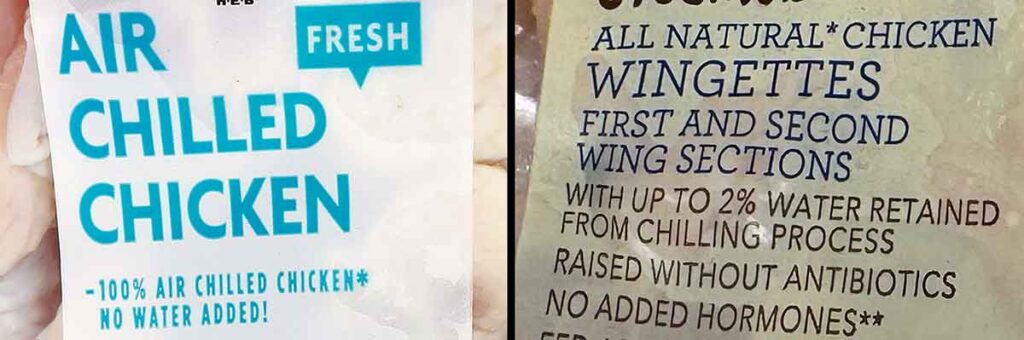
These terms describe how poultry is chilled after it is processed, which can affect surface moisture (FSIS). Most packages won’t say “water chilled” anywhere, so if you don’t see an “air chilled” claim, it’s usually water chilled, and you may also see a “retained water” line.
Practical difference for buying:
- air chilled wings tend to be drier out of the package, with no added chill water
- water chilled wings may hold more water, which can mean more steam during cooking
Contains up to X% solution
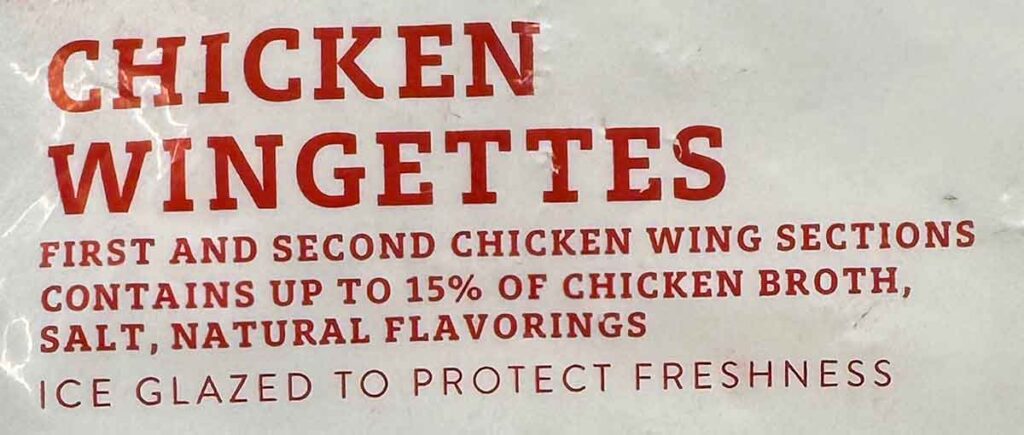
Added solution/retained water should be disclosed on the label. If the label says ‘contains up to X% solution,’ it means the wings were injected or soaked with a liquid solution, commonly water, salt, and sodium phosphates. If you’ve ever wondered why some wings seem to “weep” more liquid, this is often the reason.
What it means for buying and planning:
- you are paying for some added weight that can cook off as water
- sodium is higher
- wings may release more moisture during cooking
- if you buy these, season with a lighter hand since they are already “enhanced”
If you plan to brine your wings as in this smoked wing recipe, you’ll need to be careful not to over salt the wings. Our brining calculator helps you set a lighter salt target.
Jumbo vs regular: wings per pound
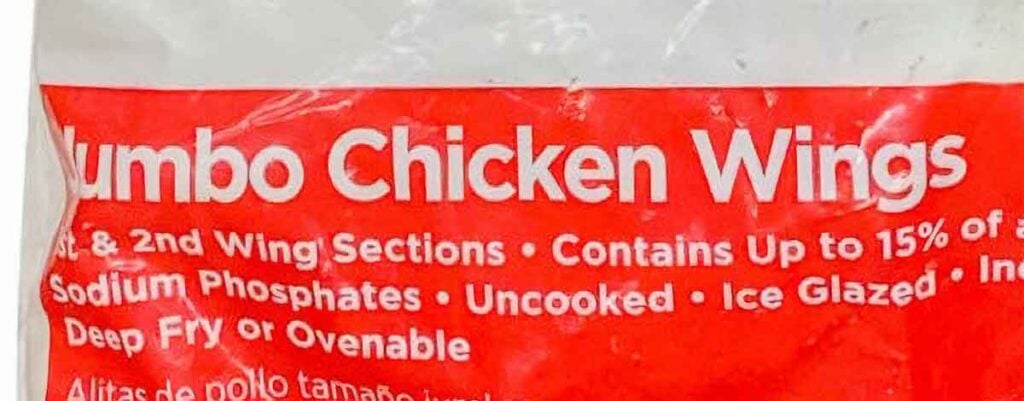
“Jumbo” is just a size marketing term on the bag, not a universal standard. As a practical shopping guide, ranges vary by brand, but you’ll often see a rough range like this:
- jumbo whole wings might be 6–8 wings per pound
- smaller wings might be 9–12 wings per pound
Why it matters for buying:
- Larger wings can slow down batches
- Larger wings can change the eating experience
- Smaller wings often fit party grazing better
Individually quick frozen and ice glazed
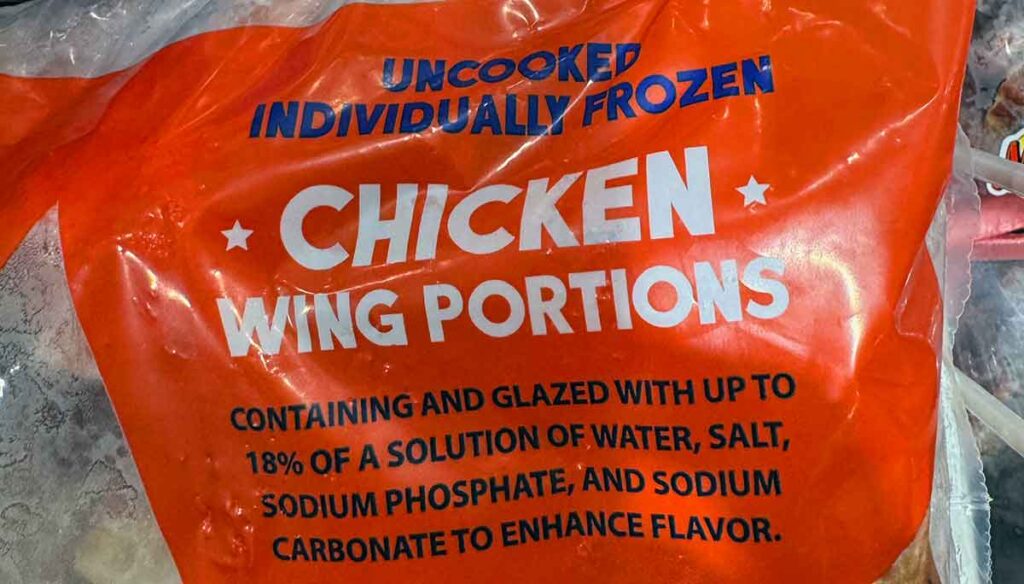
Ice glazed wings typically have a thin protective ice coat, which helps prevent freezer burn and clumping.
What to expect when you thaw them:
- expect meltwater during thaw
- drain well and dry after thawing
- very thick ice coatings can signal long storage or rough handling
Freezer burn
Freezer burn is a quality issue, not a safety issue. USDA FSIS guidance on freezer burn notes you can trim heavily affected areas if needed.
Label phrases that usually don’t matter
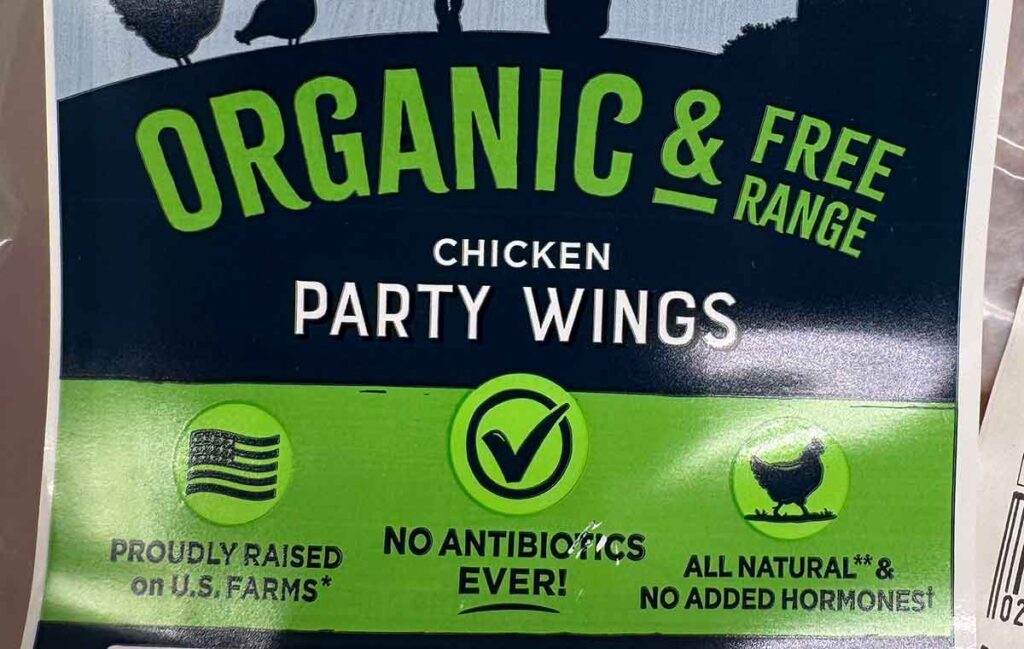
If you’re buying wings mainly for timing, prep, and cooking results, these claims are usually not the ones that make or break the cook.
- “No hormones added” (on chicken): This one is basically a reminder. Hormones aren’t allowed in poultry production, and labels can only use this claim if they add a statement saying federal rules prohibit hormones in poultry.
- “Natural”: On meat and poultry labels, “natural” is about processing, not how the bird was raised. It means no artificial ingredients or added color and only minimal processing, and most raw chicken already fits that definition.
- “Free range” / “free roaming”: Think of this as a values clue, not a cooking-performance clue. USDA/FSIS treats it as an animal-raising claim that has to be substantiated, but the package usually won’t tell you the details (how much outdoor time, what the outdoor area is like).
Label definitions and required qualifiers are based on USDA/FSIS labeling guidance. FSIS labeling policies.
When I’m standing in the store, I treat these as ‘nice to know’ and focus first on cut, size, ice glaze, and any ‘enhanced/solution’ wording.
Bottom line: On wings, the label details that most affect cooking and value tend to be solution/enhanced, air chilled vs water chilled, ice glaze, and size.
If you can only find whole wings: how to cut them
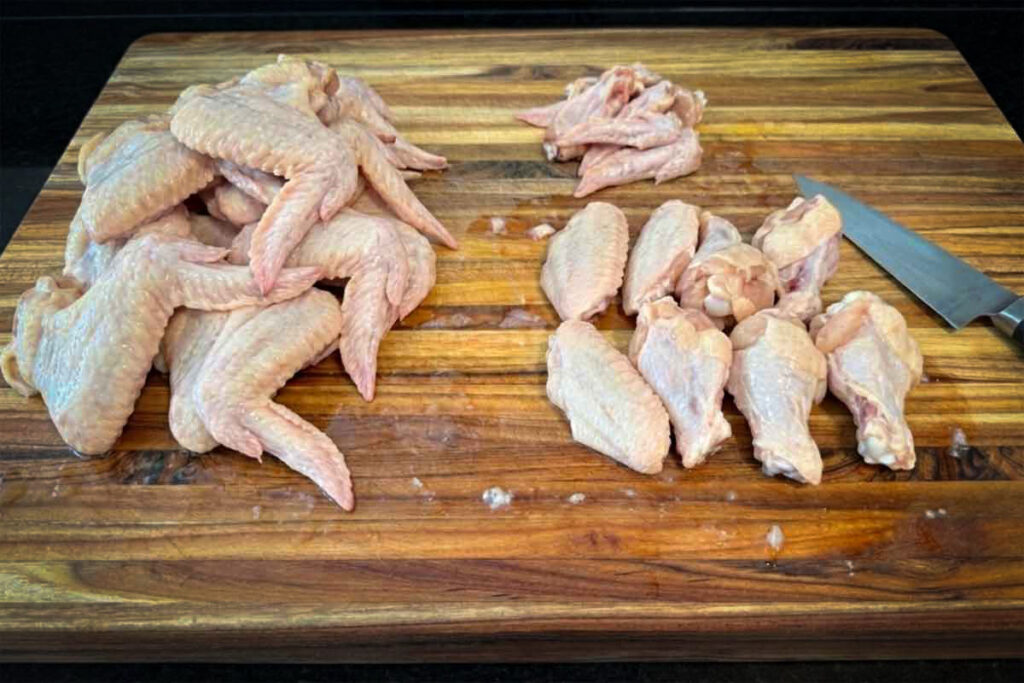
If whole wings are the only thing available, you can convert them into party wings quickly. Keep it simple:
- Find the joints (between drumette and flat, and between flat and tip)
- Cut through the joints, not the bone (cartilage gives way cleanly when you’re in the right spot)
- Keep wings cold as you work and sanitize surfaces afterward
Once you have the motion down, wing cutting goes fast. A useful benchmark, once you’ve done a few, is about 2 pounds in a few minutes, which makes DIY party wings realistic for party prep.
Wing buying checklist
Use this at the cooler as a final check so you don’t get home and realize you bought extra water, the wrong cut, or a bag you can’t thaw in time.
Wing buying checklist
Use this before you check out.
- Confirm the cut: party wings/sections vs whole wings
- Check for added solution: “contains up to X% solution,” “enhanced,” or similar can mean more water and more sodium. If you’re planning a Dry Rub, season with a lighter hand and give the wings extra time to dry before cooking
- If buying frozen, scan the bag: some ice glaze is normal; heavy clumping or thick frost can suggest long storage or rough handling
- Make fridge space first: bulk thawing needs real room and safe temps
- Pick a thaw method now, not later:
- Fridge thaw: as a rough estimate, I generally plan for at least 5 hours per pound
- Cold-water thaw (if you must): keep wings sealed, submerge in cold water, and change the water every 30 minutes, then cook promptly
- Use official guidance: follow safe thawing methods (especially for cold-water thaw timing)
- Have a thermometer ready: wings must reach 165°F internal for safety. For best quality, go higher; see wing finish temps
- Don’t forget the wing ecosystem: sauces, dips, celery, napkins, and serving trays are easy to miss when the main item is bulky
Cooking in batches or finishing early: use our keep wings hot and crispy plan for the serve window
Wing buying FAQs
If wings thawed in the refrigerator and stayed at 40°F or below, you can refreeze them safely says FSIS, but quality can take a hit (more moisture loss and softer texture). If wings were thawed in cold water or at room temperature, cook them first. For best results, portion into smaller bags before freezing so you only thaw what you need.
No. Rinsing can splash raw poultry juices around your sink and counters, which raises cross-contamination risk according to the USDA. Skip the rinse. Instead, open the package in a contained area, discard pads and wrap, and wash hands right away. If you want drier skin, pat wings dry with paper towels or air-dry them on a rack in the fridge.
After thawing, drain wings well, then dry aggressively. Pat with paper towels and spread in a single layer on a rack over a sheet pan. Refrigerate uncovered for a few hours (or overnight) to let the surface dry further. This step helps high-heat methods a lot because it reduces steaming and improves browning.
Big, tightly packed bags thaw slower than most people expect. For a smoother thaw, put the sealed bag in a rimmed pan to catch meltwater and give it airflow in the fridge. If you can, split into smaller bags before freezing or early in the thaw. Plan extra time when wings are clumped or heavily glazed.
Look for heavy frost, thick ice buildup, or one solid clump that won’t break apart, all can signal temperature swings. Check for torn packaging and lots of loose ice in the bag. Mild glazing is normal, but excessive ice can mean you’re paying for water weight and may fight more moisture during thawing and cooking.
Treat wings like a cold-chain item. If the drive is short, go straight home and refrigerate or freeze immediately. If it’s warm out, you have multiple stops, or you’re buying in bulk, use an insulated cooler with ice packs and keep the wings sealed. Cold, fast transport protects both safety and quality.
Corrections and editorial standards
- Spotted something wrong or outdated? Send a correction here: Corrections & Updates
- How we handle sources, testing, and updates: Editorial Standards
- Media or general notes: Email the publisher
Restaurant owners and authorized reps should use the listing update form: Restaurant Listing Update.
Sources
- USDA FSIS: The Big Thaw — Safe Defrosting Methods (safe thawing options and why not to thaw on the counter).
- USDA FSIS: Danger Zone (40°F–140°F) (supports the 2-hour rule and hot-weather guidance).
- FoodSafety.gov: Cold Food Storage Chart (raw poultry fridge/freezer timelines).
- USDA FSIS: The Poultry Label Says “Fresh” (what “fresh” means on poultry labels, including 26°F).
- USDA FSIS: Water in Meat & Poultry (retained water/solution labeling and purge).
- USDA FSIS: Meat and Poultry Labeling Terms (definitions/required qualifiers for “natural,” “no hormones added,” and raising claims).
- USDA FSIS: Freezing and Food Safety (refreezing guidance and quality notes).
- USDA FSIS: Freezer burn (what it is and what to do about it).
- USDA: Washing Raw Poultry (cross-contamination risk; supports “don’t rinse wings”).
Photos and graphics in this guide are by James Roller unless otherwise noted.
About the author
James Roller documents South Carolina barbecue for Destination BBQ and authored the SC BBQ cookbook Going Whole Hog. He researches techniques and interviews pitmasters, and he and his wife, Heather, have cooked and served wings for home gatherings for years, learning through repeated cooks and grocery runs which buying and prep choices (bag sizes, thaw timing, and label claims) help keep wings hot, safe, and worth eating.