Chicken Wing Internal Temperature: Safe at 165°F, Better at 175–185°F
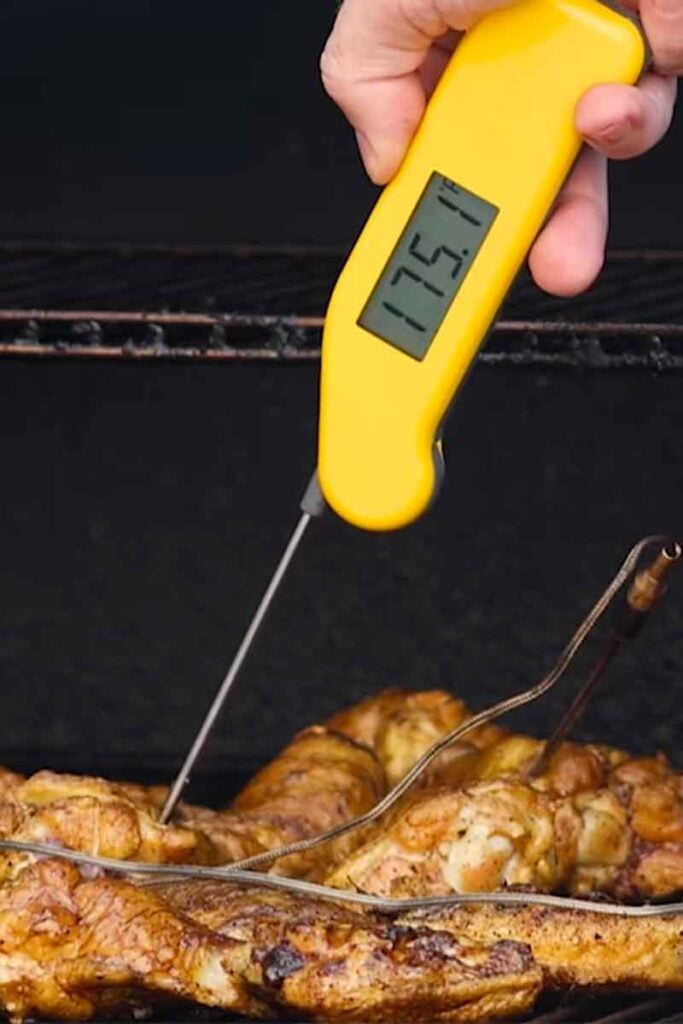
Chicken wing internal temperature tells you when wings are safe, but this guide shows why 165°F isn’t the finish line and what to do next
Most of us learned one number for chicken: 165°F. That number matters, but it’s not the whole story for wings. Wings have a lot of skin, fat, and connective tissue, and that means they can be safe at 165°F but still not have the texture you’re chasing.
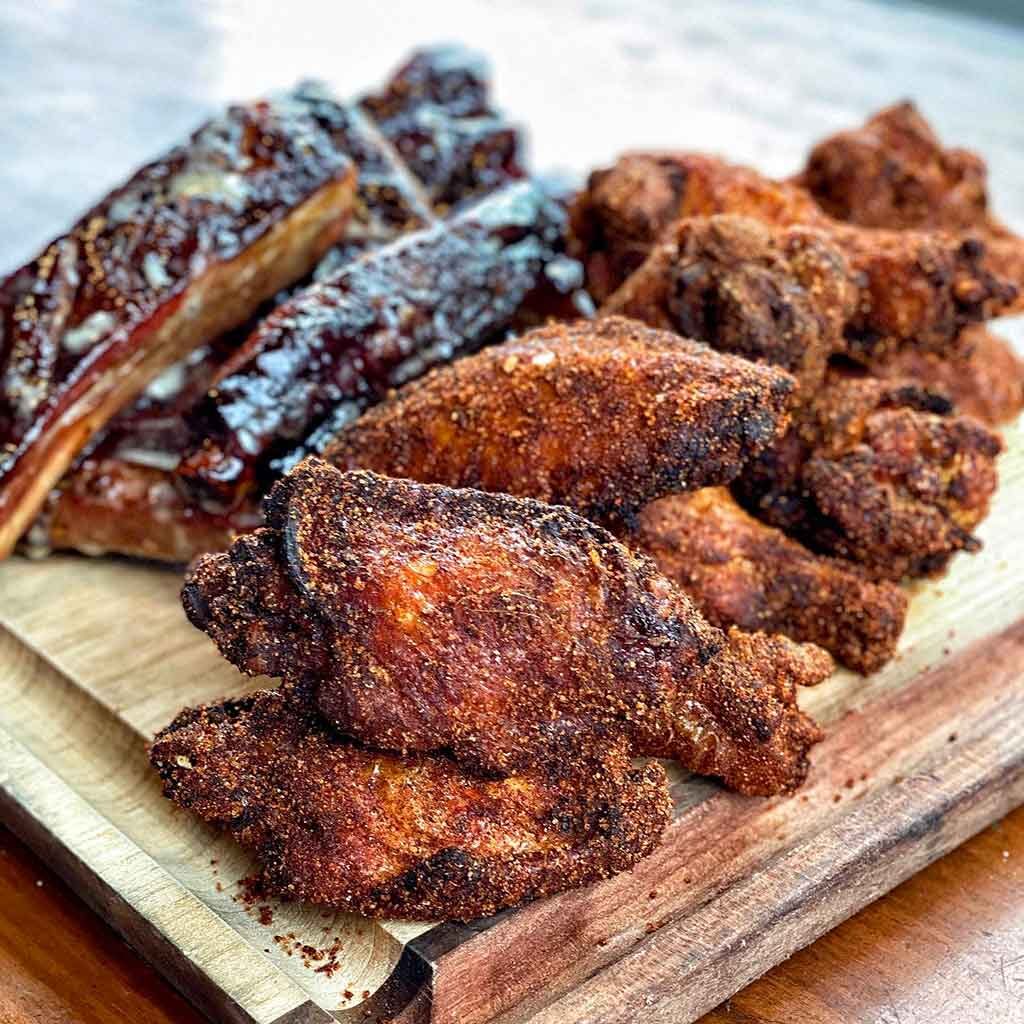
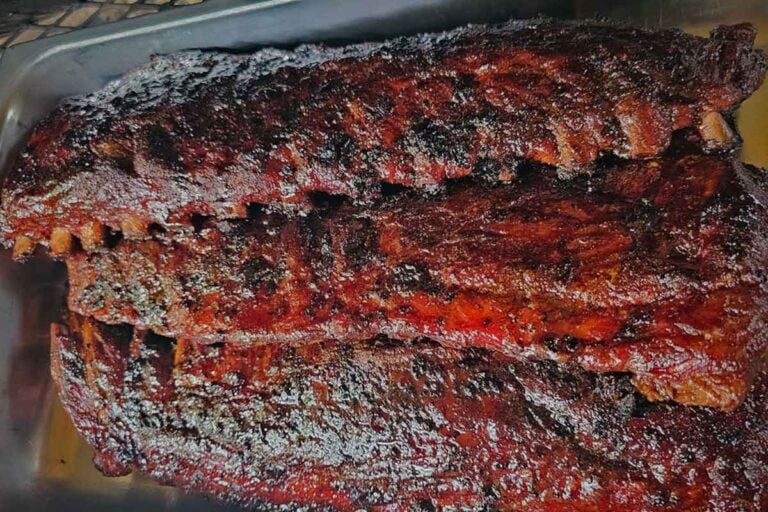
Photo courtesy of Home Team BBQ. Photo by Holy City Handcraft.
People say chicken wings are “done” at 165°F because that’s the minimum safe internal temperature for chicken. But wings often eat better when you finish higher because the meat gets more tender and the skin gets a better bite.
For most wings, 175–185°F is the sweet spot. If you want a pit-style tender finish, it’s common to take wings into the 195–200°F range, and some cooks go a touch past 200°F for an even softer bite.
Best bite in 10 seconds
- 165°F: minimum safe internal temp for chicken wings
- 175–185°F: best everyday bite for most wings (tender meat, better skin bite)
- 195–200°F: pit-style tender (often smoked), very tender and gelatin-rich meat
When in doubt: Don’t average your readings. Probe a few wings from different spots and go by the lowest reading you get.
If you’re still figuring out how many wings to buy, start with the Wing Calculator and the wing buying guide. This page is just about doneness and getting the bite you want. If you’re hosting and trying to time batches so wings hit the table hot, use the Wing Party Timeline and Equipment Checklist.
Where these numbers come from: I’m using published food-safety guidance plus temperature-and-texture guidance from reputable thermometer and cooking educators, checked against what I’ve seen work in our own cooks at home. (See Sources.)
Bottom line: 165°F is safe, 175–185°F eats better
165°F is the minimum safe internal temperature for wings. That means 165°F in the thickest meat, measured with a food thermometer. That’s your baseline, every time.
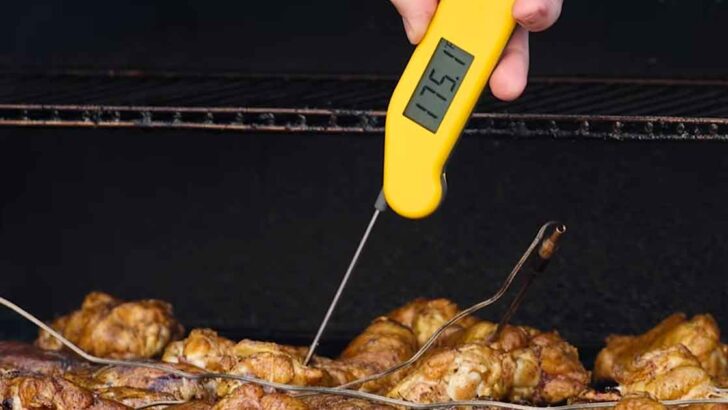
From there, the finish temperature is about how you want them to eat: most wings hit a sweet spot around 175–185°F, while a 195–200°F finish can get you a more pit-style tender result (often with smoked wings). Wings tend to turn more tender and juicy as they cook higher because more fat renders and the connective tissue breaks down. Use the following table to pick a finish range that matches the bite you’re after.
Temperature bands at a glance
Quick compare: it’s “minimum vs best bite vs pit-style tender,” with one extra row for what happens if you keep going.
| Internal temp | What it means | How it tends to eat |
|---|---|---|
| 165°F | Minimum safe internal temperature for chicken | Cooked through, but can still cling to the bone and a bit chewy |
| 175–185°F | Everyday sweet spot for wings | Noticeably more tender and juicy, with better fat render and improved skin bite |
| 195–200°F | Pit-style tender finish (often smoked) | Very soft and gelatin-rich, may be close to “fall-off-the-bone” tender |
| 200–205°F | Extra-soft finish (optional) | Even softer, more “pulled” wing bite; some pitmasters prefer this range for smoked wings |
| 205°F and up | Shred zone (for pulled texture) | Moves toward “pulled chicken” texture; can work for tacos or salad, but once you get much past ~210°F, the meat can start to dry out. |
What higher temperatures change (and why it matters for wings)
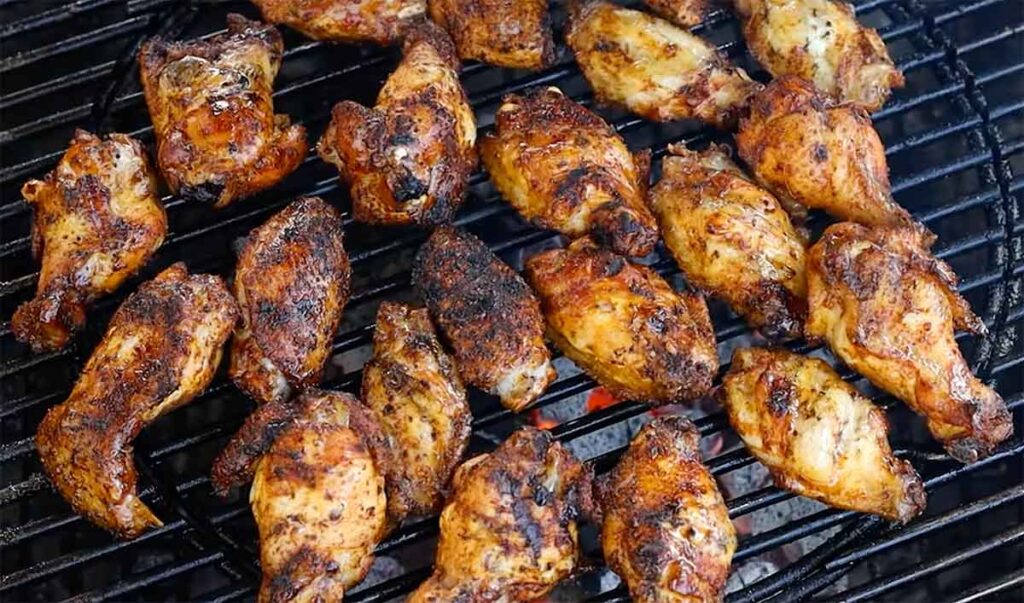
After wings pass 165°F, you’re cooking for tenderness and skin bite.
As the temperature climbs, more collagen turns to gelatin and more fat renders, especially around the skin. That’s why dark meat cuts like wings (and thighs) cooked to 175–185°F often feel juicier and more tender than those pulled right at 165°F. That’s typical for wings.
A few “feel” changes you’ll notice as you move up the scale:
- Skin bite improves as fat renders and the surface dries and browns more effectively
- Meat loosens from the bone and stops feeling clingy
- Texture gets richer as gelatin builds in the meat
That browning is the Maillard reaction, and it’s part of what gives wings that roasted, savory edge.
Once every wing passes 165°F, the only question left is how tender you want them. Use the decision tree below to pick the finish range that matches your plan.
Pick your target: a simple decision tree
You don’t need one “correct” finishing temperature for every wing cook. You need the target that matches how you plan to serve them.
Pick your finish based on what you want
- Just want good wings most people love: go for the everyday “tender and juicy” finish with a clean bite (175–185°F)
- Want meat that pulls clean from the bone: choose a pit-style tender finish, often used for smoked wings (195–200°F)
- Chasing the crispiest skin: start with a dry rub, keep sauce off until the end, and finish hot
- Serving extra-wet wings: finish on the higher side before you sauce so they still eat tender once they hit the platter (180–185°F)
- Skin went soft after saucing: you need more heat and time to dry the surface, not more sauce
Use the “Best bite in 10 seconds” box above for the temperature bands that match each finish.
Once you’ve picked your finish, the only way to hit it consistently is to temp wings correctly. This next checklist shows where to probe and how to read a batch without fooling yourself.
Thermometer checklist for wings
- Calibrate if you can: ice water should read about 32°F, boiling water about 212°F at sea level (lower at higher elevations)
- Probe the thickest meat: flats near the joint, drumettes in the main muscle
- Avoid bone contact: don’t touch bone or slide along the joint
- Wait for the reading to steady: wing temperatures can look “jumpy” at first
- Check more than one wing: size varies, hot spots exist
- Cook based on your lowest reading: don’t average readings across the batch
- Rest briefly: wings have small carryover, but a short rest can raise internal temperature a few degrees
- Wipe the probe between checks: residue can throw off readings and makes a mess fast
Mixed readings: what to do (and what not to do)
It’s normal to see one wing read higher than another, especially with flats vs drumettes. The mistake is trying to “split the difference” and call the batch done when some wings are still behind.
Mixed readings: two good options
- Simplest: keep cooking until your lowest reading reaches your target
- Most precise: pull wings as they hit your target and keep cooking the rest
Either way, don’t average the numbers and call it good.
If you choose the “most precise” option, serve the done wings right away, or park them in a warm, dry hold while the others finish so the skin doesn’t go soggy. If you need a simple holding setup, see Keep Wings Hot and Crispy.
Doneness notes by cooking method
Wings can look “done” before they’re actually at temperature, especially with high heat or smoke. Use these notes to know when to start checking and what tends to fool people.
| Method | When to start checking | What goes wrong | Why looks can mislead |
|---|---|---|---|
| Oven | When the skin is turning golden and you think they’re close | People cook to color and overshoot | Browning can lag behind internal doneness |
| Air fryer | When the surface looks crisp and you’re tempted to pull the basket | Flats finish early, drumettes lag | Outside browns before the thickest meat hits target |
| Fried | As soon as the crust looks “there” | Pulling by color alone | Oil browns fast, but that’s surface only |
| Grilled | When you’ve got good browning and you’re tempted to pull them | Hot spots and flare-ups cook some wings fast while others lag | Char happens on the surface. The thickest meat can still be behind |
| Smoked | Once you’ve got the color and smoke level you want | Smoke color gets mistaken for doneness | Smoke changes color. Temperature tells doneness |
If you’re using one of these methods today, the notes below explain what usually trips people up and when to start checking temperatures.
Oven baked wings
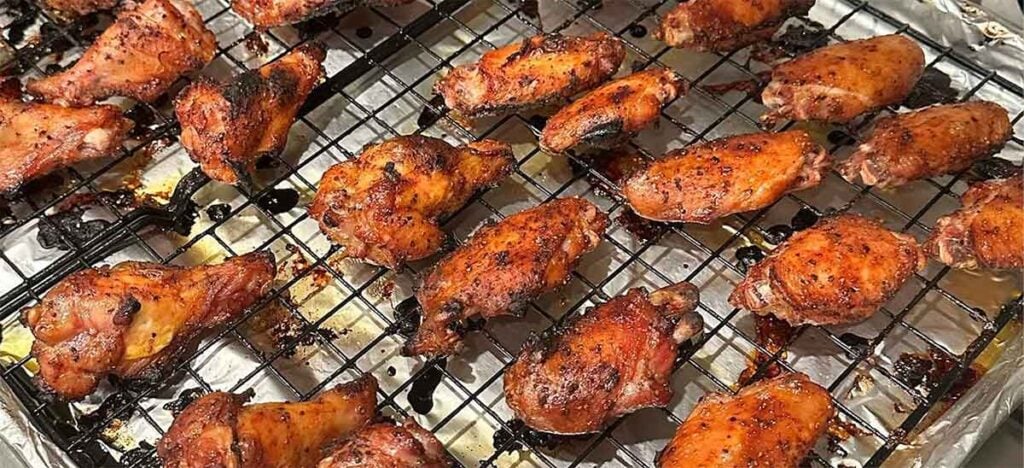
- What goes wrong: skin can brown slowly, so people keep cooking until they “look right” and overshoot without meaning to.
- When to start checking: around the point the skin is turning golden and you’d normally think, “These are close.”
- Why looks mislead: color lags behind doneness in the oven, especially if your wings are wet, crowded, or running cooler than you think.
Air fryer wings
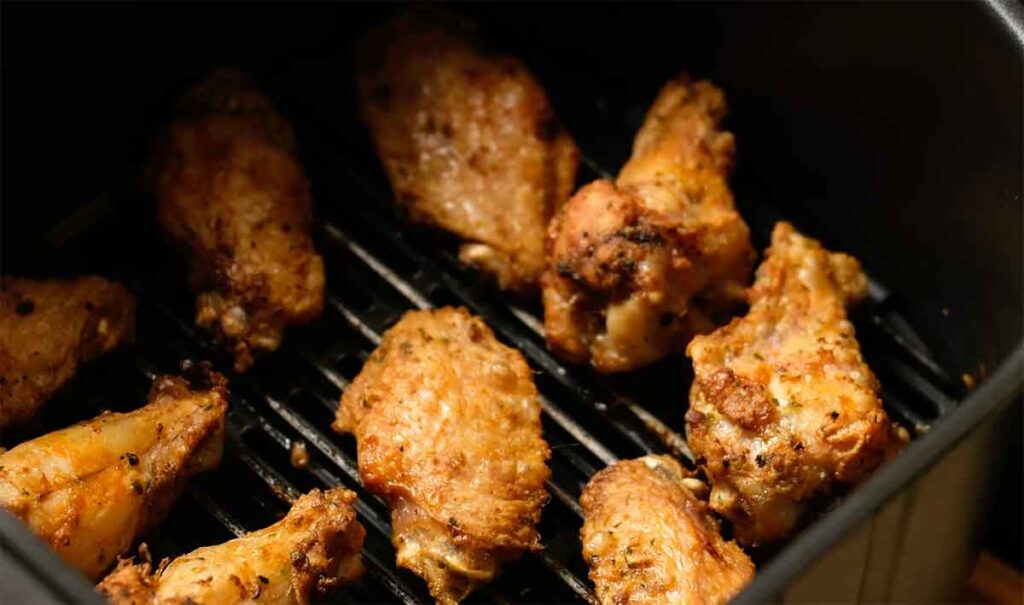
- What goes wrong: small flats can finish early while drumettes lag behind.
- When to start checking: once the surface looks crisp and you’re tempted to pull the basket.
- Why looks mislead: air fryers brown fast, and the outside can look perfect before the thickest meat hits target.
Fried wings
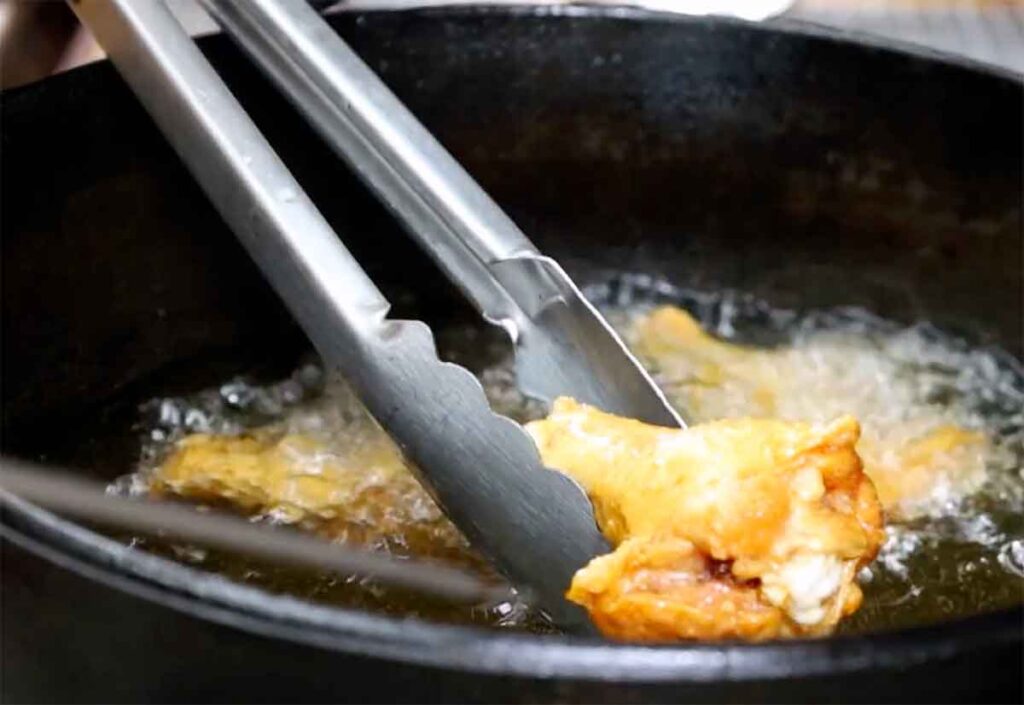
- What goes wrong: the crust goes golden early, so people assume the inside is done.
- When to start checking: as soon as the color looks “there.”
- Why looks mislead: browning is a surface event. The thermometer is the only reliable check.
Grilled wings
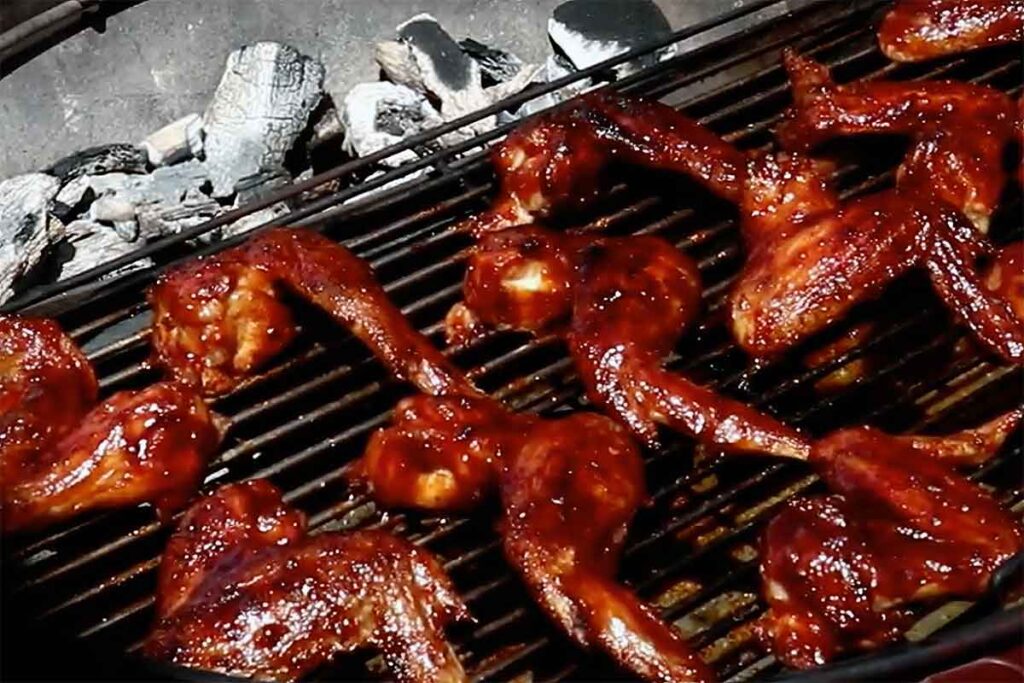
- What goes wrong: hot spots and flare-ups can char the outside while the thickest meat is still behind.
- When to start checking: once you’ve got the color you want and you’re thinking about moving them off the heat.
- Why looks mislead: grill marks and char are surface cues. Doneness still comes down to internal temp in the thickest meat.
Smoked wings
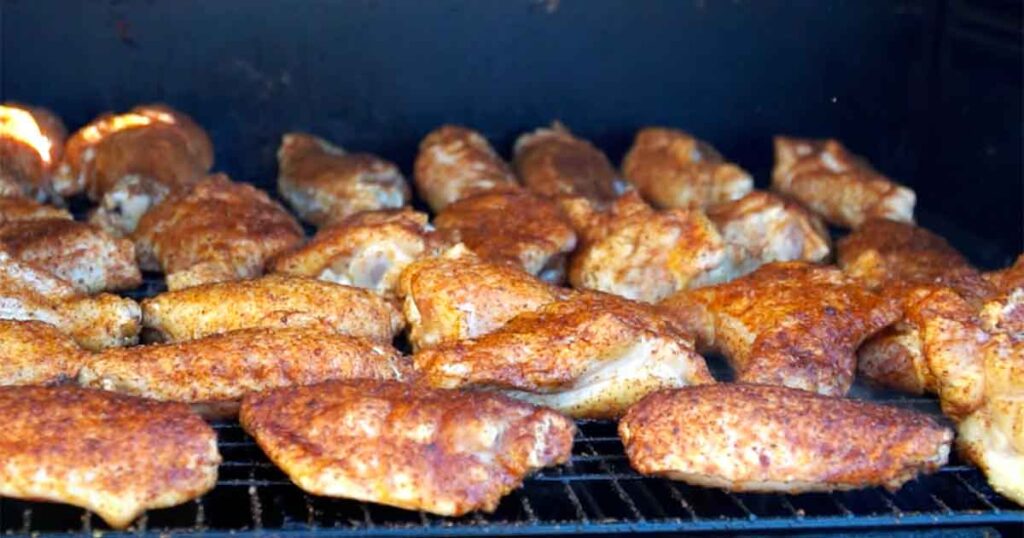
- What goes wrong: wings can look darker, pinker, or “done” from smoke long before they hit the finish temp you want.
- When to start checking: when the skin has taken on color and you’ve gotten the smoke flavor you want.
- Why looks mislead: smoke changes color. Doneness is still a temperature question.
- Extra tip: aim for thin, clean blue smoke (not thick white smoke) so wings don’t get too dark before they hit your finish temperature.
Why you hear “around 200°F” for smoked wings: some pit-style cooks finish smoked wings at higher internal temperatures on purpose for tenderness and bite-through texture. Three examples:
- Malcom Reed’s Smoked Party Wings finishes wings at 195–200°F internal.
- Heath Riles’ Asian Wings on the Drum describes wings often finishing around 200°F or higher for texture.
- ThermoWorks: How to Smoke Chicken Wings explains why smoked wings often benefit from finishing higher than the safety minimum.
Want a step-by-step method that uses those targets? See our smoked wing recipe.
Troubleshooting wing doneness
If wings are confusing you, it’s usually one of these situations. Use the quick fix that matches what you’re seeing, then temp again in the thickest meat.
Pink near the bone
Color is not a reliable doneness cue for wings, especially near joints and bone.
- Why it happens: normal cooking chemistry and smoke can leave a pink tint even when a wing is fully cooked
- What to do: trust the thermometer in the thickest meat and cook until your lowest reading hits your target
Uneven cooking across a batch
Wing size varies, hot spots exist, and flats and drumettes don’t always finish together.
- Why it happens: crowding, uneven airflow or heat, and mixed wing sizes
- What to do: temp the biggest wings, rotate if needed, and pull done pieces while the rest finish
If you’re cooking multiple trays or batches, Cook Wings for a Crowd shows a simple batching flow so everything finishes more evenly.
Sauced wings and confusing temps
Sauce can mess with surface cues and gunk up your probe, which makes readings feel “off.”
- Why it happens: thick sauce changes the surface, and residue on the probe can slow or distort readings
- What to do: wipe the probe, re-check in the thickest meat, and finish hot after saucing if the skin went soft
If you’re setting up a sauce table, How Much Sauce for Wings gives simple baselines without turning this into a recipe page.
Cold centers or jumpy readings
This is usually probe placement, bone contact, or a wing that’s simply behind the rest.
- Why it happens: touching bone or joint, shallow probing, or uneven cooking
- What to do: re-probe in a slightly different spot, wait for the reading to settle, and keep cooking until your lowest reading reaches your target
Smoked wings: smoke ring vs doneness
Smoke can leave a pink tint that looks underdone even when the wing is fully cooked.
- Why it happens: smoke and cooking chemistry affect color, especially near bone
- What to do: ignore color and go by your lowest internal temperature in the thickest meat
If your temperatures are right and the texture still isn’t where you want it, the next section covers the few safety rules that matter every time you cook wings.
Chicken wing food safety basics
This is the part we keep simple. Safe wings come from two things: clean handling and reaching the safe minimum internal temperature.
- Cook wings to at least 165°F. That’s the minimum safe internal temperature for chicken.
- Don’t wash raw chicken. It can spread germs around your sink and counters.
- Keep raw chicken separate from ready-to-eat food, and wash hands, boards, knives, and surfaces after handling it.
- If wings aren’t served right away, follow food safety guidance to keep hot food hot (140°F or higher) and refrigerate leftovers (below 40°F) within 2 hours (1 hour if it’s above 90°F).
If you’re cooking ahead, traveling, or serving over a long hangout, holding is where wings usually fall apart. If you need the full “how do I hold these and keep them crisp?” plan, use this guide on keeping wings hot and crispy. For leftovers, this wing reheating guide keeps it simple without turning wings rubbery.
Wing Temperature FAQs
These are the questions that come up every time wings and thermometers meet in the same backyard.
165°F is the safety minimum, but many wings eat better a little higher. Most people prefer a finish around 175–185°F because more fat renders and connective tissue softens, so the meat feels looser and juicier. If your wings taste “done but tight,” try finishing closer to this range.
Probe the thickest meat, not the skin and not tight against bone. On flats, aim near the joint where the meat is thickest. On drumettes, probe into the center of the main muscle. Avoid the joint and don’t slide the probe along the bone, which can read hotter than the meat.
Probe at least 3–5 wings per batch (more for big batches), and base your decision on the lowest reading you get. Check the thickest flat, the thickest drumette, and a few from different spots (center and edges) since hot spots happen. If one or two wings are clearly behind, pull the wings that have hit your target temperature and keep cooking the laggards, then re-check before serving.
A little. Wings have minimal carryover compared with big cuts, but a short rest can still raise internal temperature a few degrees and lets juices settle. Don’t rely on carryover to “get you to 165°F” if you’re below it. Use carryover as a small finishing nudge, not a safety plan.
Yes. A 195–200°F finish is common for a “pit-style” tender result, especially for smoked wings. At that point the meat can turn very soft and gelatin-rich, sometimes close to fall-off-the-bone. That’s a texture choice, not a requirement. Much past 200°F, wings can shift toward a pulled-chicken texture.
A fast instant-read digital thermometer is the easiest tool for wings because the pieces are small and cook quickly. Look for a thin probe so you can hit the thickest meat without riding the bone. Leave-in probes can work in an oven, but they’re harder to place accurately in wings and can get bumped or read hot if they touch bone.
A quick wrap-up
If you remember one thing, make it this: 165°F is the minimum safe internal temperature, and higher temperatures are about getting the wing texture you actually want. Once you start finishing most wings in that 175–185°F range, a lot of the usual doneness stress goes away.
Corrections and editorial standards
- Spotted something wrong or outdated? Send a correction here: Corrections & Updates
- How we handle sources, testing, and updates: Editorial Standards
- Media or general notes: Email the publisher
Restaurant owners and authorized reps should use the listing update form: Restaurant Listing Update.
Sources
- FoodSafety.gov: Safe Minimum Internal Temperatures (165°F for poultry)
- FDA: Safe Food Handling (clean handling basics)
- CDC: Washing Chicken Spreads Germs (don’t wash raw chicken)
- FoodSafety.gov: 4 Steps to Food Safety (danger zone and chilling guidance)
- FoodSafety.gov: Keep hot foods hot, cold foods cold (hot hold above 140°F, cold below 40°F)
- USDA FSIS: Leftovers and Food Safety (2-hour rule, 1 hour above 90°F)
- USDA FSIS: Is Pink Turkey Meat Safe? (pink tint can happen even when fully cooked)
- Serious Eats: Why Chicken Thighs Often Turn Out Tough (and how higher temps improve texture)
- ThermoWorks: Everything You Need To Know About Chicken Temp (temp and texture overview)
- ThermoWorks: Smoked Chicken Wings (hot finish for crisp skin)
- HowToBBQRight (Malcom Reed): Smoked Party Wings (uses 195–200°F internal as a finish target)
- Heath Riles BBQ: Asian Wings on the Drum (describes wings often finishing around 200°F or higher for bite-through texture)
About the author
James Roller documents South Carolina barbecue for Destination BBQ and authored the SC BBQ cookbook Going Whole Hog. He and his wife, Heather, have cooked and served wings for home gatherings for years. This guide isn’t based on formal lab-style testing. It combines published food-safety guidance with temperature-and-doneness advice from reputable cooking sources, checked against practical notes from their own cooks.