Deep-Fried Turkey: Timing & Safety Checklist
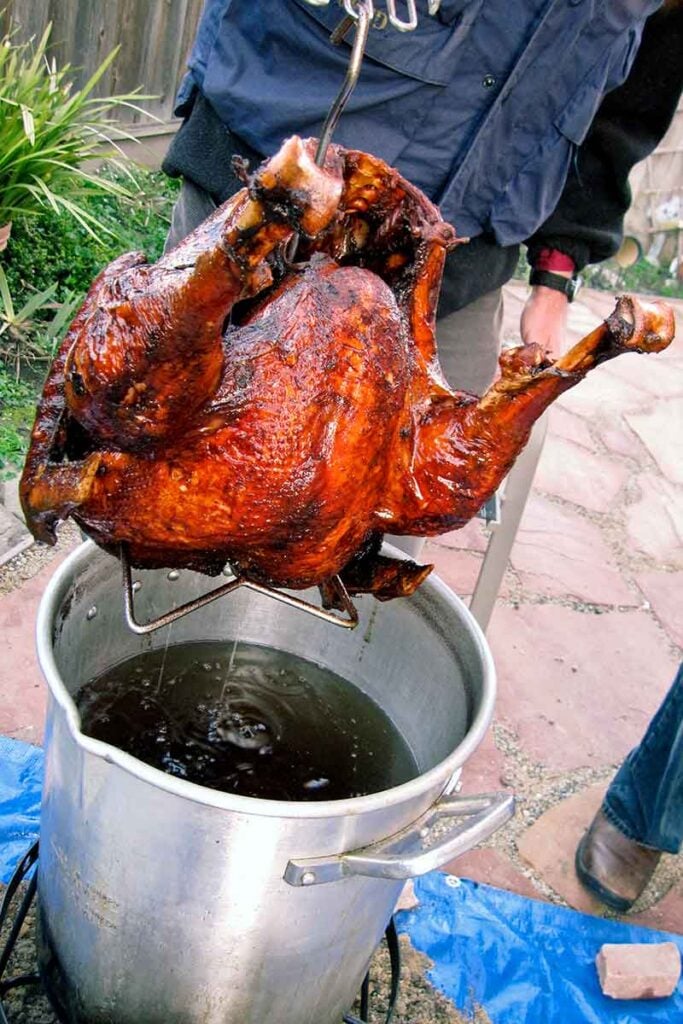
Quick Answer
- How long: Fry at 350°F for 3–5 minutes per pound, then confirm the turkey hits 165°F in the breast and thigh after lifting it out of the oil.
- Safety first: Always fry outdoors, use a fully thawed and very dry turkey, and lower it slowly with the burner turned off to prevent splatter or overflow.
- Need exact timing? Use the Turkey Calculator for a personalized fry schedule, thawing window, and safety reminders.
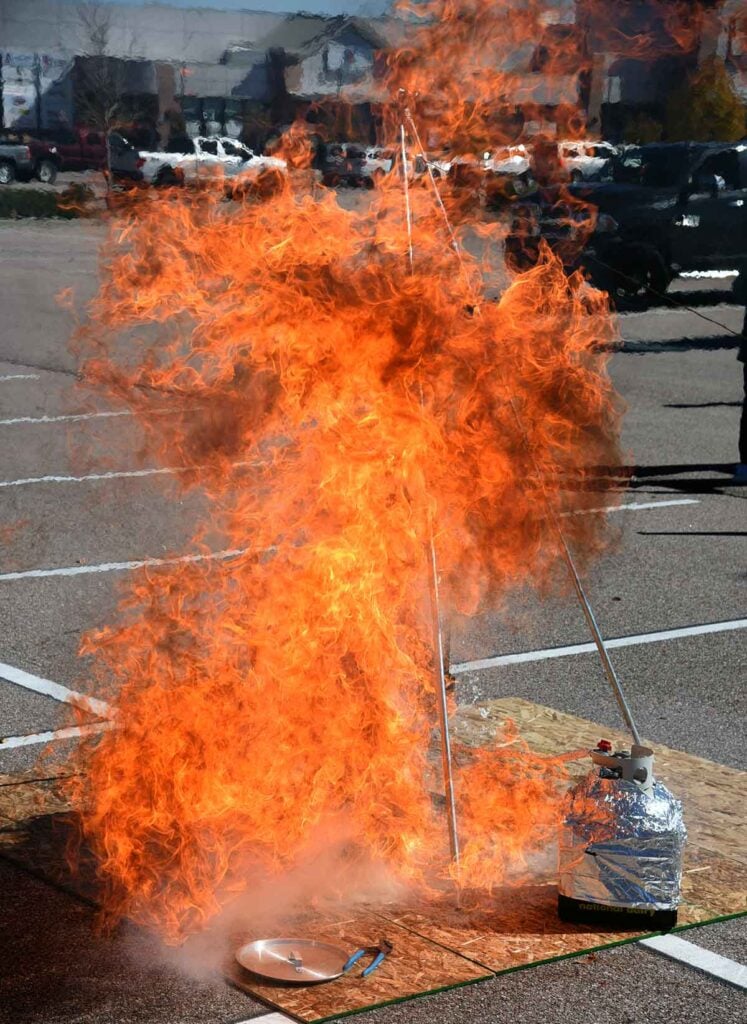
Deep-frying a turkey can produce incredibly crispy skin and juicy meat in far less time than oven roasting. But it also requires care. Each year, deep fryers are involved in hundreds of cooking fires and millions of dollars in damage, according to the National Fire Protection Association. The good news: with a few timing guidelines and a short list of safety steps, you can fry a turkey confidently and safely.
This guide explains how long it takes to deep-fry a turkey and outlines the essential safety precautions. A quick checklist at the end helps you double-check everything before you light the burner.
How Long to Deep-Fry a Turkey
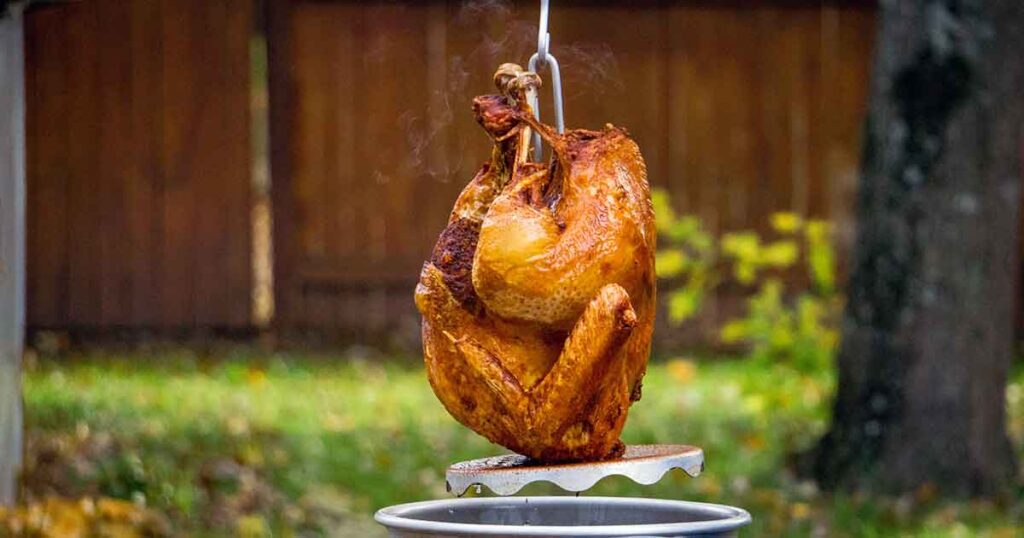
Rule of thumb: Fry at about 350°F for 3 to 5 minutes per pound, which matches USDA FSIS guidance for 8- to 12-pound turkeys.
That means a 12-pound turkey may take roughly 36 to 60 minutes. Deep-frying is fast, but the only reliable way to confirm doneness is with a thermometer. According to the USDA Food Safety and Inspection Service (FSIS), a turkey is safely cooked when it reaches 165°F in the thickest part of the breast and the innermost parts of the thigh and wing. For more detail on how time and temperature work together to keep turkey safe, see our safe turkey internal temperature guide before you fire up the fryer.
Begin checking as you approach your estimated cook time. Always lift the turkey out of the oil before taking the temperature. If any area is below 165°F, lower it back into the oil for a few more minutes and recheck. Once done, let the turkey rest for 15 to 20 minutes so the juices redistribute.
Tip: Food safety experts often recommend a smaller turkey, ideally in the 8- to 12-pound range. Larger birds are harder to handle safely, increase the risk of oil overflow, and may cook less evenly. If you’re feeding a large group, fry two smaller turkeys or turkey parts. Most consumer fryers also have a weight limit, and our Turkey Calculator will alert you if your bird exceeds typical capacity.
If you’d rather not do the math, the Turkey Calculator will give you a personalized fryer start time and safety reminders. If you’d like to see ballpark times for oven, smoker, or grill, our turkey cooking time guide quickly compares minutes per pound across all four methods.
Deep-Fried Turkey Safety Guide
Frying a turkey involves a lot of hot oil and an open flame. Review each step below before heating the pot. These precautions significantly reduce the risk of spills, flare-ups, and burns.
Fry Outdoors Only
Set up your fryer outside on a flat, stable surface well away from buildings, garages, decks, and anything flammable. Keep it at least 10 feet from structures and out from under roof eaves or patio covers. Many fryer fires start in garages or on patios placed too close to the house. Keep children and pets out of the area.
Thaw Completely and Dry Thoroughly
Never fry a frozen or partially frozen turkey. Ice and hot oil can cause violent boil-overs and fire. Thaw the turkey fully in the refrigerator, allowing about 24 hours per 4 to 5 pounds, or use a cold-water thaw method if you’re short on time, cooking the turkey immediately after a cold-water thaw. If you’re unsure how long your bird will actually take, our turkey thawing times chart lays out safe fridge and cold-water estimates by weight.
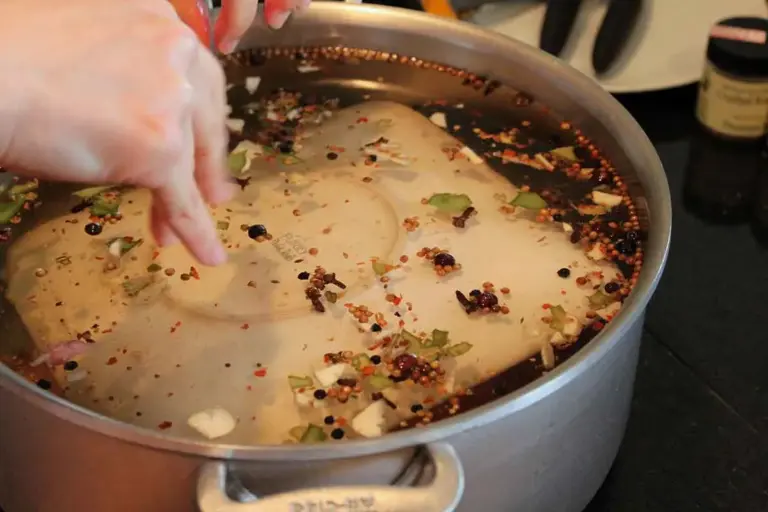
Whether brining or not, pat the bird very dry, inside and out. Surface moisture is a leading cause of splatter.
Our Brining Calculator can help you set an exact salt rate for your bird. If you want to understand the salt percentages behind your brine, Brining Math Explained walks through the formulas in plain language.
Measure the Oil to Prevent Overfilling
Overfilling is one of the most common causes of fryer accidents. Before adding oil, do a cold-water displacement test: place the turkey in the empty pot, cover it with water until just submerged, remove the bird, and mark the water line. Dry both the pot and the turkey completely, then fill with oil only to that line or the fryer’s max-fill line, whichever is lower. Never exceed the fryer’s max-fill line.
Keep the Turkey Unstuffed
Do not deep-fry a stuffed turkey. Stuffing increases mass, affects cook time unpredictably, and poses a food safety risk. Remove any packaging, plastic ties, or pop-up thermometers. If injecting marinade, do it ahead of time and still dry the surface completely. Avoid pouring any liquids over the bird.
Lower the Turkey Slowly
When the oil reaches 350°F, experts advise to turn off the burner briefly and lower the turkey very slowly using the fryer’s basket or hook. This is when most accidents happen. Doing so lowers the risk of a flare-up if the oil splashes near the burner. Take 30 to 60 seconds to ease it in. Once the bubbling calms, relight the burner to maintain temperature. Never drop or plop the bird into hot oil.
Monitor Constantly
Never leave the fryer unattended. Many propane setups have no thermostat, so the oil can easily overheat. Use a long-stem thermometer to track the oil and keep it between 325°F and 350°F. If the oil smokes or rises above 375°F, reduce the heat right away.
Use Proper Safety Gear
Wear long sleeves, insulated gloves or oven mitts, and safety goggles. Keep a grease-rated fire extinguisher (Class B or multipurpose ABC) within reach. Never use water to put out a grease fire. If a small fire starts, use the extinguisher or cover the pot with its lid. If it grows, evacuate and call 911.
Confirm Doneness Safely
When the estimated time is up, lift the turkey out of the oil and check the internal temperature in the breast, thigh, and wing. Each area must reach 165°F. If not, lower the turkey back into the oil and recheck in a few minutes. Once fully cooked, let it rest for 15 to 20 minutes before carving.
Quick Turkey Frying Safety Checklist
For a quick review, use this checklist to make sure you have covered the safety basics before and during your deep-fry:
- ✅ Location: Fry outdoors on a flat, stable surface, well away from buildings, decks, or anything flammable.
- ✅ Turkey Prep: Turkey is completely thawed, giblets and any packaging removed, and the bird is patted dry inside and out. No stuffing in the turkey.
- ✅ Oil Level: You used the water test to measure oil, and the pot is filled below the max fill line to leave room for the turkey and boiling.
- ✅ Oil Type: You are using a high smoke point oil (peanut, canola, etc.) suitable for 350°F frying.
- ✅ Gear: You have long sleeves, heat-proof gloves, and safety goggles on, and a suitable fire extinguisher within arm’s reach.
- ✅ Preheat: Oil is heated slowly and steadily to about 350°F and you are watching the temperature with a thermometer.
- ✅ Burner Off to Lower: Burner is turned off while you slowly lower the turkey into the oil to reduce the chance of flare-ups.
- ✅ Monitor: Someone is watching the fryer at all times, keeping the oil temperature in range and kids and pets well away.
- ✅ Timing: Turkey fries for about 3 to 5 minutes per pound (estimate), with a timer set so you do not lose track.
- ✅ Check Doneness: Turkey’s internal temperature is checked with a thermometer and reads at least 165 °F in the thigh and the breast.
- ✅ Finishing: Burner is turned off before you remove the turkey. The bird is lifted out slowly and rested 15 to 20 minutes before carving.
- ✅ Aftermath: Oil is allowed to cool completely before you move or discard it, and leftover turkey goes in the fridge within 2 hours.
Final Thoughts
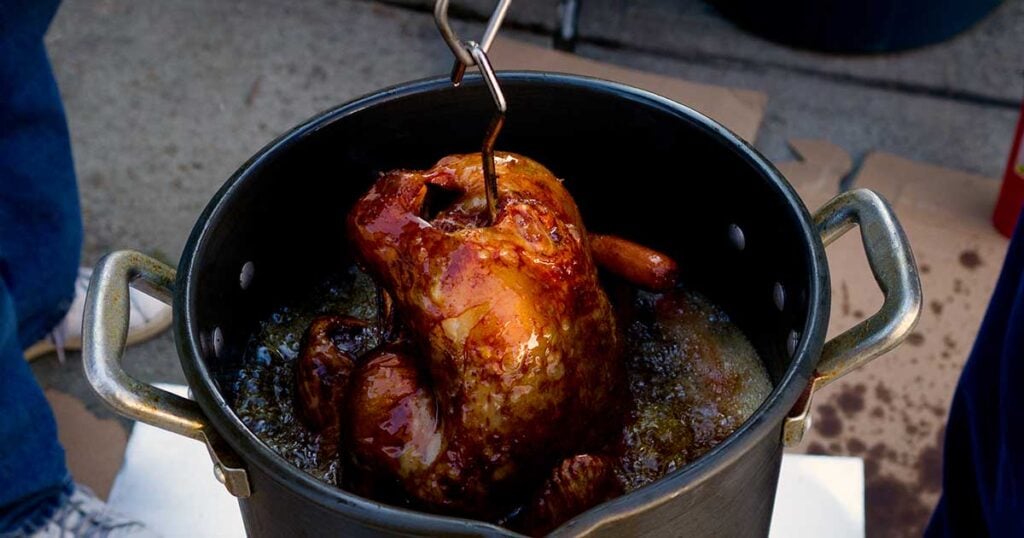
Deep-frying a turkey requires attention and patience, but the payoff is big: crisp skin, juicy meat, and a cooking time that’s typically under an hour. The most important ingredients are planning and safety.
Want your exact start time and a safety checklist tailored to your turkey? Use the Turkey Calculator to get personalized timing and prep guidance.
If you run into a situation this guide did not cover, or you have a tip from your own setup, leave it in the comments and I’ll do my best to respond.
Deep-Fried Turkey Timing & Safety FAQs
The USDA recommends an 8 to 12 pound turkey for deep-frying. Smaller birds are easier to handle, fit better in most consumer fryers, and cook more evenly. Heavier birds increase the risk of overfilling the pot and splashing hot oil. For bigger gatherings, plan on frying two smaller turkeys or turkey parts instead. For a crowd-size breakdown, see our how much turkey to buy guide.
The safest way to know how much oil you need is the water displacement test. Place the raw turkey in the empty pot, cover with water until just submerged, then remove the bird and mark the water line. Dry both pot and turkey completely, then fill with oil only to that mark or the fryer’s max-fill line, whichever is lower.
Yes, you can deep-fry a turkey that has been dry-brined, wet-brined, or injected. The key is to let excess brine drain off and pat the skin completely dry so moisture does not cause violent splatter. Inject marinades well before frying so they have time to distribute. Avoid sugary glazes until after cooking to prevent scorching.
Never attempt to deep-fry a frozen or partially frozen turkey. Ice crystals flash into steam when they hit hot oil, which can cause the pot to boil over and start a fire. Thaw the turkey fully in the refrigerator, or use a cold-water thaw, changing the cold water every 30 minutes, and cook immediately afterward. If any part still feels icy, keep thawing.
Choose a neutral, high smoke point oil such as peanut, canola, corn, or blended frying oil. It should comfortably handle 350°F without smoking. Check the label for a smoke point at or above that temperature. Use fresh oil when possible, and discard oil that smells off, looks very dark, or has a thick, sticky texture.
Allow the oil to cool completely before you move the pot. Once cool, strain it through a fine mesh or cheesecloth into a clean container. You can reuse oil a few times if it still smells fresh and looks fairly clear. When it is spent, seal it and take it to a recycling site or follow local disposal rules. Never pour it down the drain.
Corrections and editorial standards
- Spotted something wrong or outdated? Send a correction here: Corrections & Updates
- How we handle sources, testing, and updates: Editorial Standards
- Media or general notes: Email the publisher
Sources
- FDNY Smart – Deep Fryer Fires — summarizes National Fire Protection Association data on deep fryer fire injuries, deaths, and property damage.
- USDA FSIS – Turkey: Alternate Routes to the Table — provides USDA guidance on alternative turkey cooking methods, including deep-frying time and size recommendations.
- USDA FSIS – Deep Fat Frying and Food Safety — core reference for safe oil temperatures, recommended oils, doneness temperature, and leftover handling.
- State Farm – Tips to Safely Deep Fry a Turkey — reinforces best practices for fryer setup, burner-off lowering, monitoring oil temperature, and fire extinguisher use.
We cite authoritative safety and food-handling references and note when guidance is based on first-hand testing with our own equipment.
About the author
James Roller documents South Carolina barbecue for Destination BBQ and authored the SC BBQ cookbook Going Whole Hog. He researches techniques, interviews pitmasters, and builds tools like the Turkey Planner to help home cooks serve safe, great-tasting holiday meals.

.jpeg)