Turkey Cooking Time Chart by Method
Use this turkey cooking time chart to see minutes per pound for roasting, smoking, grilling, and deep-frying, then fine-tune your schedule with our Turkey Planner calculator.
Cooking times for turkey vary depending on your method. As a simple rule, most whole turkeys roast at 325°F in about 13 to 15 minutes per pound, smoke at 225 to 250°F in 30 to 35 minutes per pound, grill at 325 to 350°F in about 15 minutes per pound, and deep-fry at 350°F in 3 to 4 minutes per pound. Time is only a guideline. A turkey is safely cooked when the breast and thigh reach 165°F, according to the USDA Food Safety and Inspection Service.
Use the chart and method notes below to plan your cook. If you want a full timeline from thaw to serve, enter your details in the Turkey Planner Calculator for a step-by-step schedule built around your exact serve time.
Quick Turkey Cooking Guide
Quick Cooking Times
- Oven at 325°F: about 13 to 15 minutes per pound
- Smoker at 225–250°F: about 30 to 35 minutes per pound
- Grill at 325–350°F: about 15 minutes per pound
- Deep fryer at 350°F: about 3 to 4 minutes per pound
- Spatchcocking: cooks about 30 to 40 percent faster
- Safe internal temp: turkey is done at 165°F in breast and thigh
Need a custom thaw-to-serve plan? Use the Turkey Planner Calculator linked above.
The times above assume a fully thawed, unstuffed turkey cooked at a steady temperature; stuffing, partial thawing, or extreme cold/wind can increase cook time. If you need help backing up to when to start thawing, use our turkey thawing times chart for fridge and cold-water methods.
Turkey Cooking Time Chart (By Method)
Below is a simple cooking time reference for the four most common methods.
| Cooking method | Typical temp | Approximate time | Notes |
|---|---|---|---|
| Oven roast | 325°F | About 13–15 minutes per pound for an unstuffed turkey | Use 325°F or higher for oven roasting. Start checking early, and cook until the breast and thigh reach 165°F. |
| Smoker | 225–250°F | Often about 30–35 minutes per pound, but timing varies widely | Low-and-slow turkey depends heavily on bird size, pit temp, airflow, and whether the bird is spatchcocked. Use time only as a planning estimate and finish by internal temperature. |
| Grill, indirect | 325–350°F | About 15 minutes per pound | Use indirect heat with the lid closed. Rotate as needed to avoid hot spots, and check the thickest parts with a thermometer. |
| Deep fryer | 350°F oil | About 3–4 minutes per pound | Fastest method. The turkey must be fully thawed and dried before frying, and final doneness still depends on a thermometer reading. |
These are planning estimates, not doneness guarantees. Cook turkey to 165°F in the thickest part of the breast and thigh, and use a food thermometer rather than time alone.
Important Food-Safety Note
This chart is for general planning only and does not replace official food-safety guidance. For legal and safety reasons, Destination BBQ recommends following current USDA and local health-department recommendations, cooking all turkey to a safe internal temperature, and using a reliable food thermometer.
For quick planning, here are approximate total cook times for an unstuffed 12-pound turkey by method, assuming a fully thawed bird:
- Oven 325°F: about 2½–3 hours
- Smoker 225–250°F: about 6–7 hours
- Grill 325–350°F (indirect): about 3 hours
- Deep fryer 350°F: about 36–48 minutes
Always confirm 165°F in the breast and thigh with a thermometer.
If you’re still deciding what size bird to cook, see our guide on how much turkey to buy per person.
Oven Roasting a Turkey (325°F)
Roasting at 325°F is the standard method. Plan for 13 to 15 minutes per pound for an unstuffed whole turkey. A 12- to 14-pound turkey often finishes in about three to almost four hours. Begin checking early with a thermometer and verify the breast and thigh reach 165°F.
Place the turkey on a rack in a roasting pan. Avoid opening the oven often because heat loss slows the cook. If the skin browns early, tent lightly with foil. Rest the turkey about twenty to thirty minutes before carving so juices settle.
Stuffing adds cooking time. Most experts recommend cooking dressing separately for simpler timing and safer heating. If you do stuff the turkey, plan on a noticeably longer cook and confirm both the stuffing and meat reach at least 165°F internally.
For more on how time and temperature work together, see our safe turkey internal temperature guide.
Smoking a Turkey (225–250°F)
Smoking at 225 to 250°F produces tender meat with a classic barbecue profile. Plan for 30 to 35 minutes per pound.
A medium turkey can take six to eight hours at this temperature. In fact, many food-safety authorities suggest using turkeys under about 15 pounds so they heat through safely (see USDA’s smoking and holiday-safety guidance). Keep the smoker steady and avoid frequent lid openings.
Spatchcocking the turkey can shorten the cook by about 30 to 40 percent and helps it cook more evenly. Many pitmasters prefer this method because it exposes more surface to smoke and heat.
For the best results, use a water pan and keep airflow steady. Brining is optional but can help with moisture. If you want guidance on wood selection, our wood selection tool offers poultry-friendly woods that add flavor without overpowering the meat.
Grilling a Turkey (325–350°F)
Grilling uses indirect heat to cook a turkey outdoors. At 325 to 350°F, the cook time is similar to oven roasting, about 15 minutes per pound for an unstuffed bird. Shield the turkey from direct flames and keep the lid closed to maintain even heat.
Place a drip pan under the turkey to prevent flare-ups and to collect drippings if you want to make gravy. Rotate the turkey a few times if your grill has hot zones. Wind and cold weather can extend the cook, so allow some buffer time.
As with all methods, confirm the breast and thigh reach 165°F before resting and carving. If you plan to brine before grilling, the Brining Calculator can help you size the brine correctly.
Deep Frying a Turkey (350°F Oil)
Deep frying at 350°F is the fastest method. Plan on 3 to 4 minutes per pound. A 12-pound turkey can fry in well under an hour.
Safety is the priority when frying. Review our deep-fried turkey safety guide for a complete checklist, but here are some of the keys to safe frying:
The turkey must be completely thawed and patted very dry. Water or ice meeting hot oil can cause dangerous boil-overs. Most fryers work best with turkeys around eight to fourteen pounds, a range also suggested by the National Turkey Federation. Never fry indoors. Keep children and pets away from the area and follow the manufacturer’s fill line to avoid oil overflow.
Lower the turkey slowly into the oil. When done, verify the internal temperature reaches 165°F before letting it rest.
Factors That Affect Turkey Cook Time
Several variables can change how long a turkey takes to finish:
- Starting temperature of the turkey
- Oven or grill temperature swings
- Wind and ambient cold for outdoor cooks
- Size and shape of the turkey
- Whether the turkey is spatchcocked
- Whether stuffing is inside the bird
- Opening the oven or smoker too often
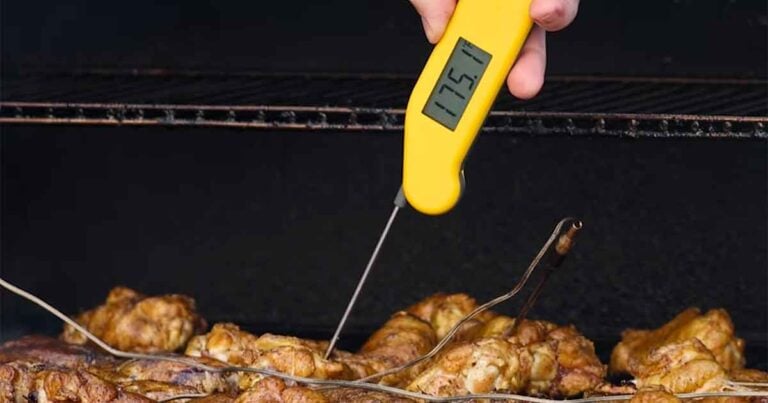
Charts help with planning, but temperature decides doneness. A reliable thermometer is your most important tool. Even if you’re feeding an offset or block pit with coals from a burn barrel, the same internal-temperature targets apply, so always let a good thermometer call the finish.
Final Notes
Use the cooking times above as guides and always adjust based on how your specific cooker behaves. A good thermometer removes the guesswork. If you want more planning help, our BBQ Tools & Calculators hub pulls together the Turkey Planner and related guides. If you prefer to generate a full thaw-to-serve timeline based on your turkey size, cooking method, and serve time, try the Turkey Planner Calculator.
Corrections and editorial standards
- Spotted something wrong or outdated? Send a correction here: Corrections & Updates
- How we handle sources, testing, and updates: Editorial Standards
- Media or general notes: Email the publisher
Turkey Cooking Time FAQs
Charts are averages. Real cook time changes with your oven or grill accuracy, how often you open the lid, the turkey’s starting temperature, its exact weight and shape, wind or cold weather for outdoor cooks, and whether the bird is spatchcocked. Use the chart to plan, then rely on a thermometer to confirm 165°F in breast and thigh.
Minutes per pound are a planning tool, not a safety rule. Food safety depends on internal temperature. The USDA Food Safety and Inspection Service says whole turkey is safely cooked when the breast and thigh reach 165°F. Use the chart to estimate timing, then always verify doneness with a reliable meat thermometer. For more detail on safe internal temperatures and how time and temp work together, see our safe turkey internal temperature guide.
For smoking, many food safety authorities suggest using turkeys under about 15 pounds so the meat passes through the temperature danger zone at a safe pace. For deep frying, most fryers are designed for birds around 8 to 14 pounds. Always follow your fryer’s manual and confirm the turkey still reaches 165°F internally.
It is safe to cook a turkey from frozen in the oven as long as you reach a safe internal temperature. This does not apply to smoking, grilling, or deep-frying, which require a fully thawed turkey. The USDA notes that cooking from frozen can add at least 50 percent more time than a fully thawed turkey. Because timing is less predictable, a thermometer becomes even more important when cooking from frozen.
Most whole turkeys benefit from at least 20 to 30 minutes of rest so juices redistribute. If you finish early, you can hold the turkey for up to about an hour by tenting it loosely with foil and keeping it in a warm place. Just avoid tightly wrapping it, which can soften the skin and raise the risk of overcooking.
Last reviewed: May 2026, based on USDA FSIS and FoodSafety.gov turkey-safety guidance current at that time.
Sources & Further Reading
- USDA FSIS – Turkey Basics: Safe Cooking – official guidance on safe internal temperature, thermometer use, and roasting times for whole turkey.
- USDA FSIS – Let’s Talk Turkey: A Consumer Guide to Safely Roasting a Turkey – practical oven-roasting charts, handling tips, and safety reminders for holiday cooks.
- USDA FSIS – Your Safe Thanksgiving Guide – seasonal overview including thawing calculators, temperature guidelines, and general turkey safety.
- USDA FSIS – Safe Minimum Internal Temperature Chart – consolidated chart of safe internal temperatures for turkey and other meats.
- National Turkey Federation – Cooking Tips & Turkey Basics – industry-backed guidance on turkey sizing, cooking methods, and doneness checks.
We rely on USDA FSIS, FoodSafety.gov, and the National Turkey Federation for time-and-temperature guidance and note when minutes-per-pound ranges reflect generalized rules of thumb or first-hand testing.
About the author
James Roller documents South Carolina barbecue for Destination BBQ and authored the SC BBQ cookbook Going Whole Hog. He researches techniques, interviews pitmasters, and builds tools like the Turkey Planner to help home cooks serve safe, great-tasting holiday meals.