Moore Family’s “Little Fisher” Hog Sauce Recipe
“This recipe for a true SC vinegar-based BBQ sauce is one that my great-grandfather Robbie Moore used dating back to the early 1900s in lower Florence County,” writes Dusty Moore, a reader who submitted the Moore Family’s “Little Fisher” Hog Sauce Recipe for publication.
“My uncle believes it to have originated from the sharecroppers who farmed the land shortly following the Civil War who used the land (called “Little Fisher”) that is located where Lynches River meets Hwy 378.
“While it is believed to be much older, the folks who would know are either no longer with us or can’t remember that far back. The land was actually a gift to his Grandfather who joined the war effort at 16 years of age in early 1861 and returned as a veteran at 19 in 1864.
The gift was from the Cameron family whose daughter my ancestor married upon his return and the land remains in our family to this day.
“The process was naturally much different back then as the heavy vinegar base was necessary as a deterrent to the meat spoiling in pre-refrigeration days. In those days, the hog was “hand-selected” on-site and slaughtered.
After the hog was put down, it was hung to bleed out, then briefly boiled to clean/remove the hair. The rest is simple enough; drain the blood and set the pit.
“Today, the sauce is not cooked for long, but back then the sauce was started at the same time the hog was placed on the pit and cooked slowly for the entire time which was roughly 12 hours depending on the size.
It was done in a fairly large cast iron pot that sat in the corner of the pit and was stirred from time to time.
“Nothing overall special about it other than we’ve been using the recipe for over 100 years now, and it seems to be well-liked among friends, family, and the folks at the church.
“My dad was never big on contests, as most of those are geared to mustard and tomato-based recipes, and in our little corner of the world, putting mustard or “ketchup” on a hog is still considered to be blasphemous.
“We cook about 5 or 6 of them a year now; however, before my Dad passed, he was likely up to 10-12 as he would do them for events around Christmas time to basically cover the cost of ours.”
Here is Dustin’s family’s recipe for “Little Fisher” Hog Sauce, an authentic recipe for the vinegar-based barbecue sauce that South Carolina is known for, shared with you to make at home in memory of his father and forefathers:

Moore Family's "Little Fisher" Hog Sauce
An authentic civil-war era SC BBQ vinegar-based barbecue sauce recipe which the Moore family has been making for generations.
Ingredients
- 1 3/4 cups salt
- 3/4 cup black pepper
- 1 cup cayenne pepper
- 1 3/4 cups crushed red pepper
- 1 gallon 4% vinegar
Instructions
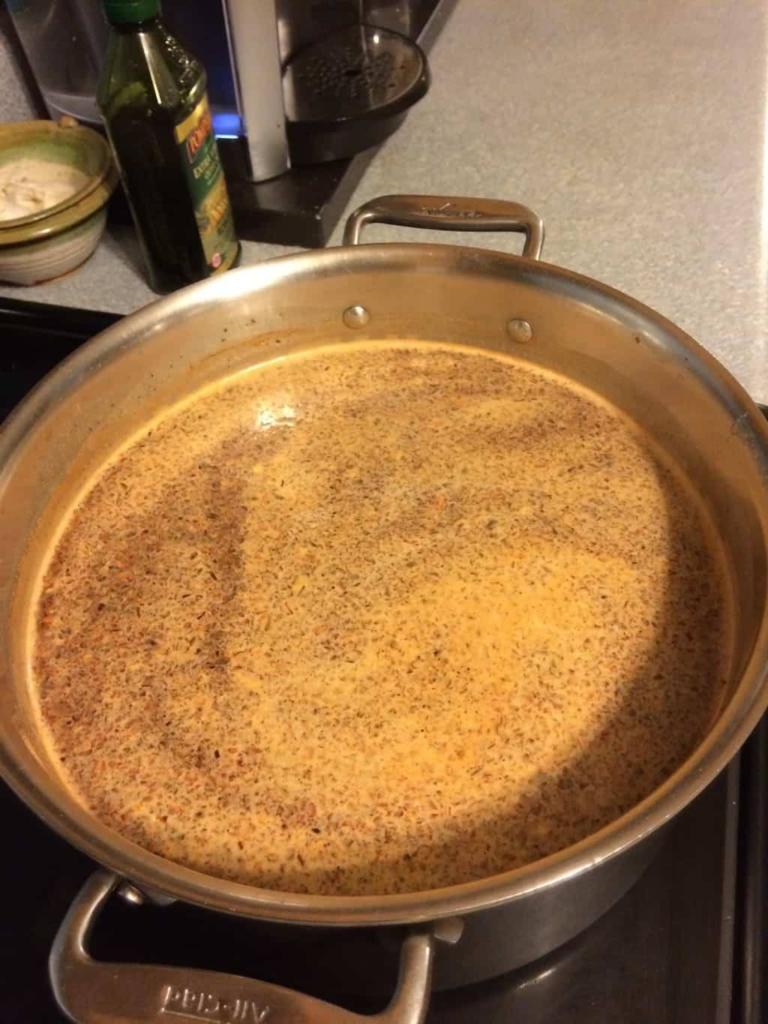
- Bring vinegar to a hard boil (should only take a few minutes).
- Cut off and add all ingredients.
- Stir well.
- Cover with lid and let sit until ready to put on the hog.
Notes
Vinegar strength: This family recipe calls for 4% acidity vinegar. If you have 5% vinegar, combine four parts 5% vinegar with one part water; then measure one gallon of the finished mixture for the recipe. A quarter cup of water added to a gallon of 5% vinegar is not enough to reach 4% acidity.
Use and storage: This is a cooking and mopping sauce for barbecue, not a tested recipe for canning or room-temperature storage. Refrigerate sauce that is not used right away. Keep unused sauce separate from the mopping bowl and discard any sauce contaminated by a brush that touched raw or undercooked meat.
Nutrition Information:
Yield:
128Serving Size:
1 fluid ounce of fully mixed mop sauce (estimated)Amount Per Serving: Calories: 12Total Fat: 0gSaturated Fat: 0gTrans Fat: 0gUnsaturated Fat: 0gCholesterol: 0mgSodium: 1549mgCarbohydrates: 1gFiber: 1gSugar: 0gProtein: 0g
Nutrition is estimated per 1 fluid ounce of fully mixed sauce, based on the recipe's one-gallon vinegar base and 1¾ cups of ordinary table salt. A batch is used to mop a whole hog; the amount actually eaten with a serving of meat may be much smaller. Sodium is about 1,550mg per fluid ounce if 128 ounces are portioned evenly; it can vary with salt type, the larger finished volume after adding seasonings, and settling of pepper solids. Calorie and macronutrient estimates include the vinegar and peppers.
Like to Volunteer as One of our Recipe Testers?
We have a bookful of recipes to test and publish. Join the team and choose from our collection of unpublished recipes.
All we ask is that you photograph the process and share your thoughts on each recipe and the finished product. And we’ll feature you when we publish that recipe.
Interested? Just send me an email.


Check out these other SC BBQ sauce recipes we’ve published on destination-bbq, and we’ve published even more sauce (and rub) recipes in the SCBBQ Recipes: Going Whole Hog Cookbook. Read more about that here.
Sauces and Rubs:
Vinegar-Pepper Sauces
- Jay Phillips’ Whole Hog Sauce Recipe
- Dad’s Mop Sauce Recipe
- Eastern SC Vinegar-Pepper Sauce Recipe
- Moore Family’s Little Fisher Hog Sauce Recipe
- Lowcountry Vinegar Sauce Recipe
Mustard Sauces
- Swig & Swine’s Mustard BBQ Sauce Recipe
- Dukes BBQ-Style Sauce Recipe
- Dukes BBQ Sauce – “Actual Recipe”
- Simple South Carolina Mustard Sauce Recipe
- Bessinger’s-Style Gold Sauce Recipe
Tomato-Based Sauces
- John Padgett’s Kansas City BBQ Sauce Recipe
- Honey-Hickory Barbecue Sauce Recipe
- Bullies BBQs Thin Basting Sauce Recipe
- Cherrywood Signature BBQ Sauce Recipe
- “Carolina Red” Light Tomato Barbecue Sauce Recipe
- Basic Tomato Barbecue Sauce Recipe
Other Sauces
- Home Team BBQ Alabama White Sauce Recipe
- Moe’s Original BBQ’s Alabama White Sauce Recipe
- Brisket Mojo Sauce Recipe
- Roller Family Hot Sauce Recipe
- Salsa Verde with Avocado for Pulled Pork Recipe
Rubs
- Sticky Fingers’ Basic Dry Rub Recipe
- JB’s Smokeshack-Style Spicy Dry Rub Recipe
- Sticky Fingers’ Texas Rub Recipe
- BlackJack Barbecue Dry Rub Recipe
- Sticky Fingers’ Sweet Rib Rub Recipe
- Home Team BBQ Dry Rub Recipe for Chicken Wings Recipe
- John Lewis BBQ-Style Brisket Dry Rub Recipe


Liam, I apologize for the delay on this response. Apparently, I had my comment notifications turned off or something. Catching up on several comments I missed along the way. To answer your question: generally speaking “ground red pepper” refers to cayenne in recipes. I confirmed this via a Google search just to back up my own personal thoughts. I used cayenne myself when making this recipe, but if Dustin meant something else (say Paprika?) I don’t know…but that’s a lot of “ground red pepper” if you ask me.
Is the ” ground red pepper” in this recipe cayenne or just ground red pepper corns?
thanks
Liam… Apologies but I have not checked out the link to this recipe in some time. By ground red pepper I am referring to crushed red pepper flakes.
SMH… I meant to say cayenne. Apolgies as I was multi tasking very poorly.
Thanks! Straight from the horse’s mouth (no offense, Dusty)! I will edit the recipe to state cayenne.